






Calculate point load online
With this online calculator, you can estimate the point load or ground pressure of your work platform or telehandler – based on the machine weight, support area, and subsurface.
The result shows you how much the floor is loaded at a given support point . This calculation is intended as a preliminary assessment and does not replace a structural test.
If the subsurface is unstable or sensitive, we recommend load distribution plates and, if in doubt, consultation with the site manager or structural engineer .
Point load or area load – what is the difference?
When setting up a work platform or forklift, it's important to understand what type of load is being applied - point load or distributed load. A distributed load describes how heavily a larger area is loaded. It is expressed in kilonewtons per square meter (kN/m²) and indicates the total load that can be distributed over a certain area - for example, the maximum load-bearing capacity of a concrete ceiling. In industrial buildings, this is usually between 1.5 and 5.0 kN/m². This means that for an area of 100 m², the total load must not exceed 150 kN (around 15 tonnes). So, it's more about what is in one area - several machines, materials or vehicles. If the permissible distributed load is not exceeded, use is generally unproblematic.
The point load, on the other hand, describes the strength of the subsoil at a single point or support – i.e., the load-bearing capacity of the material itself. It is expressed in kN or kN/cm². While a conversion between point and area load is mathematically possible, it doesn't physically make sense, as the two represent completely different types of load. Point loads are particularly relevant when the weight acts only on small areas, for example, on supports, outriggers, or narrow tires. This is particularly critical on sensitive or uncompacted surfaces – such as pavement, asphalt, or lawns – where a high point load can quickly lead to subsidence or damage.
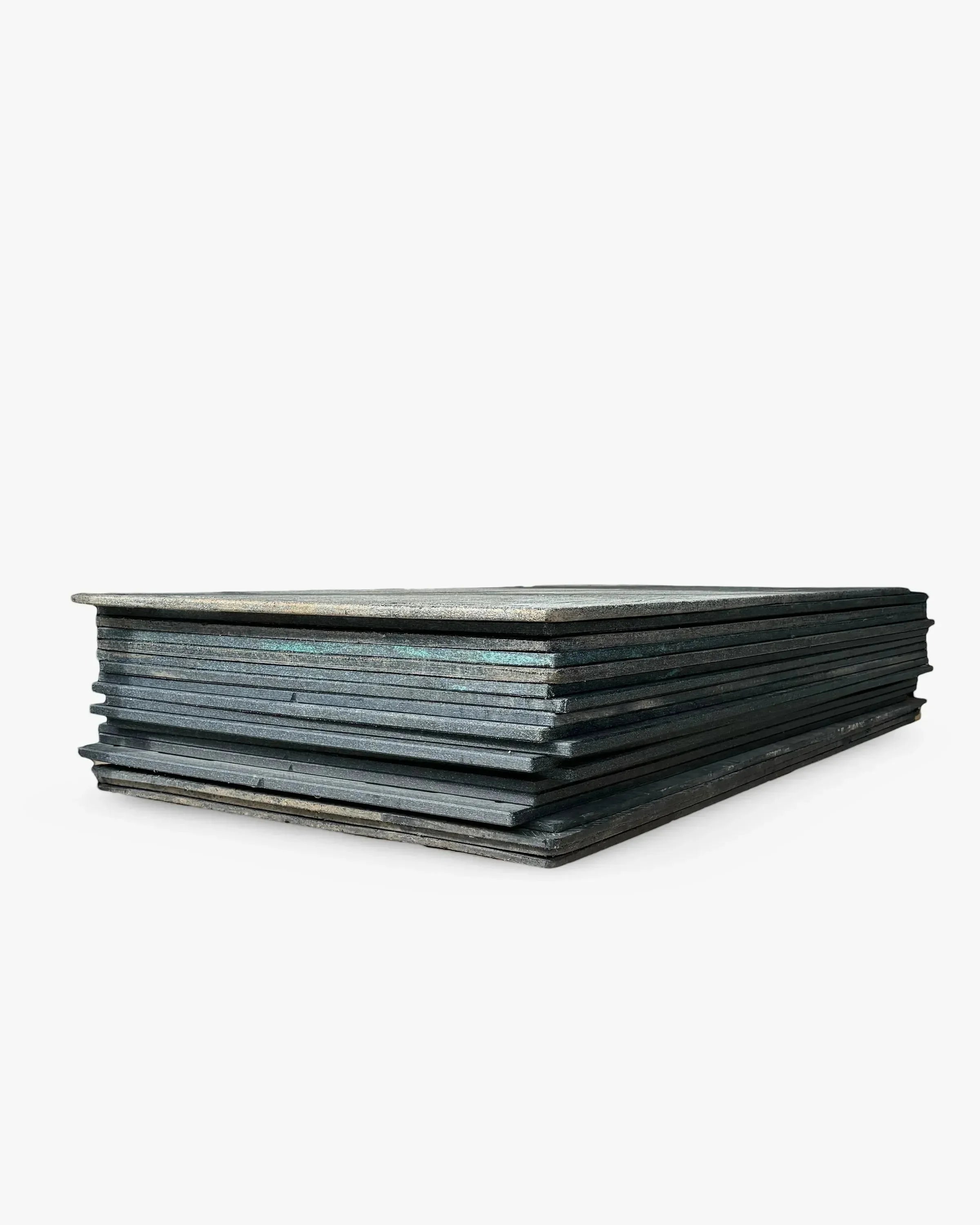
The point load can be reduced by using low-weight equipment, crawler tracks (which distribute the weight more evenly), or load distribution plates. The latter ensure that the load is distributed evenly over a larger area.
The calculator offered here refers exclusively to point loads . It assumes the so-called "worst case" – that is, the entire weight of a machine rests on a single support. This is especially important for equipment with booms (telescopic or articulated work platforms, telehandlers) when the boom is extended over a support at its maximum lateral reach. In such a case, the ground should be able to support the entire load in this small area. If the equipment has four supports, the load is theoretically distributed across four points – but this factor cannot be ignored in practice.


