


 What You Need to Know
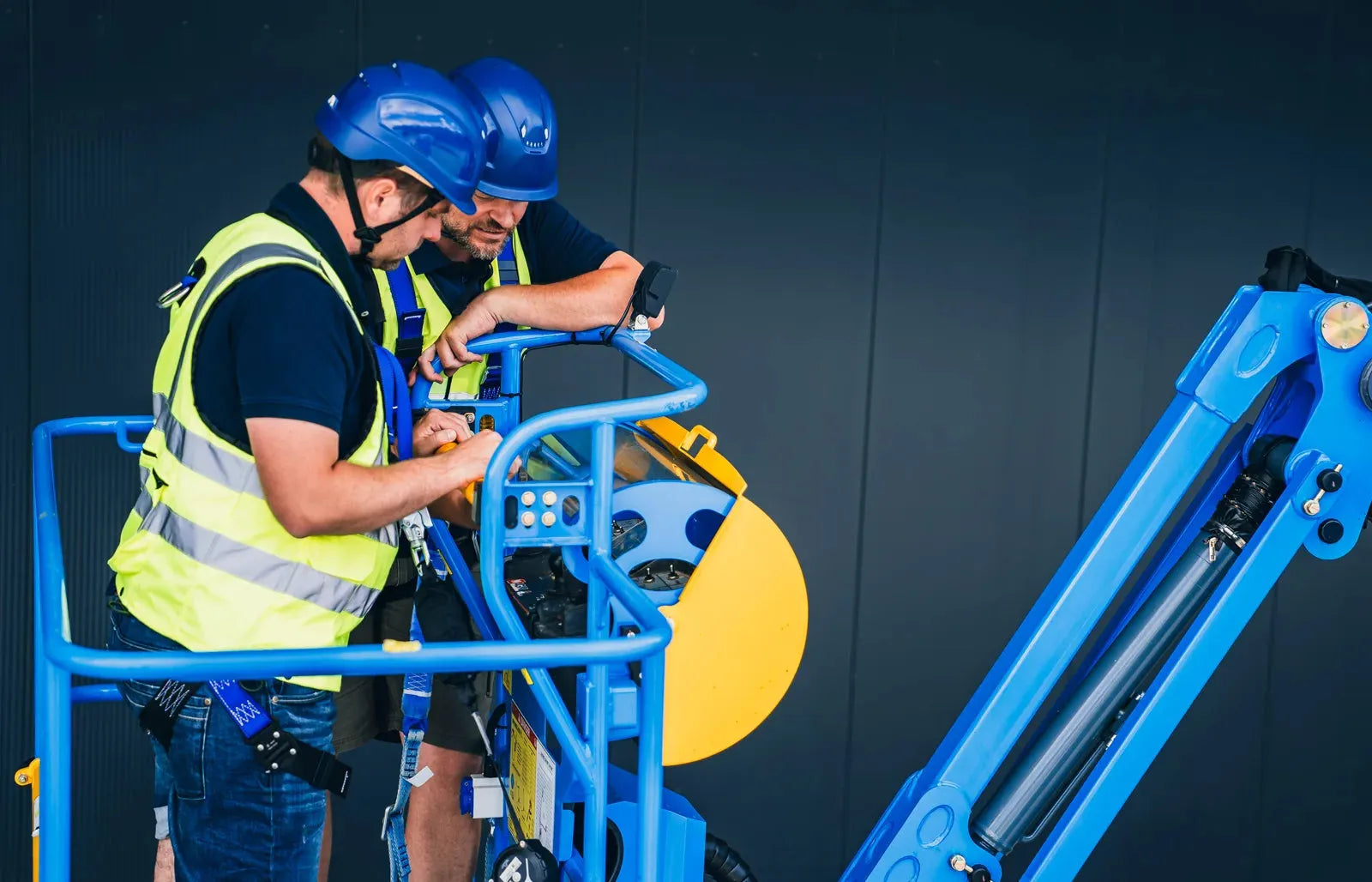
Whether on construction sites, in building cleaning, or in the event industry – aerial work platforms are now standard equipment. But as practical as they are, the risk is equally high: Accidents happen every year because operators are not adequately trained. For example, a technician falls because he positions the platform incorrectly. The result: serious injuries and legal consequences for the employer.
The figures speak for themselves: While ladders and steps are responsible for around 30% of all fall accidents, the rate for aerial work platforms is less than 0.5% – provided they are operated correctly. But this is precisely where the problem lies: Over 70% of accidents involving work platforms are due to operator error – unsuitable ground surface, overloading, lack of personal protective equipment against falls from height (PPE), or insufficient training.
The cause is usually not the technology, but the person: lack of knowledge, lack of experience, or insufficient training. That's precisely why the legislator requires clear proof of competence – and this is exactly where the mobile elevating work platform operator's license comes into play.
Also known as a mobile elevating work platform (MEWP) operator's license , it's mandatory in many industries. It protects you, your colleagues, and your company – and ensures the legally compliant operation of your MEWP. This guide tells you everything you need to know: content, procedure, costs, legal requirements, and practical tips.
What is a mobile elevating work platform operator's license?
The mobile elevating work platform (MEWP) operator's certificate is an official qualification that confirms you can safely operate a MEWP. It is based on the requirements of the German Ordinance on Industrial Safety and Health (BetrSichV) and the DGUV regulations . Without this certificate, you are not permitted to operate MEWPs in Germany.
Important: Colloquially, it's often referred to as a "driver's license." However, the legally correct term is an operator's license , which you receive after successful training and examination .
Why is a lifting platform license mandatory?
Legal basis
The obligation arises from several sets of rules:
- Industrial Safety Ordinance (BetrSichV): Employers must ensure that only suitable, trained persons operate work equipment.
- DGUV Regulation 1 Rule 100-500: Only trained persons with proof of training may operate mobile elevating work platforms.
- Occupational Health and Safety Act: Employers are responsible for the safety of their employees.
Liability and insurance
If you operate a stage without a license and an accident occurs, the insurance company can refuse to pay out. Furthermore, the employer is personally liable. A driver's license therefore protects not only your health but also your company.
Fines for violations:
- Without training or instruction: up to €5,000
- Missing risk assessment: €5,000
- Serious violations of the German Industrial Safety Ordinance (BetrSichV): fines up to €100,000
- Intentional endangerment: Criminal offense according to §23 BetrSichV
Who needs a mobile elevating work platform (MEWP) operator's license?
Occupational groups
- Construction workers (assembly, building construction, roofing work)
- Building cleaners (facades, glass, halls)
- Event stage technician (lighting and sound technology in halls)
- Tradespeople (electricians, painters, plumbers)
- Logistics staff using platforms in the warehouse
Areas of application
- Working at great heights (e.g. over 10 m)
- Use of truck-mounted aerial work platforms in road traffic
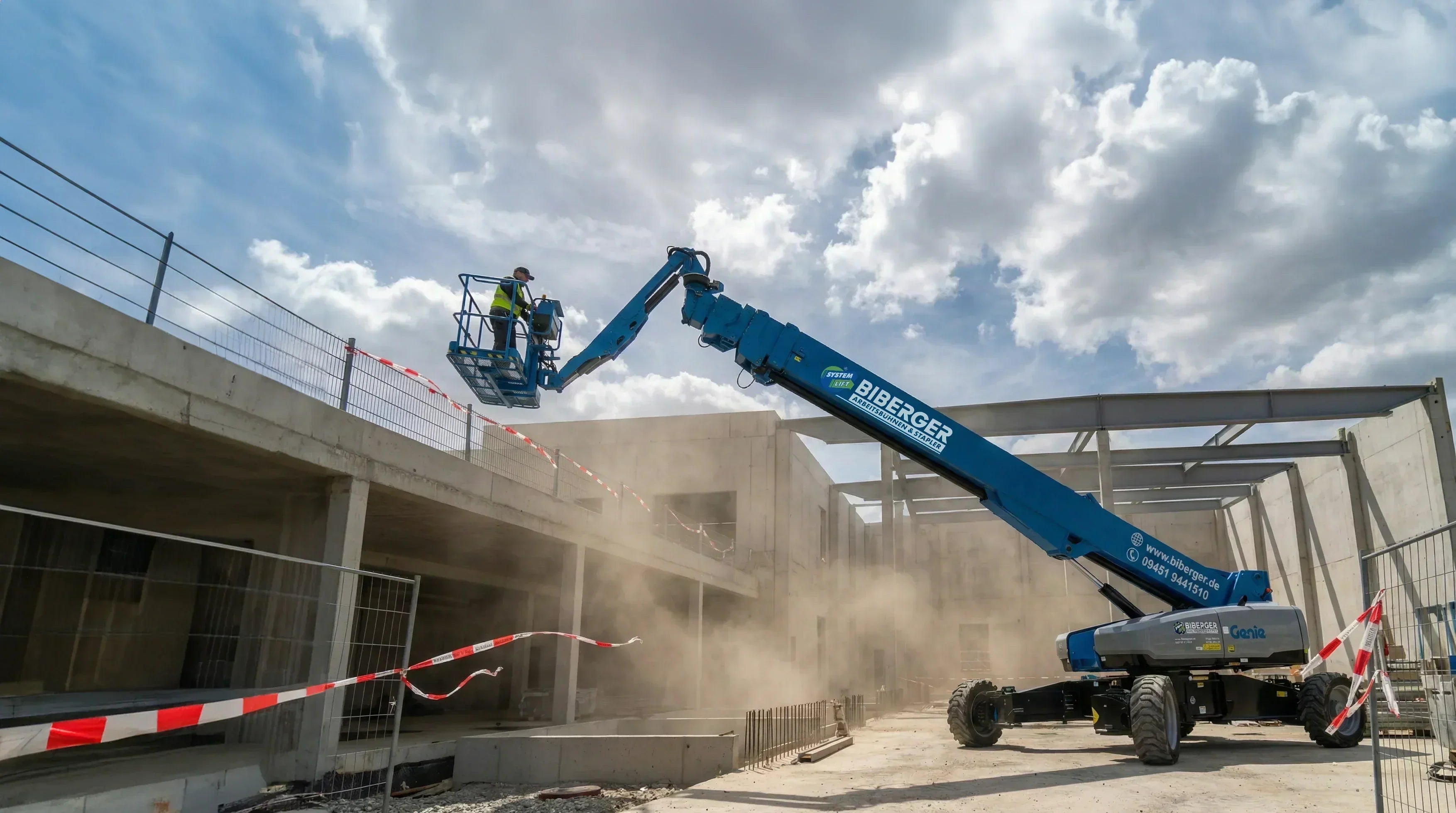
- Operation of telescopic or articulated platforms on construction sites
- Even private properties : As soon as the stage is used commercially, the training requirement applies.
Equipment categories according to DGUV and IPAF
Not every training course qualifies you to operate every stage. The equipment category is crucial.
- Category 3a: Scissor lifts (vertically movable) – for indoor use
- Category 3b: Telescopic and articulated platforms – great heights and reaches
- Category 1b: Truck and trailer platforms – stationary, additional rules in road traffic

Important: Your training must cover the type of stage you will be using later. Many providers combine 3a and 3b – check this before booking.
How does the training proceed?
theory
- Structure and function of different stage types
- Legal regulations (DGUV, BetrSichV, ArbSchG)
- Safety distances and load limits
- Hazard analysis and accident prevention
Practice
- Starting and controlling the stage
- Positioning and working safely at height
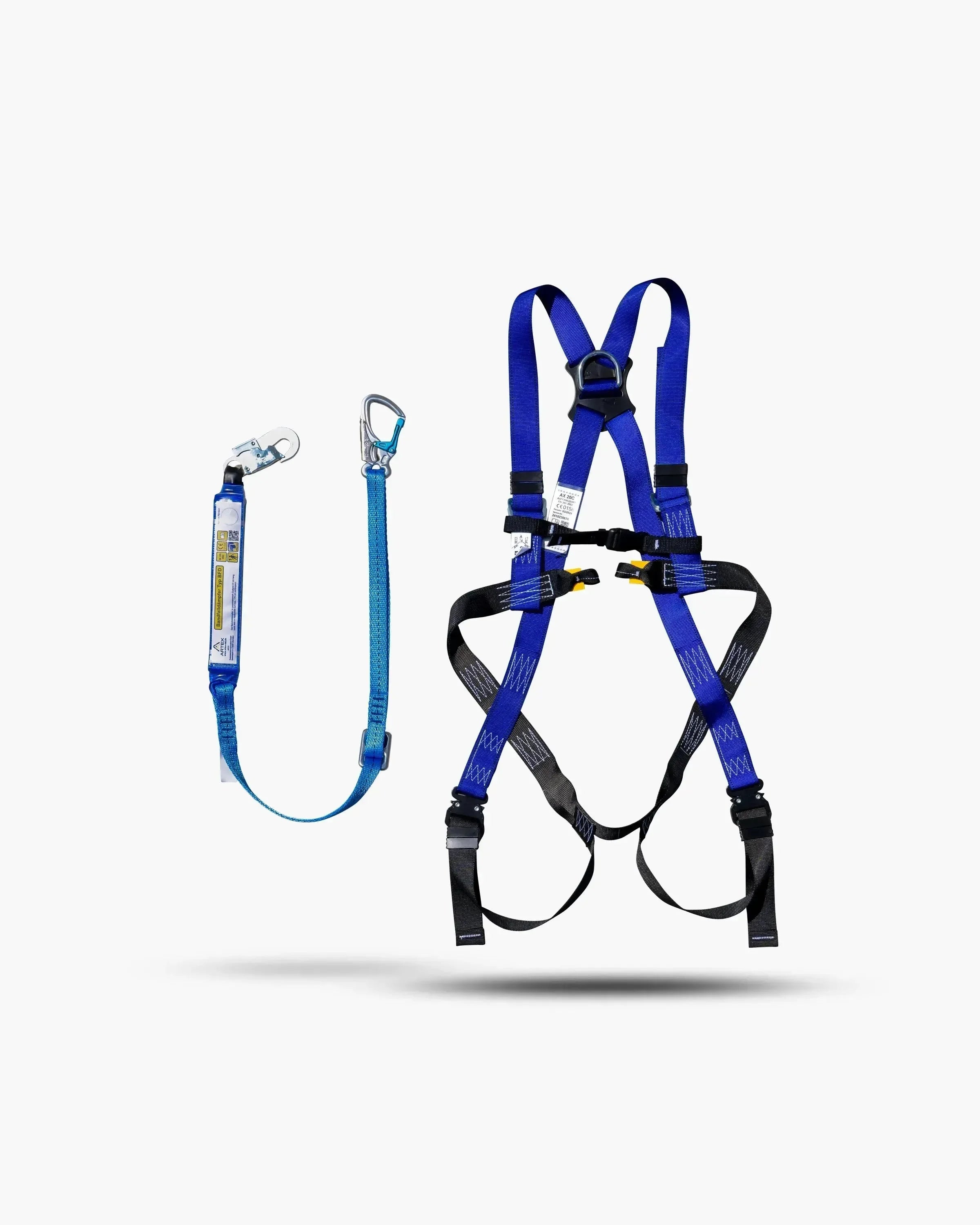
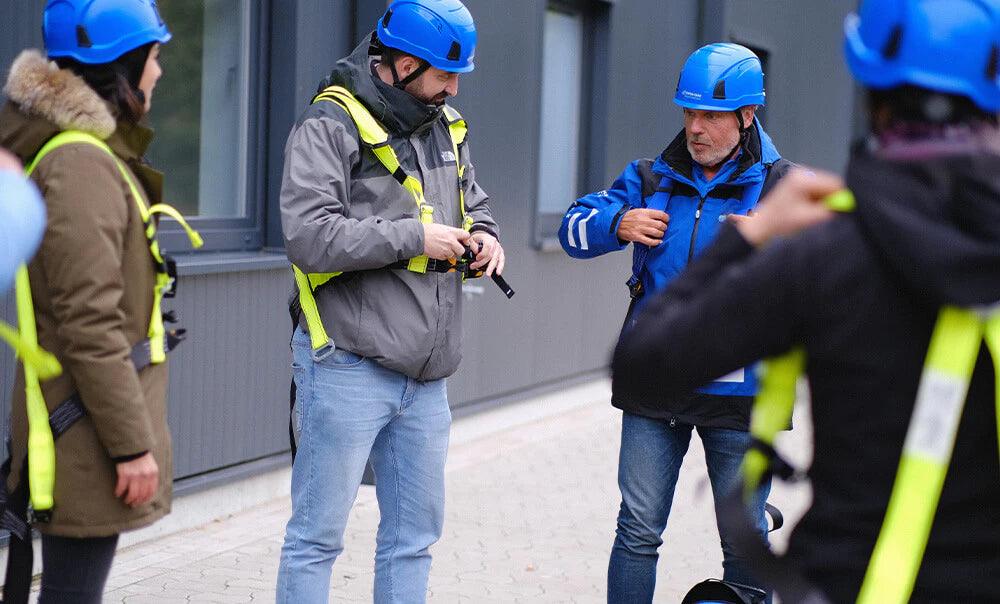
- Correct application of PPE
- Rescue and emergency drills
Test
- Written: Safety, technology, regulations
- Practical: Operation and safe handling
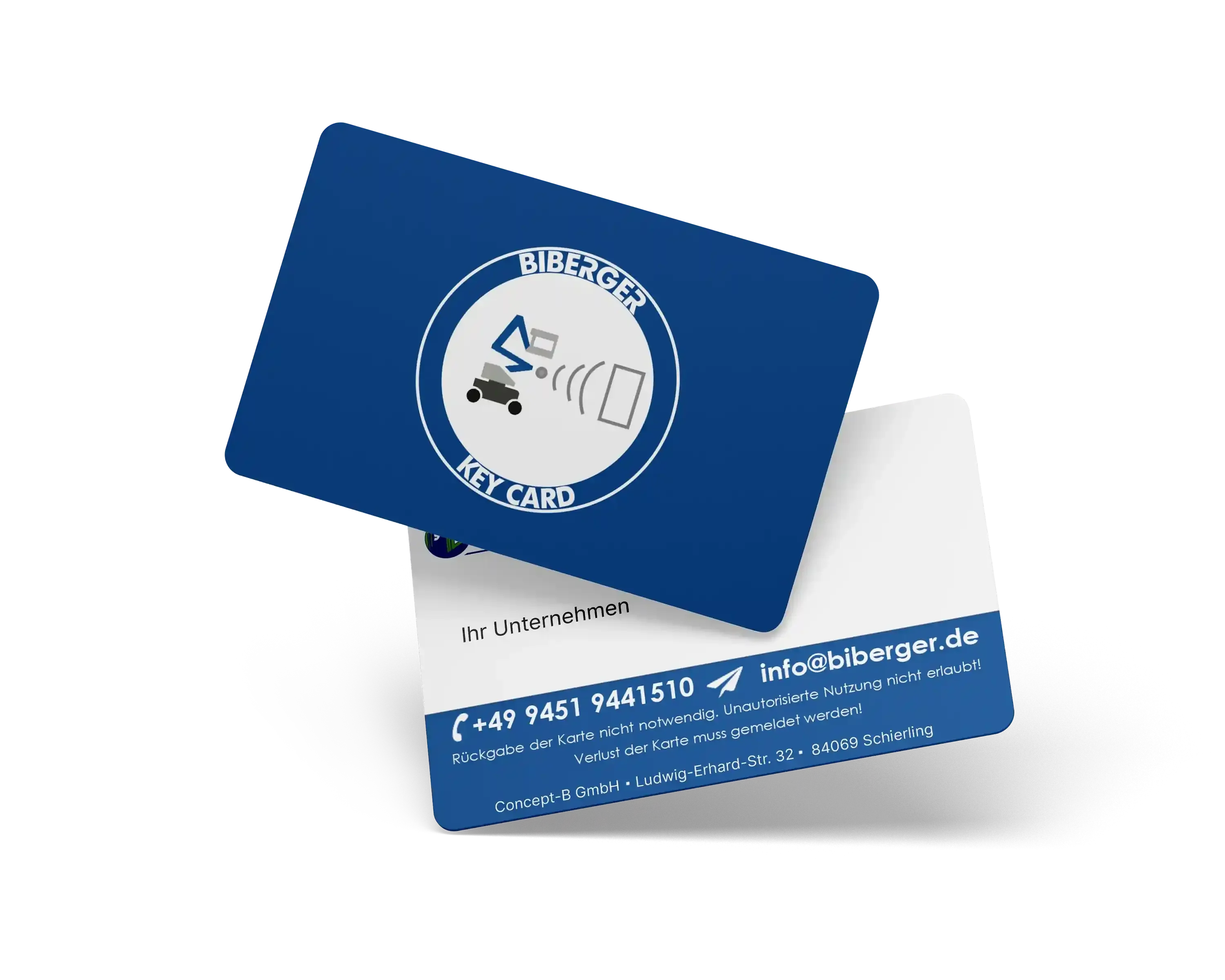
After passing the test, you will receive your operator's license – usually in credit card form.
Validity and refresher courses
The operator's license is valid indefinitely in Germany. However, to be permanently protected under employment law, you need:
- Annual instruction according to DGUV Regulation 1 (§4)
- Documentation of participation (in writing, with signature)
- After a longer break: voluntary refresher course recommended.
- For new types of equipment: additional training is necessary.
Instruction, training or driver's license – what's the difference?
| Expression | When? | Scope | Legal effect |
|---|---|---|---|
| briefing | For rental stages, before first use | In short, model-related | No valid qualification |
| instruction | Annually for all operators | Brief refresher (theory + practice) | Mandatory according to DGUV |
| Driver's license / operator's license | One-time occurrence, prior to initial activity | Full-day course: Theory + Practice + Exam | Legally binding proof |
What does the annual training include?
The annual instruction is a legally required refresher (2-3 hours), not a full training course:
- Current safety rules and regulations
- Operating instructions for the stage in use
- Identify and avoid hazards
- Behavior in an emergency (e.g., emergency lowering)
- PPE use and new developments
- Discussing internal incidents
Cost: approx. €185 per person for external training, cheaper for in-house training.
Implementation: by security specialists, experienced staff or external providers (TÜV, SYSTEM-CARD)
International Standards
The IPAF PAL card is internationally recognized, but only valid for 5 years . After that, the exam must be repeated – ideal for technicians with international assignments.
Costs and duration
Most training courses last one day . Cost: between 150 and 300 euros per participant – depending on the provider, scope of training and region.
Why do prices fluctuate?
- Providers: TÜV and DEKRA are usually more expensive than private academies.
- Contents: Only 3a or additionally 3b / 1b
- Group size: Public appointments are cheaper than in-house ones.
- Region: Metropolitan area or rural
- Extras: Training materials, exam retake
IPAF PAL Card: approx. €200–350, valid internationally in 50+ countries
Common mistakes and how to avoid them
- No training required → ID card + annual refresher course are mandatory
- Forgot PPE? → Always wear a harness when using boom lifts.
- Overload → Check load capacity including material + persons
- Incorrect substrate → Check load-bearing capacity, use shims if necessary.
- No hazard analysis → check the environment
- Distance error → at least 0.5 m to obstacles
- Ignoring wind → stop working from wind force 6.
- Collisions → proceed slowly, if necessary with a spotter.
- Power lines → 5 m distance to high voltage
- Crushing hazard → no movement between fixed objects
Practical tips checklist
- Always wear PPE (helmet, harness, safety shoes)
- Check the stage before use (visual inspection, functional test)
- Adhere to the load capacity specifications.
- Never drive without a license or annual training.
- Have an emergency plan ready
Conclusion
The operator's license for mobile elevating work platforms (MEWPs) is more than just a requirement – it's your key to safety, efficiency, and professionalism when operating these platforms. Whether on construction sites , in traffic , or during building maintenance – with this license, you're on the safe side.
Get your SYSTEM-CARD for aerial work platforms now and secure your legally recognized proof of theory and practice.




Share:
Understanding the turning circle: How to choose the right device
The Almac BIBI 1090-BL EVO is now available for rent
Our editorial quality standards
The subject content on biberger.de are editorially created, reviewed, and continuously updated. The basis is our daily work with aerial platforms, telehandlers, and industrial trucks – in rental, sales, operational planning, and technical support.
Each article draws on real-world experience and is editorially reviewed for clarity, accuracy, and practical relevance according to expert criteria. Technical statements are regularly compared against current industry standards and best practices.
The aim of our publications is to make reliable specialist knowledge accessible and to offer guidance to users, decision-makers and industry partners. BIBERGER sees itself as an independent information platform for safe, economical and modern height access technology – well-founded, comprehensible and free from advertising influence.