



 What You Need to Know
Crane-mounted work platforms are indispensable on many construction sites – especially when access via ramps, driveways, or driveways is not possible. Steep slopes, height differences, or narrow courtyards often make moving by crane the only practical solution.
It's important to note that not every stage is crane-capable. Therefore, anyone renting online should check carefully – because whether a piece of equipment can be lifted with a crane depends on clear specifications.
What does “craneable” mean and when is it important?
A work platform is considered to be craneable if it has certified lifting points and can be safely moved with a crane – for example to roofs, higher levels or hard-to-reach areas of a construction site.
This is especially relevant when access roads are too narrow or height differences are too large. You can find out whether a piece of equipment is crane-compatible by checking the manufacturer's specifications – or you can ask us directly.

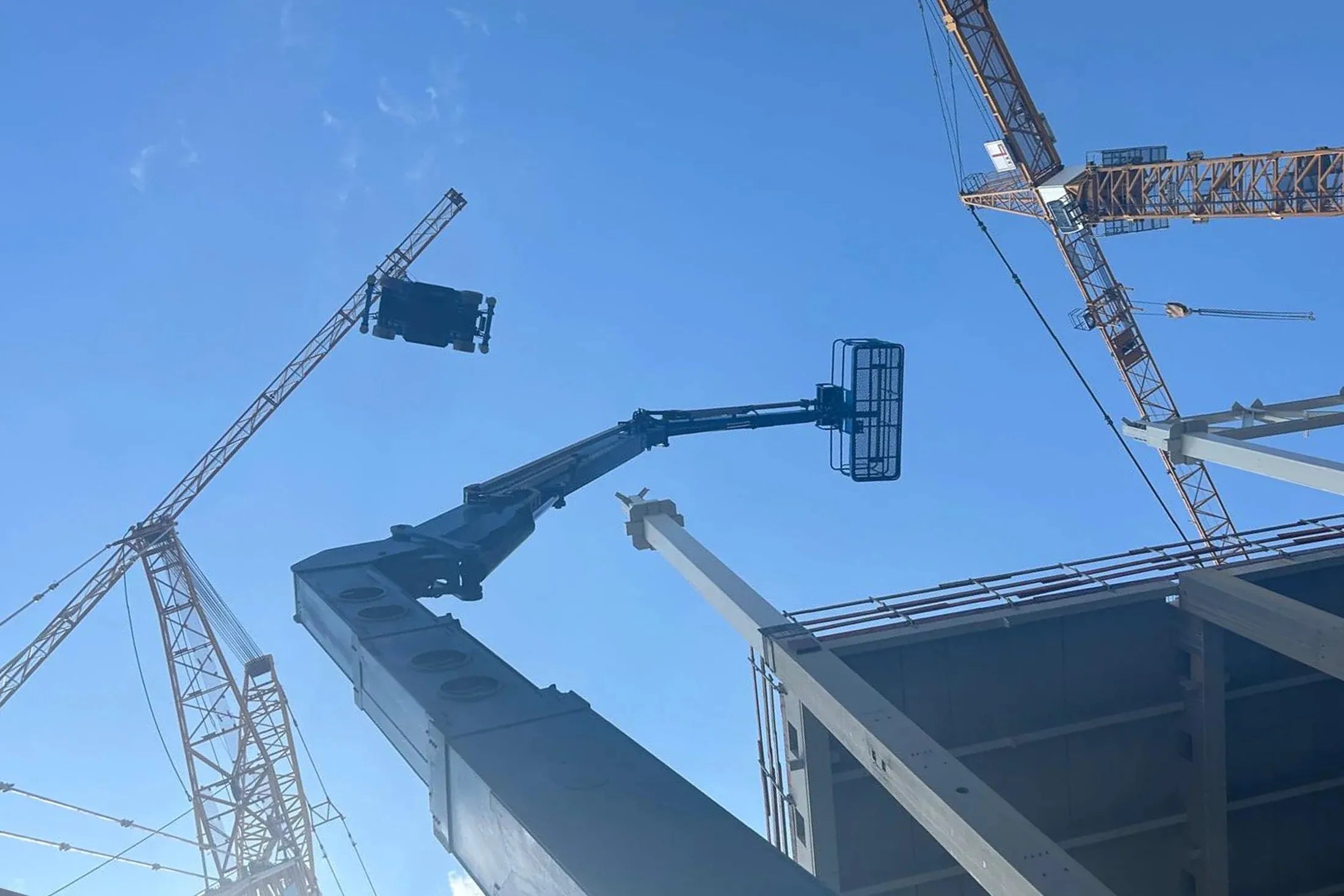
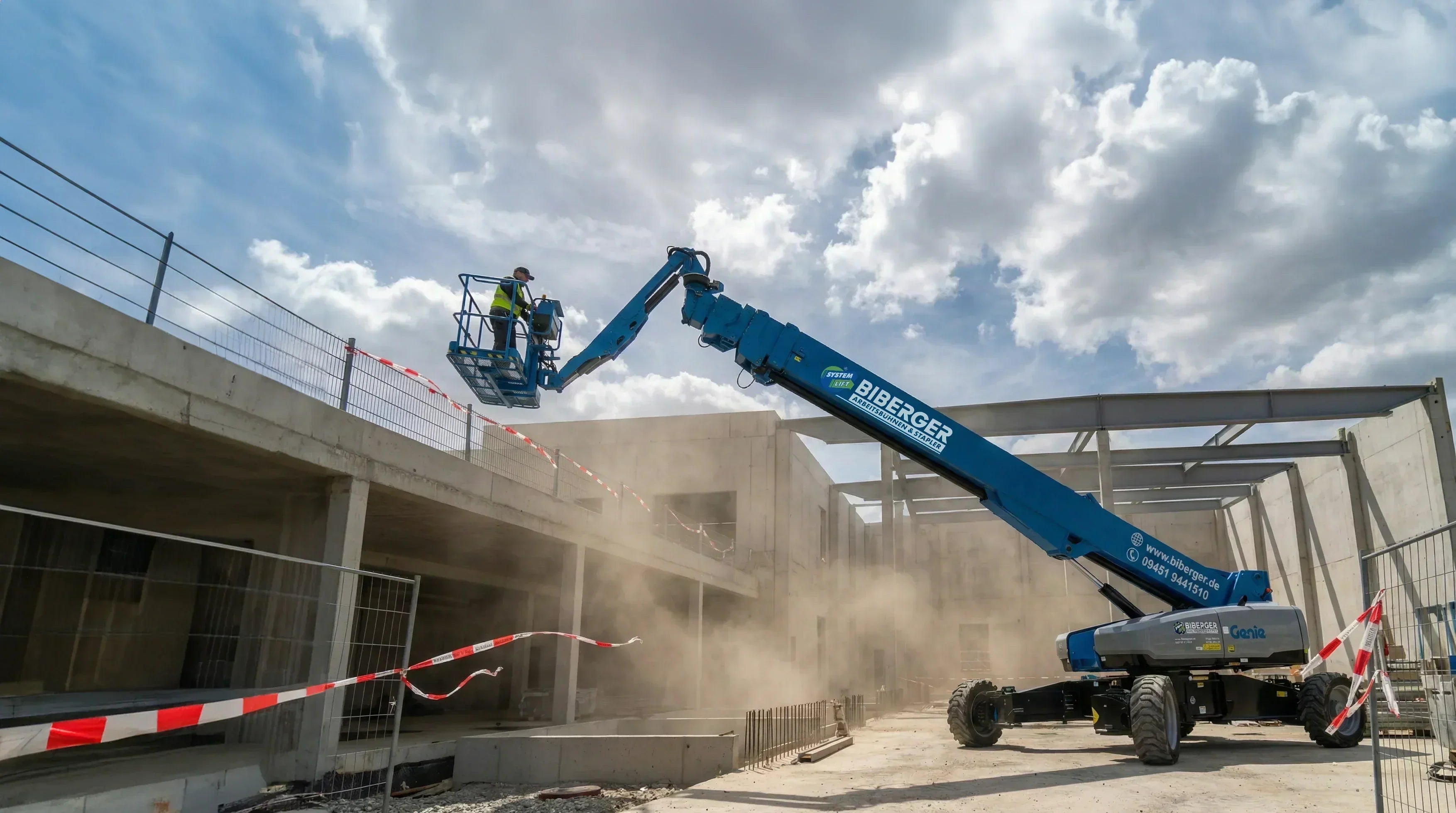
A crane-operated work platform is lifted to the desired position. Photo (BIBERGER)

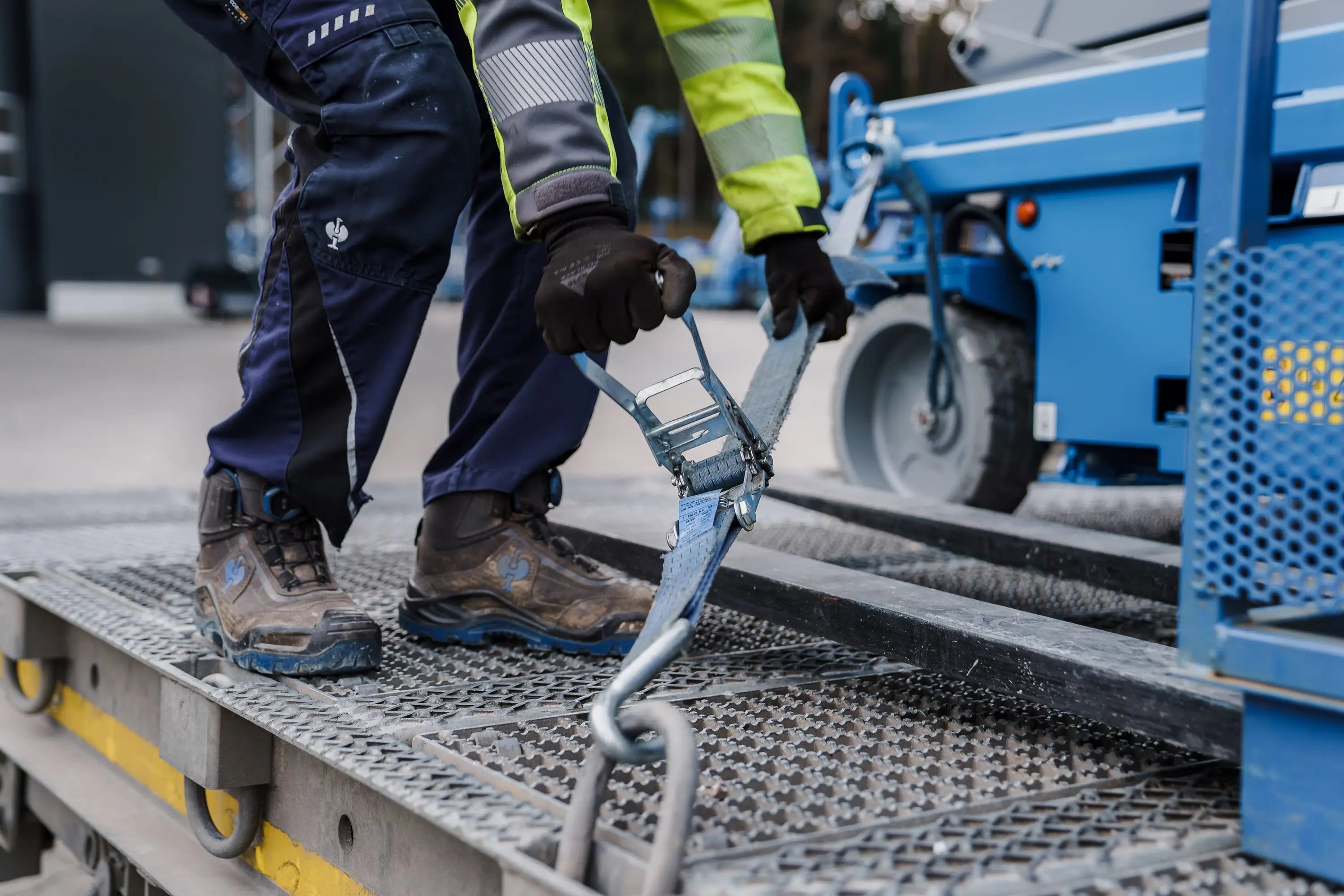
Safely lifting a Genie aerial platform by crane: Only attach to the designated lifting points and secure during transport according to the instructions. Observe the lashing and locking points – for maximum safety during loading.
Standards, regulations and manufacturer approvals
Whether a stage is considered craneable is not a gut feeling – it requires concrete evidence:
- Machinery Directive 2006/42/EC & CE marking
- DIN EN 280 for construction, safety & testing
- BetrSichV for the safe provision and use
- DGUV Regulation 52 and Rule 100-500 for lifting points and safe use
- Type plate with CE, wind information, dead weight & tested crane mount
Only platforms with manufacturer approval and clear markings may be craned. Inspection reports, operating instructions, and approval forms must be carried along.
Technical features and designs
Craneable work platforms have:
- certified lifting points with defined load capacity
- lockable pendulum axles & support systems
- approved weight, dimensions and wind limits
According to DIN EN 280 , stages are classified as follows:
- Group A: Center of gravity within the tipping edge (e.g. scissor lift)
- Group B: Center of gravity outside, e.g. telescopic platform
In addition, a distinction is made between types 1–3 depending on their mobility in the lifting state.
Important construction site factors: drive, tires and surface
In addition to craneability, other points are crucial:
- Drive: Diesel for outdoor use, electric for indoor use
- Tires: Off-road vs. non-marking for indoor use
- Soil conditions: load-bearing capacity, base plates, slope
These factors determine whether the platform can be used safely – before and after crane transport.
Crane transport procedure: Checklist & safety
- Check manufacturer approval
- Use lifting points according to instructions
- Secure device according to DGUV and DIN EN
- Pay attention to the weather and wind
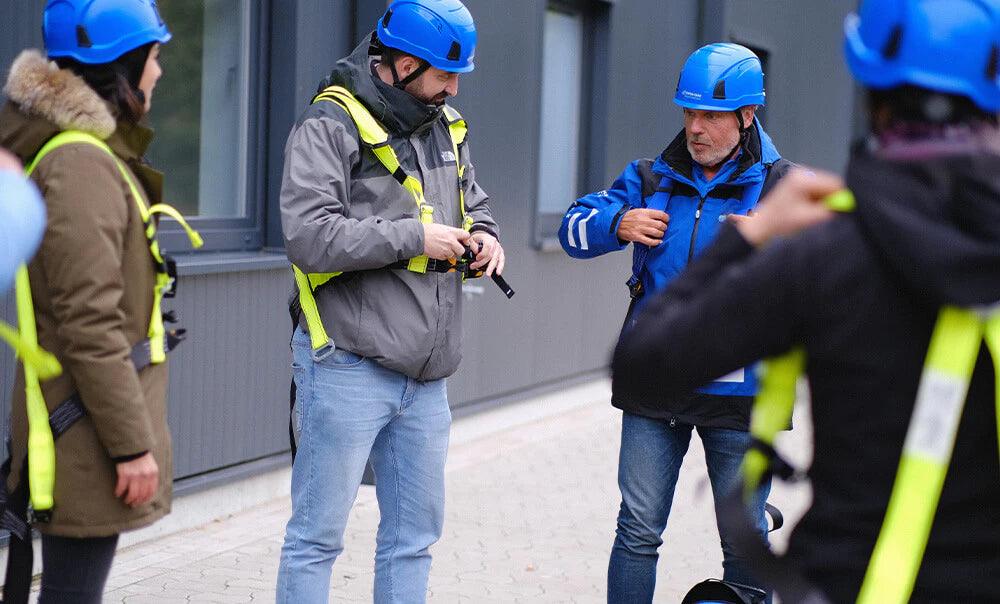
- Instruct all participants
After unloading, a functional and visual inspection must be performed. Document the process completely.
Practical examples & accidents
Accident in Stralsund in 2024: Bridge crane overturned platform – crane shutdown not completed.
Loading accident 2018: Operator dies when the platform tipped over – cause: unsecured ramp area.
Regulations: After each assembly, an inspection by a qualified person is required in accordance with BetrSichV .
Conclusion: Craneability is mandatory – not an option
Only work platforms with tested lifting points and a valid manufacturer's approval may be used for crane operations. The drive system, the ground conditions, and safety instructions are equally important. Failure to comply with these requirements not only risks property damage but also life.
BIBERGER tip: We are happy to advise you on crane-capable models – including transport planning and safety checks.




Share:
Building a solar park – machines, planning and process at a glance
Installing outdoor advertising safely: What should you consider during installation?
Our editorial quality standards
The subject content on biberger.de are editorially created, reviewed, and continuously updated. The basis is our daily work with aerial platforms, telehandlers, and industrial trucks – in rental, sales, operational planning, and technical support.
Each article draws on real-world experience and is editorially reviewed for clarity, accuracy, and practical relevance according to expert criteria. Technical statements are regularly compared against current industry standards and best practices.
The aim of our publications is to make reliable specialist knowledge accessible and to offer guidance to users, decision-makers and industry partners. BIBERGER sees itself as an independent information platform for safe, economical and modern height access technology – well-founded, comprehensible and free from advertising influence.