




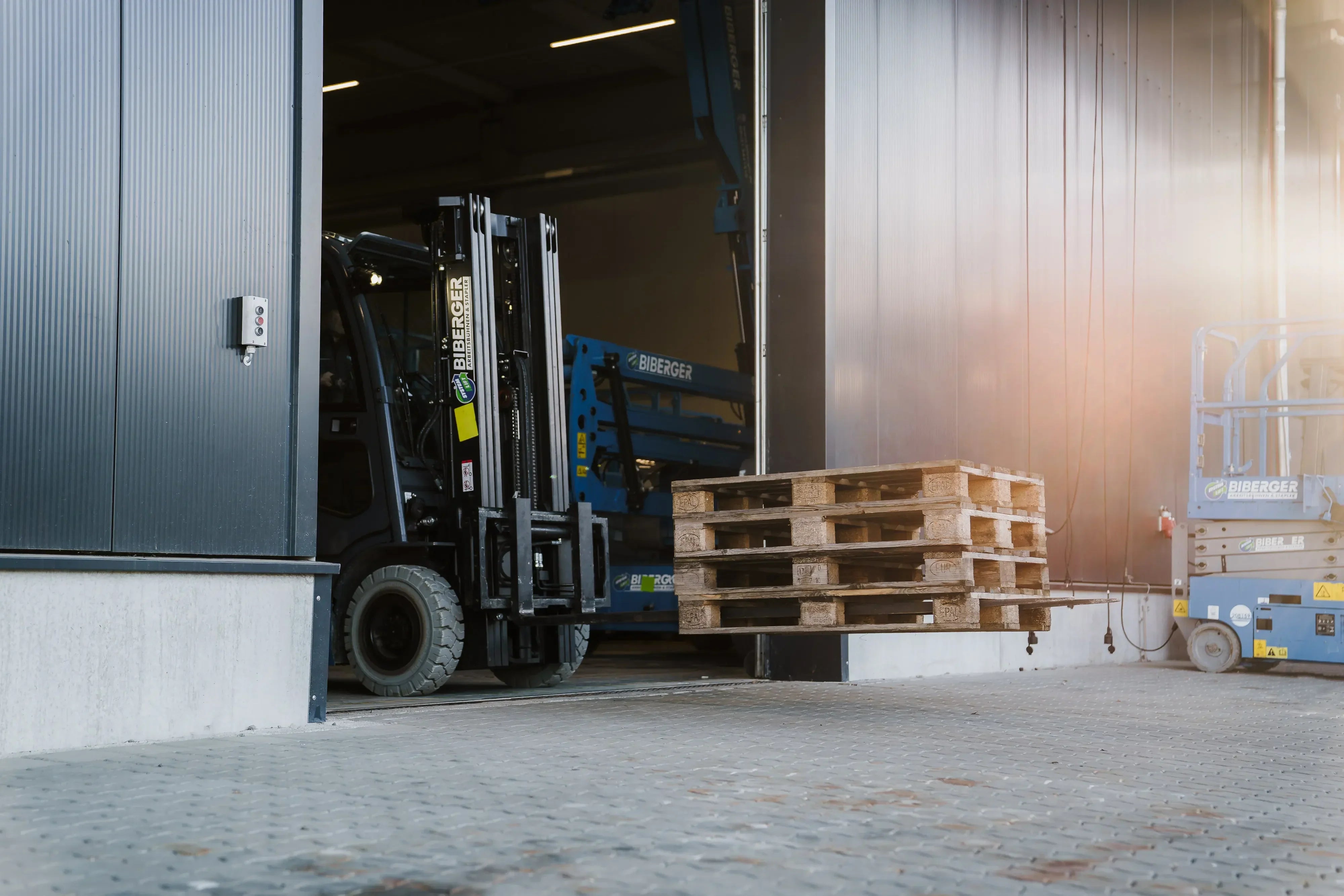
 What You Need to Know
The Euro pallet has been the common denominator of European logistics since 1961. Uniform dimensions, robust construction, and well-established exchange systems make it the standard in the flow of goods.
Here you'll find the most important facts presented in a concise format. Includes background information, clear tables, and practical tips for warehousing, transport, and returns.
The Euro pallet at a glance
What makes the Euro pallet so successful?
Standardization creates speed and reliability. One standard, hundreds of applications – everything fits together from goods receipt to truck loading.
As a reusable load carrier, it is repairable, exchangeable, and sustainable. This reduces costs and conserves resources in daily use.
A brief look back: History and milestones
The idea originated on the railway. Railway companies wanted to drastically reduce loading and unloading times and make better use of loading space.
In 1961, the dimensions were standardized to 1200 × 800 × 144 mm, followed later by quality assurance via EPAL. Since then, the regulations have been continuously refined.
Why standardization brings so much benefit
Using identical pallets eliminates the need for special solutions. Processes become scalable, times predictable, and errors less frequent.
The result is faster turnover , better space utilization and a fair exchange system between all partners.
Workplace accident risks when handling Euro pallets
Euro pallets are considered robust and commonplace – precisely what makes them dangerous in everyday work. Defective, incorrectly used, or tampered with pallets are among the most frequently underestimated causes of accidents in warehousing, handling, and transport.
Typical injuries don't occur during transport of the goods, but rather during the handling of the pallet itself : tripping over damaged boards, splinters, crushed feet and knees, or loads slipping while lifting. Broken deck boards , loose blocks , and protruding nails are particularly critical.
Another risk arises from the ratio of narrow base area to high load . Euro pallets stacked high and unstable are more prone to tipping, especially when forklifts are turning or on uneven surfaces. Occupational health and safety organizations explicitly warn against lateral overloading and improper stacking.
Tampered pallets also pose a significant risk. Improper repairs using incorrect nails, metal staples, or unauthorized components can lead to sudden structural failure. The German Social Accident Insurance (DGUV) documents serious accidents—including fatalities—caused by collapsing pallets in automated palletizing and conveying systems.
From an occupational safety perspective, safety shoes (at least S1) are mandatory when handling Euro pallets manually. Additionally, damaged pallets must be consistently discarded and may not be reused.
Standards and labeling
The Euro pallet is defined according to DIN EN 13698-1 . A visible characteristic is the embossing on the blocks.
Important: EPAL logo or EUR/UIC , plus IPPC stamp with country code and treatment (e.g., HT). This allows for immediate identification of origin and plant protection status.
The IPPC seal and its meaning
The IPPC seal on Euro pallets indicates compliance with an internationally valid plant protection standard according to ISPM 15 (International Standards for Phytosanitary Measures No. 15). It confirms that the wood of the pallet has undergone a prescribed treatment – usually heat treatment – to prevent the introduction of pests, fungi, or microorganisms into other countries.
- The seal must be permanently and legibly affixed to the central block and must contain the IPPC logo, the country code (e.g. “DE” for Germany), a manufacturer's registration number and the treatment type (e.g. “HT” for heat treatment).
- It meets the requirements of international trade and is recognized in over 100 countries. Without it, goods may be rejected for export.
- The most common treatment is heat treatment, in which the wood is heated to a core temperature of at least 56 °C for at least 30 minutes. Debarking ("DB") is often used in addition.
- Euro pallets with the IPPC seal are usually also EPAL-certified and come from sustainably managed forests.
- The seal guarantees a chemical-free treatment – important for export, furniture manufacturing and allergy sufferers.
The IPPC mark thus guarantees the phytosanitary safety of wooden pallets in international trade and is legally required for export pallets. It is permanently branded or stamped onto the middle side of the pallet.

Dimensions and technical specifications
Key data at a glance – ideal for warehouse planning, shipping and project costing.
| feature | specification |
|---|---|
| Length × Width × Height | 1200 x 800 x 144 mm |
| Base area | 0.96 m² |
| Weight | 20–24 kg (depending on wood moisture content) |
| Load capacity (dynamic) | ≥ 1000 kg |
| Construction | 11 deck boards, 9 blocks, 78 grooved nails |
| Loading/unloading | Four-way pallet (fork mount from all sides) |
| Gap width upper deck | 40–43 mm |
| Chamfers | Outer edges chamfered, three floorboards chamfered |

Details on weight
A standard Euro pallet weighs approximately 20 to 25 kilograms . This makes it stable enough to safely bear heavy loads, while remaining manageable enough for daily use in warehousing, transport, and logistics. Weight variations occur depending on the type of wood, residual moisture, and wear.
Materials: Wood types and finishes
Several types of softwood and hardwood are approved for use in Euro pallets. Spruce , pine , and birch are commonly used.
The pallets are untreated and undyed . Plant protection is achieved through heat treatment (HT) instead of chemical fumigation.
Quality grades: How to recognize the condition
In everyday life, clear definitions of conditions are important. This ensures fair exchanges and safeguards safety.
| Class | Description | Practice |
|---|---|---|
| A (new) | No signs of wear, all components intact | Ideal for visible goods and automated storage. |
| B (used) | Minor signs of wear, functional, exchangeable | Standard in B2B circulation |
| C (heavily used) | Clearly worn, no longer exchangeable | repair or control |
Manipulation and quality fraud involving Euro pallets
The high market value of Euro pallets has led to the emergence of a black market . Counterfeit EPAL markings, improper repairs, and unlicensed reproductions are not uncommon.
Typical manipulations include:
- Fake EPAL or EUR stamps
- Repairs with fake nails or metal staples
- Replacing blocks with inferior components
- Subsequent application of IPPC stamps
Such pallets are not only non-exchangeable , but also pose a significant safety risk. Under load, they can break or collapse – particularly dangerous in high-bay racking or automated systems.
Protection is only offered by purchasing through certified EPAL companies and consistent incoming goods inspection.
Current prices for Euro pallets (2025)
Prices for Euro pallets fluctuate depending on their condition, the price of wood, and demand. New pallets have become somewhat more expensive due to increased material costs, while used pallets remain an economical alternative.
| Pallet type | Price range (net) |
|---|---|
| New Euro pallet | €21.50 – €26.90 |
| Brand new Euro pallet (Class A) | 10 – 12 € (B2B) / ≈ 11.61 € (DB Schenker) |
| Used Euro pallet (Class B) | €6.70 – €8.67 |
| Used Euro pallet (Class C) | €5.70 – €7.96 |
| Repaired Euro pallet | 10 – 15 € |
| Defective Euro pallet | €2.00 – €2.50 |
The range shows that even defective pallets still have residual value and can remain in circulation, for example through certified repair companies or take-back programs. Regular inventory checks are therefore worthwhile for companies to repair or replace damaged pallets in a timely manner.
Deposit and exchange systems
Cologne vs. Bonn model
Pallets circulate in a cycle. Different models apply depending on the relationship between sender and recipient.
In B2B, direct exchange dominates, while in the B2C environment, deposit solutions are common.
| system | How it works | Deposit amount | fitness |
|---|---|---|---|
| Cologne System | Full pallet versus empty pallet upon delivery | €0 | Regular B2B supply relationships |
| Bonn system | Pallet remains with the customer, deposit settlement | Approximately €25–30 per pallet | One-off deliveries, B2C environment |
Import and export: International differences in pallet standards
EPAL, ISO and GMA – different systems, one goal
Different standards apply to wooden pallets worldwide. In Europe, the EPAL system dominates, with clear specifications regarding dimensions, material, and repair. Internationally, the ISO 18613 standard is a common basis – with somewhat more generous tolerances. In the USA, many companies adhere to the GMA guidelines (48 × 40 inch) for supermarket logistics.
The return and repair process is also organized differently: While in Europe the exchange principle is often used, many US companies work with pool or rental systems , where damaged pallets are returned to central locations and repaired there.
Important for export
Anyone shipping internationally should know: not every pallet is interchangeable everywhere. EPAL pallets are the safe choice in Europe, while GMA pallets are considered the standard, especially in North America. The IPPC marking is also crucial – it indicates that the pallet is heat-treated (HT) and suitable for export.
Pallet debt and exchange rights – what happens if no exchange takes place?
In practice, a 100% exchange is rarely achieved. If empty pallets are missing at the time of handover, a so-called pallet debt arises. This is not automatic but requires a clear agreement between the parties.
Without a contractual agreement, the recipient is not automatically obligated to replace pallets or pay a flat fee. This is precisely where many disputes arise in logistics.
Common compensation models are:
- Subsequent exchange within an agreed period (typically: 14–30 days)
- Compensation in kind through equivalent EPAL pallets
- Settlement via pallet account for regular business relationships
- Invoicing – only upon explicit agreement
Particularly problematic: Many terms and conditions contain flat-rate fees for unexchanged pallets. These are legally contestable. The Brakel District Court (2010) ruled that a flat-rate contractual penalty for pallet losses without concrete proof of damages can be invalid .
If the recipient lacks the means for an immediate exchange, the process should be documented in writing (delivery note, pallet slip). Without documentation, enforcing claims later is difficult.
Liability and insurance for Euro pallets
Who is liable in case of pallet loss?
Liability for pallet loss depends on the timing and the contractual agreement:
- Shipper: Liable until handover to the carrier
- Carrier: Liable during transport, provided that pallets are agreed upon as the goods being transported.
- Recipient: Liable from the moment of acceptance – however, only with a clearly regulated exchange or return system.
The problem is that pallets are often legally considered loading equipment , not goods. As a result, they are not automatically covered by many transport insurance policies.
Insurance coverage – when does it apply?
Insurance coverage only applies if pallets are explicitly included or considered part of the goods. Insurance policies often do not cover losses without proof or where the handover is unclear.
Flat-rate regulations and their limits
Flat-rate demands (e.g., "€25 per missing pallet") are only valid if they have been individually agreed upon. Standard terms and conditions are often insufficient. Courts require specific proof of damages .
Exchange vs. storage – a legal difference
If the pallet is only stored (e.g., during return transport), different liability standards apply than in the case of an exchange . Without a clear regulation, the claim may be completely void.
Repair procedures: This is how the repair process works
EPAL repair in Europe
Only certified companies with a valid EPAL license are permitted to repair Euro pallets. Strict regulations apply: only standardized replacement parts may be used – for example, identical blocks, deck boards, and approved nails. The dimensions are precisely checked, and each repaired pallet is then marked with a test nail and the "REPAIRED" brand .
Repairs can be carried out manually or fully automatically. The goal is consistently high quality that allows for reuse in the open exchange system.
Repair costs
Repairing Euro pallets is in most cases significantly cheaper than buying new ones. Certified EPAL companies charge fixed license fees and low unit costs.
| Type of cost | guideline |
|---|---|
| EPAL license fees for repair shops | €105 – €240 per month (depending on data volume) |
| Per-pallet fee | €0.05 – €0.06 per repaired pallet |
| External repair costs | ≈ €0.07 per freight pallet |
| Replacement costs in case of breakage or loss | Approximately €1.13 per pallet |
In practice, repair is almost always worthwhile: the costs are only a fraction of the price of a new pallet. It only becomes uneconomical if a pallet has more than four damaged components – then replacement is recommended. Regular inspection and sorting by type to ensure consistent returns help keep repair costs low in the long run.
Differences to other systems
In countries without an EPAL licensing system (e.g., the USA), repairs are often carried out according to company-specific standards . These sometimes involve the use of metal plates or clamps . Labeling is inconsistent, and traceability as required by EPAL is usually not possible. As a result, reusability varies considerably – some repaired pallets are only suitable for internal use or as disposable pallets.
Comparison of repair logics
| feature | EPAL (EU) | ISO 18613 | GMA (USA) |
|---|---|---|---|
| Licensing requirement | Yes | No (default setting) | No (pool operator) |
| Typical dimensions | 1200×800 mm | Variable | 48×40 inch |
| Component tolerances | EPAL-specific | Board thickness ± 2 mm, board length ± 5 / −10 mm | No ISO standard |
| Repair marking | "REPAIRED" brand mark + test nail | Pool marking / ISPM 15 | No unified brand |
| automation | Fully automated possible | No requirement | Semi-automated |
| Quality inspection | Monthly EPAL audits | Final inspection according to ISO 18613 | Stress test (e.g. VPI FasTrack) |
Practical tips for procuring Euro pallets
The purchase of Euro pallets is heavily influenced by regional factors. Typical minimum order quantities range from 50 to 500 units , depending on the supplier. Smaller quantities are possible, but usually significantly more expensive.
Delivery times vary greatly: Express deliveries within 24 hours are possible, but cost significantly more than standard deliveries with a 1-2 week lead time.
When buying, you should check the following points:
- Wood moisture content (too moist = risk of rot)
- Twisted or sunken blocks
- All nails firmly in place
- No oil, chemical, or mold residues
- Clean EPAL and IPPC marking
Private pools (e.g. CHEP, LPR) differ fundamentally from the open EPAL system: They are not exchangeable, but offer calculable costs in closed loops.
The Euro pallet in practice
Areas of application: From the loading ramp to the high-bay warehouse
The 120x80 size fits almost anywhere. It's the benchmark in standard trucks , high-bay warehouses , and shipping containers .
Industry, trade, and e-commerce rely on standardization. Additionally, pallets find a second life in DIY and furniture making .
Practical tips for maintaining value
Clean processes extend the lifespan and prevent complaints. With just a few rules, your pool will remain stable.
- Handling: Avoid point loads, distribute the load evenly, and discard damaged pallets.
- Storage: Store in a dry, level and well-ventilated place; avoid moisture and direct exposure to the elements.
- Documentation: Consistently maintain exchange slips; record the conditions at the time of handover.
- Returns: Have defective pallets professionally repaired; only return inspected goods to circulation.
Storage and wear: Actively control service life
Proper storage is crucial for the lifespan of Euro pallets. Moisture is their biggest enemy: it leads to rot, shrinkage, and dimensional deviations.
Ideally , storage should be in a dry, level, and well-ventilated location . Direct contact with the ground, standing water, or unprotected outdoor storage will significantly shorten the service life.
Typically, there are 10–13 cycles per year , with up to 30 in intensive use. Repairs usually become uneconomical when more than four components are damaged .
Regular visual inspections reduce repair costs and avoid safety risks.
□ Wood moisture content within the normal range
□ EPAL marking legible on all blocks
□ IPPC stamp present (on export)
□ No twisted blocks
□ No protruding nails
□ No traces of oil, chemicals, or mold
□ Dimensions correct, fork mount clear
□ No unauthorized repairs
→ Meets: Suitable for Class A/B
→ Multiple defects: Repair or Class C
When is a Euro pallet no longer exchangeable?
| Type of defect | recognition | Reason for exclusion |
|---|---|---|
| damage | Broken/missing boards, loose blocks, protruding nails | Does it compromise stability and safety during operation? |
| Improper repair | Incorrect components, non-standard nails, makeshift solutions | Not EPAL/EUR compliant, no guarantee of load-bearing capacity |
| Missing labeling | EPAL/EUR logo or IPPC stamp illegible or missing | Violation of standard, no traceability |
| Contamination/Damage | Heavy oil or chemical residues, mold, rot | Unsuitable for transport, hygienic risks |
| deformation | Swelling, severe warping, no clean fork mount | Lack of dimensional accuracy, danger when stacking |
| External pools | CHEP, LPR or pool pallets with different embossing | No participation in the open EPAL exchange system |
How long does a Euro pallet last?
How long a Euro pallet remains in use depends heavily on the material, its use, and maintenance. Wooden pallets are valued for their robustness and repairability, while plastic pallets are particularly advantageous in closed-loop systems.
| Pallet type | life | Cycles | remark |
|---|---|---|---|
| Wooden Euro pallet | 6 – 10 years | 10-13 rounds (depending on class, 5-7 rounds) | Up to 30 cycles per year are possible with regular use. |
| plastic pallet | Up to 10 years | 23-26 cycles, approx. 3-4 years of active use | In enclosed pools, it lasts up to 10 times longer than wood. |
In open exchange systems, wood continues to gain ground – primarily due to its ease of repair and lower purchase price. Plastic pallets, on the other hand, are more cost-effective for high turnover rates and consistent logistics chains, such as in the food or pharmaceutical industries.
Complete specifications of a Euro pallet
| Initial standardization | July 1, 1961 |
| standard | EN 13698-1 (Four-way flat pallet) |
| Mass | 1200 × 800 × 144 mm |
| Weight | 20–24 kg (depending on wood moisture content) |
| Load capacity | ≥ 1000 kg (dynamic) |
| Labeling | EPAL/EUR coinage, IPPC with HT |
| Exchange systems | Cologne (exchange), Bonn (deposit) |
| Deposit (Bonn) | Approximately €25–30 per pallet |
| Pools | EPAL, CHEP, LPR |
Special shapes and sub-formats of the Euro pallet
EPAL types in direct comparison
Different EPAL formats are used depending on the application. The following table shows you the most important technical data of transport pallets in direct comparison – ideal for purchasing, planning and use.
| EPAL type | Length (mm) | Width (mm) | Height (mm) | Floor area (m²) | Weight (kg) | Load capacity (kg) | Maximum load capacity (kg) | Application | Special feature |
|---|---|---|---|---|---|---|---|---|---|
| EPAL 1 (EUR pallet) | 1200 | 800 | 144 | 0.96 | ~22 | 1500 | 2000 | Standard EU/worldwide | 400 million units worldwide |
| EPAL 2 (industrial pallet) | 1200 | 1000 | 162 | 1.20 | 35 | 1250 | 1500 | Heavy industry | Larger than EUR 1 |
| EPAL 3 (XL pallet) | 1000 | 1200 | 144 | 1.20 | 30 | 1500 | 2000 | Large goods | Larger than EUR 1 |
| EPAL 6 (half pallet) | 800 | 600 | 144 | 0.48 | ~12 | 250 | 1500 | Retail, Displays | HALF the size of EUR 1 |
| EPAL 7 (quarter pallet) | 600 | 400 | 163 | 0.24 | ~7 | 100 | 800 | Supermarket displays | QUARTER of EUR 1 |
Other special formats outside the EPAL standard
In addition to the standardized Euro pallet (1200 × 800 mm), there are numerous partial and special formats that adapt to the specific requirements of industry, trade, and export. These variants facilitate the handling of smaller quantities of goods and improve logistics in niche markets.
| format | Dimensions (mm) | Weight | Load capacity | Typical use |
|---|---|---|---|---|
| Half pallet (EUR 6) | 800 × 600 | ≈ 9.5 kg | Up to 500 kg | Retail, POS displays |
| Third pallet | 800 × 400 | – | – | Displayware, promotions |
| quarter pallet | 600 × 400 | – | – | Small quantities, exhibitions |
| eighth palette | 400 × 300 | – | – | Special applications |
| Industrial range | 1200 × 1000 | – | Higher load-bearing capacity | Mechanical engineering, heavy industry |
| Container pallet | 1140 × 1140 | – | – | Overseas shipping, container logistics |
These special sizes are usually not exchangeable , but offer advantages for specific packaging dimensions or in automated storage systems. The EUR 6 half pallet, in particular, is widely used in retail because it is easy to move manually and stacks in a space-saving manner.
Sustainability and CO₂ balance
Euro pallets are considered a prime example of a circular economy. Standardized dimensions, repairability, and reusability create durable, reusable systems with clearly measurable environmental benefits. A comparison with plastic pallets shows just how significant the differences in CO₂ footprint actually are.
| criterion | Wooden Euro pallet | Plastic Euro pallet |
|---|---|---|
| CO₂ relief / emissions | −27.5 to −30 kg CO₂ per pallet | 50% lower emissions during use, but 4.8x higher production values |
| Total environmental impact | Low, as it is a renewable raw material and CO₂ storage | 13.3× higher SO₂ emissions during production |
| recycling | 100% usable (biomass, pellets, animal bedding) | Up to 80% recyclable |
| Loss rate | Higher with multiple uses and weather influence | Approximately 60% less than with wood |
| Reusable system | Approximately 650 million EPAL pallets are in circulation (Europe) | No open exchange system – mostly pool or ownership solution |
| Symbolic effect | 1,000 wooden pallets correspond to a CO₂ reduction of approximately 27.5 tons – the weight of 1,000 hot air balloons. | Lower overall effect due to energy-intensive production |
Overall, the wooden Euro pallet performs significantly better from an environmental perspective . It sequesters CO₂, is fully recyclable, and utilizes existing repair cycles. Plastic pallets only score points in closed systems with many cycles – for example, in high-hygiene or export processes where moisture and chemicals play a role.
Supply Chain Act and EUDR: What pallet buyers need to know
The EU Deforestation Regulation (EUDR) tightens the requirements for wood products. From December 30, 2025 , only products whose wood origin is fully traceable may be placed on the market.
Companies with 1,000 or more employees and €450 million in revenue are affected (phase-in until 2027).
Manufacturers must document, among other things:
- Geographical origin of the wood areas
- Proof of sustainable forestry
- Digital notification in the EU compliance database
For customers, the primary responsibility lies with the manufacturer. Nevertheless, companies should check whether their pallet suppliers operate in compliance with EUDR.
Digitalization and modern tracking systems
The Euro pallet is also evolving with the times. Thanks to digital markings, sensors, and intelligent software solutions, the flow of goods is more transparent than ever before. EPAL and numerous manufacturers are investing in systems that make pallets uniquely identifiable and traceable.
RFID technology
RFID-enabled Euro pallets have been available since 2012 (e.g., from Falkenhahn AG). Integrated radio chips allow for automatic tracking without line of sight – for example, during outgoing goods inspection, forklift tracking, or storage. However, this solution is usually only economical in large, digitized logistics processes .
EPAL QR code pallet
Since January 2024, EPAL has been producing pallets with an integrated QR code . This allows each pallet to be tracked in real time, linked to freight information, and managed digitally via the EPAL Pallet App . Over two million of these pallets are already in circulation – and the number is rising.
Blockchain and digital pallet receipts
In a pilot project by GS1 Germany, over 20 companies are testing the digital pallet receipt based on blockchain technology. The goal is a tamper-proof, transparent exchange process between partners. The technology already works, but often still fails due to organizational issues of responsibility and governance.
In the long term, such systems could revolutionize pallet exchange – with less paper, clear traceability and lower loss rates.
Conclusion: A standard format that has revolutionized logistics.
The Euro pallet is simple – and that's precisely its strength. A standardized size connects warehousing, transport, and trade across borders.
With clear standards, established exchange practices and high repairability, it remains the reliable load carrier for efficient, sustainable logistics.




Share:
Hidden defects when buying used work platforms
Forklifts on public roads: What is permitted and what is not?
Our editorial quality standards
The subject content on biberger.de are editorially created, reviewed, and continuously updated. The basis is our daily work with aerial platforms, telehandlers, and industrial trucks – in rental, sales, operational planning, and technical support.
Each article draws on real-world experience and is editorially reviewed for clarity, accuracy, and practical relevance according to expert criteria. Technical statements are regularly compared against current industry standards and best practices.
The aim of our publications is to make reliable specialist knowledge accessible and to offer guidance to users, decision-makers and industry partners. BIBERGER sees itself as an independent information platform for safe, economical and modern height access technology – well-founded, comprehensible and free from advertising influence.