


 What You Need to Know
Aerial work platforms are primarily designed, standardized, and planned for commercial use. Typical applications include facade construction, plant and building technology, and industrial maintenance. Accordingly, equipment selection, insurance models, and rental procedures are geared primarily towards commercial users with trained operators .
Nevertheless, there are private applications where the use of a work platform becomes technically sensible or safety-relevant. These include work at greater heights or with side access in locations where ladders or scaffolding do not offer a sufficient level of safety or are not economically viable.
This guide provides professional guidance for private users and outlines the technical and organizational framework conditions that must be considered when renting.
Why the rental market is largely geared towards commercial users
Commercial users have established operational structures. They have trained operators, recurring deployments, risk assessments, and business liability insurance that covers property damage, personal injury, and damage to rented machinery. Adherence to standards, load limits, operating logic, and stability requirements is part of their daily routine.
Private users typically lack the necessary infrastructure. Therefore, equipment selection, instruction, ground assessment, and insurance issues must be clarified beforehand. These criteria are crucial, as a technically suitable device depends less on the desired working height and more on the available space, ground load-bearing capacity, lateral reach, load capacity, and access conditions.
When are work platforms technically useful for private individuals?
A stage is useful when accessibility, height, standing area, or safety requirements cannot be met with a ladder or scaffolding. This applies particularly to work involving:
- on roof edges, gutters and facade surfaces in inclined or laterally offset positions
- on trees over approximately 6–8 m in sloping, damp or uneven terrain
- in confined spaces where scaffolding cannot be erected
- on unpaved surfaces that do not allow scaffold anchoring or risk subsidence
The selection is not based on the desired working height, but rather on load distribution on the ground, lifting distance, lateral reach, support width, and support angle. Only when these parameters are clearly defined can a suitable platform be technically correctly assigned.
Information for operating personnel

Even in exceptional situations such as animal rescues, a stage can be the safest solution.
Requirements for private users
Physical and personal suitability
Private operators must be at least 18 years old and physically capable of working safely at height. This includes sufficient eyesight, reaction time, and tolerance for heights. A formal operator's license (" aerial work platform operator's license ") is required for private use unless the platform is used commercially. At BIBERGER, however, we only rent to users who have received the appropriate training.
Driving licence and transport
If the stage itself is to be transported or driven, the driving licence requirements of the road traffic law apply:
- Truck-mounted aerial work platforms up to 3.5 t: Class B car driving licence is sufficient
- Truck-mounted aerial work platforms over 3.5 t: Driving licence category C/C1 required
- Trailer-mounted platforms: appropriate trailer license (e.g., class BE), depending on the towing vehicle
The machine can be delivered and picked up without a valid driver's license. Operating responsibility only begins after instruction.
Operator training
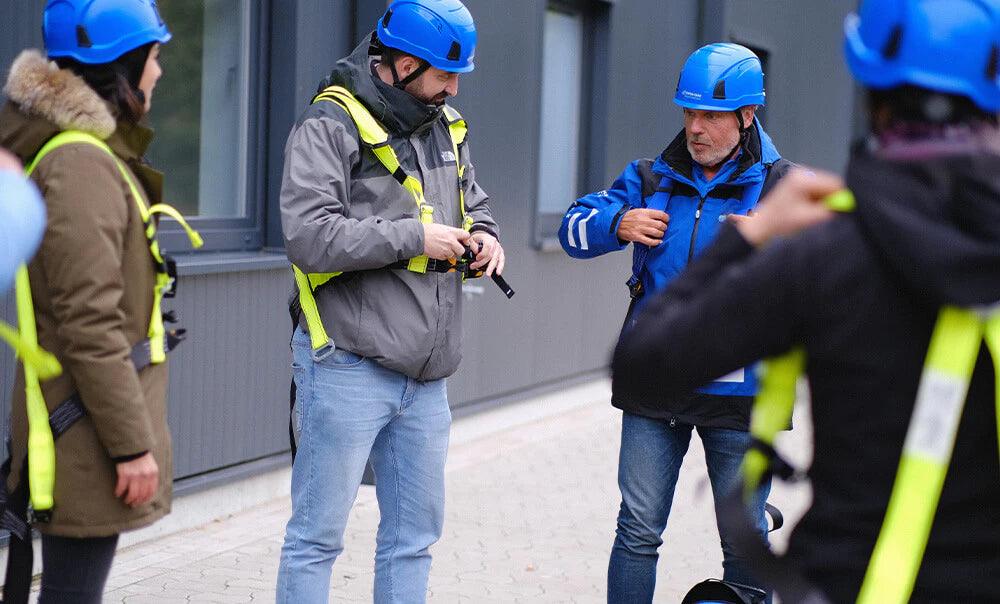
Machine-specific training is mandatory. This covers control panels, emergency lowering, load limits, outrigger logic, danger zones, and rescue functions. For private use, this training replaces the commercial training required by DGUV regulations, as no operational responsibility is transferred.
The renter is obligated to implement the instructions provided. The handover by the aerial work platform rental company may be refused if the operator's use would be clearly unsafe (e.g., lack of understanding of safety rules or severe fear of heights).
Insurance and liability
Machinery breakdown insurance
Machinery breakdown insurance is usually included in the rental agreement. It covers damage caused by operator error or external influences, but not in cases of intent or gross negligence. Typical exclusions:
- Tire damage caused by obvious obstacles
- Damage caused by overloading or faulty support
- Contamination caused by painting, construction or cleaning work
- Damage caused by lack of protection of the operational area
Deductible
In the event of damage, the renter bears a contractually agreed deductible, often between €1,500 and €2,500 per incident.
Motor vehicle liability insurance for truck-mounted stages
Truck-mounted aerial work platforms are covered by motor vehicle liability insurance when they are actively used in road traffic.
Personal liability insurance
Private liability insurance policies generally do not cover damage to rented machinery. However, certain damages to third parties or to someone else's property may be included.
Deposit and additional services
Private tenants are usually required to pay a security deposit. The amount is typically between €500 and €1,000, depending on the appliance and the insurance coverage.
Possible additional costs:
- transport
- personal protective equipment (PPE)
- Load distribution / shims
- Permits in public spaces
Suitable device types for private use
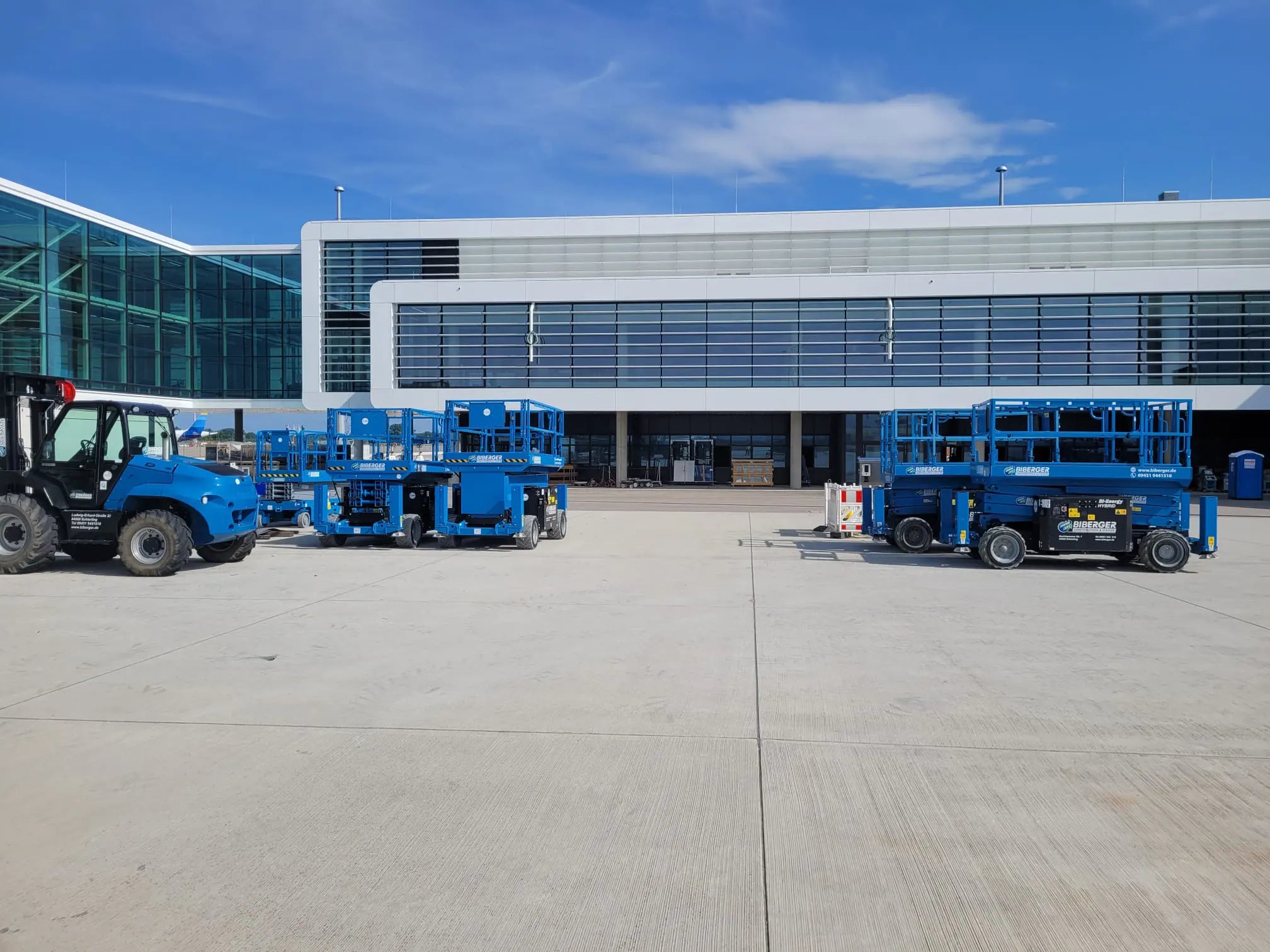
- Trailer-mounted aerial work platforms : compact, low weight, suitable for many types of properties
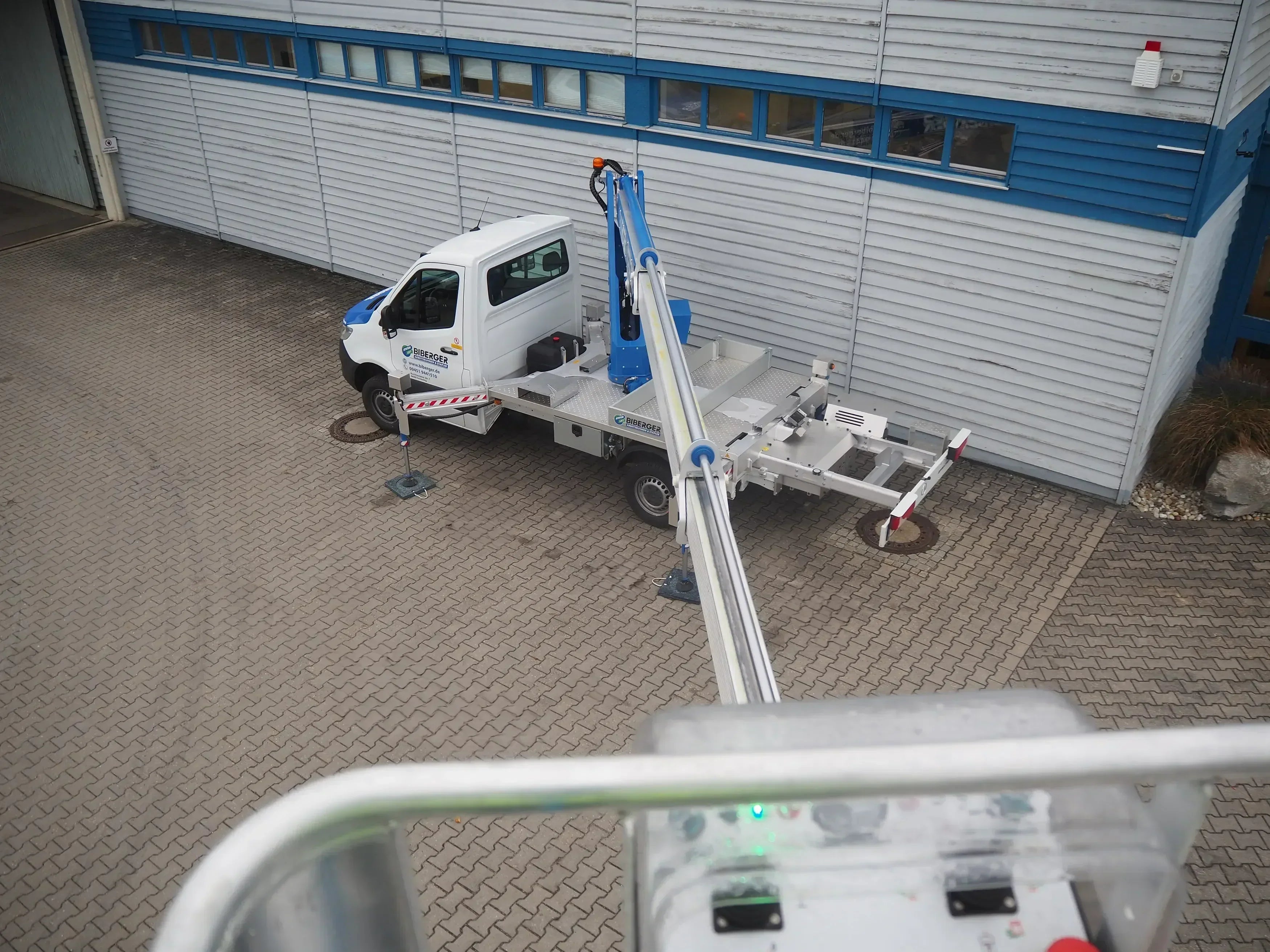
- Truck-mounted platforms up to 3.5 t (approx. 20–30 m): quick positioning, suitable for roof edges and facade areas
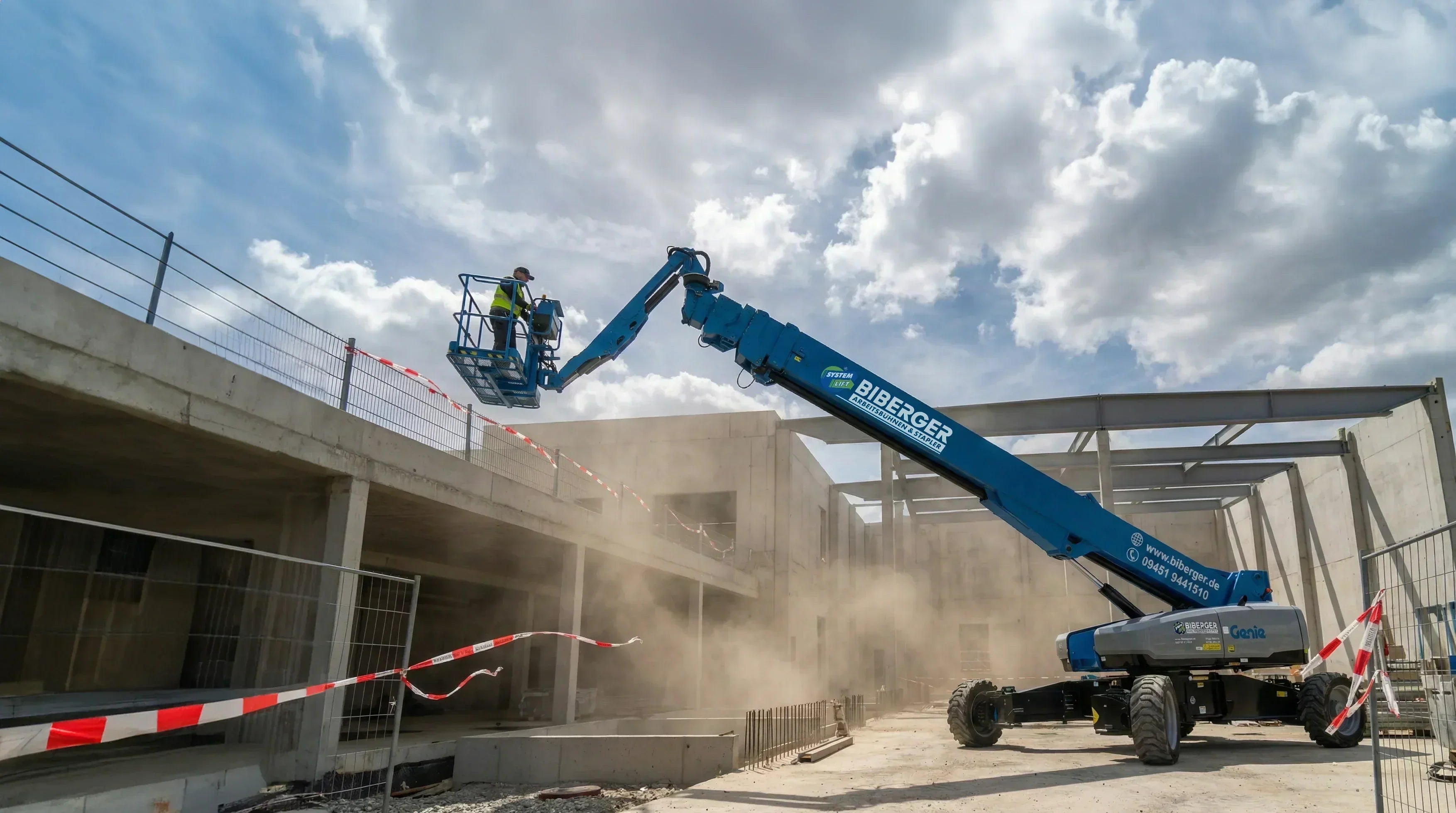
Heavy-duty all-terrain telescopic boom lifts and industrial work platforms are often unsuitable because they require increased surface loads, special access routes, or advanced operator qualifications.
Safety-related features
Stability and substrate
The most frequent cause of accidents in the private sector is inadequate shoring or a misjudgment of the ground's load-bearing capacity . A stable, sufficiently level surface is required; additional support plates are necessary on soft ground.
Personal protective equipment (PPE)
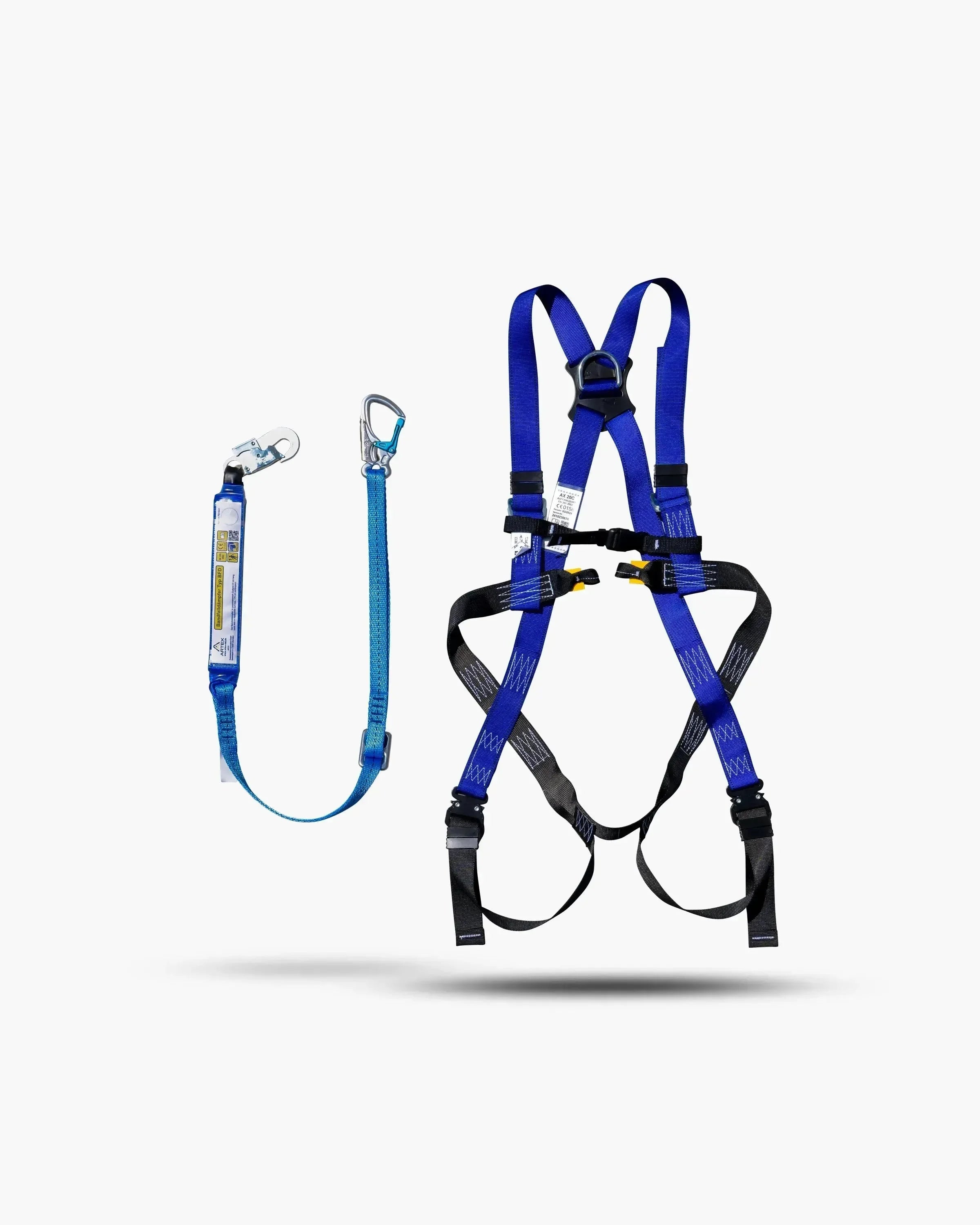
While there is no legal requirement for private use, a safety harness is essential when using telescopic and articulated platforms. Helmets and safety shoes are also commonly worn.
Installation in public space
For partial or full installation on sidewalks or streets, a municipal permit is required.
Behavior in public transport
Mobility on public roads is only permitted with a valid driver's license. Self-propelled scissor lifts or articulated platforms without registration may not be operated on public roads.
Difference between private and commercial use
For commercial use, the regulations of the German Social Accident Insurance (DGUV) apply (e.g., DGUV Rule 100-500). These rules do not apply to private users as long as no paid activity is carried out. As soon as any activity is performed for payment, it is legally considered commercial use, with mandatory training and operational responsibility.
Rental process
- Inquire with the landlord about working height, terrain, accessibility and time period - you can find suitable access equipment here.
- Offer includes insurance, transport and optional additional services.
- Confirmation and appointment scheduling
- Handover with instruction and documentation of existing damage
- Use within the agreed period
- Return, technical inspection, deposit settlement
Feel free to call us: +49 9451 9441510
Summary of key points
- Work platforms are primarily designed for professional use, but can be useful in clearly defined private projects.
- For private use, a briefing is sufficient; for commercial use, training is mandatory.
- Insurance is part of the rental agreement; certain damages are excluded.
- Stability depends on the substrate, supports, and available space.
- A driver's license is required if the device itself is being moved.
- A permit is required for installation in public spaces.
- An operator can be useful in demanding operating conditions.




Share:
Lifting loads – selecting and safely using lifting equipment
Aerial work platforms worldwide: An international comparison of markets, manufacturers & costs
Our editorial quality standards
The subject content on biberger.de are editorially created, reviewed, and continuously updated. The basis is our daily work with aerial platforms, telehandlers, and industrial trucks – in rental, sales, operational planning, and technical support.
Each article draws on real-world experience and is editorially reviewed for clarity, accuracy, and practical relevance according to expert criteria. Technical statements are regularly compared against current industry standards and best practices.
The aim of our publications is to make reliable specialist knowledge accessible and to offer guidance to users, decision-makers and industry partners. BIBERGER sees itself as an independent information platform for safe, economical and modern height access technology – well-founded, comprehensible and free from advertising influence.