



 What You Need to Know
The so-called 3D arm – also known as a 3D basket arm , pendulum basket arm , or hybrid jib – is a state-of-the-art feature for aerial work platforms. Its three-axis mobility allows for particularly precise work in hard-to-reach areas. This guide explains what distinguishes the 3D arm, which manufacturers offer it, what their model codes mean, and when a platform with 3D functionality is truly worthwhile. Ideal for anyone looking to rent 3D basket arms or purchase 3D aerial work platforms .
What is a 3D arm – and how does it work?
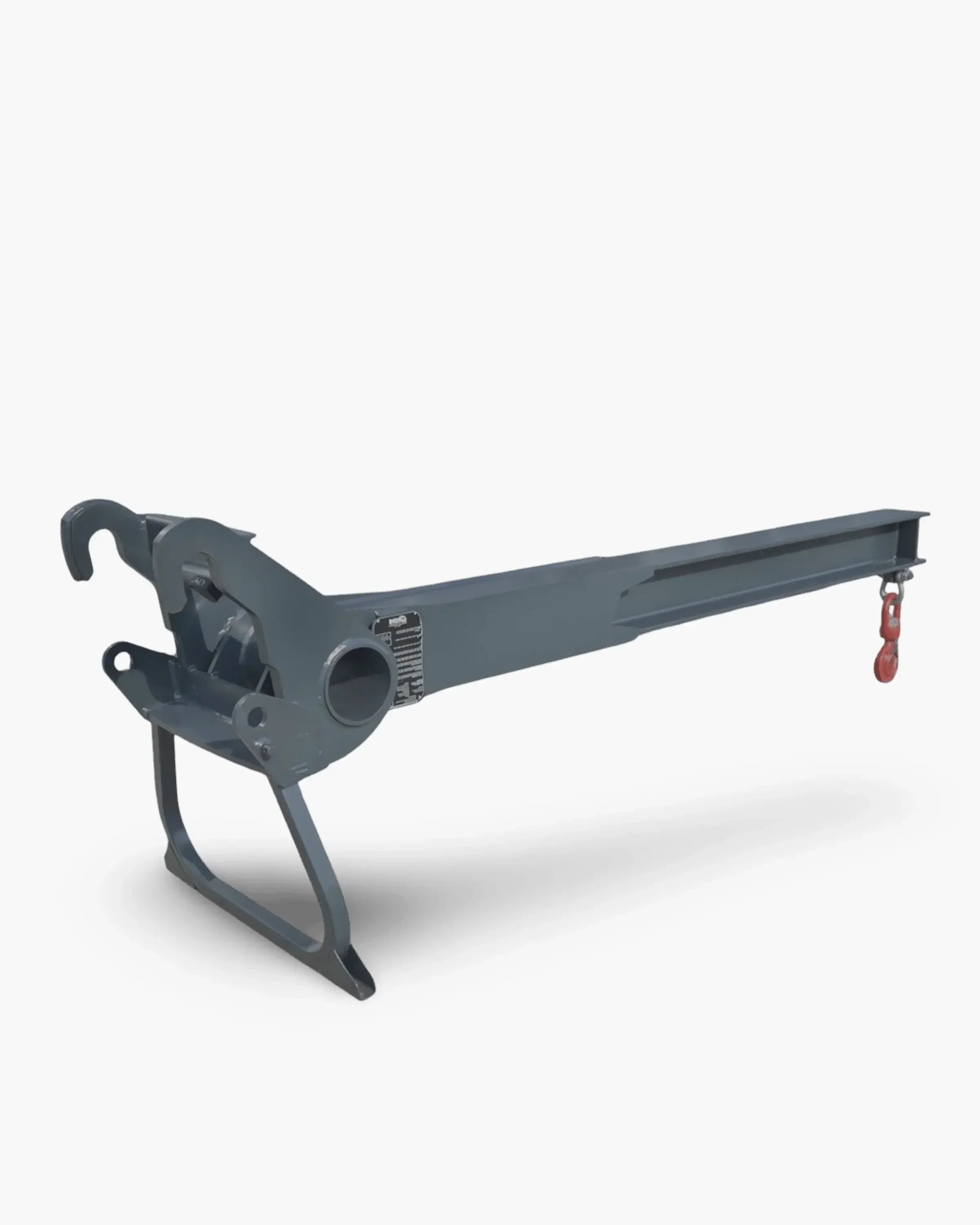
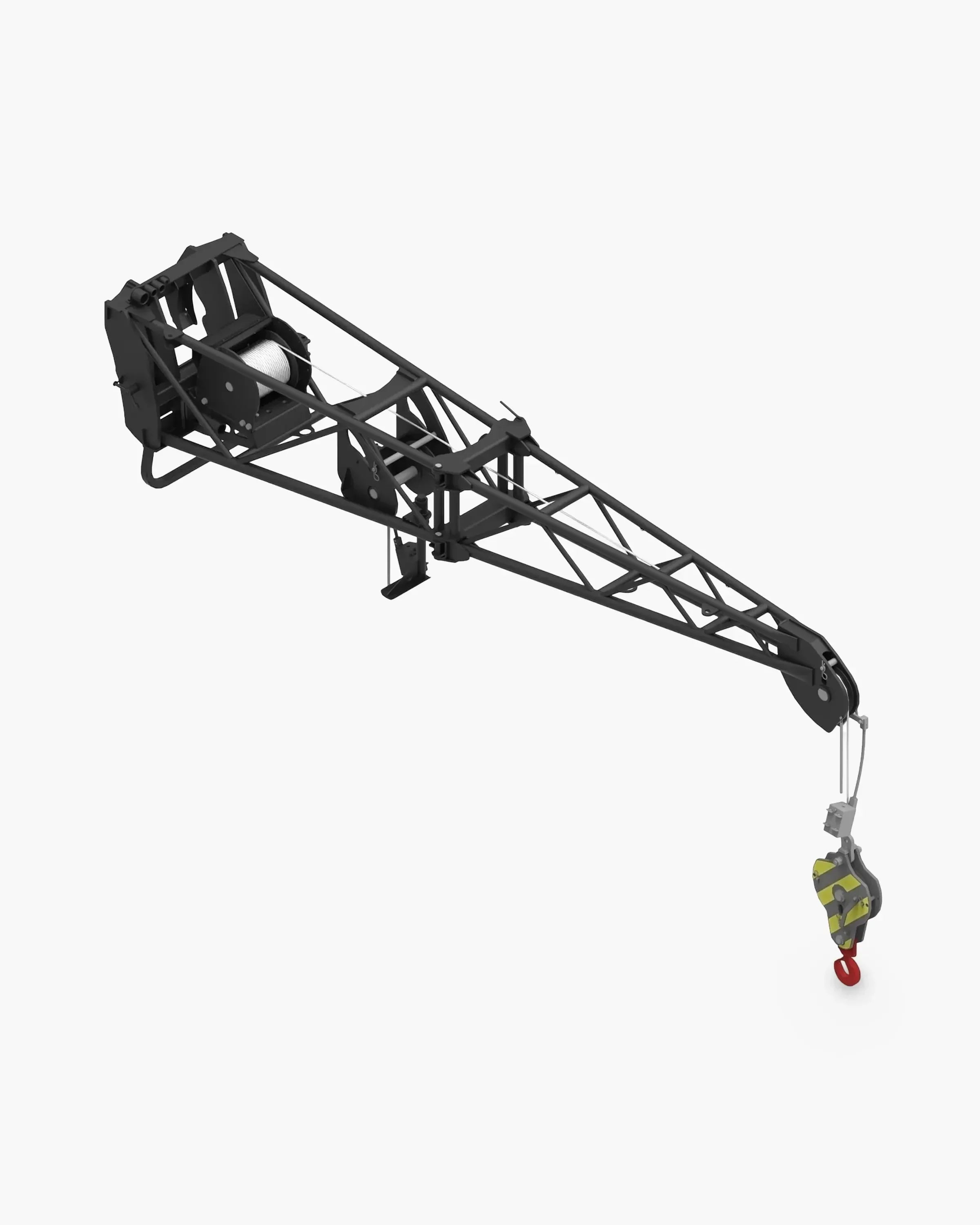
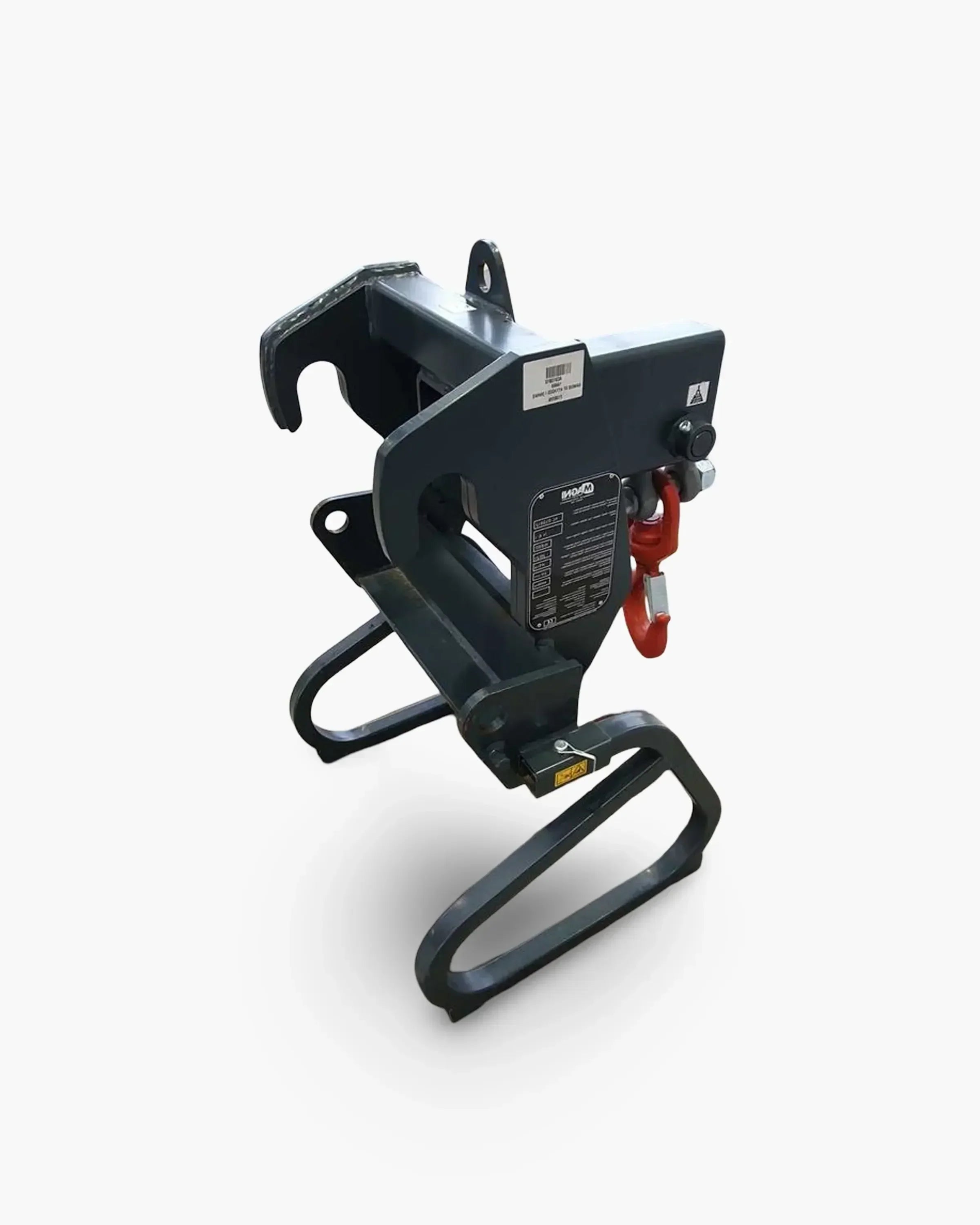
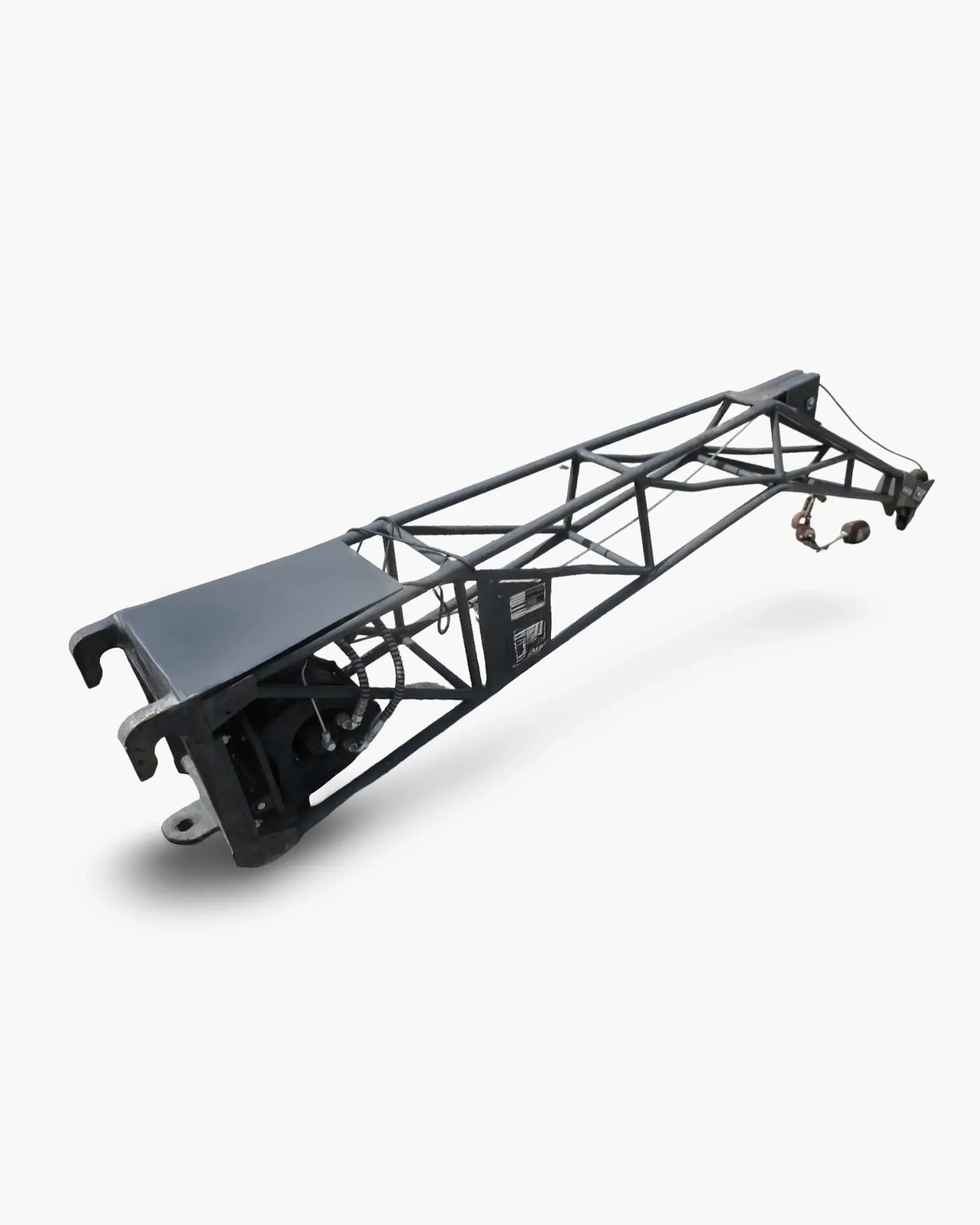
A 3D arm is an additional, movable basket arm located between the main boom and the work platform. Unlike simple basket arms, it moves:
- vertically by up to ±70°
- horizontally swiveling to the left and right (depending on the model ±70° to ±140°)
- rotating around its own axis
This allows you to reach positions that would otherwise only be accessible by laboriously repositioning the stage. Control is via sensitive proportional joysticks . Depending on the model, an additional rotating work platform with up to 180° rotation is included – for maximum maneuverability.

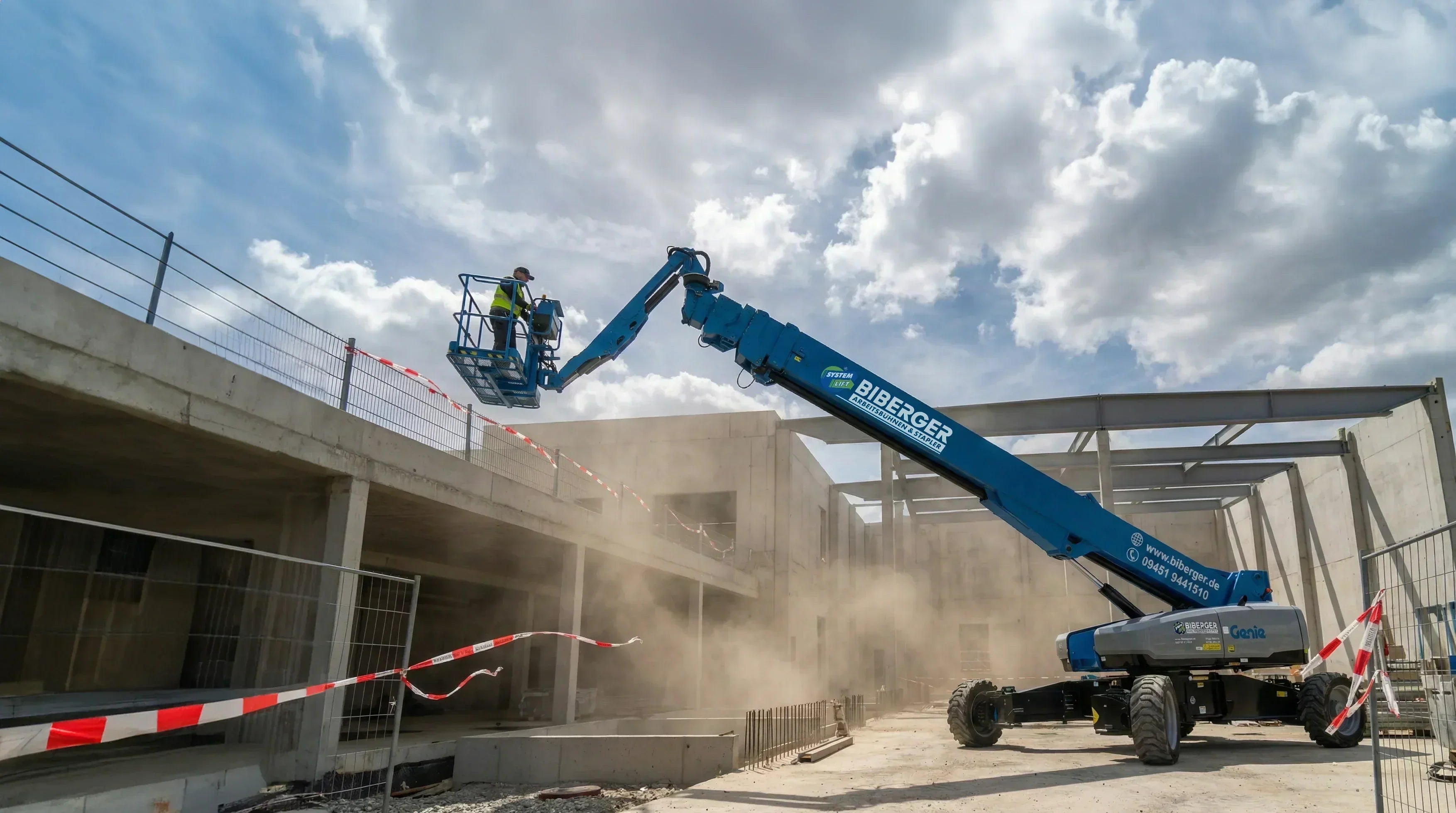
A 3D arm in use: working "around the corner" without moving the stage.
Technical notes: Maintenance, repair and safety
- Load capacity : depending on the model, 200–450 kg (electric models often slightly lower)
- Lubrication: every 200 operating hours or as specified by the manufacturer
- Hydraulic seals: check regularly and replace if necessary (cost approx. €500–1,000)
- Repair costs: Replacing a damaged 3D basket arm costs approximately €2,500–4,000 (depending on the model)
- Wind sensitivity: Operation is not permitted in winds above force 6 (over 45 km/h). Observe manufacturer's limits.
- Transport weight: higher due to the complex mechanics – important for logistics
- Storage: 3D arms should be stored protected from the weather.
All equipment must be used in accordance with DGUV Regulation 1 , DGUV Rule 100-500 and DGUV Principle 308-008 . The latter mandates training for equipment with special functions such as pendulum arms or rotating baskets.
Overview of manufacturer abbreviations and model names
| abbreviation | Meaning | Manufacturer | Example models | Notes |
|---|---|---|---|---|
| AJP | Articulating Jib Platform | JLG | 1350 AJP | Articulated platform with basket arm |
| AJPN | Articulating Jib Platform Narrow | JLG | E300 AJPN | Narrow version for tight spaces |
| SJP | Straight Jib Platform | JLG | 1350 SJP | Telescopic platform with jib |
| Z | Z-Boom (articulated boom) | genius | Z-45/25 JRT | Typical genius construct |
| RJ | Rotating Jib | genius | Z-30/20N RJ | Vertically rotating jib |
| JRT | Jib Rough Terrain | genius | Z-45/25 JRT | For off-road use |
| ABJ | Articulated Boom with Jib | Sinoboom | AB15J | Diesel-powered articulated platform with basket arm |
| ABEJ | Electric Jib | Sinoboom | AB16EJ | Electric articulated lift with jib |
| BUT | Electric Rotating Jib Narrow | Sinoboom | AB15ERJN | Narrow, electrically operated stage with rotating jib |
| RTJ | Rotating Telescopic Jib | Haulotte | HA20 RTJ PRO | Rotating basket arm + telescopic arm |
| AETJ-C 3D | Compact Electric Telescopic Jib + 3D | Manitou | 120 AETJ-C 3D | Compact stage with 3D pendulum arm |
| EAB | Electric Articulated Boom | Magni | EAB20AC | 3D basket arm available as an option |
Additional abbreviations in model names – what they mean
| code | Meaning | use | Example |
|---|---|---|---|
| N | Narrow (narrow design) | Width < 1.6 m | Z-30/20N |
| RJ | Rotating Jib | Vertically swiveling basket arm | Z-30/20N RJ |
| FE / BE | Bi-Energy | Hybrid drive (diesel/electric) | Z-45 FE |
| DC / IC | Diesel Compact / Internal Combustion | Diesel-powered compact models | Z-45/25 DC |
| Plus | Extended equipment | Premium version | AB16EJ Plus |
| 3D | 3D basket arm | Additional option available on many models | 120 AETJ-C 3D |
How to read model codes correctly
Example: JLG 1350 AJP
1350 = Working height in feet (~41 m). AJP = Articulated platform with basket arm.
Example: Genie Z-45/25 JRT
45 = Working height in feet, 25 = Reach in feet. JRT = Jib for rough terrain use.
Example: Sinoboom AB16EJ
AB = Articulated Boom, 16 = Working height in meters, E = electric, J = Jib.
Example: Manitou 150 AETJ-C 3D
150 = 15 m working height, AETJ = articulated electric telescopic jib, C = compact, 3D = pendulum basket arm with 3D function.
Typical applications for stages with 3D arm
- Maintenance in breweries and industrial plants
- Fire protection installations
- Installations under bridges
- Facade work with obstacles
- Electrical and pipeline construction
For example, when inspecting sprinkler systems in production halls, technicians can use a 3D basket arm to navigate behind machines and pipes without having to reposition the platform. The 3D function saves up to 40% of time and significantly increases workplace safety.
- complex obstacles (not with simple facades)
- Frequent repositioning – this is where the 3D arm offers real efficiency advantages.
- precise work in confined spaces
Popular 3D Arm Aerial Work Platforms: Models & Specs
| Model | Manufacturer | type | Special feature |
|---|---|---|---|
| JLG 1350 AJP | JLG | articulated platform | 41 m height, basket arm, diesel |
| Genie Z-30 /20N RJ | genius | articulated platform | Rotating jib, narrow |
| Sinoboom AB16EJ | Sinoboom | articulated platform | 16 m high, electric, emission-free |
| Manitou 150 AETJ-C 3D | Manitou | articulated platform | 15 m, compact, 3D basket arm |
| Haulotte HA20 RTJ PRO | Haulotte | articulated platform | 20 m, rotating basket arm, premium equipment |
Conclusion: For which applications is the 3D arm particularly worthwhile?
If you work in complex or confined spaces, a platform with a 3D arm is not only useful – but often essential. It reduces setup times, increases safety, and improves access to even the most difficult areas. The 3D arm truly shines in interior construction, maintenance of technical systems, and overhead work (e.g., under bridges).
At BIBERGER you'll find a wide selection of 3D-capable platforms – including expert advice, certified training, and fast availability. Rent the perfect 3D work platform now or get a free consultation .




Share:
Merlo error codes for telehandlers & platforms
Magni Diagnostic Guide: How to correctly interpret error messages
Our editorial quality standards
The subject content on biberger.de are editorially created, reviewed, and continuously updated. The basis is our daily work with aerial platforms, telehandlers, and industrial trucks – in rental, sales, operational planning, and technical support.
Each article draws on real-world experience and is editorially reviewed for clarity, accuracy, and practical relevance according to expert criteria. Technical statements are regularly compared against current industry standards and best practices.
The aim of our publications is to make reliable specialist knowledge accessible and to offer guidance to users, decision-makers and industry partners. BIBERGER sees itself as an independent information platform for safe, economical and modern height access technology – well-founded, comprehensible and free from advertising influence.