 What You Need to Know
Magni telescopic handlers feature a modern CAN bus diagnostic system capable of detecting over 170 possible error messages. Most of these are not actual defects, but rather safety functions that protect the machine from damage or overload.Typical causes include damp connectors, faulty pressure sensors, joystick calibration problems, or interrupted CAN signals.Those who understand the meaning of the SPN/FMI codes can better assess risks and avoid downtime.
Only trained technicians are allowed to clear errors or calibrate systems.The operator is obligated to document warning messages and immediately shut down the equipment in case of critical errors. The integrated MyMagni system automatically saves all errors and informs the rental company in real time. This ensures safe operation, protects the machine, and complies with DGUV regulations.
If your Magni telehandler (RTH / HTH series) suddenly displays a warning, it's rarely a total breakdown. Usually, a safety or protective function is being activated. This guide explains the most important error codes, their meaning, and how to react correctly.
Occupational safety notice: Error codes are warning signals , not a clearance to continue working. Even without a visible warning, a visual and functional check according to DGUV regulations must be carried out before every use.
Fundamentals and system structure
Magni telescopic handlers utilize a CAN bus diagnostic system according to J1939-73 . It detects over 170 fault codes. The system is based on the Diagnostic Manual UM Diagnostica RTH REV.01 with defined SPN/FMI combinations and criticality levels.
Control units and diagnostic path
-
CCU (Central Control Unit): central logic
-
Engine ECU: Mercedes or Deutz control unit
-
DM1-CAN-Gateway: collects all messages
-
Attachment recognition: Potentiometer system
-
Wireless sensors: remote control and position
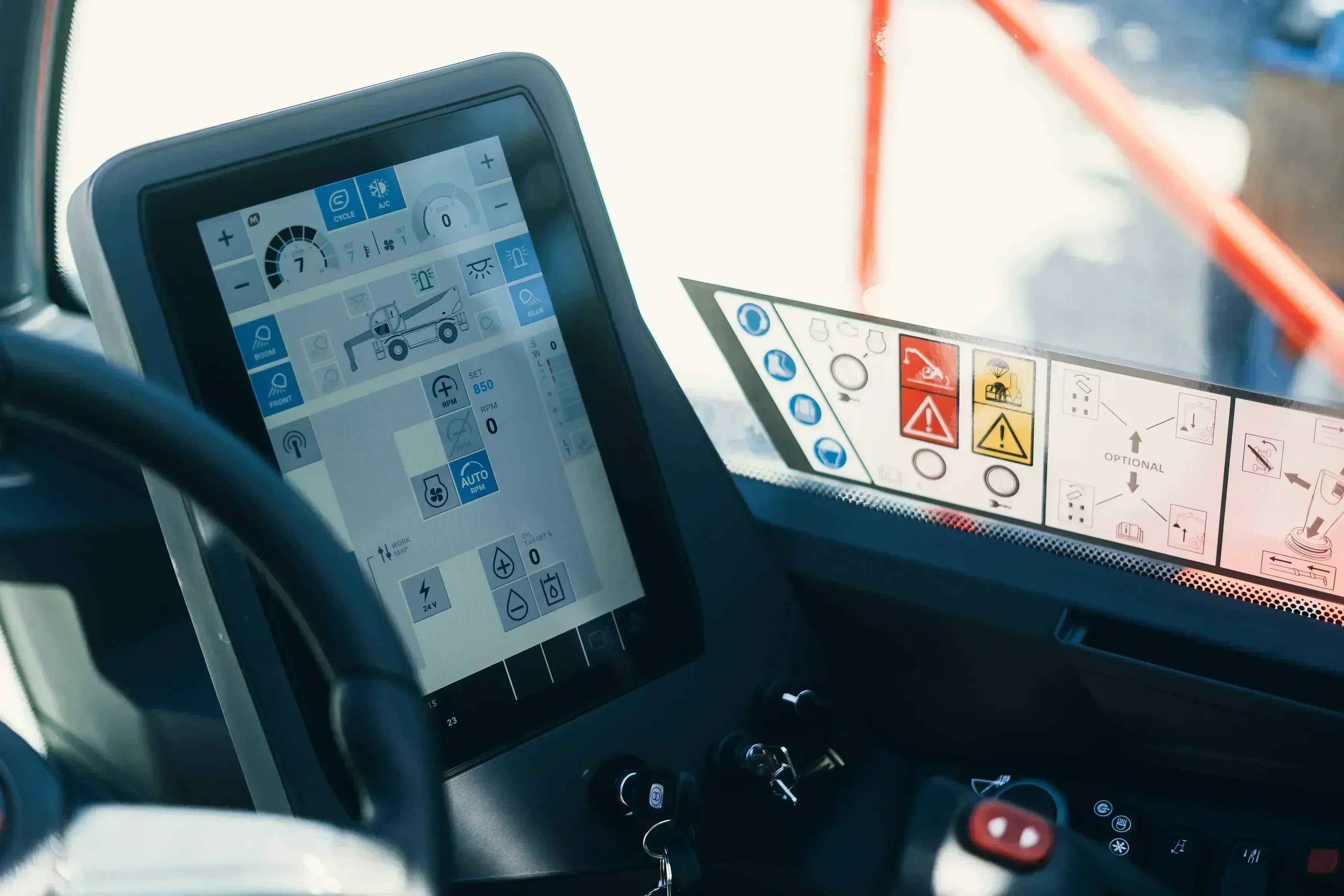
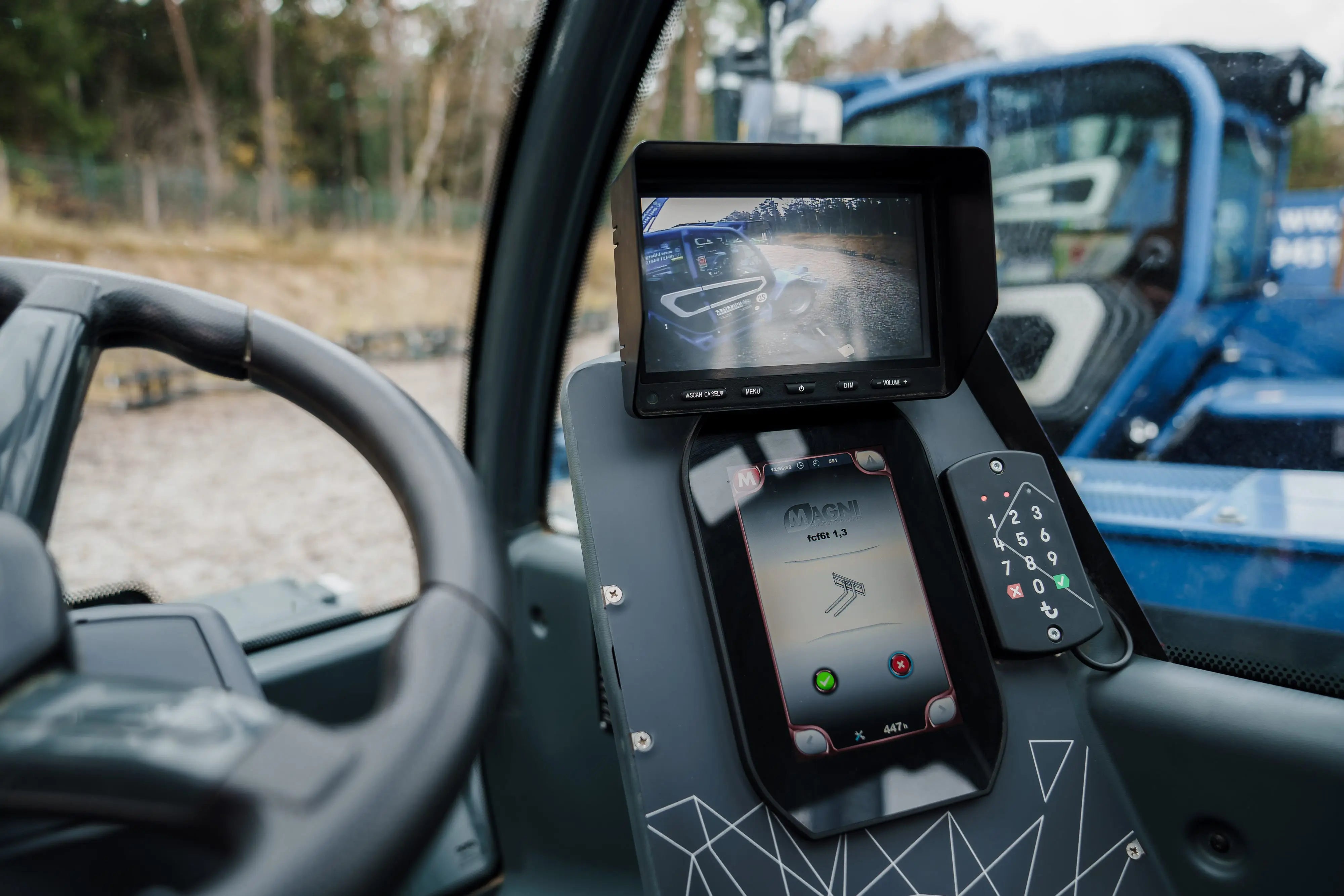
Diagnostics via touch display
- Automatic error logging
- Live data (pressure, sensor values)
- System calibration
- Emergency release tests
Practical tip: The error codes appear as SPN / FMI . This combination indicates what is defective (SPN) and how it is defective (FMI).
SPN vs. FMI – Explained briefly
Example: SPN 1015 + FMI 1 = "Accelerator pedal voltage too low". SPN 1015 + FMI 3 = "Voltage too high". This allows the technician to pinpoint the fault to the second.
Who is authorized to read and clear error codes?
Operator duties
- Read and document the code
- Shut down device in case of critical warnings
- Send photo or video to landlord
- Make an entry in the test log
Authorized technicians
- Magni-certified service technicians
- Experts according to DGUV 308-009 / TRBS 1203
- Authorized rental companies with manufacturer training
Note: Reading errors is not the same as fixing them. Interventions in hydraulics or software should only be carried out by qualified personnel.
Error codes by system area
Hydraulic pressure sensor faults (SPN 5241–5299)
| SPN |
Error code |
Meaning |
Caused |
| 5261–5262 |
MCyl_PHA_TMin/TMax |
Rod side outside area |
Sensor defective or implausible |
| 5268 |
MCyl_PHD_MaxDiff |
Signal A/B differs |
Calibration or leakage |
| 5241–5242 |
MCyl_PLA_TMin/TMax |
Piston side out of range |
Sensor failed |
Cantilever sensors (SPN 5271–5274)
| SPN |
Error code |
Meaning |
| 5271–5272 |
R1A/B_TOut |
Position signal interrupted |
| 5273 |
R1D_MaxDiff |
Redundant signals differ |
| 5274 |
R1D_CrossPoint |
Potentiometer blocked |
Tilt sensors (SPN 5280–5289)
| SPN |
Error code |
Criticality |
Consequence |
| 5280–5281 |
AL_TOut_AmuCA/B |
High |
Level adjustment disabled |
| 5284–5289 |
CTilt_X/Y |
High |
Inclination not measurable |
Overload prevention (SPN 5320–5322)
| code |
Alert level |
reaction |
| 5320 |
100% |
Warning, movement is limited |
| 5321 |
110% |
Only relief is possible |
| 5322 |
120% |
Complete shutdown until relief |
CAN bus / communication (SPN 5400–5411)
| SPN |
Error code |
Meaning |
impact |
| 5400–5402 |
AL_TOut_MtoL |
CAN message missing |
Control interrupted → standstill |
| 5410 |
SlewAux_EncoderFault1 |
Encoder not recognized |
Rotary drive fails |
Engine and drive fault (J1939 SPN/FMI)
| SPN |
FMI |
Error code |
Meaning |
consequence |
| 1015 |
1 |
Accelerator PWM |
Lacking tension |
Machine does not start |
| 1072 |
3 |
Decompression Brake |
Open circuit |
Braking effect reduced |
| 1127 |
1 |
Turbo Underboost |
Boost pressure too low |
Reduced performance |
| 1184 |
0–3 |
Turbine Temp High |
Overheating |
Thermolimit |
| 1233 |
9 |
AdBlue Tank Level Low |
Tank empty |
SCR shutdown imminent |
| 1234 |
9 |
SCR Catalyst Efficiency |
Catalyst ineffective |
Exhaust gas fault, power reduction |
| 5356 |
5 |
DPF Regeneration |
Regeneration required |
Power limited |
Most common mistakes in practice
| Rank |
Mistake |
frequency |
Stagnation? |
Repair time |
| 1 |
Joystick calibration |
35% |
No |
15–30 min. |
| 2 |
Pressure sensor differential |
25% |
Yes |
45–120 min. |
| 3 |
CAN communication |
15% |
Yes |
30–90 min. |
| 4 |
Tilt sensor timeout |
12% |
Partially |
60 min. |
| 5 |
Cantilever potentiometer |
10% |
Yes |
90–240 min. |
Seasonal sources of error and maintenance instructions
Magni telescopic handlers can be affected by temperature, humidity, and extended periods of inactivity. This overview shows which types of faults occur more frequently depending on the season – and how to avoid them.
| season |
Typical sources of error |
Recommended measures |
| winter |
Battery failures, frozen sensors, viscous hydraulic oil, AdBlue crystallization |
Preheat the machine, use heated storage, calibrate sensors, empty or temper the AdBlue tank |
| spring |
Moisture in plugs, corrosion on contacts |
Check plug connections, use contact cleaner, test electrical systems |
| Summer |
Overheating due to turbo/DPF, failure of fans or temperature sensors |
Clean the cooling system, check the oil level, take regular breaks in high ambient temperatures. |
| Autumn |
Condensation in control housings, false alarms due to temperature fluctuations |
Store in a dry place, check seals, monitor the MyMagni error log. |
Quick check for error message
- Note or photograph the error code (SPN/FMI).
- Check criticality (Red = stop immediately)
- Move the machine into a safe position
- Switch off the engine and inform the rental company.
- Do not attempt any repairs yourself.
Conclusion
Magni error codes are not a cause for panic, but rather precise warnings. Interpreting them correctly prevents downtime and damage. This guide provides operators and rental companies with reliable guidance for daily use.
Book Magni training now
About the author
Martin Biberger
Managing Director
Martin is the founder and managing director of BIBERGER Arbeitsbühnen & Forklifts.
He is responsible for thetechnical areaTogether with his team, he is responsible for thetechnical purchasingthe machines thatFurther development of the machine inventoryand the smooth operation of over 1,500 BIBERGER rental devices.
From many years of experience he knows theStrengths and weaknesses of all device classes, the possibleAreas of applicationand thetechnical possibilities– always with a view to theDevelopment of the entire industryand future innovations.



 What You Need to Know




Share:
3D arm on aerial work platforms: Technology, advantages and model codes at a glance
CAN bus and J1939 diagnostics in construction machinery
Our editorial quality standards
The subject content on biberger.de are editorially created, reviewed, and continuously updated. The basis is our daily work with aerial platforms, telehandlers, and industrial trucks – in rental, sales, operational planning, and technical support.
Each article draws on real-world experience and is editorially reviewed for clarity, accuracy, and practical relevance according to expert criteria. Technical statements are regularly compared against current industry standards and best practices.
The aim of our publications is to make reliable specialist knowledge accessible and to offer guidance to users, decision-makers and industry partners. BIBERGER sees itself as an independent information platform for safe, economical and modern height access technology – well-founded, comprehensible and free from advertising influence.