


 What You Need to Know
With some types of platforms, the difference is immediately apparent: a scissor lift moves vertically upwards, while a crawler platform moves safely across the terrain – both are immediately understandable.
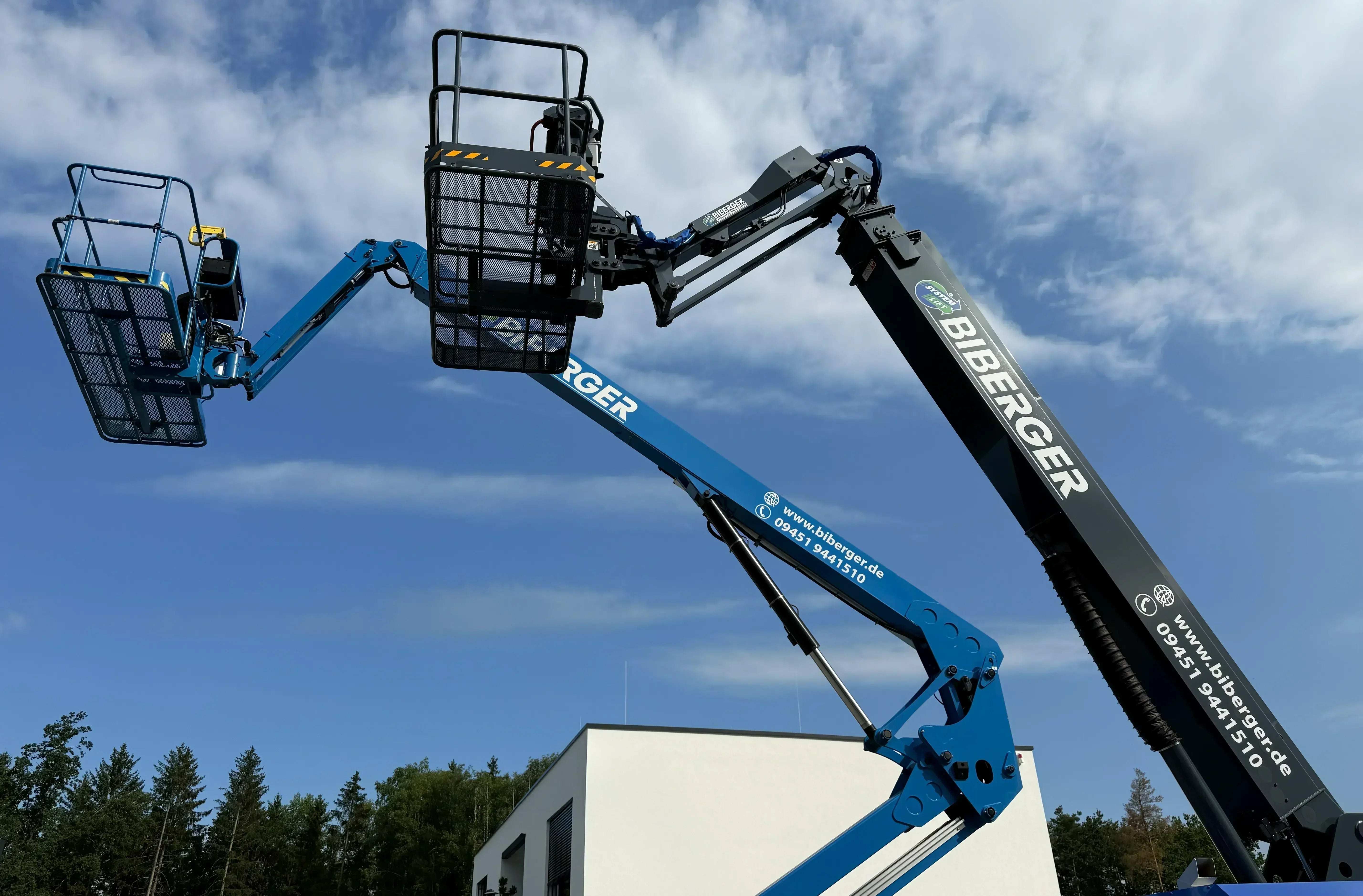
But what about telescopic boom lifts and articulated boom lifts ? Both can take you to great heights, both appear similarly constructed – and yet small differences determine efficiency, safety, and time savings on the construction site.
In this article, you will learn which stage is the right choice in which situation.
Basic principle: reach vs. flexibility
The main difference between the two designs lies in the construction of the boom – and thus in the principle of movement:
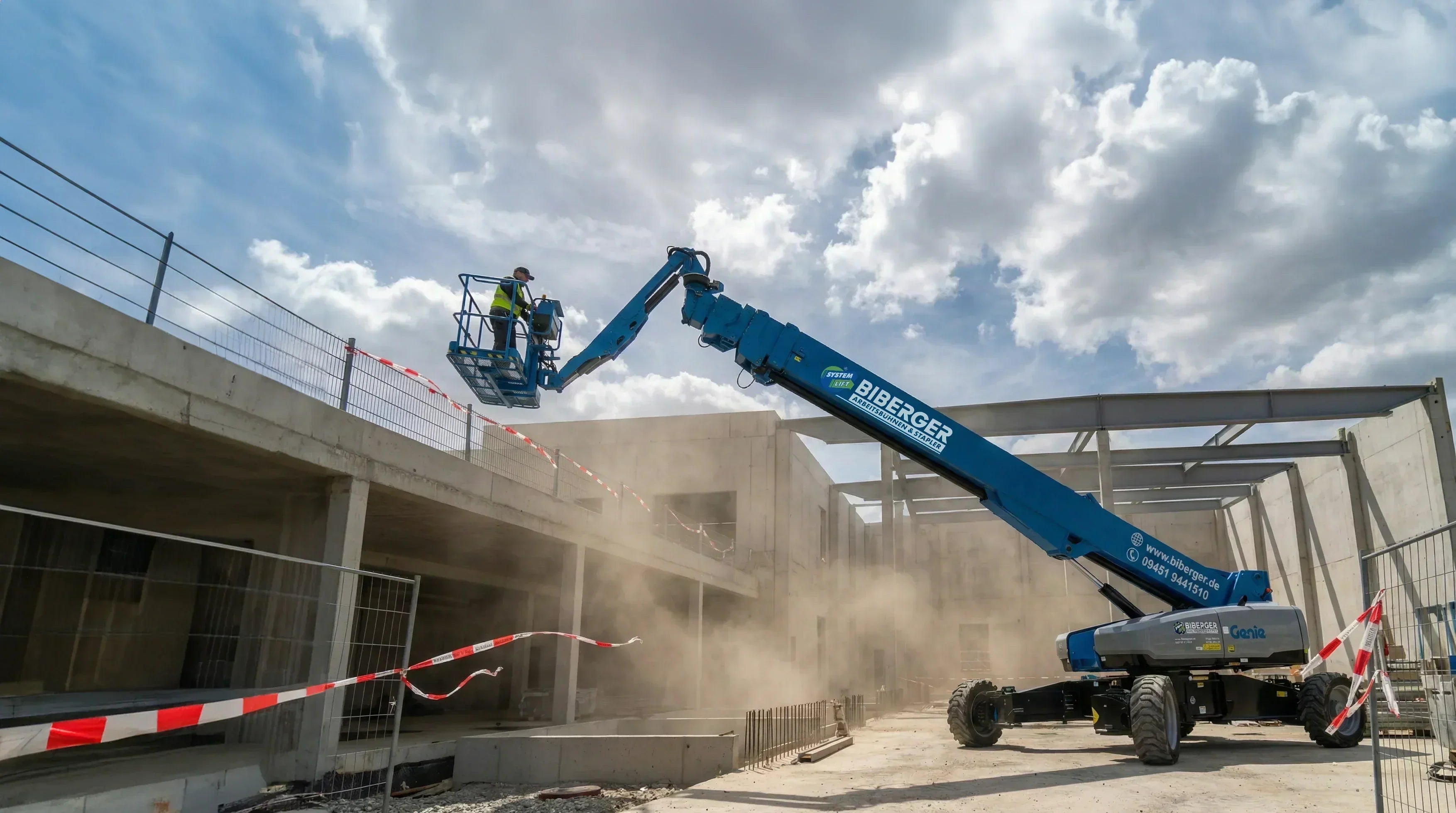
- Telescopic boom lifts feature a straight-extendable boom . They offer a long reach in a straight line and are ideal when you have unobstructed access.
- Articulated platforms have several articulation points in the boom that can be used to bridge obstacles – perfect for narrow or obstructed areas.
Telescopic work platforms – reach and stability
Telescopic boom lifts are the first choice when clear access is available and work must be carried out at a distance. Their linear boom ensures high precision and stability – especially in windy conditions and at maximum height.
Typical areas of application
- Hall and steel construction with open space
- Facade and roof work
- Outdoor industrial and maintenance applications
Technical advantages
- High range in direct line
- Fast movement thanks to linear boom
- Stable position and less fluctuation
- Cheaper rental prices for the same working height
Articulated platforms – mobility and precision
When the direct route to the work area is blocked, articulated platforms come into their own. They can reach over obstacles, swing out sideways, and work in tight spaces – even indoors.
Typical areas of application
- Courtyards and setbacks
- Installation via machines or roof overhangs
- Maintenance in confined or sensitive environments
Technical advantages
- Lateral overlap possible
- High maneuverability in tight spaces
- Quiet and emission-free operation (depending on model)
Direct comparison: AICHI SP 14 vs. GENIE Z-40/23 N RJ
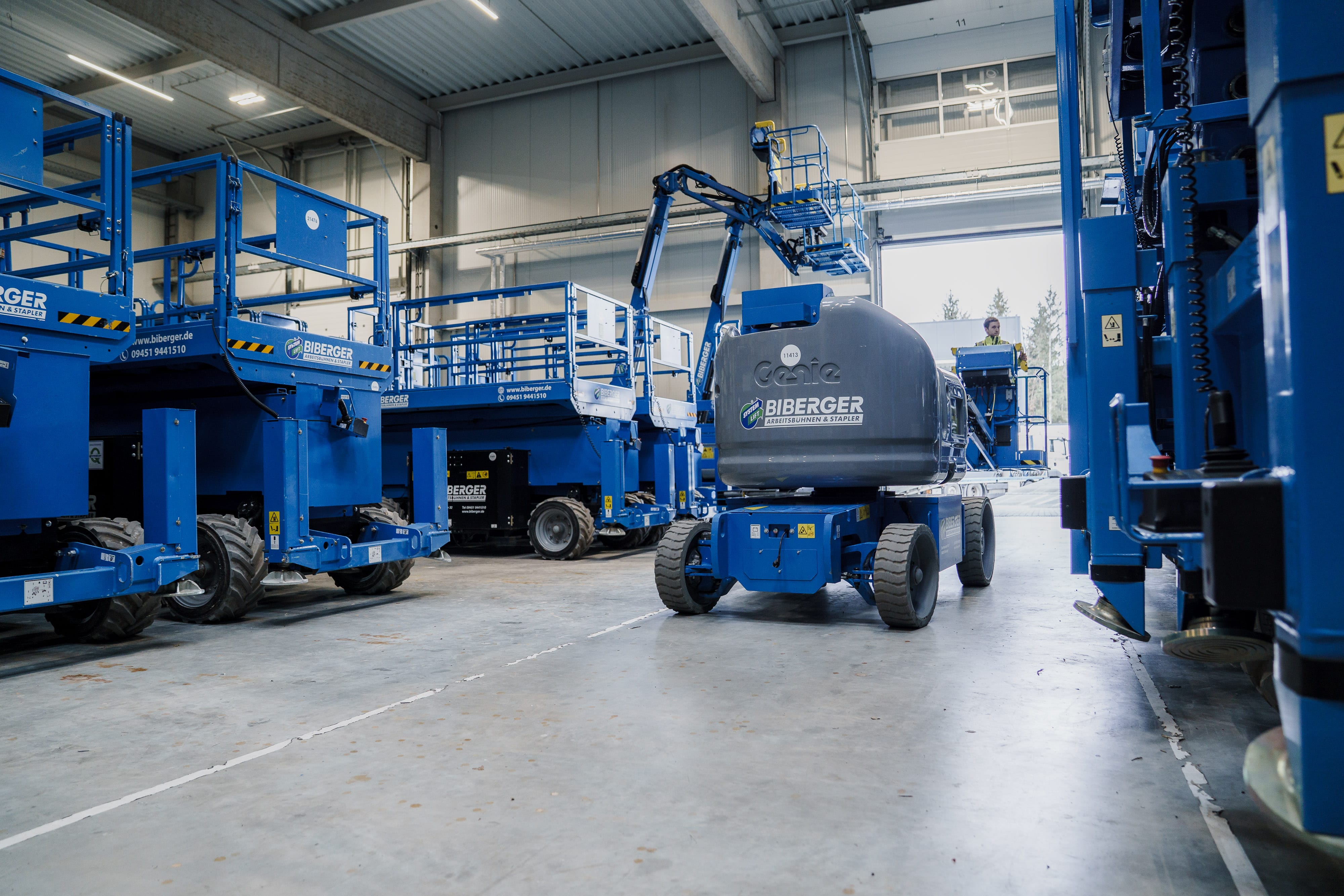
To illustrate the difference in a practical way, we compare two stages from the BIBERGER rental fleet that are often chosen for similar height ranges.
| Characteristic | AICHI SP 14 (telescope) | GENIE Z-40/23 N RJ (joint) | Better suited for |
|---|---|---|---|
| Working height | 15.6–16 m | 14.3 m | AICHI (+1.3 m) |
| Lateral reach | 12.7 m (straight) | 6.9 m (over joint) | AICHI (wide facades) |
| Overarching height | – | 6.5 m | GENIE (over canopies) |
| Basket load | 250 kg | 227 kg | AICHI (more tools) |
| Dead weight | 8,200–8,500 kg | 6,940 kg | GENIE (light transport) |
| climbing ability | 45% | 30% | AICHI (site) |
| turning circle | ≈ 5.0 m | ≈ 3.9 m | GENIE (narrow areas) |
| drive | Diesel 4×4 with swing axle | Hybrid / Battery | Depending on the location |
| Rental price (day) | 60–80 € | 80–100 € | AICHI (cheaper) |
Practice evaluation
- AICHI SP 14 – robust, off-road capable, long range → ideal for outdoor areas.
- GENIE Z-40 RJ – compact, quiet, precise → ideal for use in halls or confined spaces.
Practical examples
Example 1: Gutter replacement on industrial hall
Clear access, straight facade – the AICHI SP 14 is perfect for this. Its 12.7 m reach allows work along the entire front of the hall without relocating the platform.
Example 2: Assembly in a production hall
There's barely any space between machines and pipelines. Thanks to its articulated boom, the GENIE Z-40 RJ reaches the work area over obstacles and operates emission-free.
Avoid common wrong decisions
Many users are too quick to choose "the bigger stage." However, more joints or height don't automatically mean greater efficiency—instead, they often result in higher rental prices and longer setup times. The environment is crucial.
- Articulated platform without obstacles? → Lost time and additional costs.
- Telescopic platform in a narrow yard? → No maneuvering space = standstill.
Decision-making aid in brief
Telescopic platform
- Free access and plenty of space in front of the building
- Greater range necessary
- Rugged terrain or inclines
- Longer project duration → cheaper
Articulated platform
- Obstacles must be overcome
- Indoor spaces or narrow courtyards as a location
- Quiet, emission-free operation required
- Precise positioning over roof overhangs
Conclusion
Both types of platforms have their merits: Telescopic platforms excel with their reach, speed, and stability—ideal for large construction sites. Articulated platforms excel with their mobility and safety in tight spaces. It's not the type that matters, but the environment in which you work.
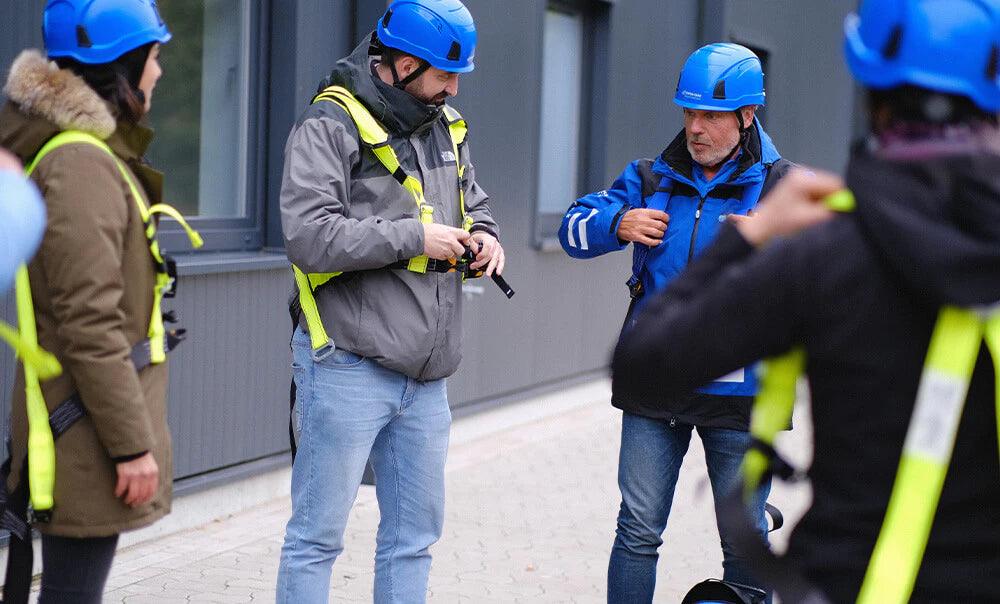
BIBERGER helps you select the right stage – from open-air sites to industrial halls, including transport, instruction, and optional SYSTEM CARD training .




Share:
Work platforms in logistics – working safely and efficiently in confined spaces
More efficiency on the construction site: When a telehandler is worthwhile
Our editorial quality standards
The subject content on biberger.de are editorially created, reviewed, and continuously updated. The basis is our daily work with aerial platforms, telehandlers, and industrial trucks – in rental, sales, operational planning, and technical support.
Each article draws on real-world experience and is editorially reviewed for clarity, accuracy, and practical relevance according to expert criteria. Technical statements are regularly compared against current industry standards and best practices.
The aim of our publications is to make reliable specialist knowledge accessible and to offer guidance to users, decision-makers and industry partners. BIBERGER sees itself as an independent information platform for safe, economical and modern height access technology – well-founded, comprehensible and free from advertising influence.