


 What You Need to Know
Telehandlers combine the functions of a crane, forklift , and work platform in a single device. When used correctly, they significantly reduce setup times, accelerate material flows, and lower rental and operating costs – especially on tight construction sites and short-term installations. This guide guides B2B decision-makers through all relevant aspects: efficiency, costs, technology, safety, logistics, application limits, and procurement.
Business Case: When Telehandlers Save Time and Money
The three biggest levers
- Setup time → working time: Telehandlers are ready for use almost immediately; crane setup and dismantling often takes several hours. The result: faster project start, less downtime.
- Pick Carry 360° (Roto): Lift, move, and set down from one position; Roto models reach multiple work areas without repositioning.
- Rental TCO: Daily rental rates for telehandlers are generally significantly lower than comparable crane services; in addition, one device replaces several machines.
Where the crane is still superior
Extreme heights (40–50 m) and very heavy loads (16 t standard telehandler) remain the domain of cranes. For serial lifting at high heights, special boom angles, or complex lifting plans, the crane is the safe and predictable choice.
Efficiency Time savings in use
The most noticeable effect is the reduction of non-productive time : arrival, assembly/disassembly, transfer, and maneuvering. Telehandlers practically start "out of the truck."
Typical time savings from practice
| Area of application | Time gained | Reason |
|---|---|---|
| Project start / setup | several hours | No crane assembly (4–6 hours are eliminated for quick-erection/mobile cranes) |
| Material transport (construction site) | ~30% | Pick carry instead of transferring/restacking |
| Loading/unloading | up to ~50% | Direct drop-off over obstacles, fewer trips |
| Maneuvering (Roto) | up to ~100% | 360° reaches multiple work areas from the stand |
Note: Time savings vary per project; they primarily result from the elimination of crane setup times and reduced relocation processes.
Cost comparison: crane vs. telehandler
Daily rents (guideline)
| Machine type | Daily rental (8 hours) | remark |
|---|---|---|
| Truck crane / mobile crane | ~220 € – 3,000 € | plus arrival/departure, ballast transport if necessary, usually including driver |
| Mini crane (3–5 t) | ~450 € – 900 € | Compact crane, often used for indoor assembly |
| Rotating telehandler (Roto) | ~139 € – 1,452 € | Price varies greatly depending on height/load capacity/region |
Price range from current rental portal guides (D 2024/25).
Why TCO often speaks in favor of telehandlers
- Elimination of setup time costs (no paid downtime)
- All-in-use : one device replaces forklift + crane + possibly work platform
- Fewer personnel changes (one operator, one machine)
Example break-even (simplified scenario)
Assembly package 3 days, 8 hours each: Crane €1,200/day + 2 hours setup time/day vs. Roto €950/day without setup time. Even with a similar daily rate, setup time and additional trips tip the scale in favor of the telehandler. (Guidelines based on the above framework prices.)
Manufacturer comparison of telehandlers
| Manufacturer | segment | Global market share (%) | Focus / Special feature |
|---|---|---|---|
| Merlo | Telehandler | 1.56 | Niche guide for Roto models |
| Manitou | Telehandler | 5.9 | Broad-based telehandler portfolio |
| JCB | Telehandler | Top 5 telehandlers | High level of vertical integration, global |
| JLG Industries | Telehandler | Top 5 telehandlers | Hybrid models, large service network |
| Caterpillar | Telehandler | Top 5 telehandlers | Premium segment, global sales |
| Liebherr | Telehandler | Top 5 telehandlers | High lifting height range, solid construction |
| Bobcat | Mini telehandler | Top 5 telehandlers | Focus on compact devices |
| Magni | Telehandler | 1.1 – 1.3* | Italian specialist for 360° Roto models; OEM partnerships |
Technology: Load capacity, lifting height, reach
Performance data of modern telehandlers
Typical ranges: load capacity 3–16 t , lifting height 6–24 m (Roto also higher), boom reaches dependent on the project. Manufacturers such as Merlo and Manitou exhibit Roto models with a lifting height of 20 m, with some up to approximately 35 m.
| criterion | Telehandler (rigid) | Telehandler (rotating) | mobile crane |
|---|---|---|---|
| Load capacity (typical) | high with short display | load-dependent, reduced for large outreach | wide range up to 100 t+ |
| Max. lifting height | ~6–18 m | ~20–35 m (depending on model) | ~20–50 m (depending on class) |
| rotation | — | 360° (endless or 600°) | Rotatable uppercarriage |
| Assembly/disassembly | 30 minutes | 30 minutes | 4–6 hours |
| Footprint / support | small | small to medium | large, ballast/support surfaces |
Manufacturer/model examples: Merlo Roto 20 m, Manitou MRT 2660 (~26 m/6 t).
Rotor vs. rigid: When to use which concept?
| criterion | Rigid telehandler | Roto telehandler | Practical tip |
|---|---|---|---|
| Mobility/Implementation | more frequent relocation necessary | achieves more from the stand | Roto saves maneuvering time in tight spaces |
| Heavy load near machine | very stable | load dependent on projection | Check load diagram |
| Price/Rent | cheaper | higher daily rate | TCO/setup time counter-test |
| Range of applications | Transport, bulk goods, pallets | + Work basket, + Winch, + Crane function | Roto frequently replaces additional technology |
Condensed landlord information based on current specialist articles.
Attachments Multimode use
Typical attachments
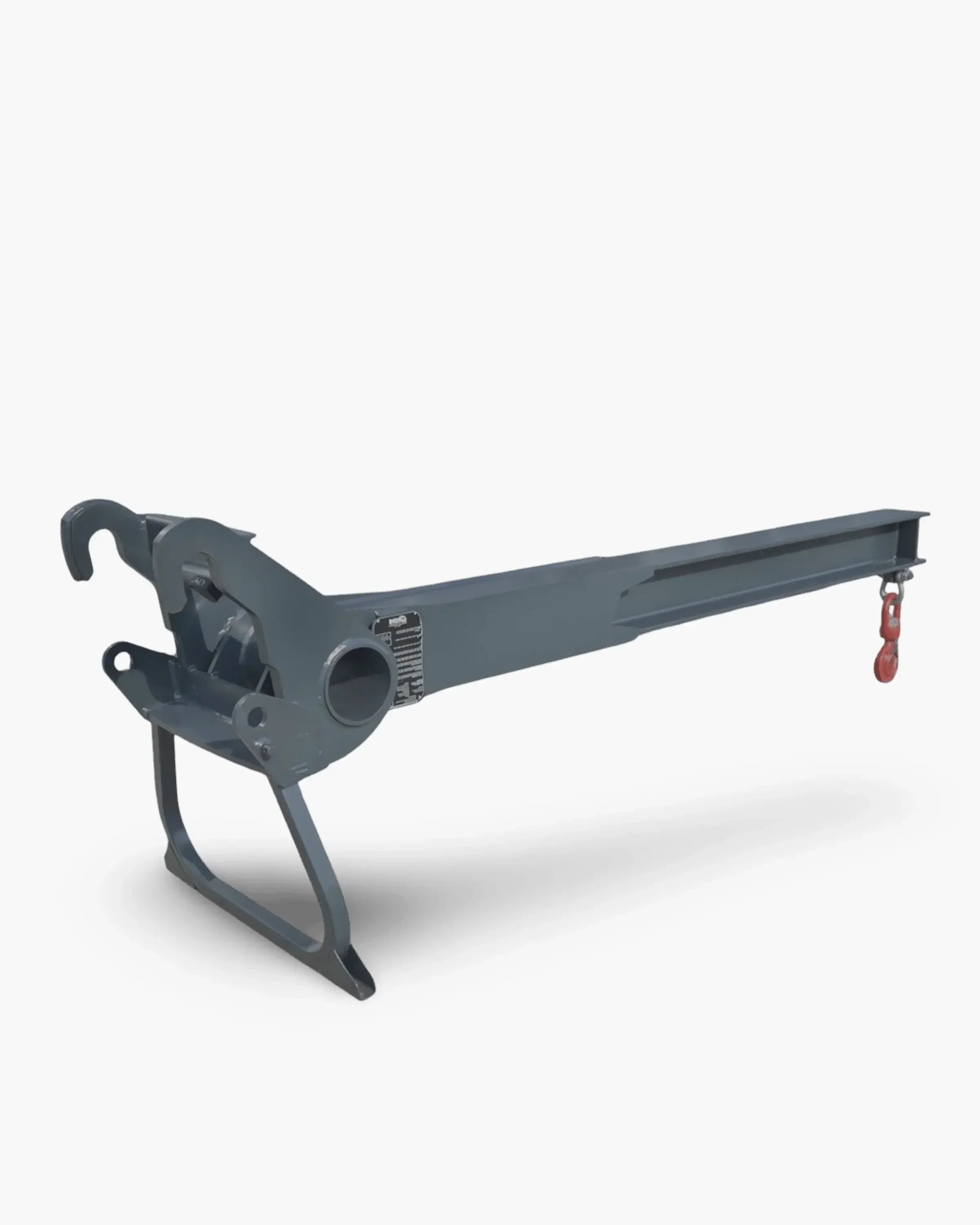
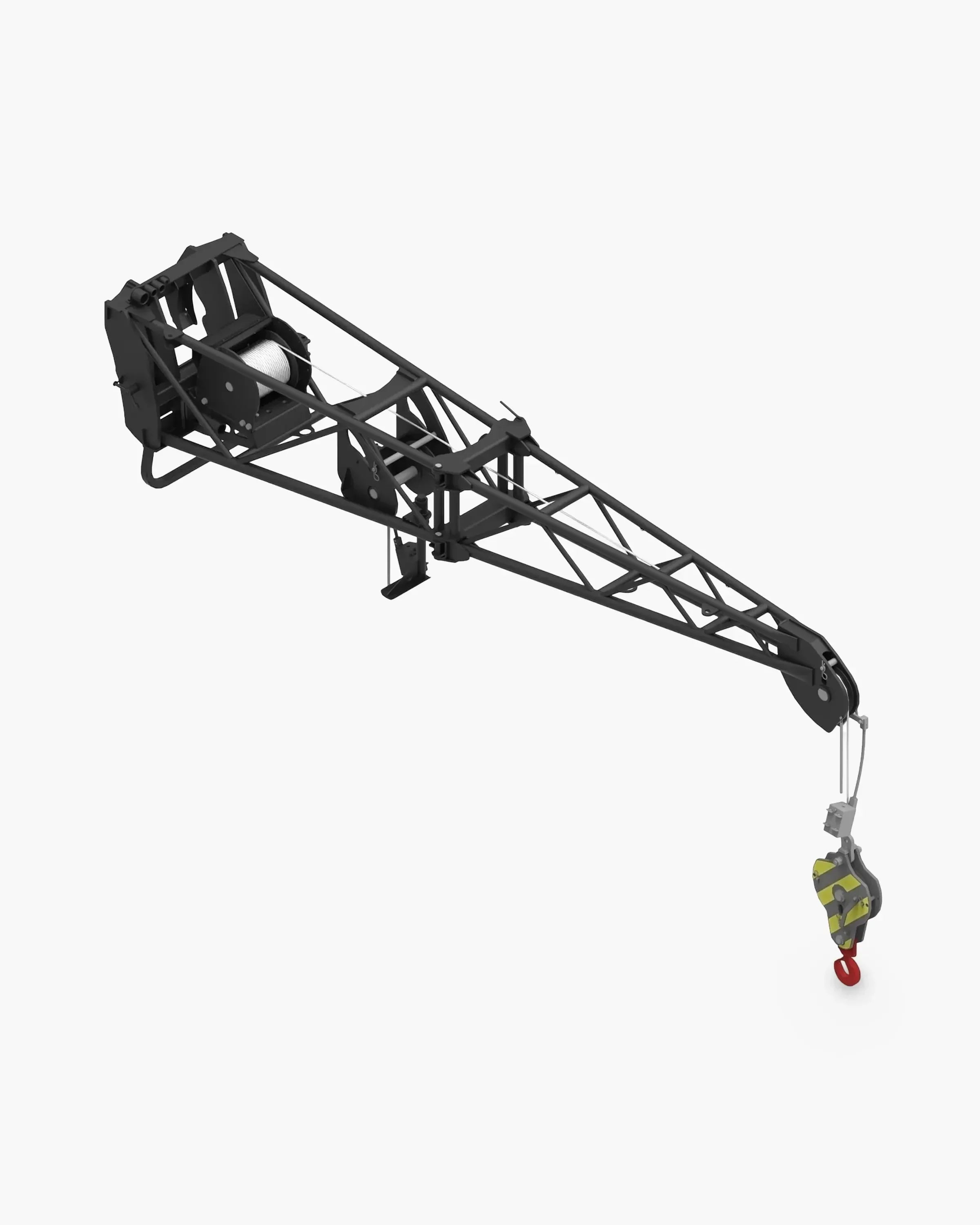
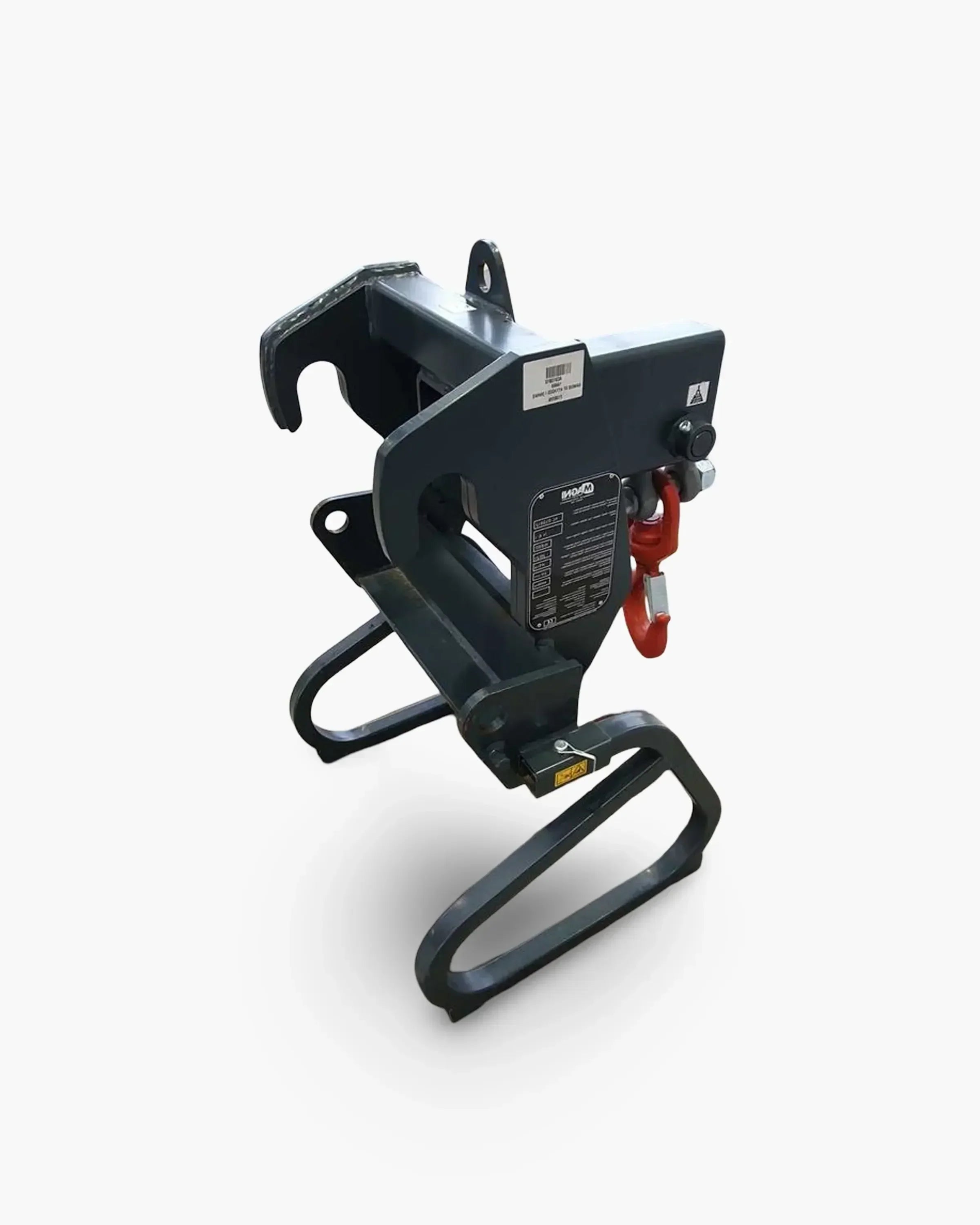
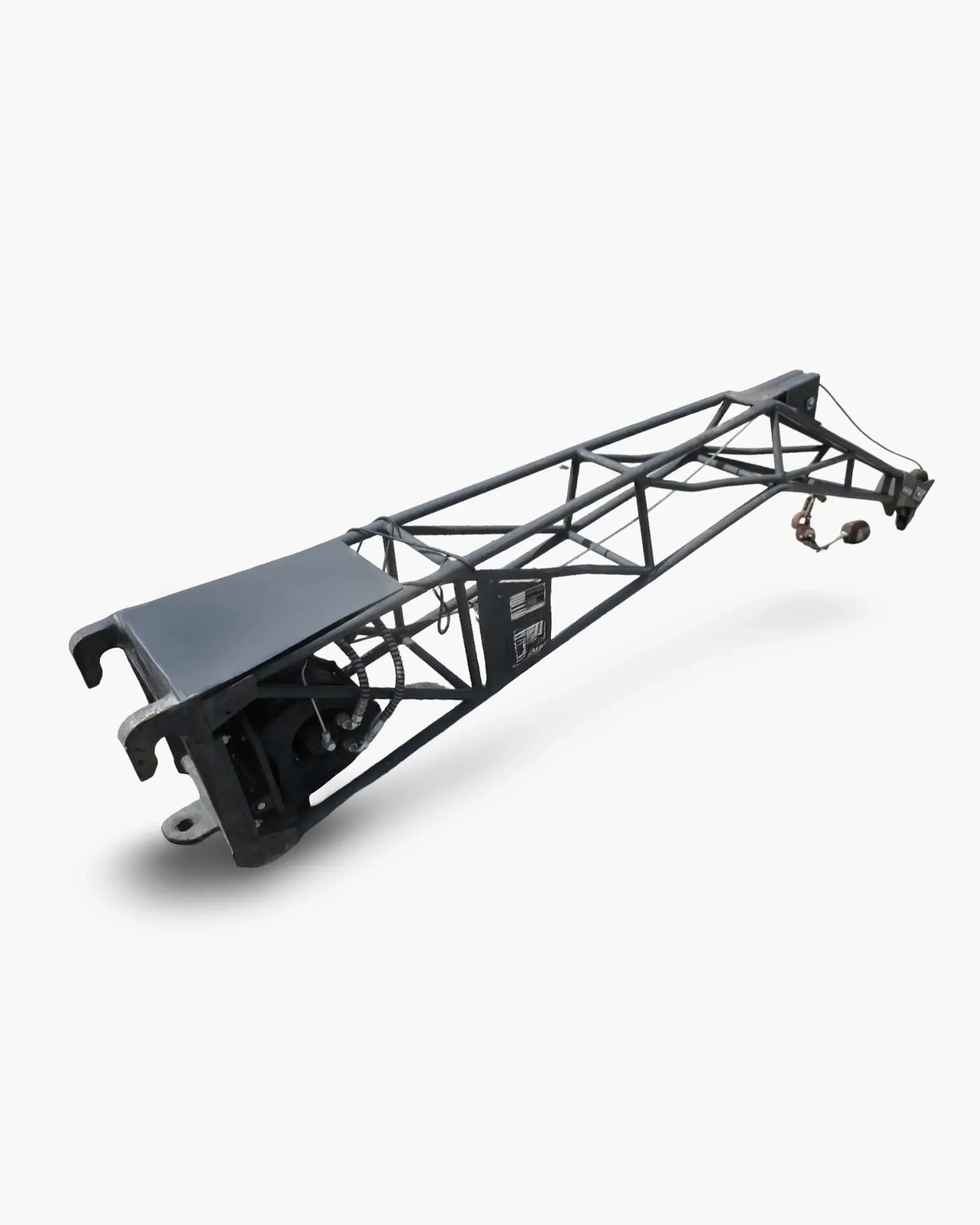
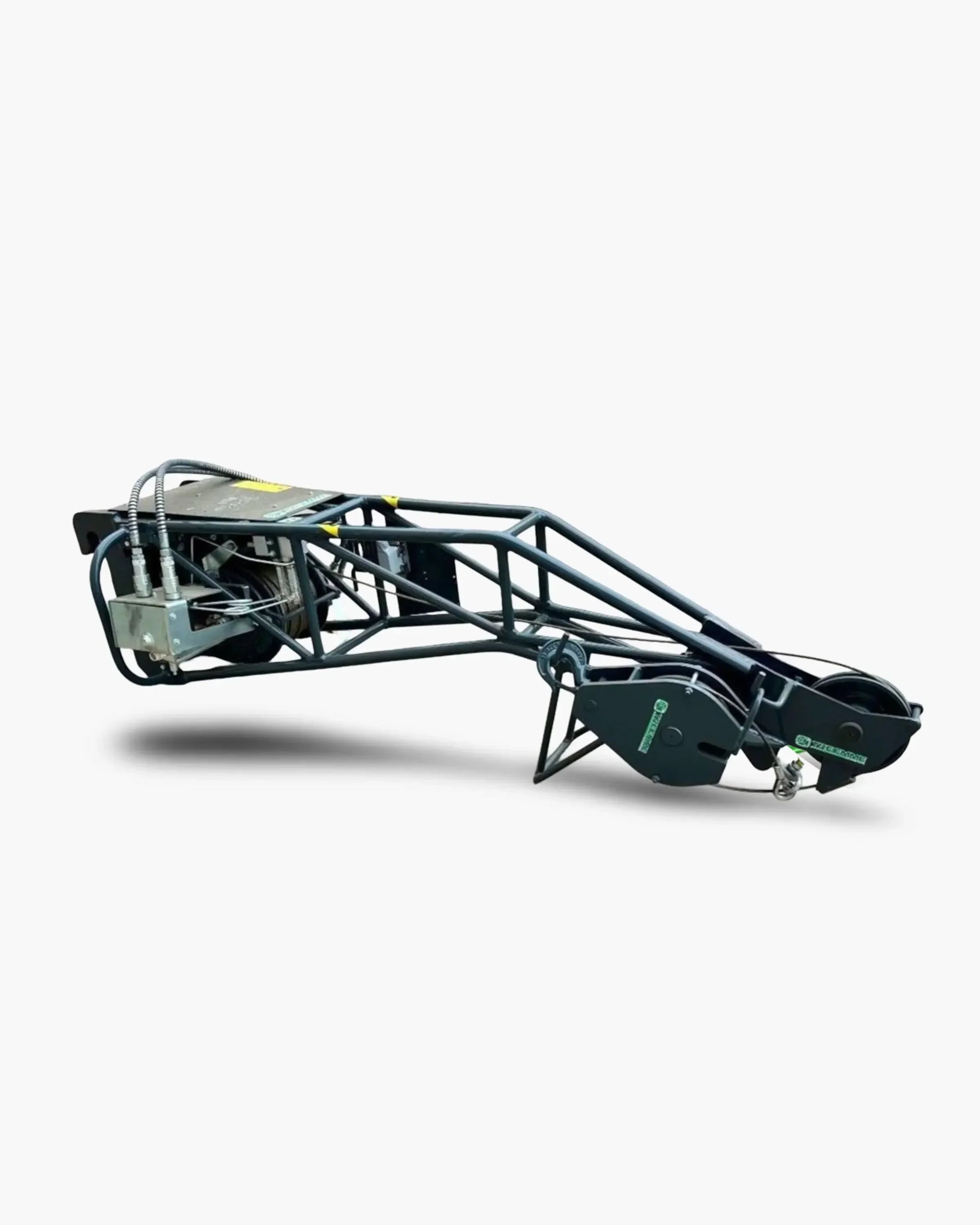
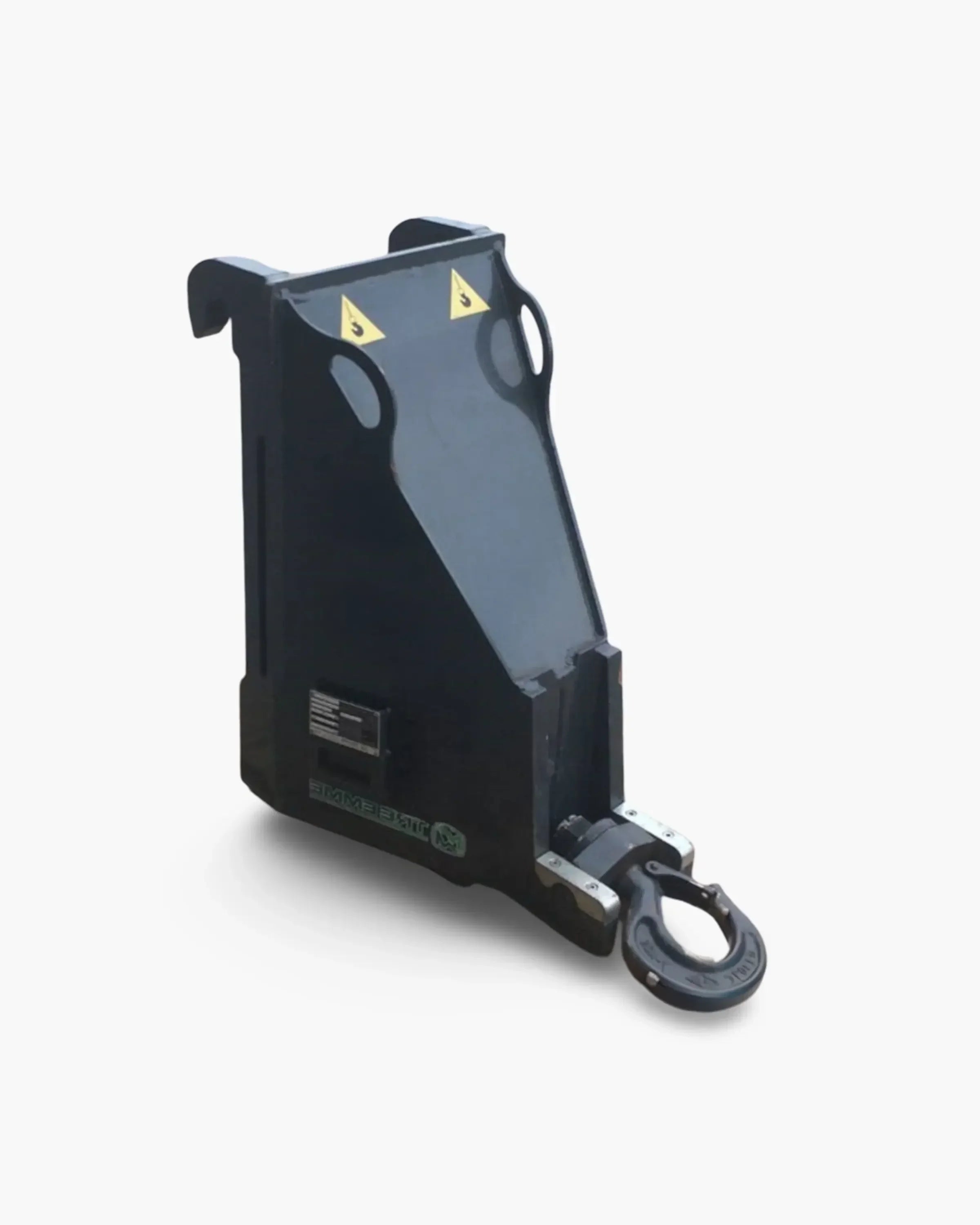
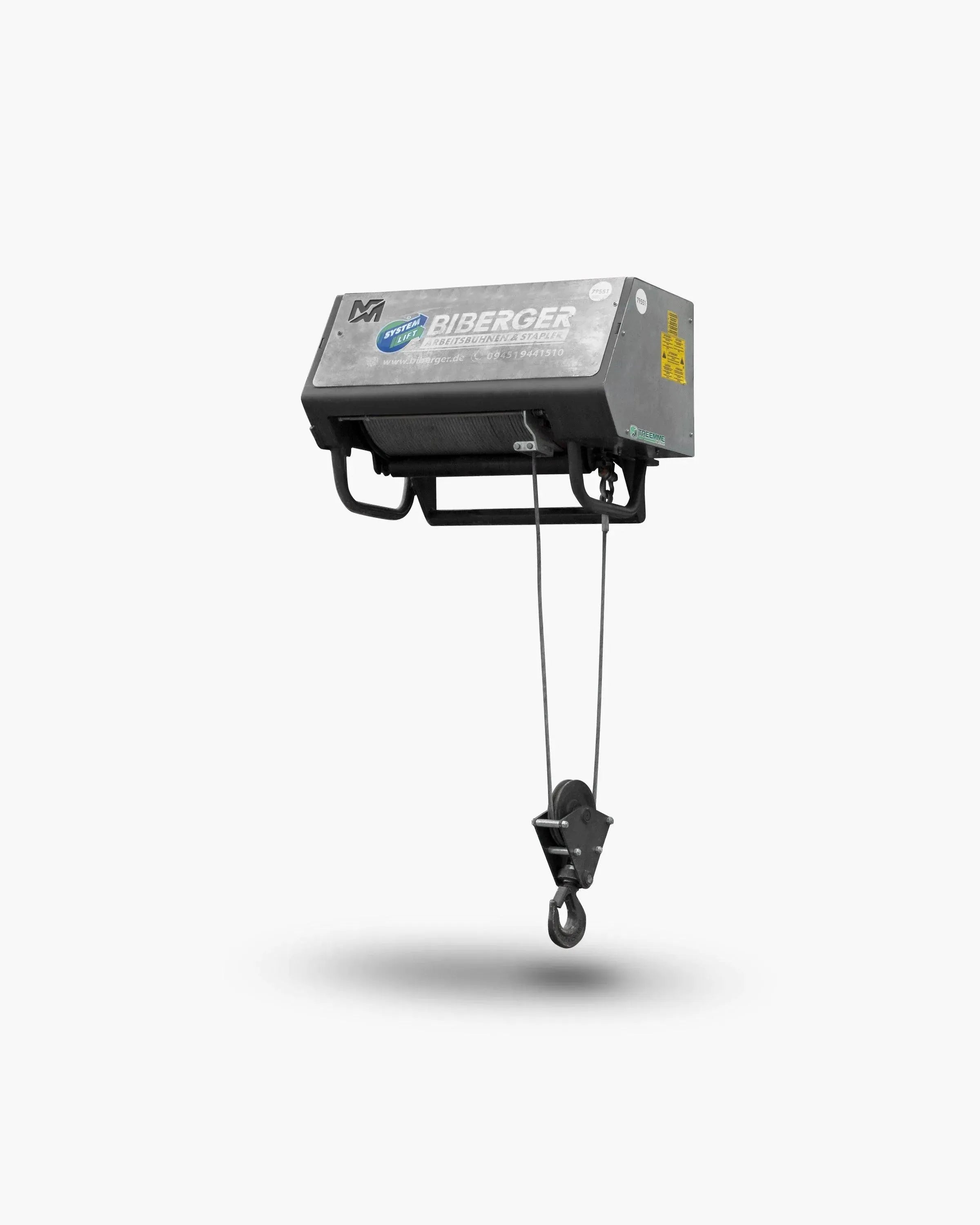
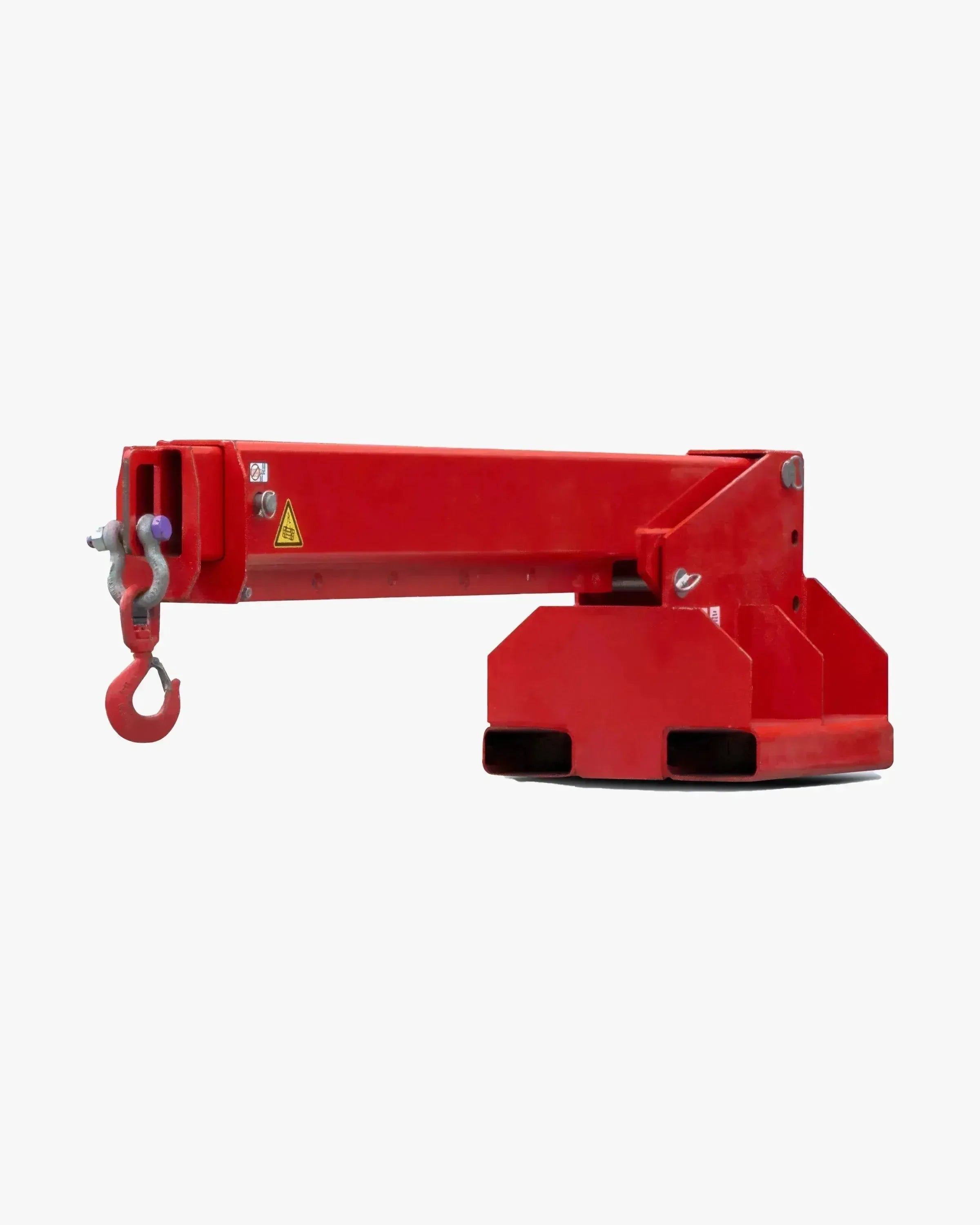
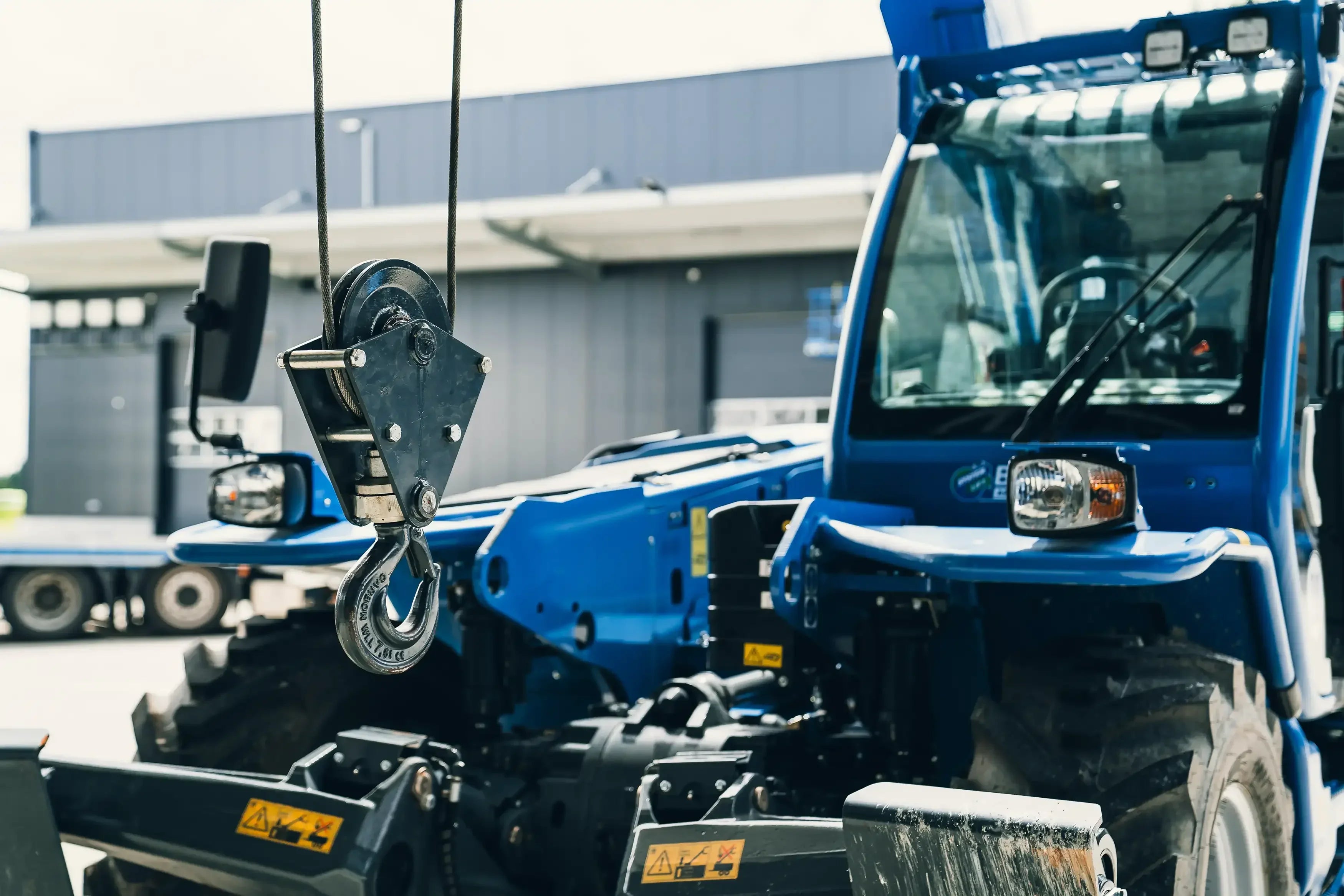
- Pallet fork, load hook/ cable winch (crane mode), work basket (elevating work platform)
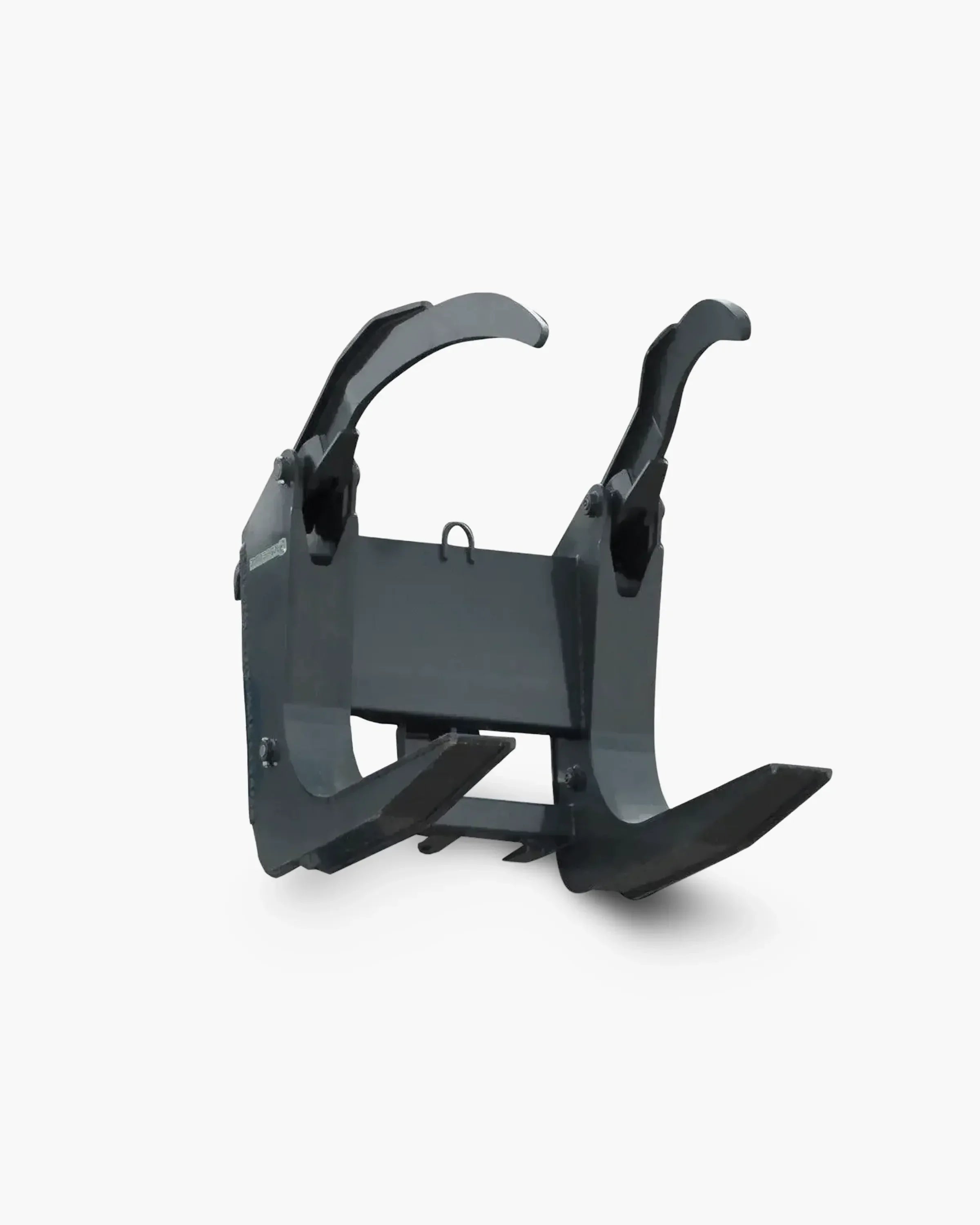
- Bucket, big bag traverse, concrete mixing bucket, special grapple (industry)
Important: DGUV test regulations (DGUV V54/55) must be observed for add-on winches.
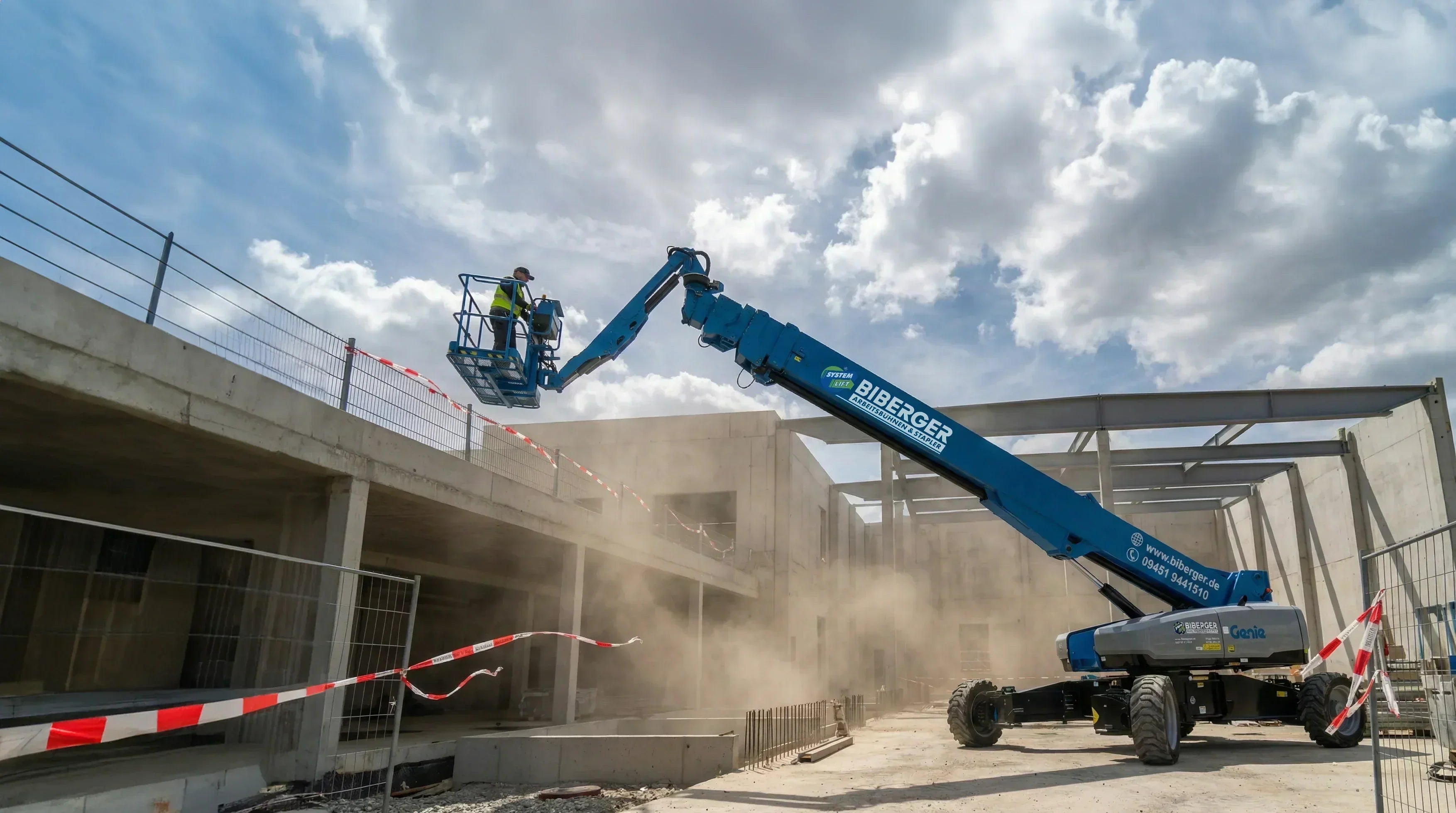
Work basket on a telehandler – what should you consider?
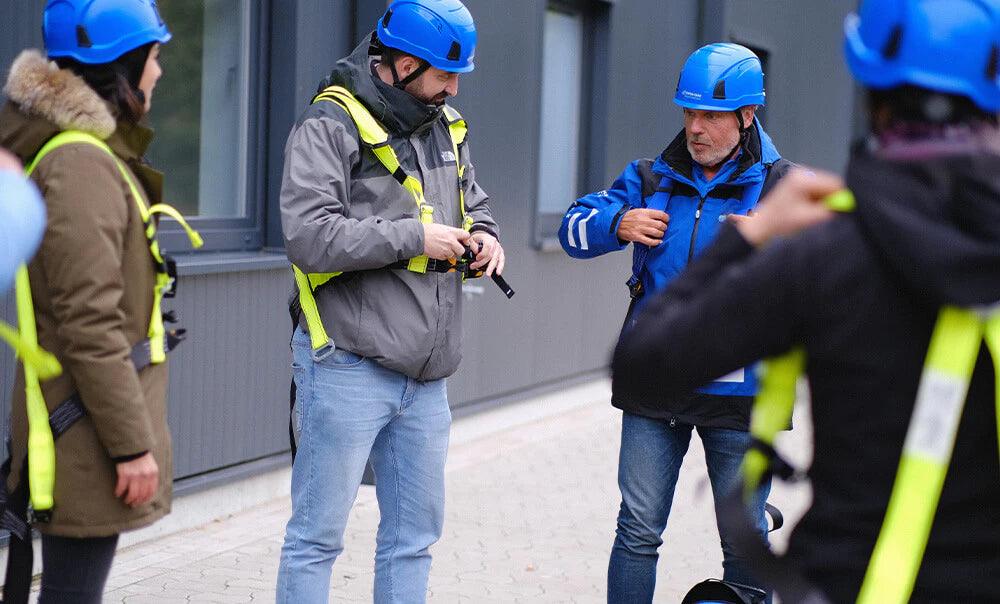
Use as a mobile elevating work platform = additional hazards. Requires additional Level 2b qualification for operators (in addition to telehandler training ). Content is based on DGUV 308-009 and 308-008.
Security, Legal Qualification
Operator qualification
- Telehandler driving license according to DGUV principles (including level 2b for basket operation).
- Instruction on accident prevention (UVV) testing (annually) according to BetrSichV/TRBS/manufacturer specifications; mobile elevating work platform operation according to DGUV Info 208-019.
Road traffic / registration / insurance (Germany)
| Theme | up to 20 km/h (SAM) | over 20 km/h | Notice |
|---|---|---|---|
| Registration/license plate | No registration required, operating license required | Registration + license plate (green) | FZV, green license plates for tax exemption |
| Compulsory insurance | usually business liability | Motor vehicle liability insurance is mandatory (since April 17, 2024, also on company premises) | PfIVG amendment 2024 |
| Operation on public roads | Operating license required | Registration, HU/AU, exception if applicable | observe local regulations |
Compiled from specialist articles on SAM/licensing/insurance.
Transport Logistics
Delivery and installation
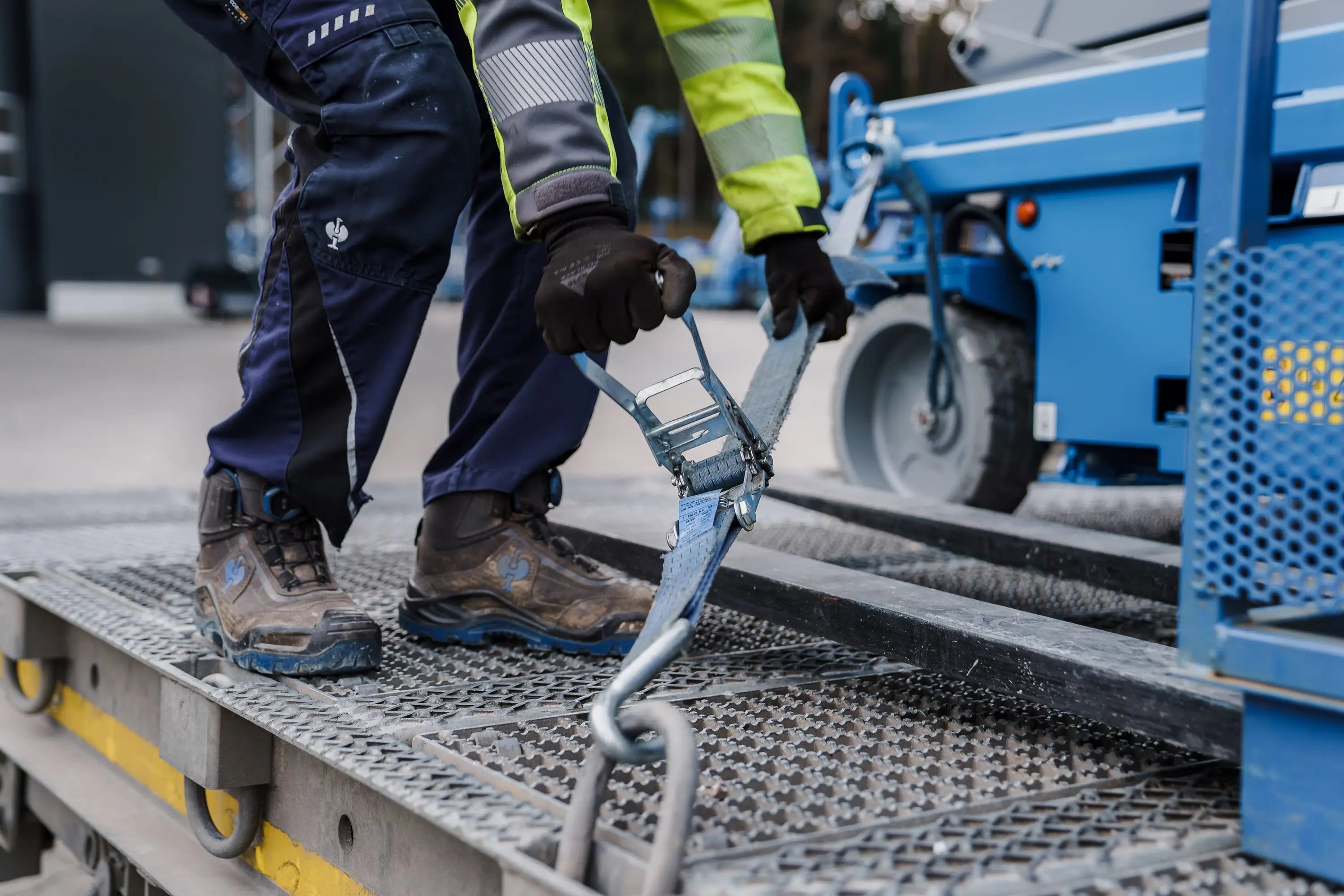
- Transport: usually by low-loader; no additional ballast/counterweight transport required as with a crane.
- On-site: brief support and functional checks; then immediate readiness for work.
- Access roads: Clarify load-bearing capacity, ramp angles, curve radii and narrow passages (gates/doors) in advance.
Operation on/over public land
When driving on public roads or farm tracks, the registration and insurance status must be checked and, if the vehicle is over-wide or heavily loaded, an exemption permit may need to be agreed upon with the rental company.
Industry Use Cases
Construction expansion
Facades, roofs, steel and timber construction, PV installation. Advantage: quick transition between lifting, lowering, and work basket.
Industrial Intralogistics
Machine relocations, hall conversions, and overhead line installation (work basket). Advantages: no crane setup time, minimal disruption.
Event/Trade Fair Municipalities
Trusses/lighting, banner installation, Christmas lighting; flexible daily/weekly rental, small footprint.
Landscaping and landscaping agriculture
Bales/bulk material, yard work, tree care with work basket; high utilization thanks to versatile attachments.
Selection of dimensions
Key questions before renting
- Maximum load radius? → Check the model's load diagram .
- Required lifting height working area ( rotary vs. rigid)?
- Subsurface support areas (slabs, barriers)?
- Access (gate width, curves, ramps) Environment (inside/outside, emissions/noise)?
- Attachments (winch, work basket, shovel…) qualification (level 2b for basket operation)?
Quick match telehandler vs. crane
| scenario | Recommendation | Reason |
|---|---|---|
| Short assembly, confined space | Roto telehandler | 360°, minimal setup time, small footprint |
| Heavy base load near machine | Rigid telehandler | Stable with low projection, cheaper |
| 30–50 m height or special lifting plans | Mobile/tower crane | Performance/geometry require crane |
| Series strokes at changing positions | Telehandler | Pick carry, quick implementation |
Procurement: Renting, long-term rental, buying
Decision based on days of use
- 120–150 usage days/year: Rental/project rental is usually more economical (flexibility/model change).
- 120–150 usage days/year: Consider purchasing or leasing (utilization ensures amortization).
Typical rental prices availability
Roto crane range ~€139–1,452/day; crane ~€220–€3,000/day (depending on class/region). For specific projects, calculate regional availability and travel costs.
Conclusion
Telehandlers are the fastest way to safely transport materials and people to heights and work precisely there – without the setup and downtime of traditional cranes. Anyone who regularly has short to medium-sized assembly jobs, tight spaces, or changing locations can save time, money, and stress with telehandlers – and also increase capacity utilization because one device performs multiple tasks.




Share:
Forklifts on public roads: What is permitted and what is not?
Storage racks & forklifts: Load limits in the warehouse
Our editorial quality standards
The subject content on biberger.de are editorially created, reviewed, and continuously updated. The basis is our daily work with aerial platforms, telehandlers, and industrial trucks – in rental, sales, operational planning, and technical support.
Each article draws on real-world experience and is editorially reviewed for clarity, accuracy, and practical relevance according to expert criteria. Technical statements are regularly compared against current industry standards and best practices.
The aim of our publications is to make reliable specialist knowledge accessible and to offer guidance to users, decision-makers and industry partners. BIBERGER sees itself as an independent information platform for safe, economical and modern height access technology – well-founded, comprehensible and free from advertising influence.