



 What You Need to Know
Bottleneck analysis is not a theoretical management tool, but a proven method for identifying and eliminating hidden performance bottlenecks in operations. Especially in height access technology —that is, aerial work platforms (AWP) and forklifts —it determines how safely, readily, and economically machines are actually used. Understanding bottlenecks can reduce downtime, increase throughput, and gain planning reliability.
As a rental company with decades of experience in platform and forklift logistics, we see every day where time is lost in practice: Equipment sits unused because the site isn't prepared, safety inspections are carried out too late, or transport routes are poorly coordinated. A precise bottleneck analysis helps make these issues measurable – before they become costly in everyday life.
Basics of bottleneck analysis
The method originates from the Theory of Constraints (TOC) – a concept originally from industrial production. It essentially involves looking at the process as a whole and identifying the step that limits the system. In practice, these are usually not machines, but organizational hurdles: lack of planning, late communication, or unclear responsibilities.
Unlike traditional efficiency programs, TOC doesn't focus on uniform optimization across all areas, but rather on the bottleneck that has the greatest impact on overall throughput. This is precisely what makes it so valuable in aerial access technology—because of the many interdependencies between humans, machines, and the environment.
The five steps in practice
- Identify bottlenecks: Where are the process bottlenecks? For example, during inspections, deliveries, or operating personnel.
- Utilize bottlenecks: Make optimal use of existing capacity, e.g., through better resource planning or buffer times.
- Adapt processes: Align all other steps to the pace of the bottleneck – instead of creating new problems in parallel.
- Expand capacity: If possible, relieve the bottleneck – for example, through additional equipment, training, or standardized processes.
- Find new bottlenecks: After each improvement, check where the next bottleneck has arisen – for continuous development.
Bottleneck analysis for work platforms
Typical bottlenecks in rental practice
- Availability: Devices are in storage because the order of use is not clearly defined or feedback is missing.
- Setup times: Long setup and dismantling phases, especially when locations change or infrastructure is lacking.
- Inspections: Safety checks according to UVV or PPE take longer than planned – often due to a lack of preparation.
Analysis methods
- Process mapping: Document every step from order receipt to return to make bottlenecks visible.
- Cycle time measurement: Measurement of setup, driving and test times – in practice often much more variable than assumed.
- Capacity comparison: Compare planned deployments with actual device utilization.
Optimization approaches
- Central scheduling: A coordinated pooling structure prevents double bookings and idle times.
- Checklists & partial tests: Divide tests into clearly defined sections – saves time without loss of quality.
- GPS-supported logistics: Digital route planning measurably shortens transport times.
- Standardized handover processes: Clear handover protocols reduce queries and operating errors.
Bottleneck analysis for forklifts
Typical bottlenecks
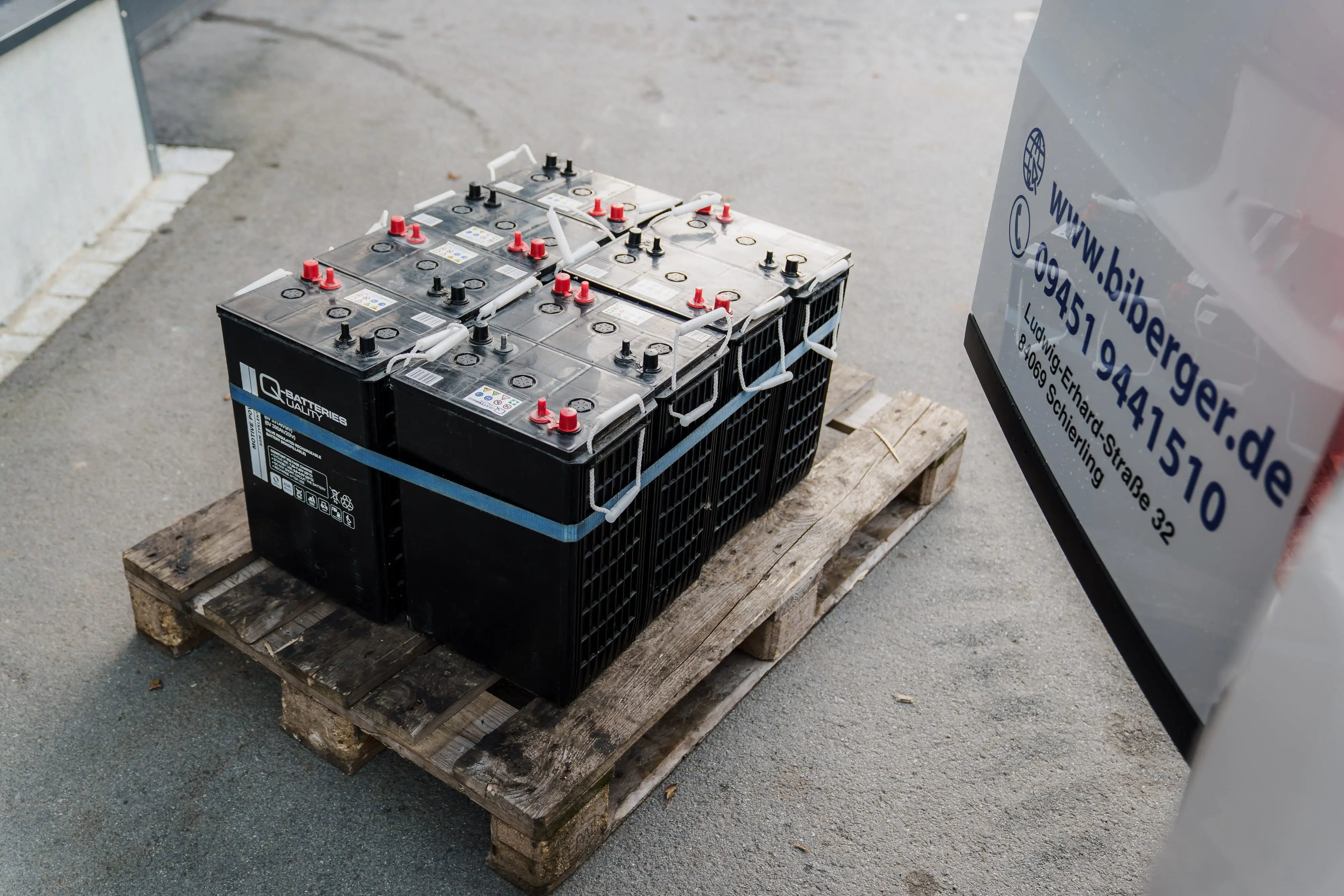
- Energy supply: Battery changes or refueling often take place during operation – resulting in long downtimes.
- Driver planning: Lack of qualifications or unclear responsibilities lead to idle time.
- Traffic routes: Narrow lanes or poor traffic management slow down the flow of materials.
Analysis and measures
- Downtime logs: Record every minute of downtime and categorize causes.
- Key figure comparison: Continuously monitor usage times, charging cycles, and maintenance intervals.
- Layout simulation: Digitally map traffic routes to identify and replan bottlenecks.
Optimizations in practice
- Fast charging zones: Multiple charging points significantly reduce waiting times.
- Dynamic driver scheduling: Real-time assignment based on order situation increases throughput.
- One-way traffic: Structured traffic management reduces the risk of accidents and traffic jams.
- Off-peak maintenance: Equipment availability during peak periods remains consistently high.
Integration into the overall process
Bottlenecks in platforms or forklifts rarely occur in isolation. They are usually the result of coordination problems between logistics, planning, and technology. Therefore, the isolated optimization of individual work steps is only of limited effectiveness. The goal is holistic process optimization .
- Cross-departmental reviews: Regularly involve all stakeholders – from scheduling to security.
- Live dashboards: Visualize current metrics on availability, transport status, and utilization.
- Continuous improvement process (CIP): Regularly review and adapt measures.
BIBERGER 's rental experience demonstrates that when customers consider bottlenecks during planning, capacity utilization and safety increase noticeably. Through coordinated availability, standardized inspection processes, and efficient transport logistics, downtimes can often be completely avoided – before they even occur.
Practical example
A construction company discovered that changing forklift batteries during shift changes caused approximately two hours of downtime per day. After implementing a rapid charging station and battery rotation , downtime decreased by 75% and forklift availability increased by 20% . For aerial work platforms, the introduction of standardized checklists reduced setup and dismantling times by 15% —equivalent to half an additional call per day per machine.
Conclusion
Bottleneck analyses create measurable transparency instead of gut feeling. In height access technology, they lead to more stable processes, higher equipment availability, and greater safety in everyday operations. Regularly reviewing processes, evaluating data, and learning from the results not only saves time but also increases the yield per device.
BIBERGER supports companies with practical solutions – from the right equipment selection and flexible rental models to process consulting at the construction site and logistics level. This ensures that every fleet remains economical, safe, and ready for use – exactly when it's needed.




Share:
What does a work platform really cost? – TCO & Depreciation 2026 explained
DGUV regulations and principles for work platforms and forklifts – simply explained
Our editorial quality standards
The subject content on biberger.de are editorially created, reviewed, and continuously updated. The basis is our daily work with aerial platforms, telehandlers, and industrial trucks – in rental, sales, operational planning, and technical support.
Each article draws on real-world experience and is editorially reviewed for clarity, accuracy, and practical relevance according to expert criteria. Technical statements are regularly compared against current industry standards and best practices.
The aim of our publications is to make reliable specialist knowledge accessible and to offer guidance to users, decision-makers and industry partners. BIBERGER sees itself as an independent information platform for safe, economical and modern height access technology – well-founded, comprehensible and free from advertising influence.