
Reading now: DGUV regulations and principles for work platforms and forklifts – simply explained
Zusammenfassung What You Need to Know

TheDGUV regulationsform the foundation forSafety, training and operationsof work platforms and forklifts in Germany. They specify who is permitted to operate equipment, how inspections must be conducted, and what obligations companies have regarding risk assessment, training, and maintenance.

What is crucial for practice are theDGUV Rule 100-500(operation of lifting platforms), thePrinciple 308-008(training of operators) and theRegulation 68(Industrial trucks). Anyone who knows these requirements and implements them in their daily work ensuresmore security, fewer failures and legally compliant operation– whether in rental, construction or industry.

Zusammenfassung What You Need to Know

TheDGUV regulationsform the foundation forSafety, training and operationsof work platforms and forklifts in Germany. They specify who is permitted to operate equipment, how inspections must be conducted, and what obligations companies have regarding risk assessment, training, and maintenance.

What is crucial for practice are theDGUV Rule 100-500(operation of lifting platforms), thePrinciple 308-008(training of operators) and theRegulation 68(Industrial trucks). Anyone who knows these requirements and implements them in their daily work ensuresmore security, fewer failures and legally compliant operation– whether in rental, construction or industry.

Anyone who uses work platforms or forklifts cannot ignore the DGUV ( German Social Accident Insurance). The German Social Accident Insurance (DGUV) provides the framework for safe and legally compliant operation with its regulations, rules, and principles.

Sounds dry—but it's incredibly important, because violations can be costly. We'll show you what really applies, which documents are relevant, and what you need to pay attention to in practice.

How the DGUV regulations are structured

The German Social Accident Insurance (DGUV) has created an entire system of regulations. It consists of four levels that collectively govern occupational safety and health – from mandatory to recommended.

  • Regulations: legally binding, e.g., DGUV Regulation 68 for forklifts
  • Rules: explain how regulations are to be implemented in practice
  • Principles: define requirements for training, testing and operation
  • Information: provide practical tips and checklists for everyday life

DGUV rules for mobile elevating work platforms

DGUV Rule 100-500 Chapter 2.10 – Operation of lifting platforms

This rule forms the basis for the safe use of aerial work platforms. It specifies who is permitted to operate them, how inspections are conducted, and when safety equipment is required.

  • Only persons aged 18 and over with proven qualifications and written authorization
  • Daily visual and functional inspection before each use
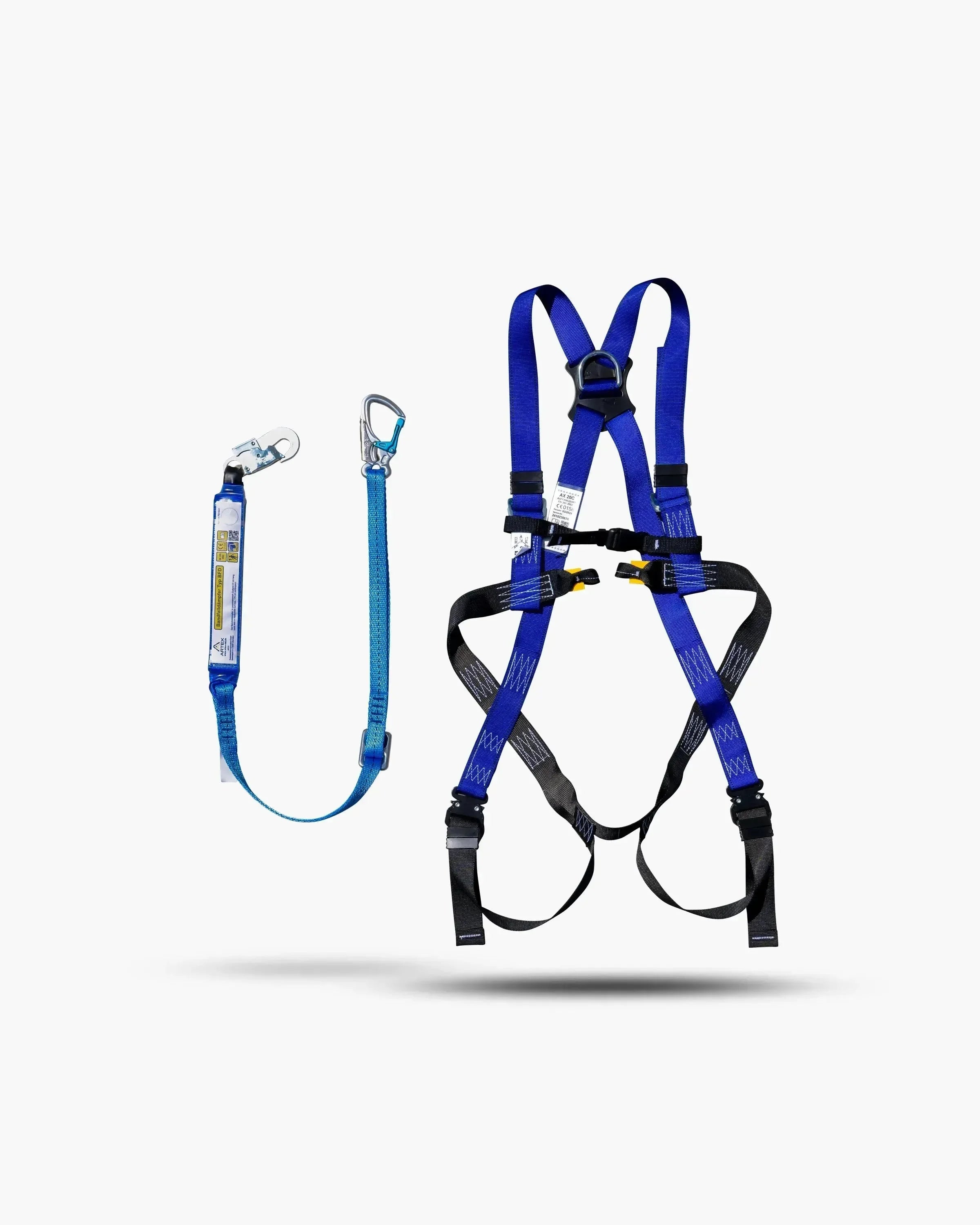
  • PPE (Personal Protective Equipment against falls from a height) in the work basket is mandatory
  • Wind, inclination and ground must be taken into account – otherwise there is a risk of tipping over

DGUV Principle 308-008 – Training and commissioning of operators

This regulation precisely regulates who can be considered a platform operator and what qualifications are required. Without this certification, no one is allowed to operate a work platform.

  • Theory and practice with final exam (driving license required)
  • Additional training for special designs such as truck-mounted or articulated telescopic platforms
  • Annual company training
  • Requirement: at least 18 years old, physically and mentally fit (G25/FSÜ recommendation)

DGUV Information 208-019 – Safe handling of mobile elevating work platforms

This DGUV information is the ultimate practical document. It explains how to use platforms safely, which hazards occur frequently, and how to prevent them.

  • Analysis of typical accident causes (e.g. tipping over or crushing hazard)
  • Sample checklists for visual inspection, operational planning and maintenance
  • Reference to EN 280 – the technical standard for mobile elevating work platforms

DGUV Principle 308-002 – Testing of lifting platforms

This concerns the testing obligations of manufacturers and operators.

  • Inspection before first commissioning by experts
  • At least annual re-examination
  • Additional extraordinary inspection after damage or modifications

DGUV rules for forklifts and industrial trucks

DGUV Regulation 68 – Industrial trucks

The most important regulation for forklifts. It applies to all industrial trucks with a drive system—whether electric, diesel, or gas—and regulates safe operation.

  • Drivers may only be employed with a certificate of competence (forklift license)
  • Daily functional check by the driver
  • Regular inspection by a qualified person
  • Specifications for routes, traffic areas and load bearing

DGUV Principle 308-001 – Training and commissioning of forklift drivers

This principle is the benchmark for every forklift training course in Germany. Without it, no valid forklift license is issued.

  • Theoretical and practical training with exam
  • Additional training for special equipment or attachments
  • Annual training in the company

DGUV Information 208-004 – Forklift trucks

This practical guide for the safe handling of forklifts covers all topics from construction and maintenance to handling.

  • Checklists for daily testing
  • Tips for safe driving, load handling and cornering
  • Information on operating instructions and UVV testing

DGUV Information 208-031 – Working platforms on industrial trucks

This rule applies when a forklift truck exceptionally lifts a work platform. This is only permitted within narrow limits – and only with an approved platform.

  • Only permitted if no other work equipment is suitable
  • Short operating time, full CE marking
  • Form-fitting fastening with anti-loosening device
  • Fence at least 1.10 m

Overarching regulations

DGUV Regulation 1 – Principles of prevention

This regulation applies to all companies. It regulates the basic obligations of employers and employees regarding occupational health and safety.

  • Risk assessment and regular training
  • Provision of suitable work equipment
  • Use of only qualified persons
  • Wearing personal protective equipment

Industrial Safety Ordinance (BetrSichV)

The governmental basis on which many DGUV regulations are based. It obliges operators to conduct risk assessments, tests, and documentation.

Technical Rules for Operational Safety (TRBS)

TRBS specify the BetrSichV. Particularly relevant:

  • TRBS 2121-2: Hazards when using ladders
  • TRBS 2121-4: Exceptional lifting of persons with work equipment

Machinery Directive 2006/42/EC

European basis for the design and safety of machinery. Every mobile elevating work platform or forklift truck bearing the CE mark is subject to this directive.

Personal protective equipment (PPE/PPEgA)

When is PPE mandatory?

PPE against falls from a height is mandatory for platforms with booms – i.e. truck-mounted, articulated or telescopic platforms – and recommended for scissor lifts.

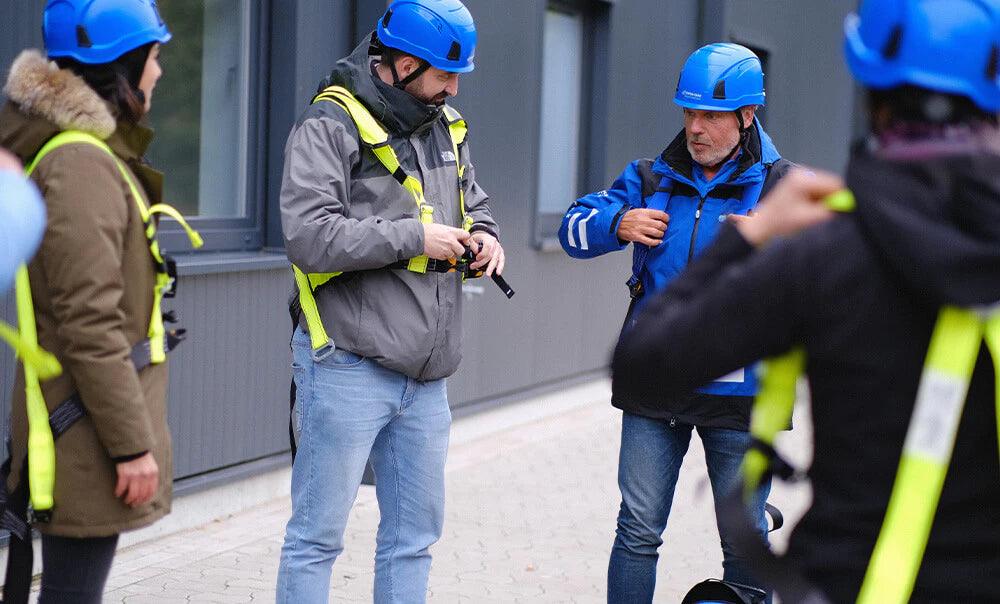
  • Consisting of a full body harness and lanyard (max. 1.8 m)
  • Anchor points in the work basket are mandatory
  • Regular inspection by qualified persons

Occupational medical suitability

Anyone who operates platforms or forklifts should undergo regular medical examinations (formerly G25 examination, now DGUV Recommendation E FSÜ).

  • Testing of vision, hearing and reaction ability
  • Recommended intervals: every 3–4 years, from 40 years every 2–3 years

Examinations and qualifications

Qualified persons and experts

Qualified personnel regularly inspect the work equipment. Experts are called in for extraordinary inspections or after accidents.

Typical inspection periods

Work equipment Test type interval Responsible
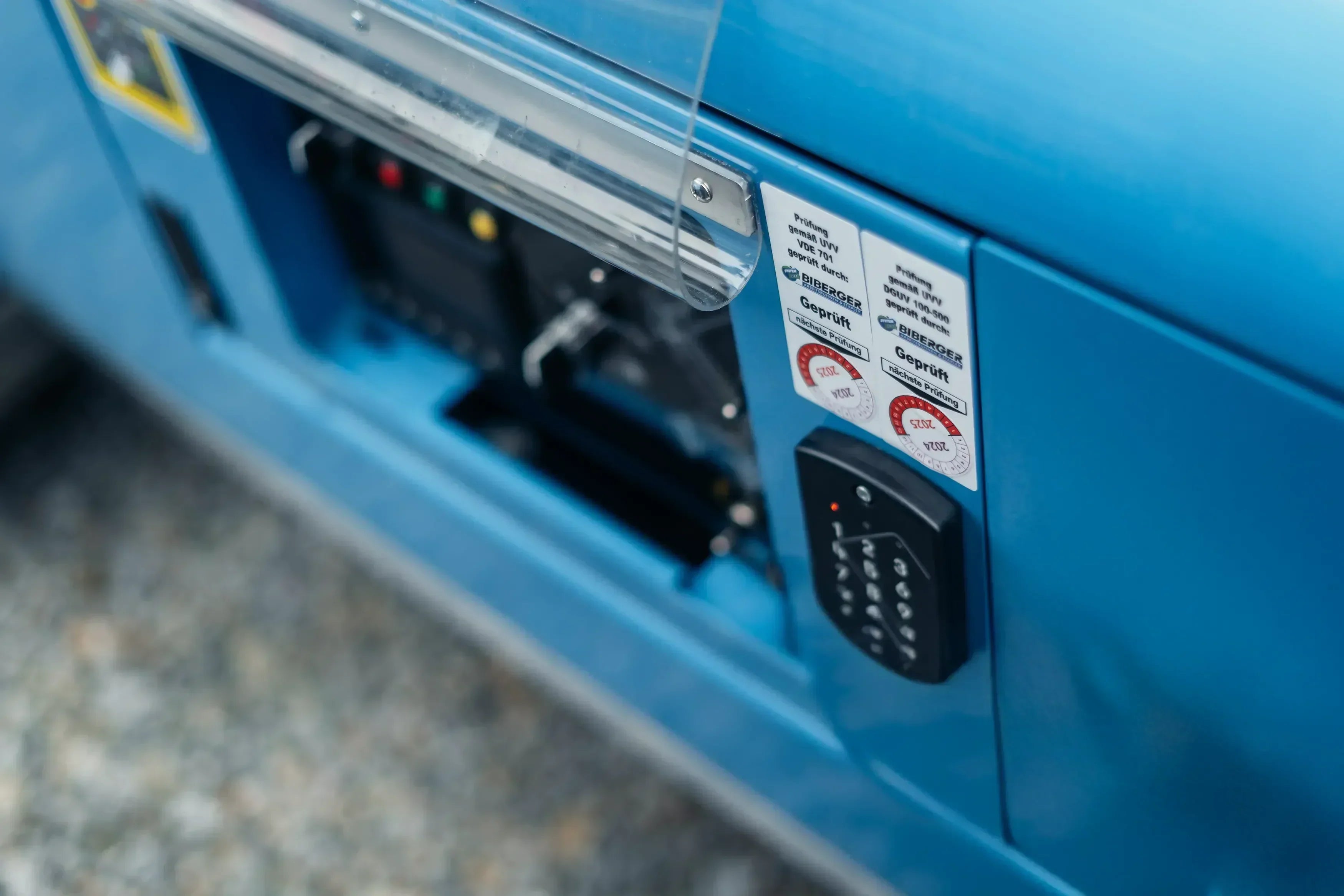
Aerial work platform Regular testing Yearly Competent person
Forklift / industrial truck Visual inspection Daily before use driver
Forklift / industrial truck Main examination Yearly Competent person
Work basket on the forklift Extraordinary audit In case of damage / modifications expert

Special devices and applications

Telehandler

According to DGUV Principle 308-009, qualification is carried out in several stages, depending on the structure and application. Additional qualification is mandatory, especially for rotating superstructures or use as a platform.

Ladders and steps

According to DGUV Information 208-016, ladders may only be used for low-risk and short-term work. For longer work periods, a platform or scaffold must be used.

Current developments

New DGUV recommendations

Previous principles such as the G25 review were converted into recommendations (E FSÜ) in 2022. The content remains, but the legal pressure is less, placing greater responsibility on the employer.

Revised standards

  • DIN EN 280-1:2022 – new definitions, modified load measurement, more safety tests
  • TRBS 2121-4:2019 – stricter rules for exceptional lifting with forklifts

Conclusion

DGUV regulations aren't paperwork, they're life insurance. They protect drivers, operators, and businesses alike. Adhering to the rules not only avoids accidents, but also downtime and hassle with authorities. At BIBERGER , we ensure that all equipment is inspected, documented, and ready for use during every rental – exactly as required by the DGUV. This isn't a matter of duty; it's safety in practice.

Sources & further information
Benjamin_Biberger_f09df03b-780b-4e03-8991-ca3f20113b29 - BIBERGER
About the author

Benjamin Biberger

Managing Director

Benjamin is the founder and managing director of BIBERGER Arbeitsbühnen & Forklifts.

He is responsible for thecommercial and administrative areasof the company and, together with his team, ensures theOptimization of operational processesand theoptimal customer supportin their projects.

Through his many years of experience in the areas of organization andProject managementIt provides a stable foundation – in its own daily business, in sustainableFurther development of processesas well as in theCollaboration with partners and customers.

Our editorial quality standards

The subject content on biberger.de are editorially created, reviewed, and continuously updated. The basis is our daily work with aerial platforms, telehandlers, and industrial trucks – in rental, sales, operational planning, and technical support.

Each article draws on real-world experience and is editorially reviewed for clarity, accuracy, and practical relevance according to expert criteria. Technical statements are regularly compared against current industry standards and best practices.

The aim of our publications is to make reliable specialist knowledge accessible and to offer guidance to users, decision-makers and industry partners. BIBERGER sees itself as an independent information platform for safe, economical and modern height access technology – well-founded, comprehensible and free from advertising influence.

Leave a comment

Please note, comments need to be approved before they are published.

This site is protected by hCaptcha and the hCaptcha Privacy Policy and Terms of Service apply.

FAQ

Are DGUV rules mandatory?

Basically yes – but with nuances. The DGUV rules are not laws, butrecognized rules of technologyIf you follow them, you are on the safe side. Anyone who deviates from them mustprove that it meets the same safety standardsFor companies, this means: practicallybinding, even if legally it is “only” a concretization.

What does the DGUV regulation say?

The DGUV regulations are thebinding accident prevention regulations. They regulate,how safe work must be, what obligations employers and employees have and who is allowed to use which devices. In short: They are theMandatory occupational safety program– whether in the warehouse, on the construction site or in the workshop.

What does DGUV mean?

DGUV stands for“German Statutory Accident Insurance”This is the umbrella organization of the professional associations and accident insurance funds in Germany. The DGUV issues the rules, principles, and regulations that govern everyday working life.safe and legally securefrom forklifts to work platforms.

What is DGUV Rule 100-500?

The 100-500 is basically theSafety manual for work equipment. It states exactly,such as lifting platforms, cranes or pressure vessels must be operatedChapter 2.10 is particularly important for work platforms – it describes who is permitted to operate them, what inspections are necessary, and when personal protective equipment (PPE) is mandatory.

What does DGUV Regulation 68 (industrial trucks) say?

This regulation is theBible for forklift driversIt specifies how forklifts must be built, maintained, and operated. It covers everything from daily visual inspections to driver training. If you use forklifts, DGUV 68 is required reading.

What is the difference between DGUV rules and DGUV regulations?

Regulations =binding. Rules =concretizing.

The regulation states,Whatyou have to do.

The rule shows,Howyou do it right.

In everyday life, the two belong together: whoever follows the rule automatically complies with the regulation in a legally compliant manner.

When did BGV become DGUV?

2014. At that time, the old BGV regulations of the professional associations were incorporated into the uniformDGUV systemThe content remained largely the same – only the designations were modernized. For example, BGV D27 becameDGUV Regulation 68.

How often must the DGUV 3 test be carried out?

That depends on the application – the DGUV says in general:at least once a year.

In harsh operating conditions (e.g. construction sites, dust, humidity), it may be necessary more often. Important: The test must always bebefore commissioning after modifications or repairsAnyone who ignores this risks failure and liability issues.

Which devices fall under DGUV 3?

In short:Anything that has electricity.

From extension cables to chargers to electric work platforms. The decisive factor is whether the deviceelectrically operated or connectedThis also includes forklift chargers, testing systems, and power distribution units.

What is the difference between UVV and DGUV?

UVV was in the past, DGUV is today.

TheAccident prevention regulations (UVV)have been called since 2014DGUV regulationsThe content has remained almost the same. Only the structure is new: Today, everything is handled uniformly by the German Social Accident Insurance (DGUV).

Are DGUV tests mandatory?

Yes, absolutely. Every electrical system, every platform, and every forkliftmust be checked regularlyto prove the safe condition. This is not a recommendation – it islegal obligationaccording to BetrSichV and DGUV Regulation 3. Without proof, you risk fines or trouble with the insurance company.

What is tested during a DGUV 3 test?

It is checked whethereverything electrically works safely: Insulation resistance, protective conductor, residual current device, housing voltage – and whether everything looks OK (cable, plug, damage).

At the end there is aTest report with measured values and test sealIf you fail, the device maynot reusedbecome.

What is DGUV Regulation 3 anyway?

Regulation 3 is theBasis for electrical safetyin companies. It regulates how electrical equipment and systems must be tested – whether on a construction site, in a warehouse, or in a workshop.

Goal: Prevent electrical accidents before they happen. Simply put:Everything that is live must be safe.

What happens if you don’t take the DGUV test?

Then, in an emergency, the entrepreneurfull responsibility.

In case of an accident without a valid DGUV test, the insurance company canRefuse performance– and there is a risk of fines or even criminal prosecution.

In short: The test costs little – but omitting it can be expensive.

Relevant topics

View all

Höhenzugang auf Großflächen: So planst du Geräte, Logistik und Abläufe ohne Leerlauf

Accessing large areas at height: How to plan equipment, logistics and processes without downtime

What large-scale advertising is really about On large forecourts and long facades, you don't lose time at height, but on the ground. Repositioning, waiting times for transport, incorrect equipment width, restricted areas – all of that eats up hours. The...

Read more

DGUV 308-008, SYSTEM-CARD® oder IPAF: Welche Hubarbeitsbühnen-Schulung braucht dein Team wirklich?

DGUV 308-008, SYSTEM-CARD® or IPAF: Which mobile elevating work platform training does your team really need?

In Germany, several relevant training systems for mobile elevating work platform operators exist in practice: the DGUV principle 308-008 as the employers' liability insurance association basis, the SYSTEM-CARD® based on it as an association-organized quality system, and the international IPAF...

Read more

Typische Planungsfehler beim ersten Einsatz von Arbeitsbühnen – und wie du sie vermeidest - BIBERGER

Typical planning mistakes when using aerial work platforms for the first time – and how to avoid them.

Introduction Why errors occur even before deployment The safe operation of a work platform begins long before the basket lifts off. Mistakes don't happen during the lift itself, but in the preparation: assessing the ground conditions, selecting the right equipment,...

Read more

Wind und Arbeitsbühnen: Was Du für einen sicheren Einsatz unbedingt wissen musst - BIBERGER

Wind and aerial work platforms: What you absolutely need to know for safe use

Key problem: Why wind loads are so often underestimated Wind load is one of the most underestimated risks when using aerial work platforms. At ground level, wind force 6, with 12.5 m/s or around 45 km/h, often seems relatively harmless....

Read more

Arbeitsbühnen weltweit: Der internationale Vergleich von Märkten, Herstellern & Kosten - BIBERGER

Aerial work platforms worldwide: An international comparison of markets, manufacturers & costs

Aerial work platforms are indispensable on almost every construction site and in many industries. However, although the basic technology is similar worldwide, markets differ significantly in terms of regulation, manufacturing landscape, pace of innovation, and typical application profiles. Understanding international...

Read more

Arbeitsbühne Privat mieten – Was ist erlaubt? - BIBERGER

Renting a work platform for private use – what is allowed?

Aerial work platforms are primarily designed, standardized, and planned for commercial use. Typical applications include facade construction, plant and building technology, and industrial maintenance. Accordingly, equipment selection, insurance models, and rental procedures are geared primarily towards commercial users with trained...

Read more

Anschlagen von Lasten – Anschlagmittel richtig auswählen und sicher einsetzen - BIBERGER

Lifting loads – selecting and safely using lifting equipment

Safely attaching loads is one of the most demanding tasks when operating cranes , forklifts , and lifting equipment. Errors almost never occur during the lifting itself, but almost always result from misjudging the load capacity, type of attachment, or...

Read more

Staplerfahrer werden

Become a forklift driver: safely, trained and responsibly

A moment of inattention 7:15 a.m. A forklift driver begins his early shift. Routine. He only gives the forklift a cursory check – time pressure, the truck is waiting. On the third lift, the fork tine snaps at an old...

Read more