




 What You Need to Know
Telehandlers are extremely versatile on construction sites, in depots, and in industry. They lift loads, transport materials, work with forks, buckets, load hooks, or work platforms, and can reach areas that classic forklifts cannot.
However, this very versatility also makes them risky. Due to the boom, cabin, attachments, loads, and changing operational situations, there are areas around the machine that the operator cannot see or can only see to a limited extent. These areas are called blind spots.
Especially when maneuvering, reversing, turning, swiveling, or working on confined construction sites, blind spots can quickly become dangerous. People, vehicles, materials, or obstacles are detected too late—or not at all.
In this guide, you will learn where the largest blind spots on telehandlers occur, what technology helps, when a spotter is useful, and which rules really count in everyday operation.
What is a blind spot?
A blind spot is an area around a machine that the operator cannot see directly. Even mirrors, cameras, or monitors cannot always fully cover these areas.
This is particularly critical with telehandlers because the visibility changes depending on the position of the boom, attachment, load, and direction of travel.
Why blind spots are so dangerous
The operator can be attentive and still not see everything. This is exactly what makes blind spots so dangerous. A person can be in the danger zone without being visible from the cabin.
It becomes particularly dangerous when several factors combine:
- narrow roadways
- pedestrians in the work area
- reversing machines
- poor visibility due to loads
- time pressure
- noise on the construction site
- changing attachments
Why telehandlers have particularly many blind spots
A telehandler is not a simple driving machine. Depending on its use, it is a forklift, crane, loader, or carrier for work platforms. This constantly changes visibility, center of gravity, and the danger zone.
The boom obstructs visibility
The telescopic boom is a central reason for restricted visibility. Depending on its position, it can obscure side or front viewing areas. When the boom is raised or extended, the overview changes again.
Therefore, the operator must not only see the path of travel but also keep an eye on the area around the boom, load, and attachment.
Cabin position influences the overview
The cabin on many telehandlers is located to the side. This improves certain visibility areas but simultaneously creates other blind zones.
What is clearly visible on one side can be difficult to see on the other. Especially when maneuvering in confined areas, a quick glance backward is often not enough.
Attachments further alter visibility
Forks, buckets, load hooks, or work platforms significantly change the machine. They affect not only driving behavior but also the field of vision.
A wide bucket can obscure the front area. Long forks can remove people or obstacles from direct view. A work platform further changes the danger zone because people are carried at height.
Where are the most dangerous blind spots located?
Blind spots do not only occur behind the machine. With telehandlers, they can occur all around the entire vehicle.
Behind the telehandler
The rear area is particularly critical when reversing. People, material, vehicles, or boundaries can quickly be overlooked.
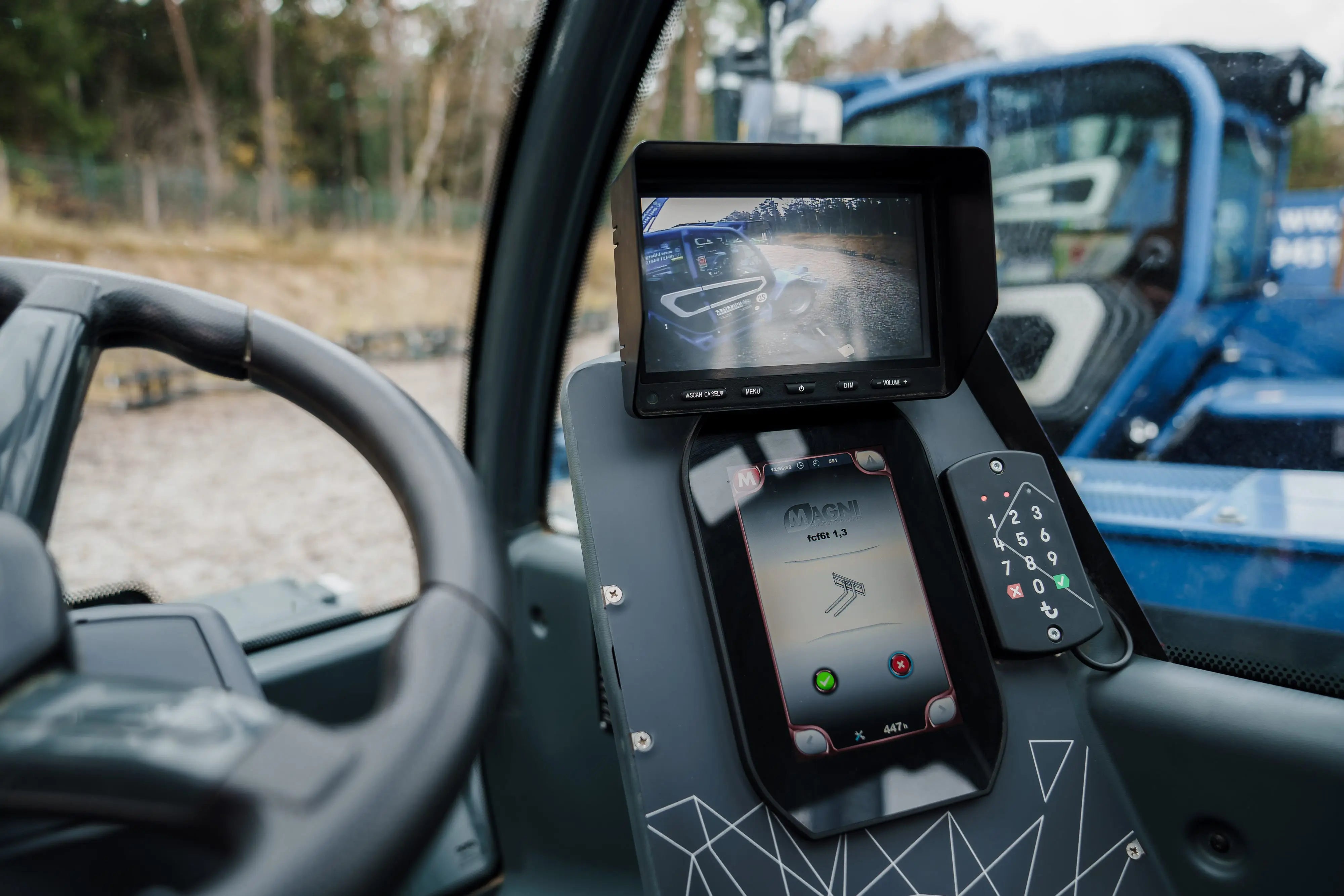
Even with a reversing camera, caution is still necessary. Cameras can be dirty, distort distance, or only show a limited section.
Next to the machine


- Choosing a selection results in a full page refresh.
- Opens in a new window.