 What You Need to Know
Toyota forklifts are very reliable, but error codes can still occur in everyday use. In our guide, you'll learn what these codes mean, how to correctly read them, and what immediate measures are advisable. These include turning off the engine, restarting the forklift, and performing a quick safety check of the most important systems. One thing is clear:Never continue working with an active error code– only after the problem has been resolved or approved by the service team can you continue safely.
The tables provide a comprehensive overview of all relevant categories, from 4Y engines and diesel common rail to electric forklifts, hydraulics, SAS systems, and chargers. For each code, you'll receive practical advice for the initial check. This allows you to quickly decide whether simple checks like cable or sensor testing are sufficient or whether Toyota Service should be called in.
Toyota forklifts are considered extremely reliable—which is precisely why we like to use them in our rental business. Nevertheless, error messages can occur in the rigors of everyday life. With the right approach, you can resolve most issues quickly, safely, and without subsequent damage.
Here you'll learn what Toyota forklift error codes mean, how to systematically check them, and when you should call for service. All the tables below will help you quickly identify codes – ideal for workshops, warehouses, and shift work. The style and structure are based on our proven BIBERGER practical guides.
What are error codes – and why are they helpful?
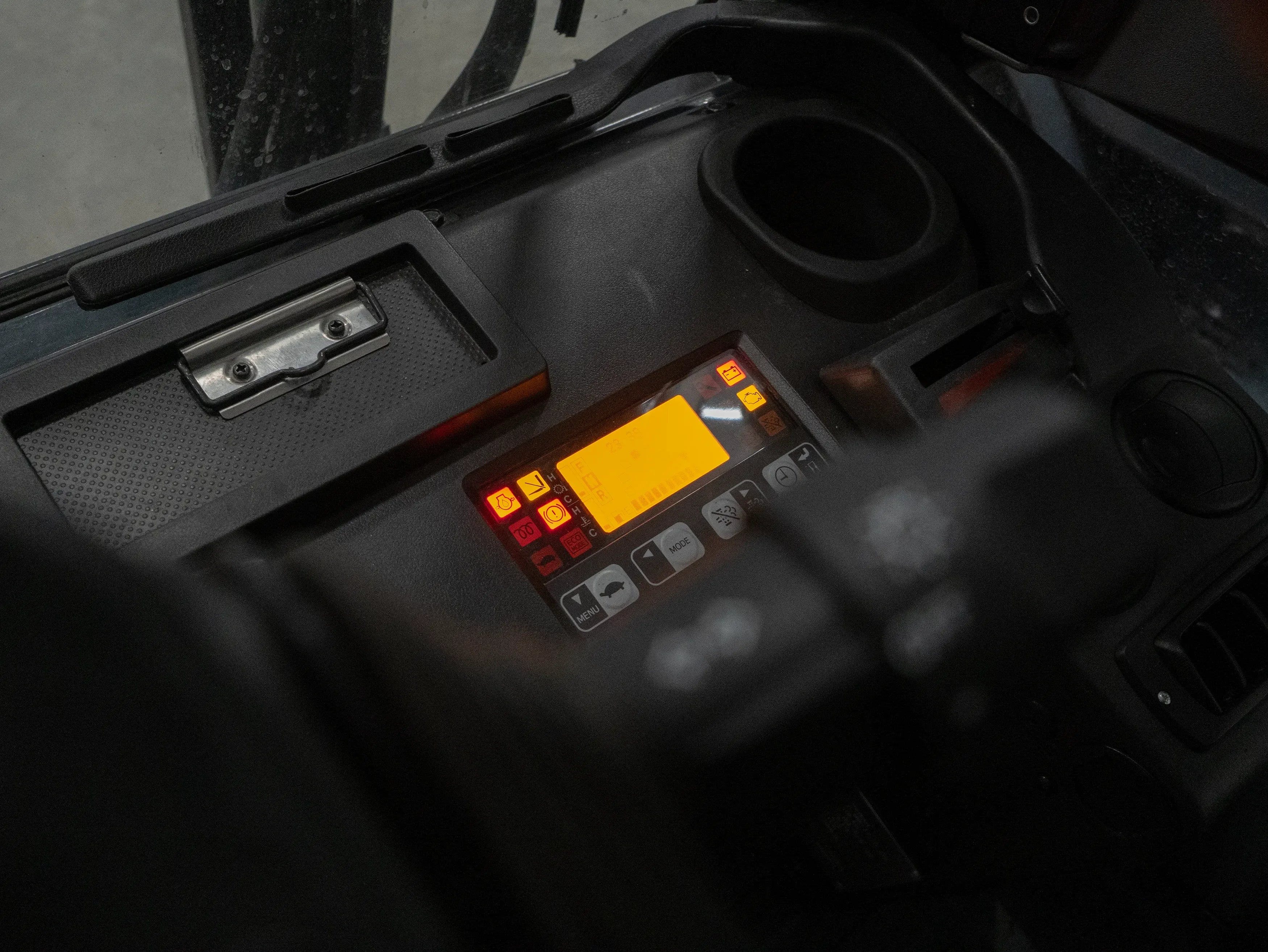
Error codes are diagnostic clues from the vehicle's control system. They show you which component or sensor is faulty and where to start your investigation. This saves time and prevents parts from being replaced on suspicion.
Important: A code is not a judgment, but an indication . Only after a visual inspection, measurements, and a brief functional test can you make the right decision.
How to deal with Toyota error codes correctly
Basic principle: first secure, then systematically check
-
Secure : Cordon off the area, secure the forklift against rolling away, put the load down.
-
Read : Note down the code, document the display or symbol with the time.
-
Identify : Check the affected assembly, cables, connectors, fuses.
-
Testing : Test the repair, check the error log again.
-
Decide : Release the device or request service. This clear sequence is standard in our operations and training courses.
First steps in case of error codes
- Turn off the engine immediately if an error code or wrench symbol appears.
- Restart the forklift – many codes can be reset by a controlled restart .
- Perform safety check – check SAS, emergency stop, seat/safety switches.
- If the fault persists, contact a Toyota service technician or our service department.
Safety instructions
- Never continue working with an active error code.
- If you have unknown codes, always call customer service .
- Only put the forklift back into operation after the fault has been rectified. Safety first.
Error codes: Overview and practical “first aid”
The tables are sorted by components/categories . The "First Aid/Check" column describes quick checks you can safely perform yourself. If in doubt, contact service.
4Y Engine – ECS Basics
| code |
Description |
First Aid/Examination |
category |
| E01-1 |
Fuel feedback control error (gasoline) rich |
Fuel mixture too rich - check fuel system, check O2 sensor |
4Y Motor ECS Basics |
| E01-2 |
Fuel feedback control error (gasoline) lean |
Fuel mixture too lean - check fuel system, check O2 sensor |
4Y Motor ECS Basics |
| E01-3 |
Fuel feedback control error (LPG) rich |
LPG mixture too rich - check gas system, correct settings |
4Y Motor ECS Basics |
| E01-4 |
Fuel feedback control error (LPG) lean |
LPG mixture too lean - check gas system, correct settings |
4Y Motor ECS Basics |
| E01-5 |
O2 sensor circuit open abnormality |
O2 sensor circuit open - check wiring and sensor |
4Y Motor ECS Basics |
| E01-6 |
O2 sensor heater circuit open abnormality |
O2 sensor heating circuit open - check wiring and heating element |
4Y Motor ECS Basics |
| E02-1 |
Intake air temperature sensor circuit open abnormality (High input) |
Intake air temperature sensor open - check sensor and wiring |
4Y Motor ECS Basics |
| E02-2 |
Intake air temperature sensor circuit short abnormality (Low input) |
Intake air temperature sensor short circuit - check sensor and wiring |
4Y Motor ECS Basics |
| E03-1 |
Intake air pressure sensor circuit open abnormality (High input) |
Intake air pressure sensor open - check sensor and wiring |
4Y Motor ECS Basics |
| E03-2 |
Intake air pressure sensor circuit short abnormality (Low input) |
Intake air pressure sensor short circuit - check sensor and wiring |
4Y Motor ECS Basics |
| E04-1 |
Coolant temperature sensor circuit open abnormality (High input) |
Coolant temperature sensor open - check sensor and wiring |
4Y Motor ECS Basics |
| E04-2 |
Coolant temperature sensor circuit short abnormality (Low input) |
Coolant temperature sensor short circuit - check sensor and wiring |
4Y Motor ECS Basics |
| E04-3 |
Coolant temperature sensor circuit malfunction |
Coolant temperature sensor malfunction - replace sensor |
4Y Motor ECS Basics |
| E05-1 |
Throttle position sensor 1 open abnormality |
Throttle Position Sensor 1 Open - Check/Replace Sensor |
4Y Motor ECS Basics |
| E05-2 |
Throttle position sensor 1 short abnormality |
Throttle position sensor 1 short circuit - check/replace sensor |
4Y Motor ECS Basics |
| E05-3 |
Throttle position sensor 2 open abnormality |
Throttle Position Sensor 2 Open - Check/Replace Sensor |
4Y Motor ECS Basics |
| E05-4 |
Throttle position sensor 2 short abnormality |
Throttle position sensor 2 short circuit - check/replace sensor |
4Y Motor ECS Basics |
| E05-5 |
Throttle position sensor offset abnormality |
Throttle Position Sensor Offset Error - Calibration Required |
4Y Motor ECS Basics |
| E05-6 |
Throttle position sensor out of range error |
Throttle position sensor out of range - Calibrate/replace sensor |
4Y Motor ECS Basics |
BT Electric Forklifts – Extended
| code |
Description |
First Aid/Examination |
category |
| 2,001 |
The emergency stop switch has been activated |
The forklift stops - reset the emergency stop switch |
BT Electric Forklift Extended |
| 2,003 |
Service is required |
Cause is displayed - call customer service technician |
BT Electric Forklift Extended |
| 3,001 |
Cruise control not in neutral position when switching on |
The forklift cannot be driven - set the controller to neutral |
BT Electric Forklift Extended |
| 3,002 |
Engine temperature > +150 °C |
Reduced performance - let the forklift cool down |
BT Electric Forklift Extended |
| 3,003 |
Engine control temperature > +85 °C |
Reduced performance - let the forklift cool down |
BT Electric Forklift Extended |
| 3,080 |
Incorrect values from the temperature sensors |
Reduced performance - have temperature sensors checked |
BT Electric Forklift Extended |
| 3,081 |
Incorrect values from the temperature sensors |
Reduced performance - have temperature sensors checked |
BT Electric Forklift Extended |
| 3,521 |
Low motor voltage |
Forklift stops - check battery and wiring |
BT Electric Forklift Extended |
| 3,522 |
High motor voltage |
Forklift stops - call customer service technician |
BT Electric Forklift Extended |
| 4,001 |
Lift/lower control not in neutral position at start |
Function deactivated - set controller to neutral position |
BT Electric Forklift Extended |
BT Electric Forklift – Standard
| code |
Description |
First Aid/Examination |
category |
| 1:503, 2:504 |
Unclear status of the emergency stop switch |
Restart forklift |
BT Electric Forklift Standard |
| 2:005 |
Maintenance is due |
Contact Support |
BT Electric Forklift Standard |
| 2:102 |
Lifting height limitation/height preselection error |
Be careful when lifting and lowering |
BT Electric Forklift Standard |
| 2:106 |
Collision sensor has been activated |
Forklift drives at reduced speed |
BT Electric Forklift Standard |
| 2:180 |
No contact with the collision sensor |
Forklift drives at reduced speed |
BT Electric Forklift Standard |
| 2:420 |
Battery voltage too low |
Check cables and battery for faults |
BT Electric Forklift Standard |
| 2:421 |
Battery voltage too high |
Check cables and battery for faults |
BT Electric Forklift Standard |
| 2:507 |
Forklift not functional |
Contact Support |
BT Electric Forklift Standard |
| 3:080 |
Safety pedal defective. Signal after 20 minutes of inactivity |
Make sure the pedal has not been blocked or tampered with |
BT Electric Forklift Standard |
| 3:081 |
Seat switch defective. Signal after 20 minutes of inactivity |
Make sure the seat switch is not jammed |
BT Electric Forklift Standard |
| 3:305, 3:325, 4:205, 4:225, 5:035, 5:326 |
Overtemperature |
Allow the forklift to cool down. If the error persists, contact support. |
BT Electric Forklift Standard |
| 4:180, 4:181, 4:182, 4:183 |
Altitude sensor error |
Check if the charge exceeds the capacity. Contact support if problems occur. |
BT Electric Forklift Standard |
| 4:185, 4:186, 4:187 |
Incorrect height measurement |
Raise and lower forks. Contact support if you have any problems. |
BT Electric Forklift Standard |
| 4:188 |
Cabin tilt function defective |
Contact Support |
BT Electric Forklift Standard |
BT warning codes
| code |
Description |
First Aid/Examination |
category |
| C19 |
Parameter values not OK. Default values entered |
Call customer service technician |
BT warning codes |
| C20 |
Speed control not in zero position when switched on |
Set the controller to zero |
BT warning codes |
| C28 |
Emergency stop switch has been activated |
Release emergency stop switch |
BT warning codes |
| C29 |
Maintenance due |
Call customer service technician |
BT warning codes |
| C3 |
Safety speed – collision sensor impact detected |
Check collision sensor, remove obstacles |
BT warning codes |
| C41 |
Battery voltage too low |
Charge battery |
BT warning codes |
| C42 |
Battery voltage too high |
Call customer service technician |
BT warning codes |
| C43 |
High temperature in the transistor panel |
Leave the forklift standing, restart later |
BT warning codes |
Diesel engine (Common Rail)
| code |
Description |
First Aid/Examination |
category |
| E1B-1 |
Common rail pressure sensor circuit open abnormality (High input) |
Common rail pressure sensor open - check sensor and wiring |
Diesel engine (Common Rail) |
| E1B-2 |
Common rail pressure sensor circuit short abnormality (Low input) |
Common rail pressure sensor short circuit - check sensor and wiring |
Diesel engine (Common Rail) |
| E1B-3 |
Common rail pressure sensor circuit malfunction |
Common rail pressure sensor malfunction - replace sensor |
Diesel engine (Common Rail) |
| E1B-4 |
Common rail pressure sensor circuit malfunction |
Common rail pressure sensor malfunction - replace sensor |
Diesel engine (Common Rail) |
| E1C-1 |
Common rail pressure too high |
CR pressure too high - check pressure regulator valve, check fuel system |
Diesel engine (Common Rail) |
| E1C-2 |
Fuel large leakage detected |
Large fuel leak - check lines and injectors |
Diesel engine (Common Rail) |
| E1C-3 |
Supply pump control circuit malfunction |
Check feed pump control circuit |
Diesel engine (Common Rail) |
| E1C-4 |
Supply pump malfunction |
Check/replace feed pump |
Diesel engine (Common Rail) |
| E1D-1 |
EDU all malfunction |
Check all injection valve control units |
Diesel engine (Common Rail) |
| E1D-2 |
Injector EDU #1 malfunction |
Check/replace EDU #1 |
Diesel engine (Common Rail) |
| E1D-3 |
Injector EDU #2/#3 malfunction |
Check/replace corresponding EDU |
Diesel engine (Common Rail) |
| E1D-4 |
Injector EDU #3 malfunction |
Check/replace EDU #3 |
Diesel engine (Common Rail) |
Throttle/Fuel (Gasoline/LPG)
| code |
Description |
First Aid/Examination |
category |
| E06-1 |
Throttle motor drive circuit open abnormality |
Check wiring |
Throttle/Fuel |
| E06-2 |
Throttle motor drive circuit short abnormality |
Check wiring |
Throttle/Fuel |
| E06-3 |
Throttle motor power supply circuit open abnormality |
Check power supply |
Throttle/Fuel |
| E06-4 |
Throttle motor power supply circuit short abnormality |
Check power supply |
Throttle/Fuel |
| E06-5 |
Throttle engine seizing abnormality |
Check/replace motor |
Throttle/Fuel |
| E06-6 |
Electronic throttle circuit malfunction |
Check/reset system |
Throttle/Fuel |
| E07-1 |
Fuel control module circuit open abnormality |
Check wiring |
Throttle/Fuel |
| E08-1 |
Low voltage (battery line open) error |
Check battery and wiring |
Throttle/Fuel |
| E09-1 |
Ignition signal error |
Check ignition system |
Throttle/Fuel |
| E0A-1 |
Fuel specification determination signal error |
Check fuel switchover |
Throttle/Fuel |
| E0A-2 |
Fuel specification changeover switch abnormality |
Check/replace switch |
Throttle/Fuel |
| E0A-3 |
Fuel specification type mismatch |
Check settings |
Throttle/Fuel |
| E0A-4 |
Engine specification determination error |
Check ECU parameters |
Throttle/Fuel |
Electric Forklift – Advanced (Control/Power)
| code |
Description |
First Aid/Examination |
category |
| E101 |
Hardware error |
Check control unit, try restarting |
Electric Forklift Extended |
| E104 |
Hardware error |
Check control unit, try restarting |
Electric Forklift Extended |
| E106 |
Too high current on digital output or field current |
Check wiring for short circuits, reduce load |
Electric Forklift Extended |
| E115 |
Main contactor fault |
Check main contactor/coil, check wiring |
Electric Forklift Extended |
| E152 |
Battery/communication problems (controller/handle) |
Check battery connections and CAN bus |
Electric Forklift Extended |
| E161 |
Power amplifier issue (lower valve detection) |
Check hydraulic valves and amplifiers |
Electric Forklift Extended |
Electric forklifts – Common practice codes
| code |
Description |
First Aid/Examination |
category |
| AD-8 |
CAN communication SAS/OPS data reception error |
Check SAS/OPS cabling and CAN |
Electric forklifts frequently |
| C-1 |
Current sensor drive defective |
Locate and check the current sensor on the chassis |
Electric forklifts frequently |
| C-14 |
Arm angle reference warning |
Check tilt sensor, perform calibration |
Electric forklifts frequently |
| E-107 |
Main contactor off error |
Check main contactor (coil resistance approx. 39 ohms), check wiring |
Electric forklifts frequently |
| E-150 |
Drive communication error |
Check CAN bus wiring/connector |
Electric forklifts frequently |
| E-250 |
Charger in sleep mode / Battery problems |
Plug in charger (a few minutes), check battery connections |
Electric forklifts frequently |
Hydraulic system
| code |
Description |
First Aid/Examination |
category |
| E61-1 |
Load sensor open abnormality |
Load sensor open - check sensor/wiring |
Hydraulic system |
| E61-2 |
Load sensor VCC short abnormality |
Load sensor power supply short circuit - check wiring |
Hydraulic system |
| E62-1 |
Tilt angle sensor open abnormality |
Tilt angle sensor open - check sensor/wiring |
Hydraulic system |
| E62-2 |
Tilt angle sensor VCC short abnormality |
Tilt angle sensor VCC short circuit - check wiring |
Hydraulic system |
| E64-1 |
Lift lower lock solenoid open circuit or load short |
Check coil and wiring |
Hydraulic system |
| E64-2 |
Lift solenoid: Short circuit |
Check/replace coil |
Hydraulic system |
| E65-1 |
Tilt control solenoid open circuit or load short |
Check coil and wiring |
Hydraulic system |
| E65-2 |
Tilt solenoid: Short circuit |
Check/replace coil |
Hydraulic system |
Charger error codes (integrated chargers)
| code |
Description |
First Aid/Examination |
category |
| 8,010 |
Communication problems with integrated charger (start) |
Check wiring |
Charger error codes |
| 8,011 |
No communication handle ↔ charger |
Check wiring |
Charger error codes |
| 8,014 |
No communication handle ↔ charger |
Check wiring |
Charger error codes |
| 8,020 |
Battery not connected to integrated charger |
Check battery connection |
Charger error codes |
| 8,021 |
Low battery voltage |
Check/replace battery |
Charger error codes |
| 8,022 |
High battery voltage |
Call customer service technician |
Charger error codes |
| 8,023 |
Low charging temperature |
Increase temperature |
Charger error codes |
| 8,024 |
High charging temperature |
Let cool |
Charger error codes |
| 8,027 |
Serious error in the integrated charger |
Replace charger |
Charger error codes |
| 8,028 |
Loading time exceeded |
Reset charging process |
Charger error codes |
| 8,029 |
Overcharging above the permissible Ah value |
Check battery |
Charger error codes |
| 8,030 |
Charger installed, no parameter selected |
Set parameters |
Charger error codes |
| 8,031 |
Incorrect parameter selection battery |
Correct parameters |
Charger error codes |
Engine sensors
| code |
Description |
First Aid/Examination |
category |
| E18-1 |
NE sensor / crankshaft sensor malfunction |
Check sensor and wiring |
Engine sensors |
| E18-2 |
NE sensor open at start |
Check/replace sensor |
Engine sensors |
| E18-3 |
G2 / Camshaft sensor malfunction |
Check/replace sensor |
Engine sensors |
| E19-1 |
Starter signal circuit malfunction |
Check starter relay and wiring |
Engine sensors |
SAS system (stability/steering)
| code |
Description |
First Aid/Examination |
category |
| E51-1 |
Speed sensor open abnormality |
Check sensor/wiring |
SAS system |
| E52-1 |
Yaw rate sensor open abnormality |
Check sensor/wiring |
SAS system |
| E54-1 |
Swing lock solenoid open / load short |
Check coil/wiring |
SAS system |
| E71-1 |
Tire angle sensor open abnormality |
Check sensor/wiring |
SAS system |
| E72-1 |
Steering wheel angle sensor SS1 open |
Check/replace sensor |
SAS system |
| E73-1 |
Knob position compensation solenoid open |
Check valve/wiring |
SAS system |
System/Controller (ECU, voltages)
| code |
Description |
First Aid/Examination |
category |
| E1F-1 |
Controller malfunction / CPU error (ASC) |
Check/replace ECU, check wiring |
System/Controller |
| E1F-2 |
Controller CPU malfunction |
Replace ECU |
System/Controller |
| E1F-4 |
Controller circuit malfunction |
Check wiring |
System/Controller |
| E1F-5 |
EEPROM injector correction malfunction |
Program/replace ECU |
System/Controller |
| E30-1 |
DCR_LH: Low voltage |
Check battery/wiring |
System/Controller |
| E30-2 |
DCR_RH: Low voltage |
Check battery/wiring |
System/Controller |
| E30-3 |
PCR: Low voltage |
Check battery/wiring |
System/Controller |
When should you check it yourself – and when should you call for service?
Check yourself: Visually inspect the connectors, fuses, battery terminals, and any obvious cable breaks. A controlled restart is also acceptable.
Call Service for recurring errors, safety-relevant systems (SAS, brakes, lift hydraulics), high-voltage, common-rail injection, and all codes with an unknown cause. This is in line with our "Safety Before Speed" policy.
Practical tips from renting
Document the code, time, operating conditions, and recent work on the vehicle. This will significantly speed up the diagnosis.
Keep standard spare parts on hand: fuses, relays, fleet-standard O2/temp sensors, and common connectors. This will reduce downtime.
24/7 service and support
For our tenants: 24/7 service hotline – we are available for you around the clock.
We also provide maintenance and repairs for third-party devices. Just give us a call – we'll take care of it.
About the author
Martin Biberger
Managing Director
Martin is the founder and managing director of BIBERGER Arbeitsbühnen & Forklifts.
He is responsible for thetechnical areaTogether with his team, he is responsible for thetechnical purchasingthe machines thatFurther development of the machine inventoryand the smooth operation of over 1,500 BIBERGER rental devices.
From many years of experience he knows theStrengths and weaknesses of all device classes, the possibleAreas of applicationand thetechnical possibilities– always with a view to theDevelopment of the entire industryand future innovations.





 What You Need to Know






Share:
Load center simply explained – definition, meaning & practice
Hidden defects when buying used work platforms
Our editorial quality standards
The subject content on biberger.de are editorially created, reviewed, and continuously updated. The basis is our daily work with aerial platforms, telehandlers, and industrial trucks – in rental, sales, operational planning, and technical support.
Each article draws on real-world experience and is editorially reviewed for clarity, accuracy, and practical relevance according to expert criteria. Technical statements are regularly compared against current industry standards and best practices.
The aim of our publications is to make reliable specialist knowledge accessible and to offer guidance to users, decision-makers and industry partners. BIBERGER sees itself as an independent information platform for safe, economical and modern height access technology – well-founded, comprehensible and free from advertising influence.