







 What You Need to Know
The selection of work platforms is vast – and that's precisely what makes the decision complex. The wrong platform costs time, money, and stress. Here you'll find clear, practical guidance: a compact overview of types with working heights, load capacities, advantages, and typical applications, plus the most important selection criteria for your project.
Why the right work platform is crucial
Only when the design and requirements are matched will you be able to work safely, efficiently, and without idle time. Therefore, always consider not only the height, but also the lateral reach , the surface , the available space , and the mobility .
Overview of work platform types and their areas of application
Main recommendation: Choose based on working height, lateral reach, ground conditions, and mobility needs. These values are approximate and vary depending on the model.
| type | Construction / mechanism | Working height* | Load capacity | Advantages | Typical areas of application |
|---|---|---|---|---|---|
| Scissor lifts | Parallel lifting/lowering via scissor mechanism | up to 20 m | up to 1,000 kg | Large, stable platform; high load capacity; compact | Electrical installations, painting/drywalling, maintenance in halls |
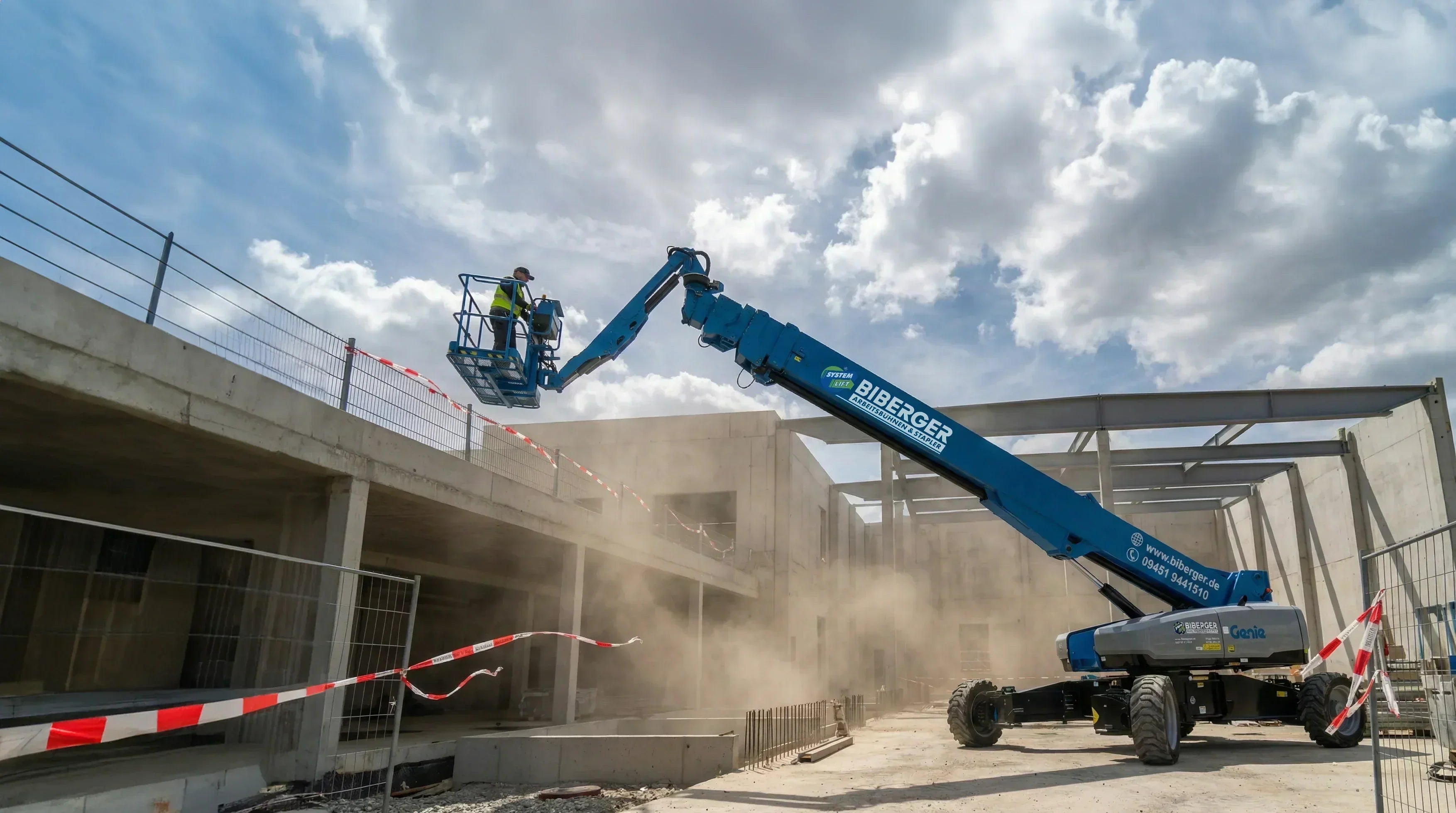
| Telescopic work platforms | Straight, telescopic boom arm | up to 60 m | approx. 200–300 kg | High, direct reach; fast access | Facades, tree care, wind power, power line maintenance |
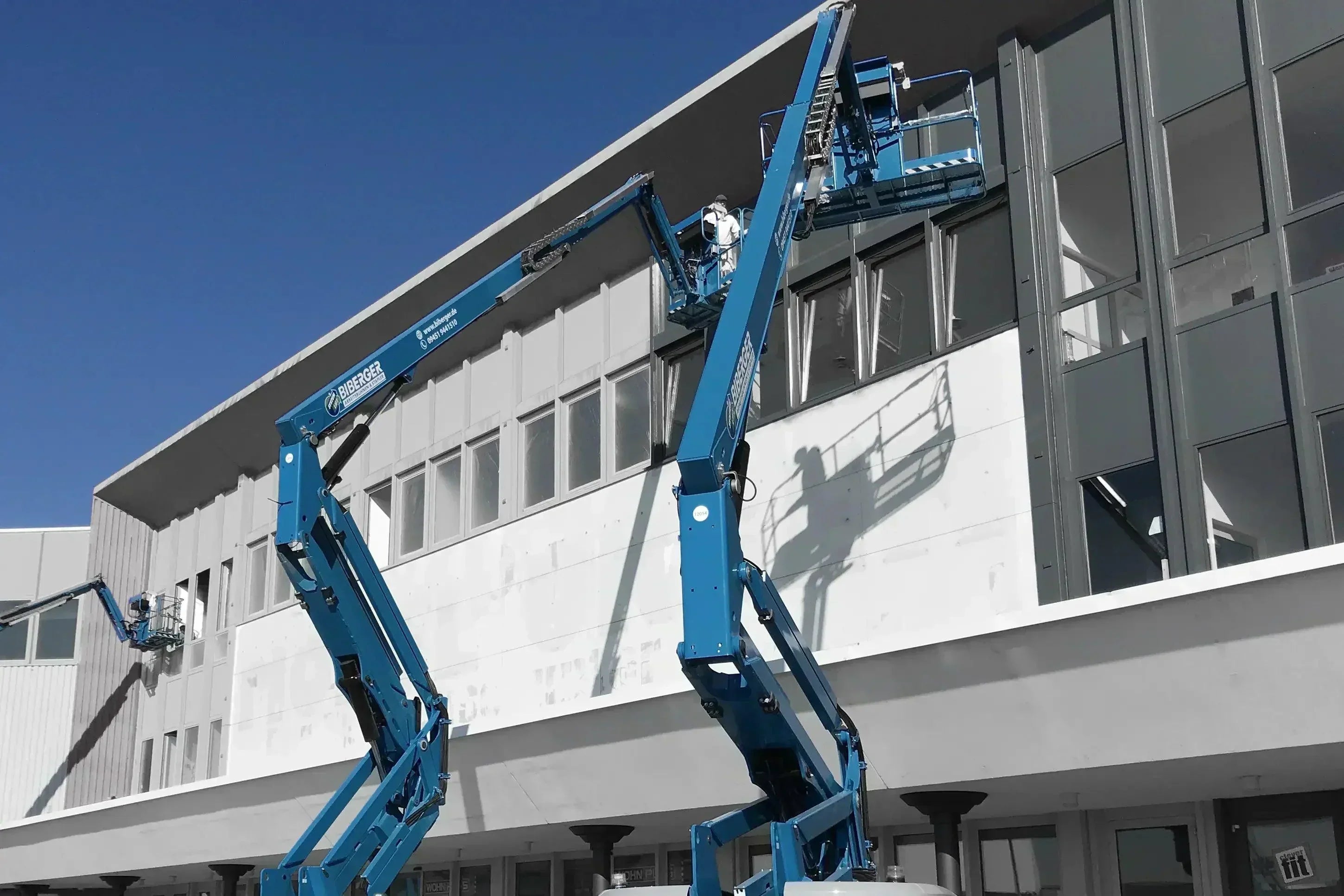
| Articulated telescopic work platforms | Multi-articulated boom for avoiding obstacles | up to 40 m | approx. 200–300 kg | Bridges obstacles; flexible positioning | Over roof edges/machines, bridge underpasses, narrow construction sites |
| Mast work platforms (vertical) | Guided mast (pile/rotating mast), pure vertical movement | up to 15 m | approx. 200–300 kg | Very compact; small footprint; emission-free possible | Interiors with narrow corridors, maintenance in museums/shopping centers |
| Crawler work platforms | Boom on crawler chassis with automatic leveling | up to 30 m | approx. 200–300 kg | Off-road; gentle on the ground; stable on uneven surfaces | Landscaping, cemetery maintenance, soft/unpaved ground |
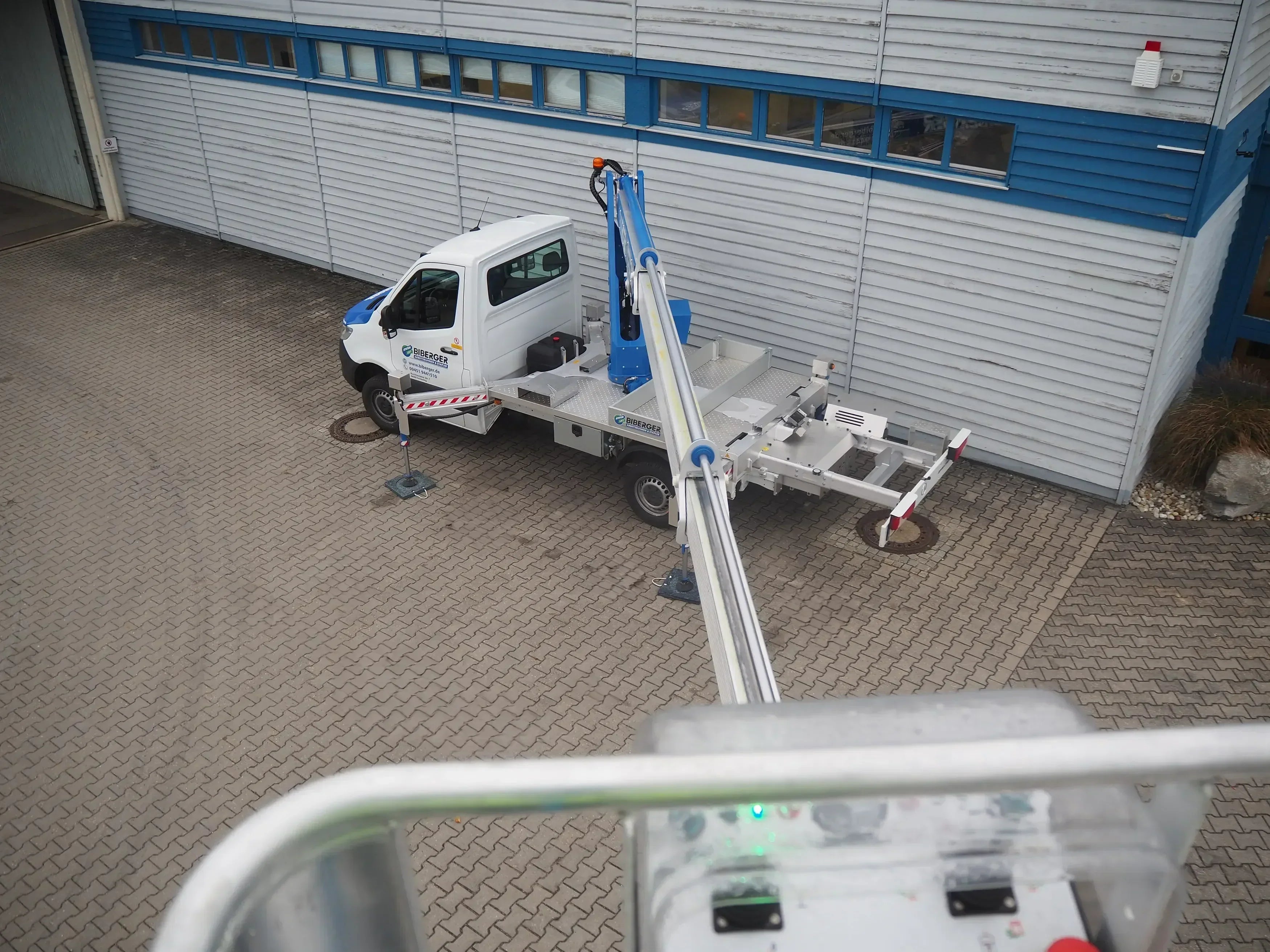
| Trailer-mounted work platforms | Telescopic or articulated telescope on trailer chassis (car towing) | up to 21 m | approx. 200–300 kg | Transportable by car; cost-effective; compact | Courtyards, driveways, renovations to existing buildings |
| Truck-mounted work platforms | Platform permanently mounted on truck chassis | up to 100 m | approx. 200–300 kg | Highly mobile; quick relocation; great heights/ranges | Municipalities, building cleaning, roof/photovoltaics, antenna installation |
| Passenger lifts | Compact one-person stages with a small footprint | up to 12 m | approx. 120–200 kg | Very maneuverable; quickly ready for use; easy to operate | Maintenance in halls, shopping centers, theaters, technical rooms |
| Aerial rescue vehicles (fire brigade) | Special boom/turntable ladder with rescue cage | up to 30 m | up to 300 kg | Designed for rescue and firefighting operations; robust cage technology | Fire service, rescue, technical assistance |
*Maximum working heights are guidelines only and depend on the specific model.
Typical areas of application
- Assembly & Construction: Facades, roofs, steel construction, interior fittings
- Maintenance & Repair: Industrial halls, logistics, airports
- Events: Lighting/stage technology, setup and dismantling
- Landscaping: tree pruning, maintenance of large green areas
- Cleaning & Renovation: Interior and exterior cleaning at
- Telecommunications & Energy: Masts, antennas, PV systems
How to make the right choice – the decisive criteria
- Working height : Required height plus reserves for tools/movement.
- Lateral reach: Bridging obstacles? Is side access necessary?
- Load capacity : realistically add people, tools and materials.
- Terrain & surface: Indoor floor (non-marked) vs. unpaved (chain).
- Space conditions: Check clearance heights, door widths, turning circles.
- Drive & emissions: Electric for indoors, diesel/hybrid for outdoors and range.
- Mobility: Frequent relocation? → Truck-mounted platform or trailer . Stationary? → Scissor lift/mast .
Compare work platforms directly online
At biberger.de , you can compare multiple aerial work platforms at once . With just one click, you can add machines to the comparison and receive a clear table with performance data such as working height, load capacity, drive type, and dimensions. This way, you can quickly identify which model is best suited to your application – before renting or purchasing.
Rent or buy – which is better?
- Renting: Ideal for occasional use or changing projects. You only pay for the equipment you use and benefit from immediately available, serviced machines – often including training, accident prevention regulations, maintenance, and insurance.
- Buying: Makes sense if you use it very regularly. Pay attention to maintenance records , accident prevention regulations , and technical inspections, especially for used devices.
Conclusion
The right work platform saves time , money, and reduces risks . Use the type overview and criteria, compare models, and then decide: rent for maximum flexibility or buy for permanent use. If you're unsure, a quick consultation with our technicians will help – then the right platform will be in the right place for the first appointment.




Share:
Comparison of aerial work platform drives: diesel vs. electric vs. hybrid
Forklift types – all types, applications, key figures & acquisition costs
Our editorial quality standards
The subject content on biberger.de are editorially created, reviewed, and continuously updated. The basis is our daily work with aerial platforms, telehandlers, and industrial trucks – in rental, sales, operational planning, and technical support.
Each article draws on real-world experience and is editorially reviewed for clarity, accuracy, and practical relevance according to expert criteria. Technical statements are regularly compared against current industry standards and best practices.
The aim of our publications is to make reliable specialist knowledge accessible and to offer guidance to users, decision-makers and industry partners. BIBERGER sees itself as an independent information platform for safe, economical and modern height access technology – well-founded, comprehensible and free from advertising influence.