Reading now: Installing mobile radio systems: Safe installation on roofs, mobile phone masts and transmission towers
Zusammenfassung Summary

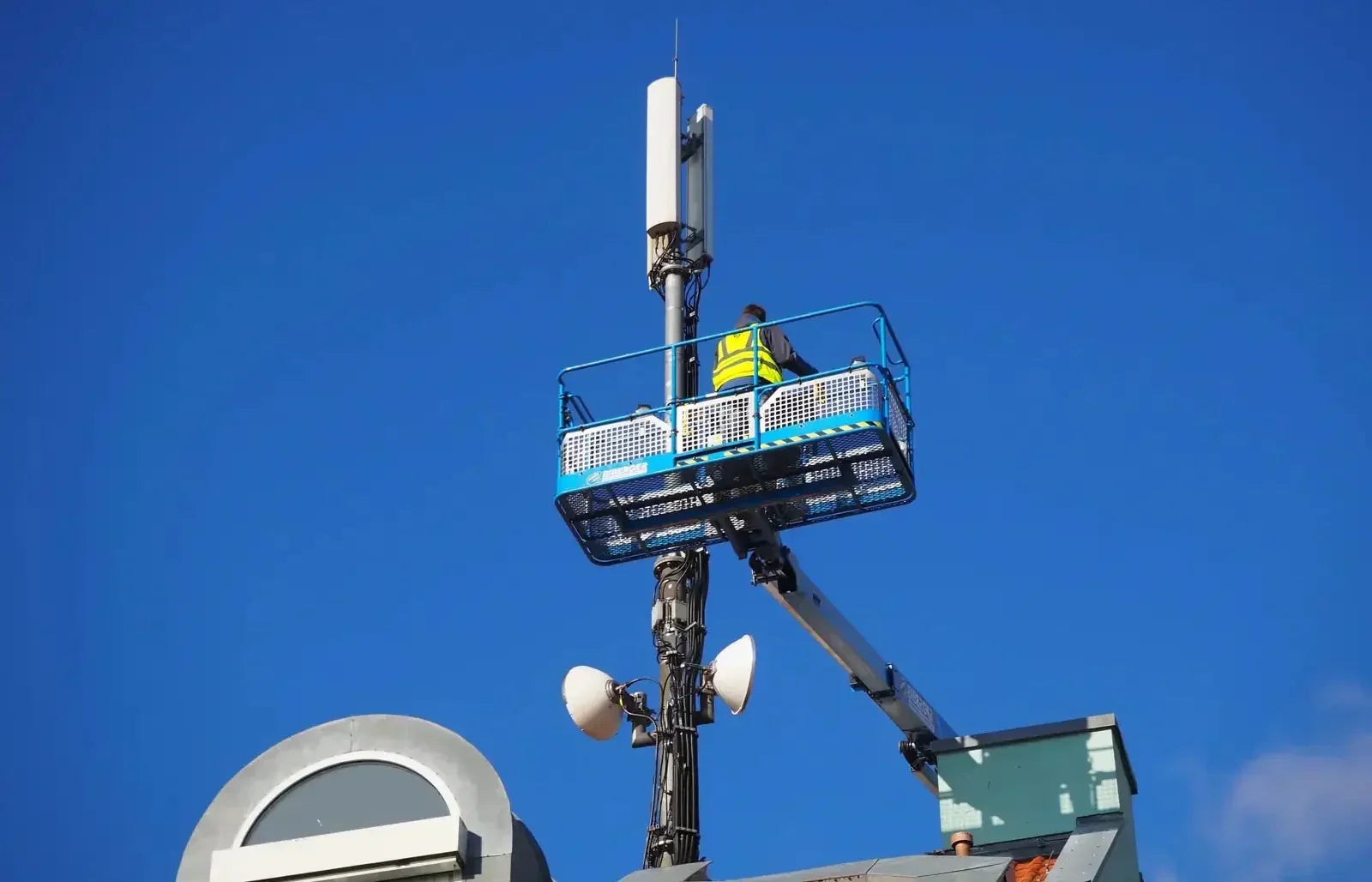
When mobile radio systems are installed on roofs, masts or in buildings, safe access to height is crucial.Work platformsThe most important tool: They enable safe and efficient work without scaffolding or lengthy preparation. Depending on the location, different types are suitable – for example,Articulated telescopic platformsfor permanent work on masts,Truck-mounted platformsfor flexible, short-term assignments orScissor liftsfor indoor installations.

Anyone who works with work platforms needs avalid training and annual instructionThis is the only way to avoid accidents and comply with legal requirements. Using the right platform saves time, increases safety, and ensures precise installation – whether in the city, off-road, or inside a building.

Zusammenfassung Summary

When mobile radio systems are installed on roofs, masts or in buildings, safe access to height is crucial.Work platformsThe most important tool: They enable safe and efficient work without scaffolding or lengthy preparation. Depending on the location, different types are suitable – for example,Articulated telescopic platformsfor permanent work on masts,Truck-mounted platformsfor flexible, short-term assignments orScissor liftsfor indoor installations.

Anyone who works with work platforms needs avalid training and annual instructionThis is the only way to avoid accidents and comply with legal requirements. Using the right platform saves time, increases safety, and ensures precise installation – whether in the city, off-road, or inside a building.

Whether on roofs, cell phone masts, or transmission towers – the installation of modern mobile phone systems requires reliable technology and precise work at great heights. Work platforms are indispensable tools for providing safe access for installers and implementing projects efficiently.

Challenges in the assembly of mobile radio systems

Mobile communications projects are technically demanding: Antennas must be precisely aligned, cables laid securely, and base stations professionally installed. In addition, some locations are difficult to access – such as the roofs of tall buildings, masts in the field, or the interiors of public buildings. Without the right platform, not only the risk but also the time required increases considerably.

Which work platform is the right one?

The choice depends on the duration of use, location, and structural conditions. Here's an overview of proven stage types:

1. Articulated telescopic platforms – perfect for continuous use

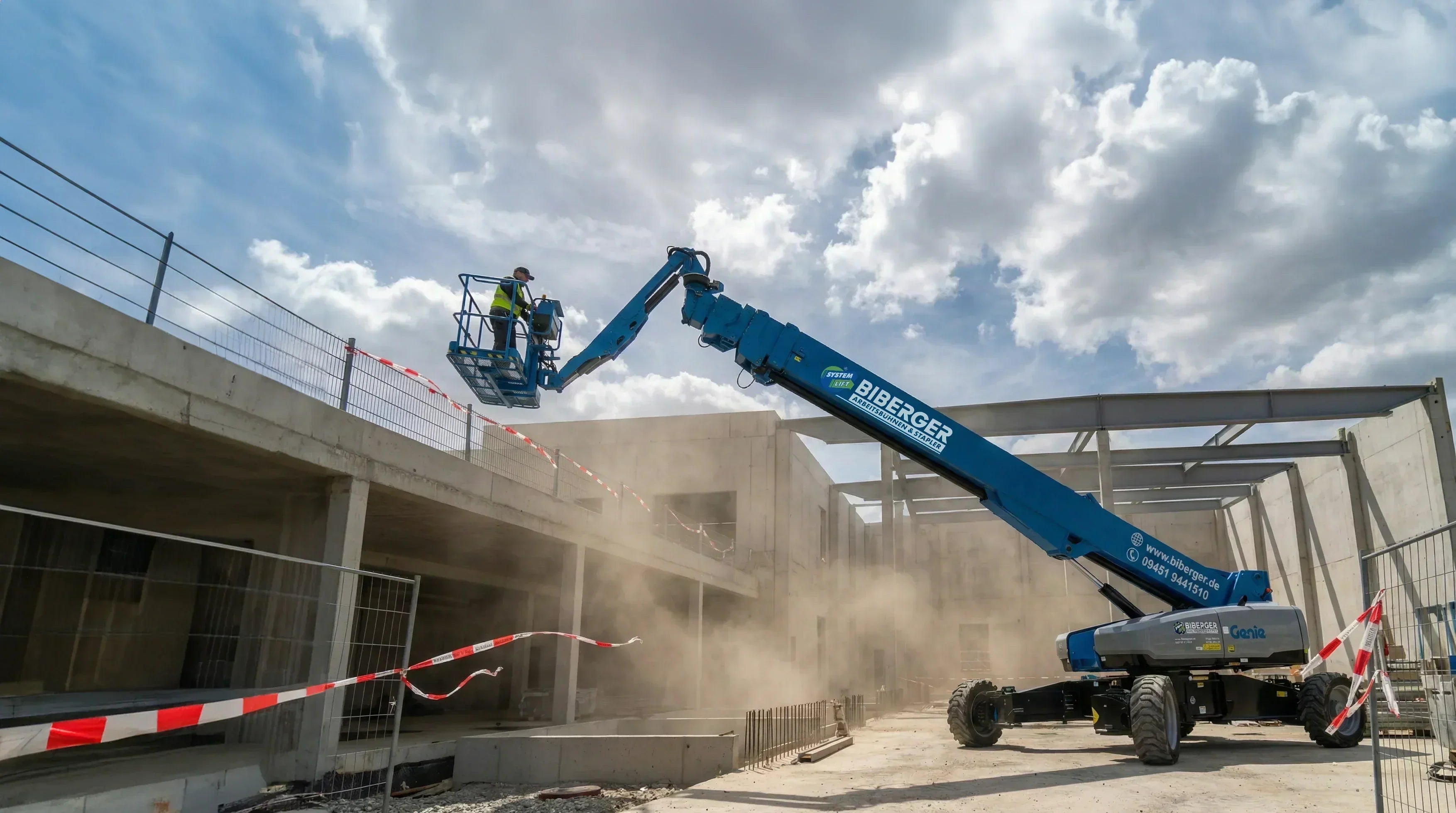
Articulated boom lifts offer a long reach and maximum mobility, making them ideal for precise work on masts, antennas, or facades. Their load-bearing capacity and stability also allow you to easily lift tools and materials into the air. Ideal for installations that last several days or require changing access points.

2. Truck-mounted work platforms – mobile and ready for immediate use

Truck-mounted platforms are versatile, quickly transportable, and ideal for short-term deployments. They are particularly useful for maintenance, temporary network reinforcements, or minor expansions at multiple locations. They offer high stability even in difficult terrain – with minimal setup effort.

3. Scissor lifts – ideal for indoor use

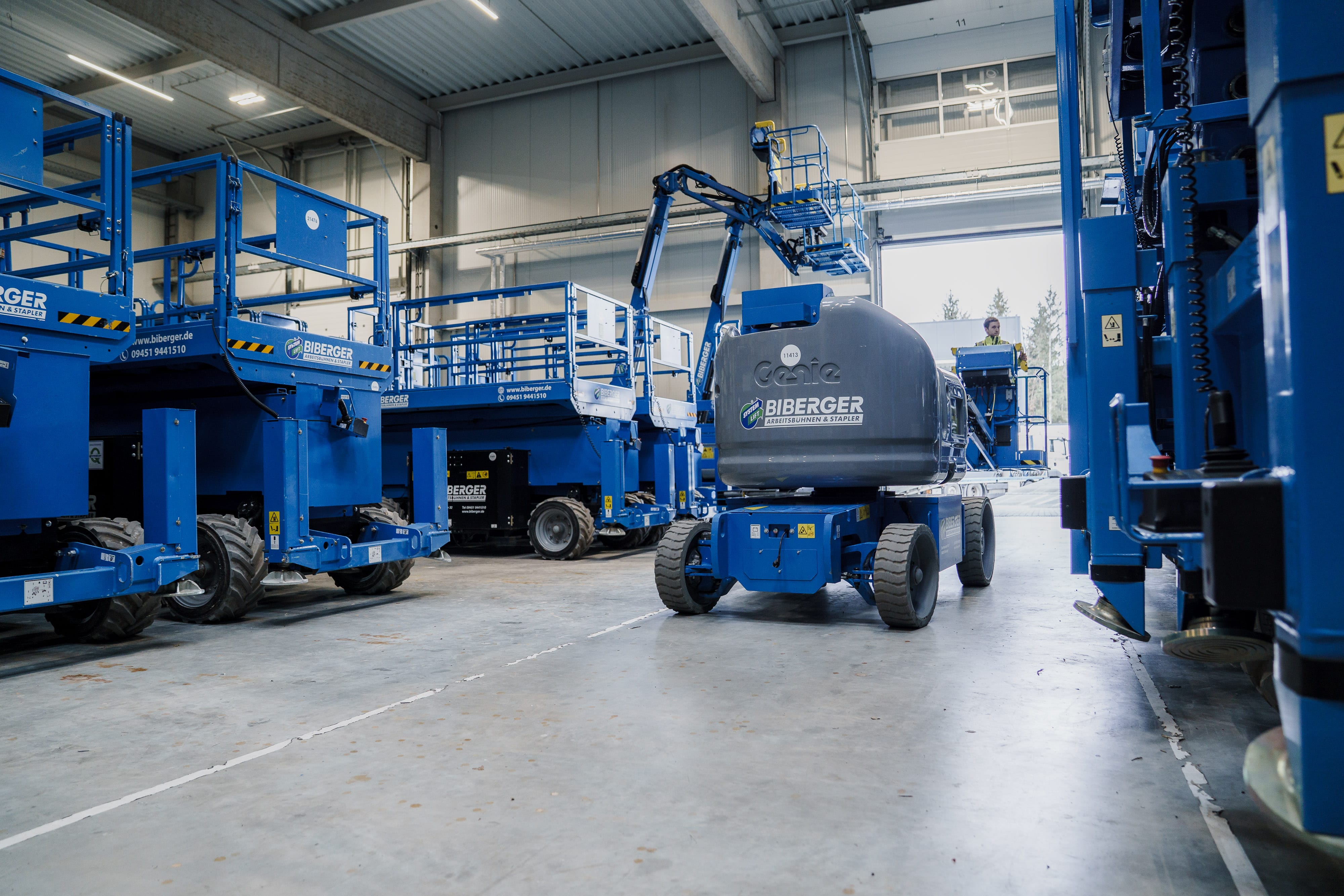
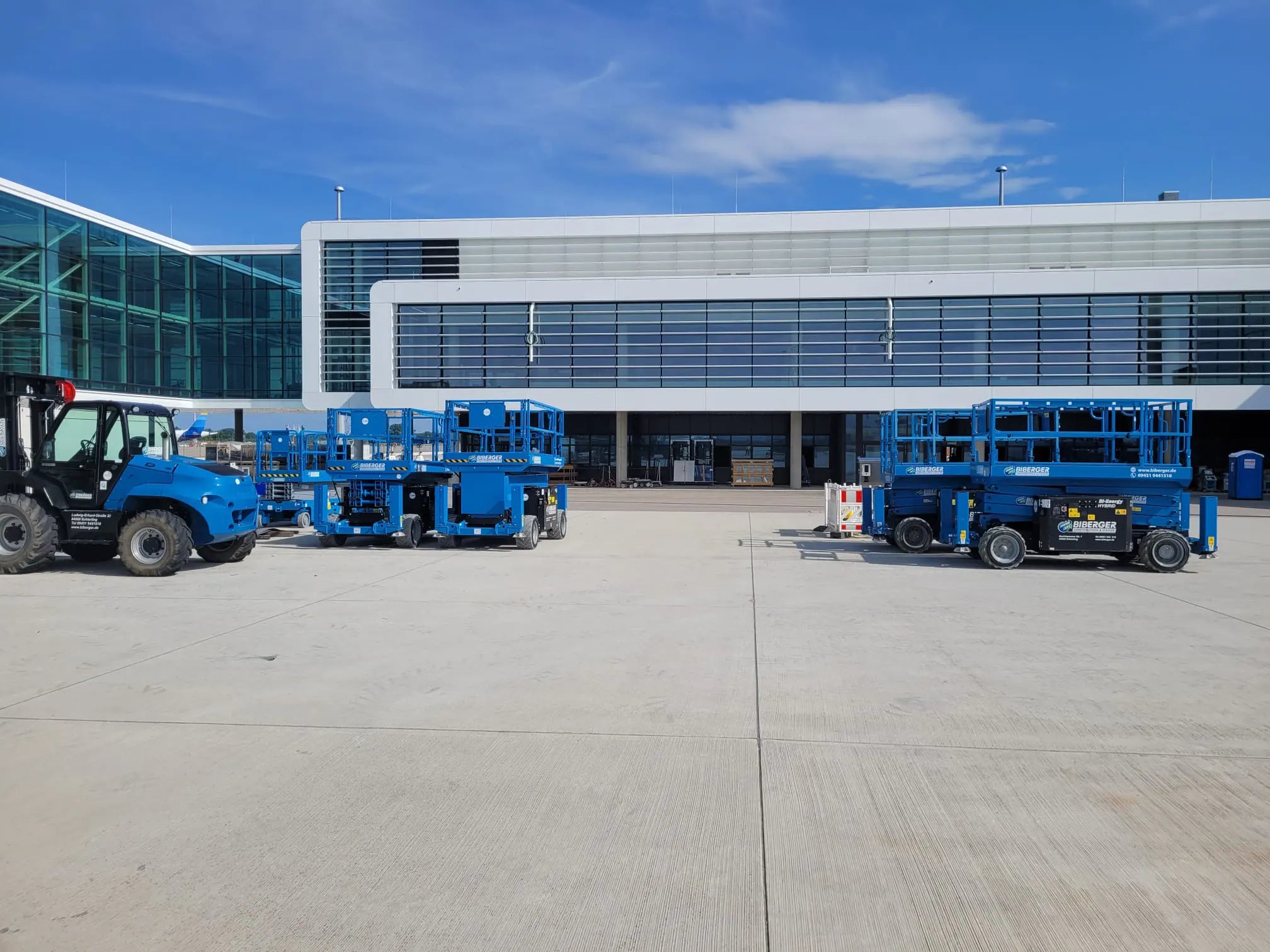
Scissor lifts They provide stable work surfaces for assembly work in buildings such as shopping centers or industrial halls. They offer sufficient space for two people plus materials and are emission-free thanks to their electric drive technology – ideal for indoor use or noise-sensitive areas.

Advantages of work platforms in the mobile communications sector

  • Flexibility: Access even in hard-to-reach places such as tower tops or rear of buildings
  • Efficiency: Quick assembly and disassembly, no scaffolding required
  • Safety: Stable stand, modern fall protection and intuitive operation
  • Productivity: More work in less time thanks to ideal working height and optimal alignment

Legal requirements: Who is allowed to operate stages?

For the use of mobile elevating work platforms in the mobile communications sector, operator training in accordance with DGUV Regulation 1 and annual instruction are mandatory. Only qualified personnel may operate these machines – both for safety reasons and for legal protection.

Conclusion: The right platform for your mobile communications deployment

Whether assembly, expansion, or maintenance – with the right work platform, you can complete mobile work faster, safer, and more efficiently. Depending on your project requirements, we offer the optimal solution – from compact scissor lifts to powerful articulated boom lifts.

Tip: At BIBERGER , you can rent work platforms flexibly – for any duration of use and any height.

Benjamin_Biberger_f09df03b-780b-4e03-8991-ca3f20113b29 - BIBERGER
About the author

Benjamin Biberger

Managing Director

Benjamin is the founder and managing director of BIBERGER Arbeitsbühnen & Forklifts.

He is responsible for thecommercial and administrative areasof the company and, together with his team, ensures theOptimization of operational processesand theoptimal customer supportin their projects.

Through his many years of experience in the areas of organization andProject managementIt provides a stable foundation – in its own daily business, in sustainableFurther development of processesas well as in theCollaboration with partners and customers.

Our editorial quality standards

The subject content on biberger.de are editorially created, reviewed, and continuously updated. The basis is our daily work with aerial platforms, telehandlers, and industrial trucks – in rental, sales, operational planning, and technical support.

Each article draws on real-world experience and is editorially reviewed for clarity, accuracy, and practical relevance according to expert criteria. Technical statements are regularly compared against current industry standards and best practices.

The aim of our publications is to make reliable specialist knowledge accessible and to offer guidance to users, decision-makers and industry partners. BIBERGER sees itself as an independent information platform for safe, economical and modern height access technology – well-founded, comprehensible and free from advertising influence.

Leave a comment

Please note, comments need to be approved before they are published.

This site is protected by hCaptcha and the hCaptcha Privacy Policy and Terms of Service apply.

Relevant topics

View all

Wind und Arbeitsbühnen: Was Du für einen sicheren Einsatz unbedingt wissen musst

Wind and aerial work platforms: What you absolutely need to know for safe use

Key problem: Why wind loads are so often underestimated Wind load is one of the most underestimated risks when using aerial work platforms. At ground level, wind force 6, with 12.5 m/s or around 45 km/h, often seems relatively harmless....

Read more

Arbeitsbühnenmärkte weltweit KI generiert

Aerial work platforms worldwide: An international comparison of markets, manufacturers & costs

Aerial work platforms are indispensable on almost every construction site and in many industries. However, although the basic technology is similar worldwide, markets differ significantly in terms of regulation, manufacturing landscape, pace of innovation, and typical application profiles. Understanding international...

Read more

Arbeitsbühne Privat mieten – Was ist erlaubt?

Renting a work platform as a private individual – What is allowed?

Aerial work platforms are primarily designed, standardized, and planned for commercial use. Typical applications include facade construction, plant and building technology, and industrial maintenance. Accordingly, equipment selection, insurance models, and rental procedures are geared primarily towards commercial users with trained...

Read more

Anschlagen von Lasten – Anschlagmittel richtig auswählen und sicher einsetzen

Lifting loads – selecting and safely using lifting equipment

Safely attaching loads is one of the most demanding tasks when operating cranes , forklifts , and lifting equipment. Errors almost never occur during the lifting itself, but almost always result from misjudging the load capacity, type of attachment, or...

Read more

Staplerfahrer werden

Become a forklift driver: safely, trained and responsibly

A moment of inattention 7:15 a.m. A forklift driver begins his early shift. Routine. He only gives the forklift a cursory check – time pressure, the truck is waiting. On the third lift, the fork tine snaps at an old...

Read more

CAN-Bus und J1939-Diagnose bei Baumaschinen - BIBERGER

CAN bus and J1939 diagnostics in construction machinery

Modern construction machinery is now highly networked systems. Sensors, control units and safety modules communicate with each other constantly – and this happens via the so-called CAN bus . The CAN bus is essentially the nervous system of every modern...

Read more

Magni Diagnose-Leitfaden: Fehlermeldungen richtig deuten - BIBERGER

Magni Diagnostic Guide: How to correctly interpret error messages

If your Magni telehandler (RTH / HTH series) suddenly displays a warning, it's rarely a total breakdown. Usually, a safety or protective function is being activated. This guide explains the most important error codes, their meaning, and how to react...

Read more

3D-Arm einer Arbeitsbühne

3D arm on aerial work platforms: Technology, advantages and model codes at a glance

The so-called 3D arm – also known as a 3D basket arm , pendulum basket arm , or hybrid jib – is a state-of-the-art feature for aerial work platforms. Its three-axis mobility allows for particularly precise work in hard-to-reach areas....

Read more