









 What You Need to Know
What do you do if the platform suddenly stops responding – and the cage is hanging 25 meters above the ground? In such moments, the emergency lowering system determines safety and control. This feature ensures that you can return to the ground safely in an emergency – even if the controls fail or the power goes out.
Here you'll learn what emergency lowering is, how it works, when you need it, and what mistakes you should avoid . This includes practical examples, legal requirements, and checklists for operators.
What is an emergency release – and what is it for?
The emergency lowering device is a technical safety device that allows the platform of a work platform to be lowered in a controlled and safe manner if the main control fails. It is one of the key safety devices according to EN 280 and DGUV 208-019.
Typical trigger situations
- Power failure or battery damage
- Failure of the control or hydraulics
- Medical emergency in the work basket
- Defects in the driving or lifting system
The goal is always to get the operator back to the ground quickly and safely – regardless of the system status.
How does the emergency release work?
Depending on the manufacturer and model, there are different systems. They all bypass the main control and allow lowering – usually from the ground, by a second person.
Emergency lowering systems by stage type
| Stage type | system | Operation | Setback time |
|---|---|---|---|
| Scissor lift | Manual hand pump (2–4 strokes/m) | From the ground manually | approx. 2–5 minutes |
| Telescopic platform | Hydraulic emergency valve | 1–2 lever pulls | approx. 3–8 minutes |
| Articulated platform | 24 V emergency operation + hand pump | Electric + manual | approx. 4–10 minutes |
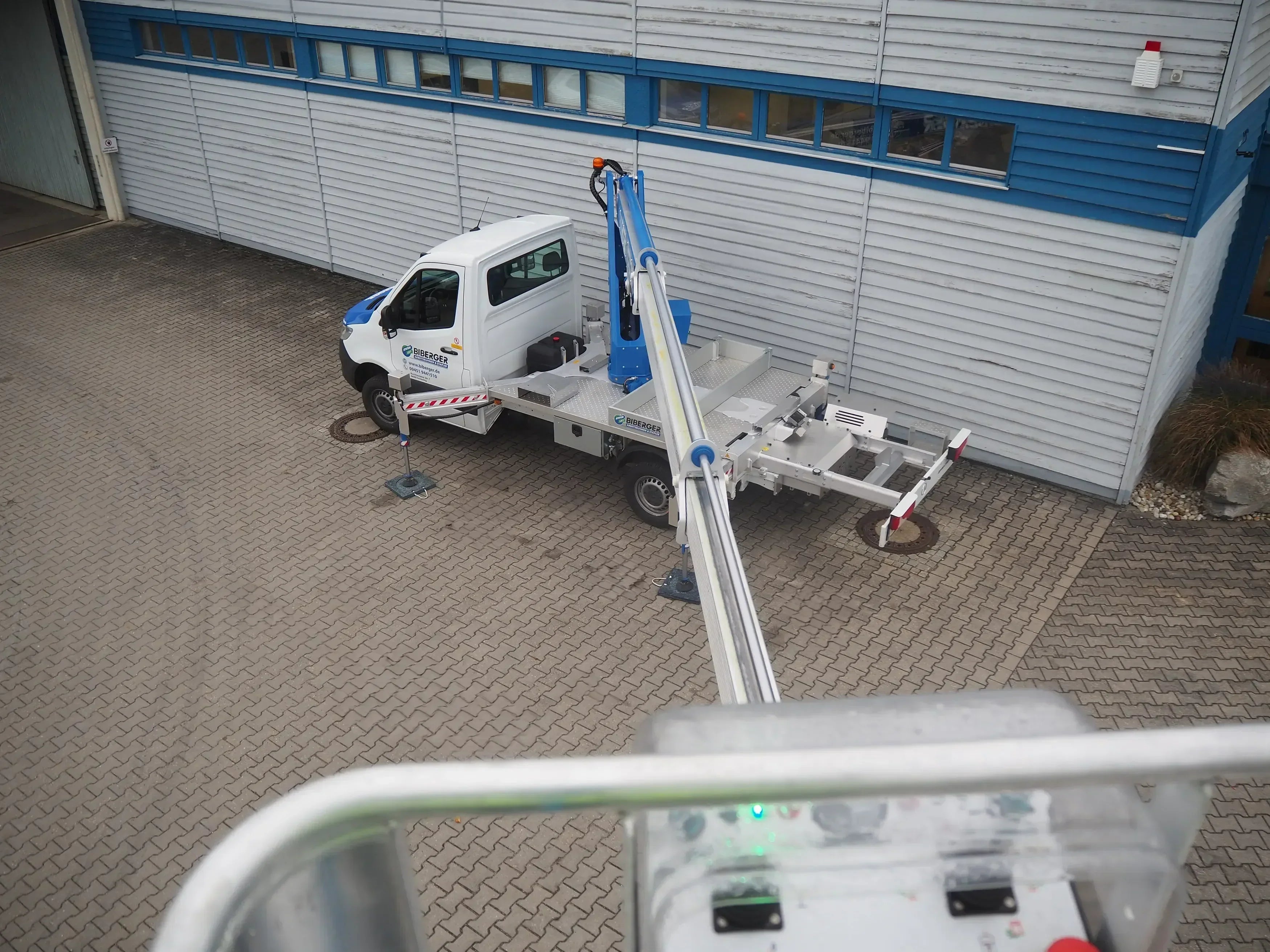
| truck platform | Hydraulic valve on the chassis | Directly at the truck | approx. 5–15 minutes |
Important: The emergency lowering device may only be operated by trained personnel or after instruction. Incorrect operation may result in sudden lowering or instability.
As a renter of a BIBERGER aerial platform: Contact the 24/7 emergency service in case of malfunctions. In the event of a medical emergency, always call 112 first.
When is the emergency release used?
The emergency lowering is only used when normal lowering is no longer possible or too dangerous:
- No response to control commands
- Medical emergency in the basket
- Emergency stop activated, but system does not respond
- Stage in an unsafe position (e.g. over obstacles)
Practical example 1: Power outage during work
Situation: Articulated telescopic platform, 18 m working height. Power supply completely fails.
Procedure: Operator in the cage activates emergency stop → colleague on the ground locates the valve → activates it → platform lowers in about 6 minutes.
Result: safe repatriation without external assistance.
Practical example 2: Medical emergency in the basket
Situation: A mechanic loses consciousness at a height of 22 meters. The second operator remains calm, alerts the emergency services, and activates the emergency lowering system.
Result: The stage is on the ground after 9 minutes – rescue takes over immediately.
Where is the emergency drain?
The position varies depending on the model, but according to the standard it must:
- be accessible from the ground
- be clearly visible and permanently marked
- explained in the instructions and manual
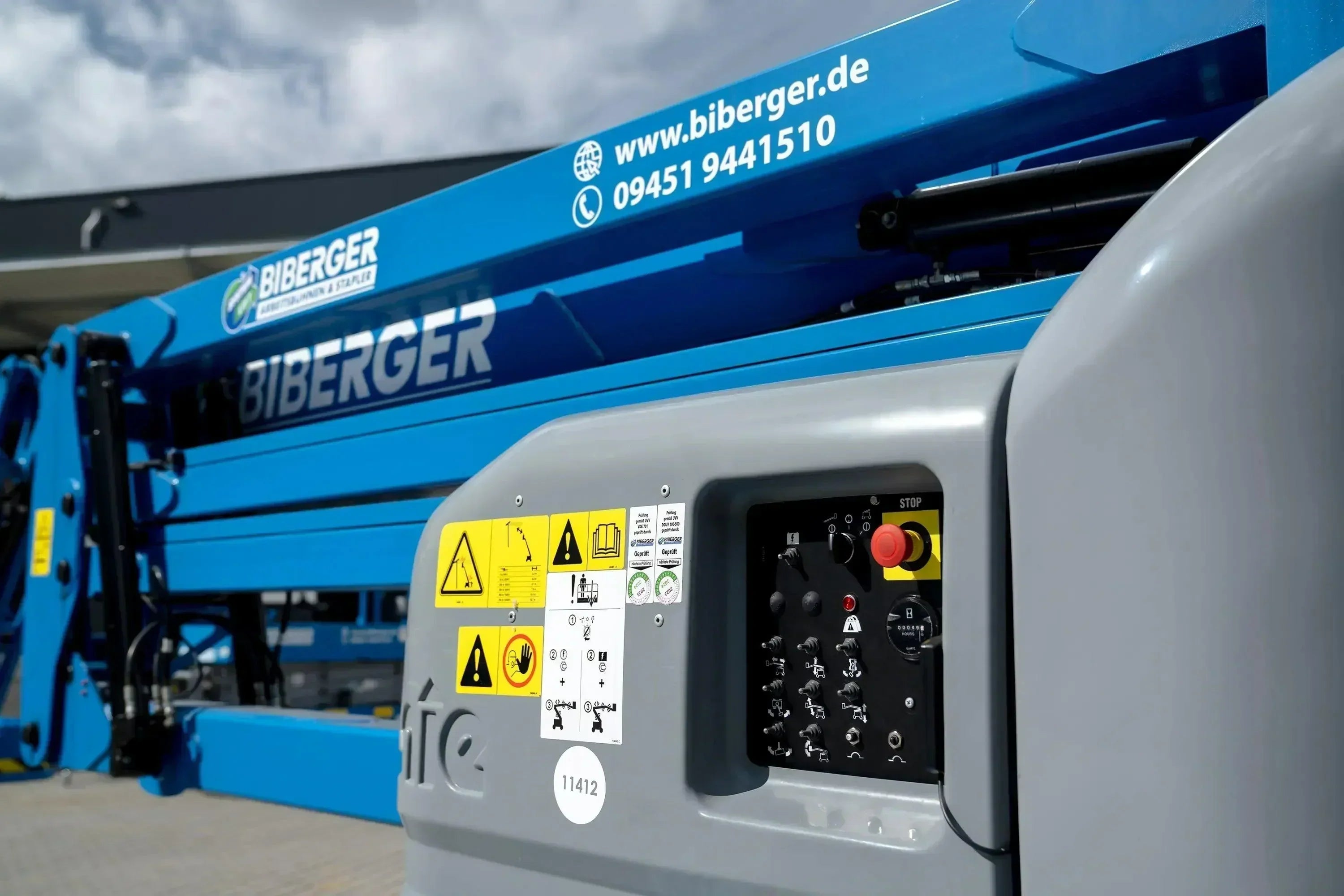
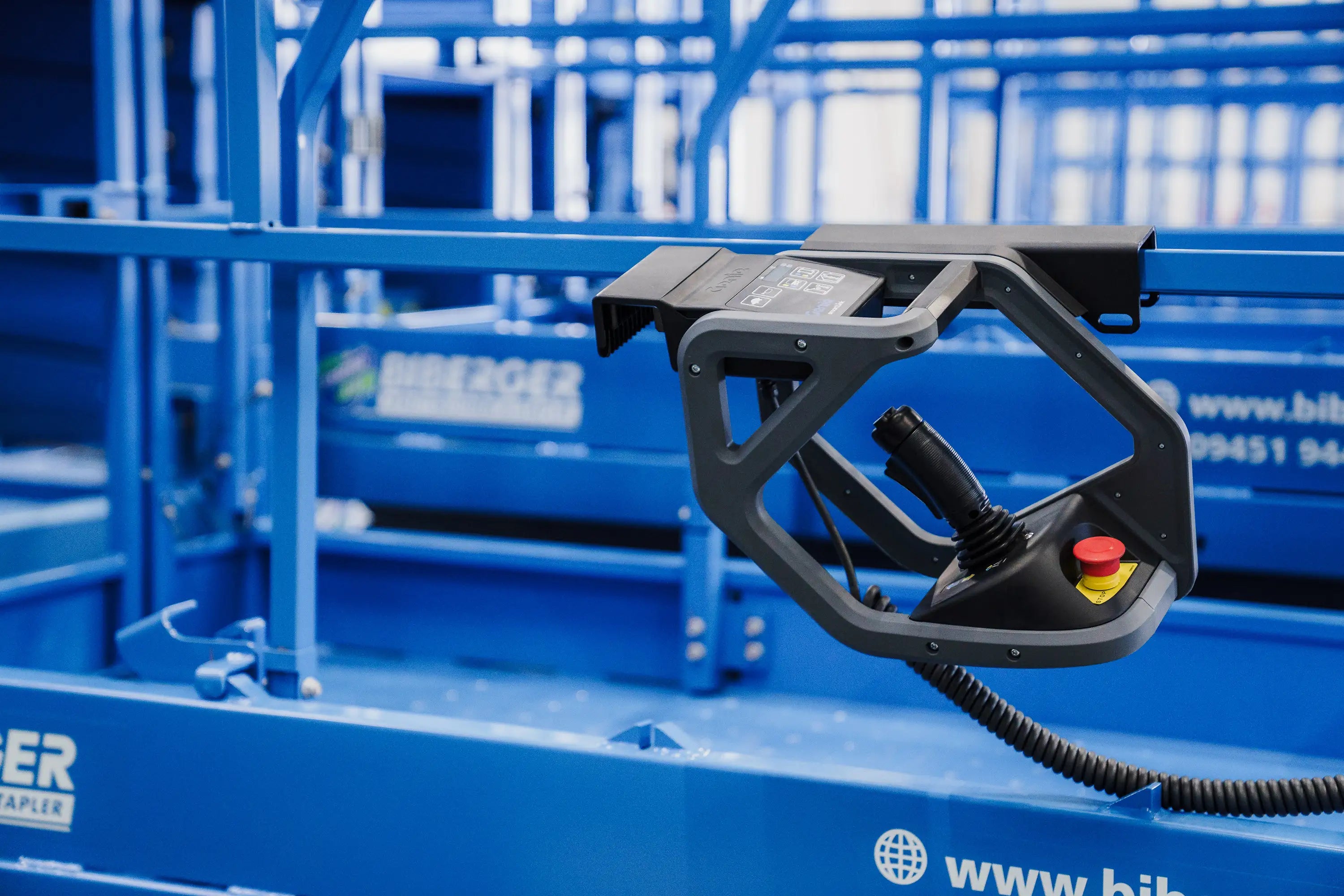
In practice, it is usually located on the chassis or on the hydraulic pump, sometimes with a green lever or separate valve.
- Emergency lowering = lowers the stage
- Emergency stop = stops power supply

Emergency lowering (green) and emergency stop (red) on a Niftylift platform. The green lever lowers the platform in a controlled manner, while the red emergency stop immediately stops all functions.
After using the emergency lowering
An activated emergency lowering is not a reset, but an emergency procedure. The platform may not simply be used again afterward.
- Switch off the stage / activate the emergency stop
- Inform landlord or internal maintenance
- Technical testing: hydraulics, power supply, control
- Carry out maintenance according to the manufacturer's instructions
- Only put back into operation after approval
Important: Every emergency lowering activation must be documented and understood as an indication of possible malfunctions.
Emergency discharge: Legal requirements
- EN 280: requires an emergency lowering device for all aerial work platforms
- DGUV 208-019: Operators must know the location and operation
- BetrSichV: Risk assessment must include failure scenarios
- Maintenance obligation: Check and document emergency lowering annually
Medical emergency: setting the right priorities
The order in an emergency:
- Call emergency number 112 – provide exact location, altitude and condition
- Lower the platform safely – operate the emergency lowering device slowly and evenly
- Inform your landlord or emergency service – e.g. BIBERGER 24/7 hotline
- Await rescue on the ground – keep access clear
Typical time: Lowering takes 8–15 minutes – emergency doctor usually on site at the same time.
Common mistakes during emergency lowering
Error 1: Emergency lowering confused with emergency stop
Problem: Operator presses emergency stop and waits in vain for movement.
Solution: Demonstrate and explain both functions before each use.
Error 2: Emergency lowering location not known
Problem: When you panic, you waste valuable time searching.
Solution: If you are renting a stage, ask to see the location and ideally take photos.
Mistake 3: Lowering too quickly
Problem: Jerky movements can cause injury.
Solution: Move the lever smoothly, never abruptly.
Mistake 4: Continuing to work after emergency lowering
Problem: Stage may be damaged.
Solution: Always inform maintenance or the landlord and wait for approval.
Checklist: Before use
- Location of the emergency lowering known?
- Operation explained or tested yourself?
- Is the lever/valve clearly marked?
- Risk of confusion with emergency stop excluded?
- Is there a maintenance inspection sticker?
- Emergency number handy?
Conclusion
The emergency lowering system isn't a minor issue; it's a lifeline on every construction site . It ensures you get to the ground safely in an emergency—whether it's a power outage, a malfunction, or a medical emergency. Knowing how to lower it saves minutes in an emergency—and those minutes are crucial.




Share:
Simple, Safe, Smart: The BIBERGER KEY CARD
Everything about the marking of construction machinery and aerial work platforms
Our editorial quality standards
The subject content on biberger.de are editorially created, reviewed, and continuously updated. The basis is our daily work with aerial platforms, telehandlers, and industrial trucks – in rental, sales, operational planning, and technical support.
Each article draws on real-world experience and is editorially reviewed for clarity, accuracy, and practical relevance according to expert criteria. Technical statements are regularly compared against current industry standards and best practices.
The aim of our publications is to make reliable specialist knowledge accessible and to offer guidance to users, decision-makers and industry partners. BIBERGER sees itself as an independent information platform for safe, economical and modern height access technology – well-founded, comprehensible and free from advertising influence.