






 What You Need to Know
Anyone looking to rent or use a mobile elevating work platform will quickly come across two terms in the technical specifications: platform height and working height . Both are crucial – but not the same thing. And if you confuse them, you'll quickly choose the wrong device.
In this article, you'll learn what these values really mean, how they're calculated, and what you should definitely pay attention to when making your selection.
What is the platform height?
The platform height indicates how high the work platform is measured from the ground when fully extended. It therefore shows the actual standing height at which the operator is standing.
Example: A scissor lift with a platform height of 8 m brings the operator to exactly this height – 8 m above the ground.
Note: The platform height is a technical value that describes the lifting capacity of the platform itself – without an operator, without tools, without reach.
What is the working height?
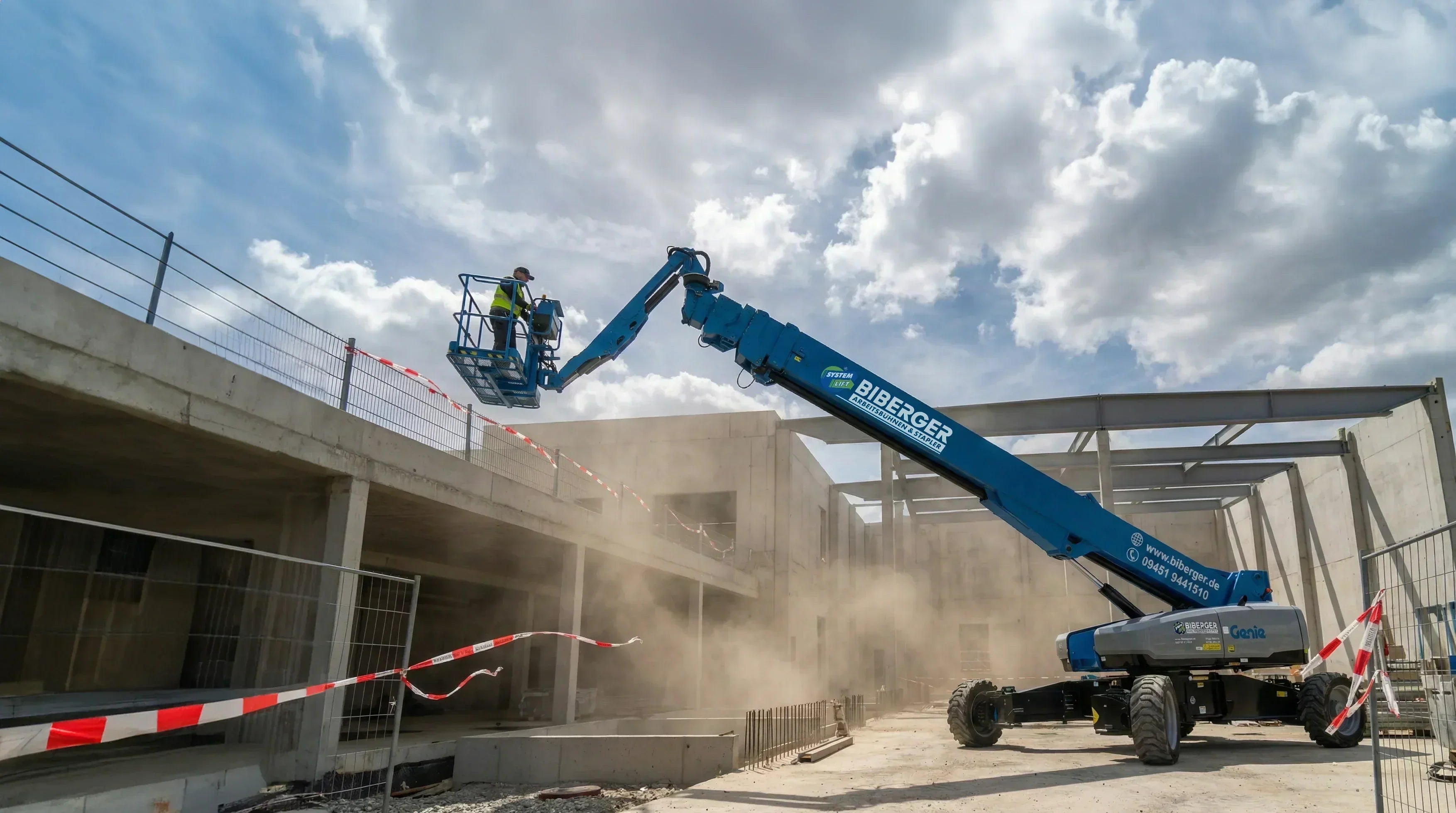
The working height describes how high a person can actually work on the platform – i.e. with outstretched arms, tools or materials.
It is calculated as a flat rate: platform height + 2 meters .
These 2 m are considered the average reach height of a standing operator .
Example:
Platform height: 8 m → Working height: 10 m
Important:
The working height is the value that counts if you want to know whether you can really reach the desired area of use.
Why are both statements made?
Because they say different things – but both are relevant :
- You need the platform height for transport planning, access routes or static calculations, for example .
- You need the working height for practical decisions on the construction site : Is the height sufficient? Do I need a larger platform?
How do I calculate the working height?
The calculation is simple:
Working height = platform height + 2 m
Tip: Always plan with some margin . Stages that are too small can quickly lead to unsafe behavior—for example, leaning out, stretching, or improvising with tools.
| Platform height | Working height |
|---|---|
| 6 m | 8 m |
| 8 m | 10 m |
| 10 m | 12 m |
| 12 m | 14 m |
| 15 m | 17 m |

What happens if the working height is not sufficient?
In short: That's when things get dangerous.
If you choose too low, you will overstretch yourself, stand unsteadily or reach for the ladder in the basket – which is absolutely forbidden.
The result: risk of falling, loss of control or collisions.
Therefore, always pay attention to the working height – not just the platform height .
Platform height or working height – what is available in the rental shop?
Most suppliers – including us at BIBERGER – state the working height in the overview because it is more practical .
The platform height is also listed separately in the technical data sheets .
Example from the rental shop:
- Working height: 12 m
- Platform height: 10 m
- Load capacity: 230 kg
If you are unsure, ask specifically about the platform height , especially if you are working in tight spaces or need to check clearance heights.
Conclusion: Working height determines safe operations
Platform height = actual standing height
Working height = achievable working height (platform + 2 m)
Both pieces of information are important – but only the working height shows you whether you are really reaching your goal.
If you want to be on the safe side, plan with reserves and don't rely on estimates.
At BIBERGER you will receive the exact measurements for each stage , clear instructions – and, if you wish, advice for your specific area of application .




Share:
Double increase: More flexibility with two additional Nifty HR17N
Industrial truck license: Step by step - everything you need to know
Our editorial quality standards
The subject content on biberger.de are editorially created, reviewed, and continuously updated. The basis is our daily work with aerial platforms, telehandlers, and industrial trucks – in rental, sales, operational planning, and technical support.
Each article draws on real-world experience and is editorially reviewed for clarity, accuracy, and practical relevance according to expert criteria. Technical statements are regularly compared against current industry standards and best practices.
The aim of our publications is to make reliable specialist knowledge accessible and to offer guidance to users, decision-makers and industry partners. BIBERGER sees itself as an independent information platform for safe, economical and modern height access technology – well-founded, comprehensible and free from advertising influence.