


 What You Need to Know
Steep slopes, soft ground, or uneven terrain – wherever conventional machines reach their limits, all-terrain aerial work platforms with high gradeability excel. But what exactly does this value mean, and why is it so crucial in practice?
This article explains what climbing ability means, how it is achieved technically, and which factors influence its performance. You'll gain practical insights into applications, manufacturer data, and modern technologies – presented clearly, concisely, and to the point .
What does climbing ability mean for machines?
The gradeability describes the gradient or incline a vehicle can safely traverse. It is expressed as a percentage (%) or degrees (°). A gradeability of 40% corresponds to approximately 22°, while 100% corresponds to around 45°. This value is crucial for safe operation on slopes or uneven terrain.
The higher the climbing ability, the better the machine can handle inclines, embankments, or soft ground – without losing traction or tipping over. This applies not only to aerial work platforms, but also to construction machinery, agricultural equipment, and transport vehicles with all-wheel or track drive.
Why is climbing ability so important for aerial work platforms?
For mobile work platforms, the climbing ability determines whether you can even reach the work site. Slopes, unpaved access roads, and muddy ground require special undercarriages with high traction.
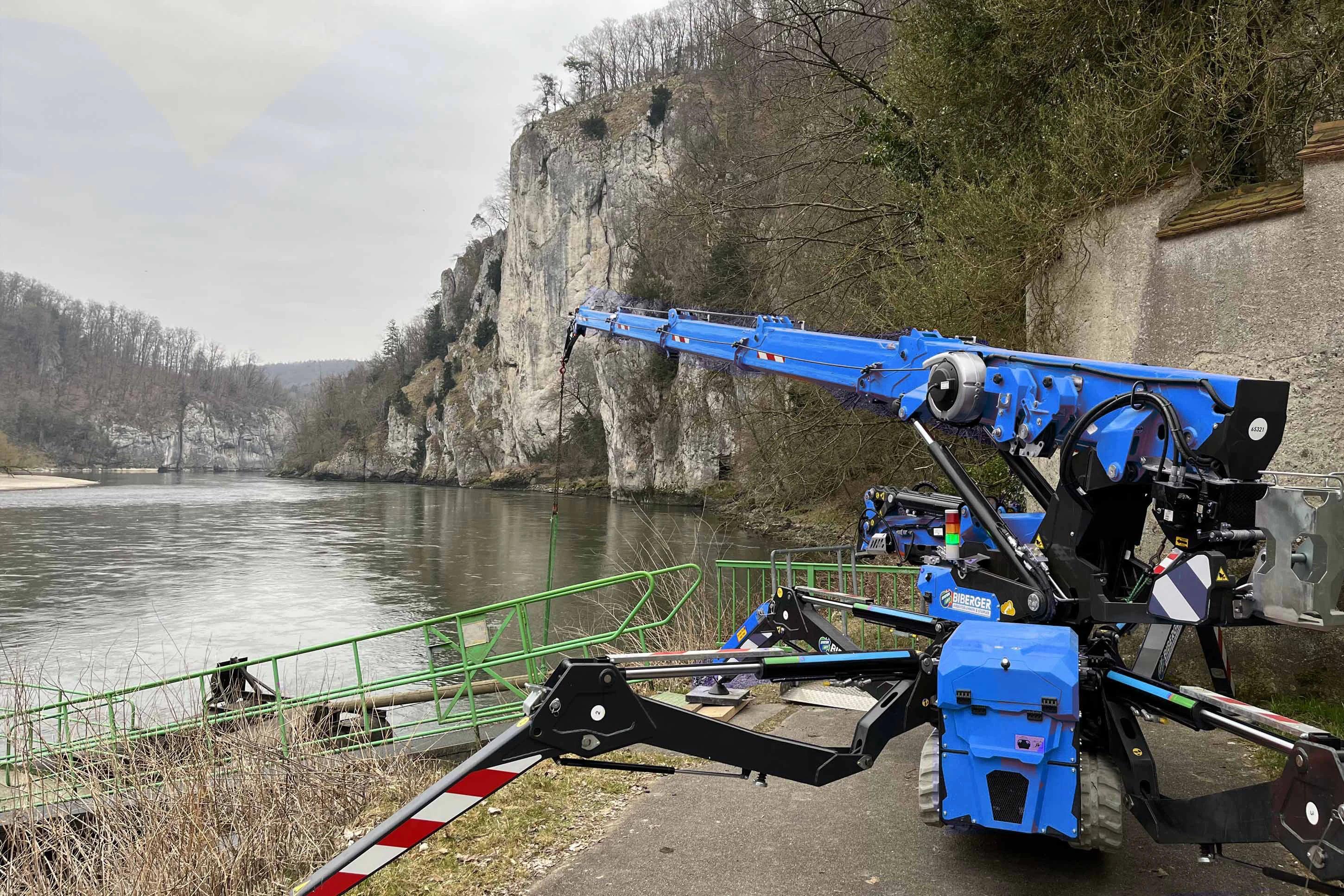
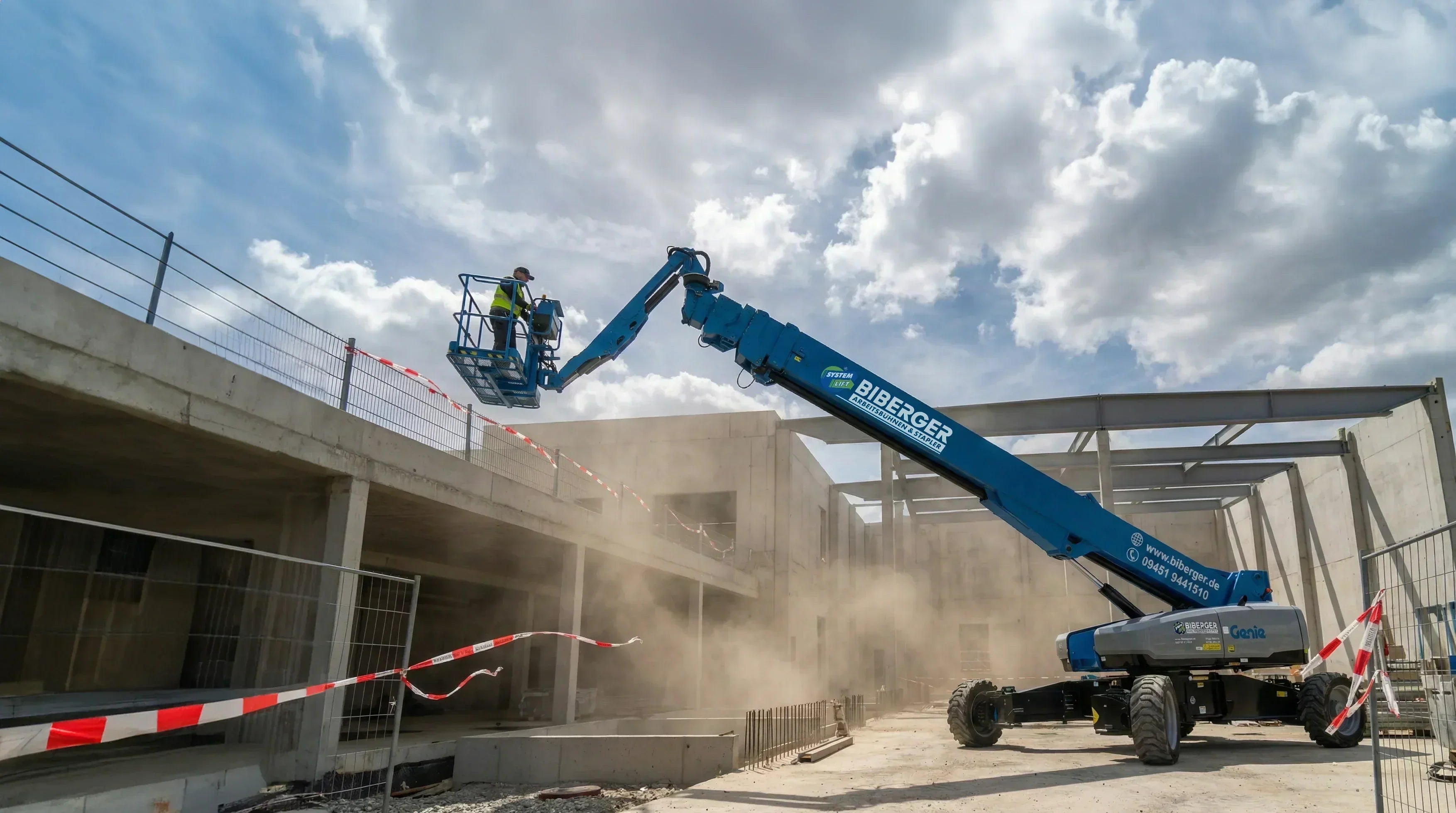
Modern all-terrain platforms, such as tracked or all-wheel-drive telescopic platforms, can achieve gradients of up to 40° (approx. 84%) – provided the ground is load-bearing. This allows for safe operation in forestry, pipeline construction, or alpine terrain.
Technology that enables climbing ability
The climbing performance of a work platform depends on several technical factors. The following are particularly important:
- All-wheel drive or tracked undercarriages for maximum traction
- Differential locks for even power distribution to all wheels
- High ground clearance to prevent bottoming out.
- Hydraulic leveling systems for stable positioning on slopes
- Low ground pressure for tracked vehicles
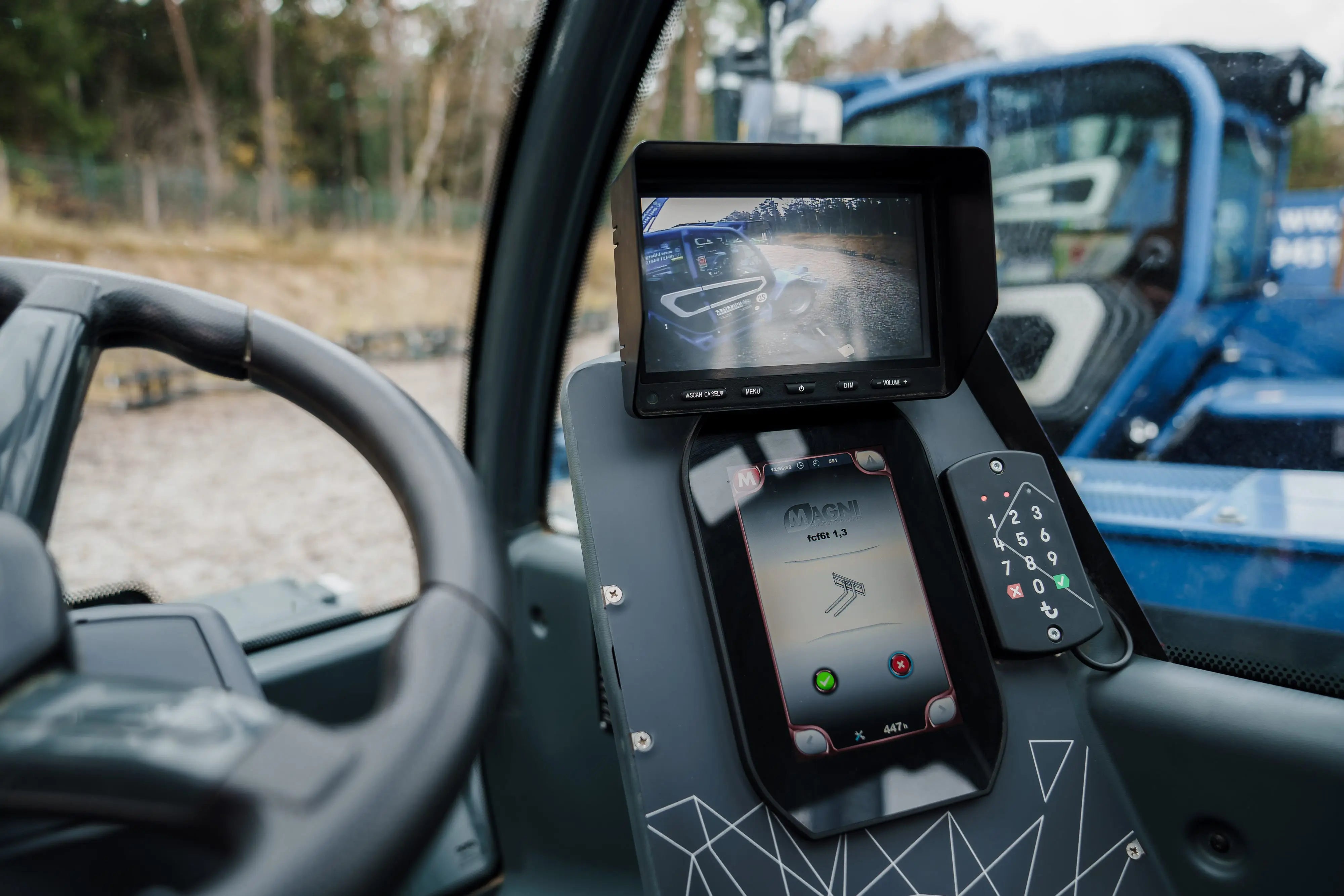
In addition, many all-terrain platforms feature automatic traction control, tilt sensors , and safety shut-offs in case of excessive incline. This ensures that the machine remains reliably controllable even in challenging terrain.
Manufacturers and typical climbing abilities
The actual climbing ability varies depending on the model and drive system. Two practical examples:
- Haulotte HA16PX (all-wheel drive scissor lift): up to 40% gradeability thanks to manually lockable rear axle differential and 28 cm ground clearance.
- Hinowa Lightlift 15.70 (spider platform): 30% gradeability with crawler tracks, compact design and 6.6 m lifting height.
Influence of soil conditions
Soil conditions strongly influence effective climbing ability. Traction decreases significantly at high soil moisture levels. Laboratory tests show that at 24% moisture and silty clay, soil elongation under rubber tracks increases by approximately 15% compared to dry conditions.
Loose sand or organic topsoil further impairs traction, as ground pressure increases and sinking is encouraged. Rubber tracks distribute the weight more evenly and reduce settling by up to 30% compared to pneumatic tires.
Maintenance and operating costs: chain vs. wheel
Tracked vehicles offer high traction but also incur higher operating costs . Up to 50% of the total costs are attributable to wear parts such as track links or road wheels. Regular inspections are required every 1,000–2,000 operating hours.
Pneumatic tire platforms require less maintenance – tire changes every 2,500–3,000 hours are usually sufficient. They are cheaper to maintain, produce less vibration, and incur approximately 25% lower maintenance costs than tracked platforms.
Telemetry and sensors for gradient control
Modern stages use GNSS-based tilt sensors to detect inclinations in real time. The position is monitored from a deviation of ±0.5°, and an automatic safety shutdown occurs if the deviation exceeds 5°.
Telematics systems compare wheel or track revolutions with the actual speed. If slippage exceeding 10% is detected, the system automatically adjusts the drive system. Additionally, remote maintenance enables the transmission of diagnostic data such as hydraulic pressure or temperature – reducing downtime by up to 30%.
Application areas with high climbing requirements
Machines with high climbing ability are needed wherever access is topographically difficult. Typical applications include:
- Tree care and forestry: working on slopes or soft forest floors
- Wind turbines: Maintenance and inspection on inclined access roads
- Quarries and open-pit mining: work on slopes and uneven terrain
- Line and pylon construction: Access to high-voltage and communication systems
- Bridge and road construction: Platform work on narrow, inclined surfaces
Stages with high climbing ability are also regularly used in film productions, event construction or security applications – wherever terrain or access to heights poses special requirements.
Climbing ability compared: Wheel, track or all-wheel drive
| Drive type | Typical climbing ability | Advantages | Limits of use |
|---|---|---|---|
| Standard wheel suspension | 15–25% | Cheap, fast on solid ground | Minimal traction in mud, snow, or on inclines |
| All-wheel drive | 30–45% | High flexibility, good climbing ability | Limitations in deep soil or extreme slope |
| crawler undercarriage | 40–60% | Very high traction, low ground pressure | Slower on asphalt, higher maintenance costs |
What you should pay attention to when renting
If you need a work platform with a high climbing ability, don't just pay attention to the manufacturer's specifications in percentages or degrees. The following are also important:
- Weight of the stage and load-bearing capacity of the ground
- Tire or track profile suitable for the type of ground
- Sensors and safety shutdown when tilted
- Local transport options and access conditions
If you are unsure, our team will help you find the right stage for your site – safely, efficiently and economically.
Rent platforms with high climbing ability
BIBERGER rents tracked aerial work platforms , articulated boom lifts , and other specialized equipment with high climbing ability throughout Germany. Whether for daily use or long-term rental – we deliver the right solution directly to your construction site.
Our tip: Get advice before renting. We check the terrain, gradient, and load-bearing capacity – so you can work safely, no matter how challenging the terrain is.




Share:
Transporting work platforms safely – planning, implementation and costs
The pothole protection on scissor lifts: We explain the safety feature
Our editorial quality standards
The subject content on biberger.de are editorially created, reviewed, and continuously updated. The basis is our daily work with aerial platforms, telehandlers, and industrial trucks – in rental, sales, operational planning, and technical support.
Each article draws on real-world experience and is editorially reviewed for clarity, accuracy, and practical relevance according to expert criteria. Technical statements are regularly compared against current industry standards and best practices.
The aim of our publications is to make reliable specialist knowledge accessible and to offer guidance to users, decision-makers and industry partners. BIBERGER sees itself as an independent information platform for safe, economical and modern height access technology – well-founded, comprehensible and free from advertising influence.