






 What You Need to Know
Telehandlers combine a forklift, crane, and wheel loader into one machine. With the extendable boom and suitable attachments , you can lift and position loads quickly and precisely.
Here you'll find all the important information in a compact format: types, license, costs, use , and safety. With clear tables, examples, and internal links to help you make your next decision.
What is a telehandler and why is it so versatile?
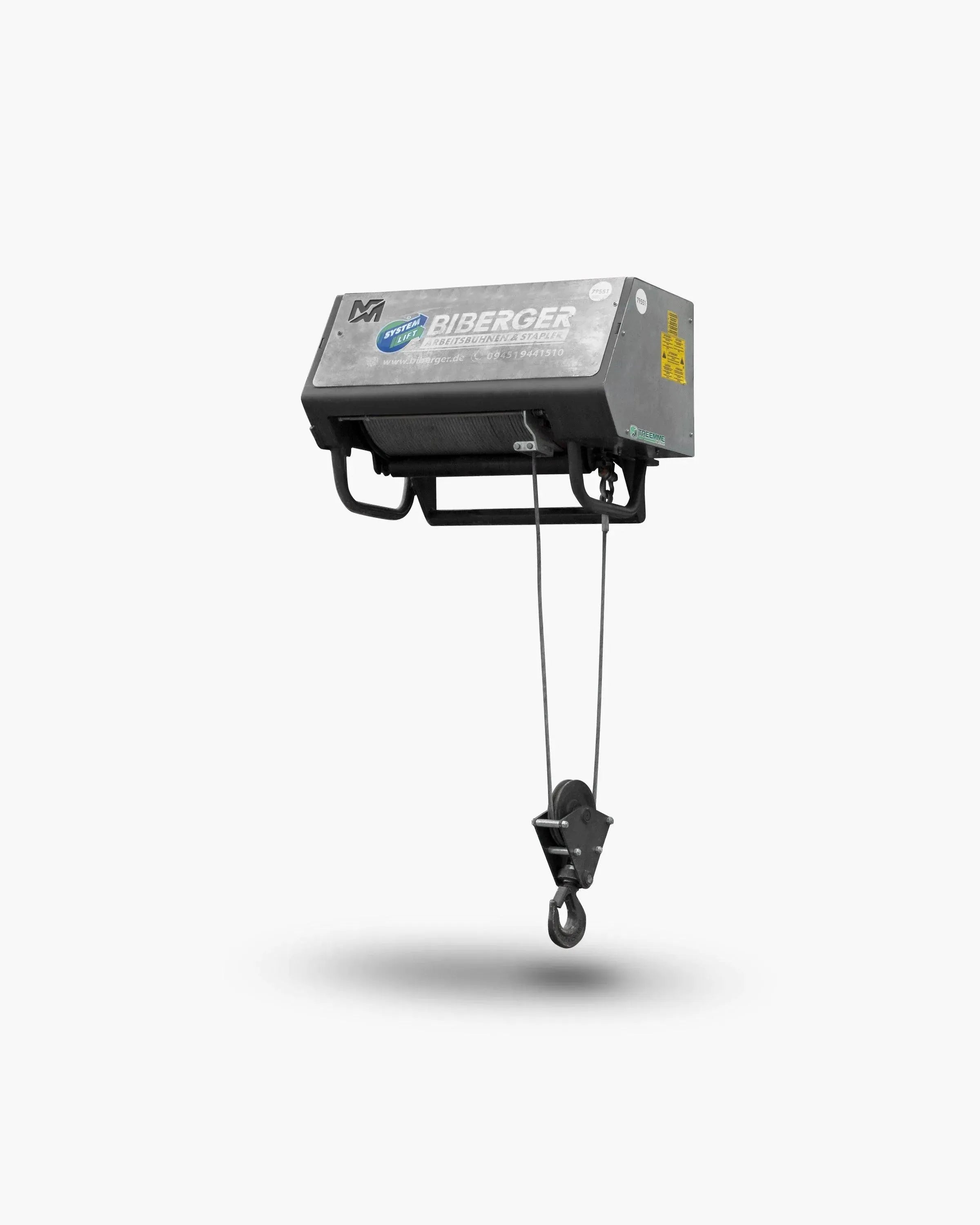
Telehandlers – also known as telehandlers or telescopic loaders – are work machines with an extendable lifting arm. With suitable attachments such as pallet forks, buckets, or cable winches , they can be adapted to a wide variety of applications. They are suitable for material handling, positioning components, or lifting heavy loads – in confined spaces or at great heights.

Types of telehandlers
Telehandlers are available as fixed and rotating models. Both share the same basic mechanics but differ significantly in their practical use on construction sites.
The choice depends on space, load, height and the number of transfers.
Rigid telehandlers
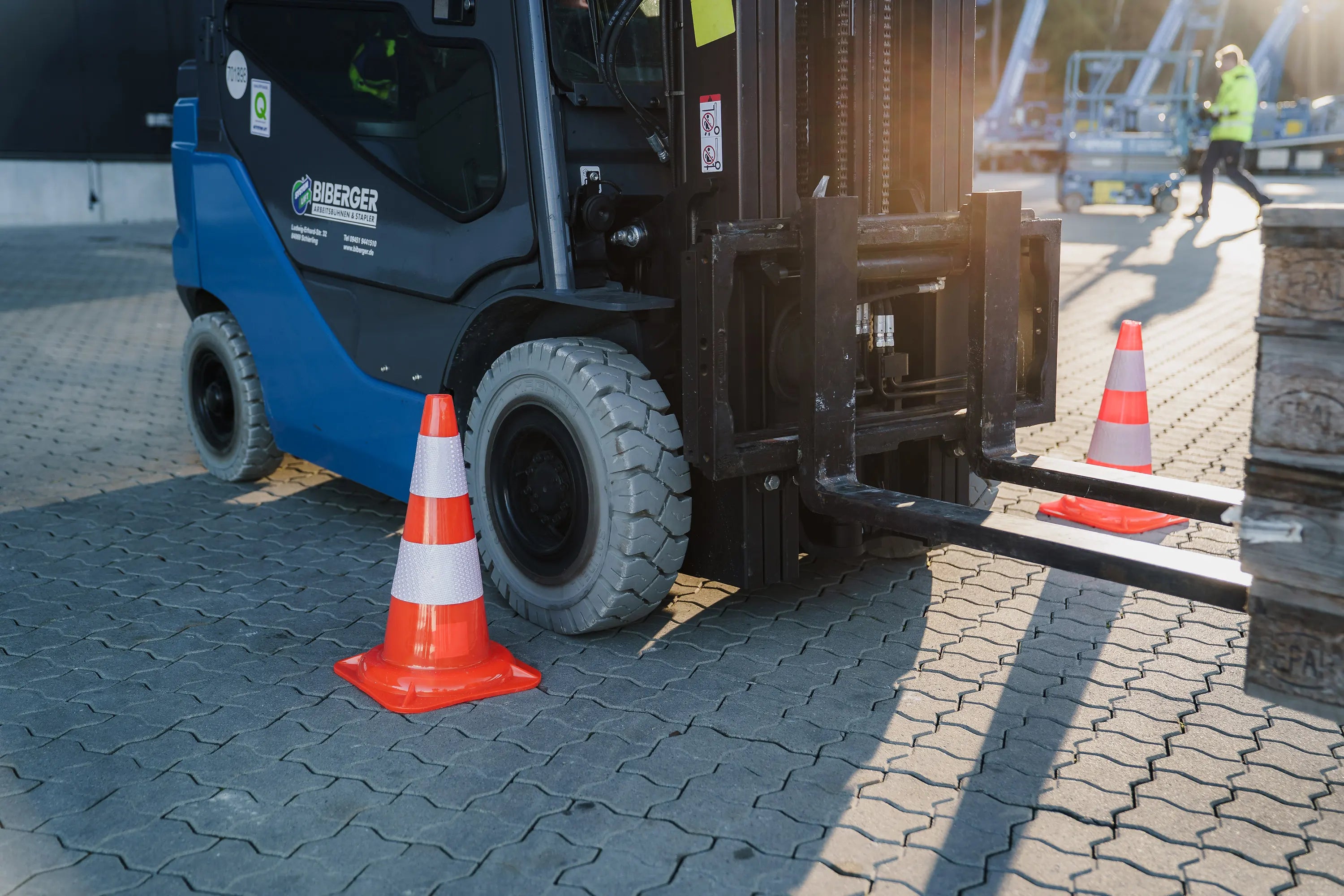
Rigid models have a non-rotating upper carriage . They boast stability, ease of handling, and attractive rental conditions.
Ideal for repetitive tasks , material handling and short-distance transport – both indoors and outdoors.
Roto telescopic forklift
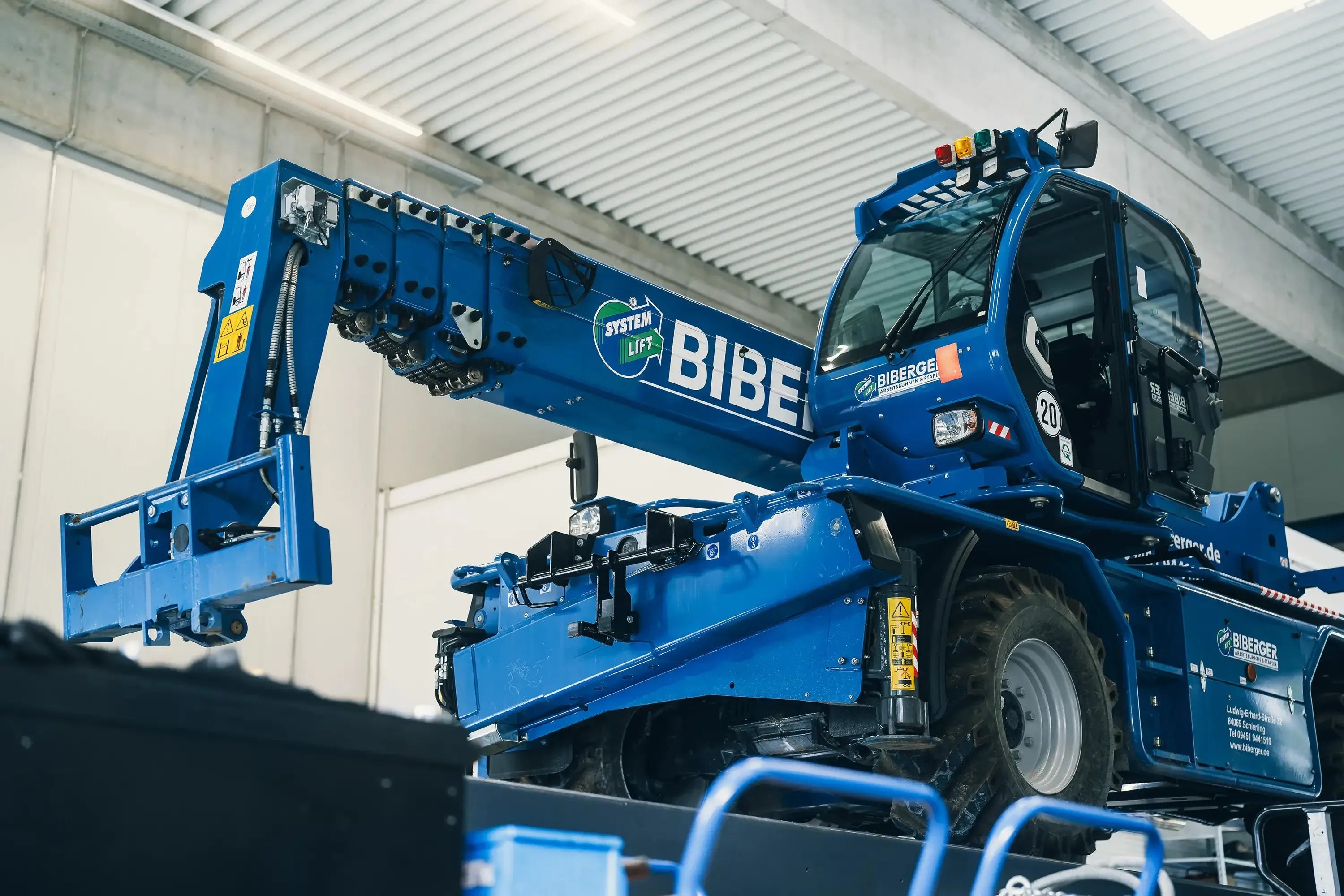
Roto models offer 360° rotation of the upper carriage, allowing you to reach multiple work areas from a single location.
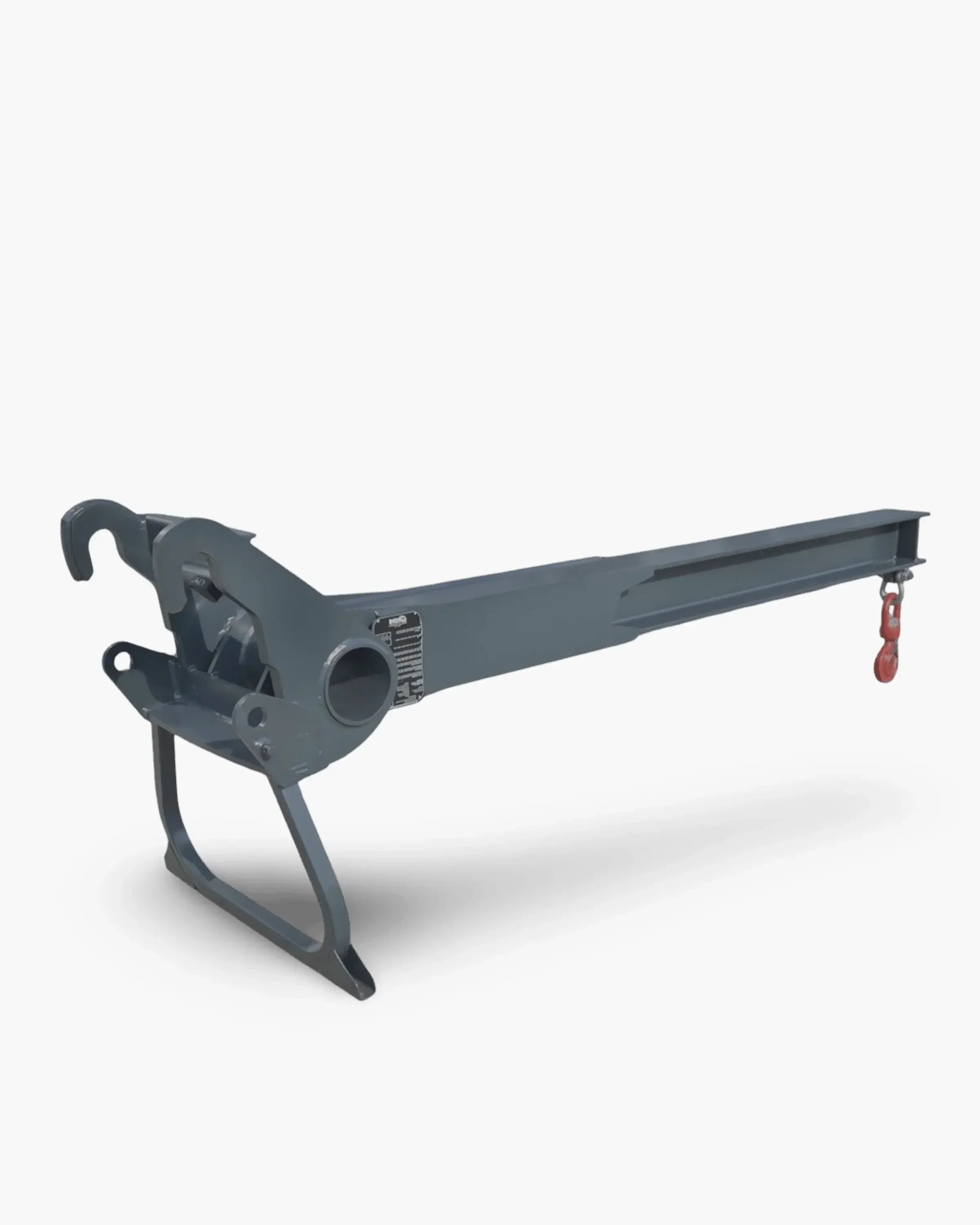
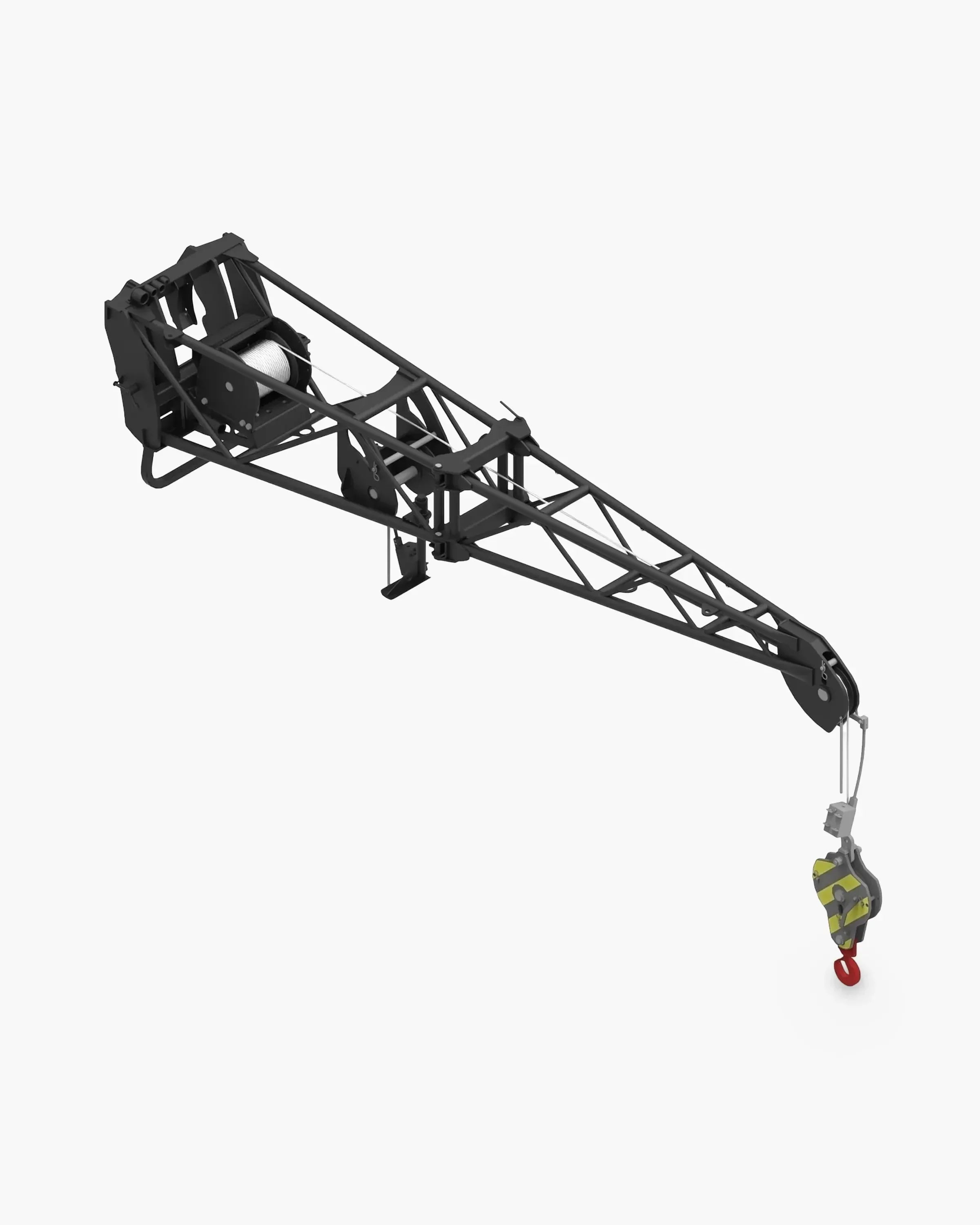
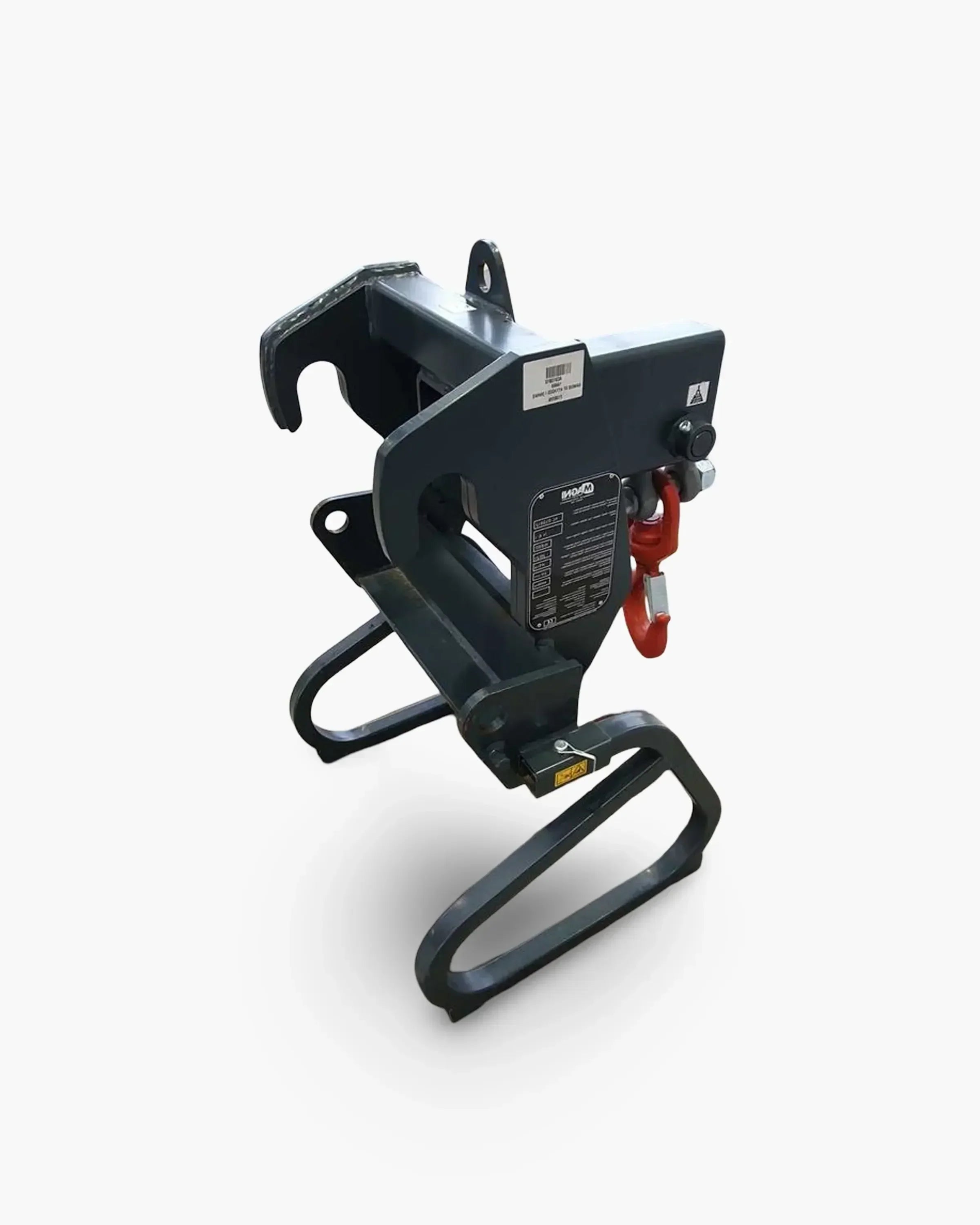
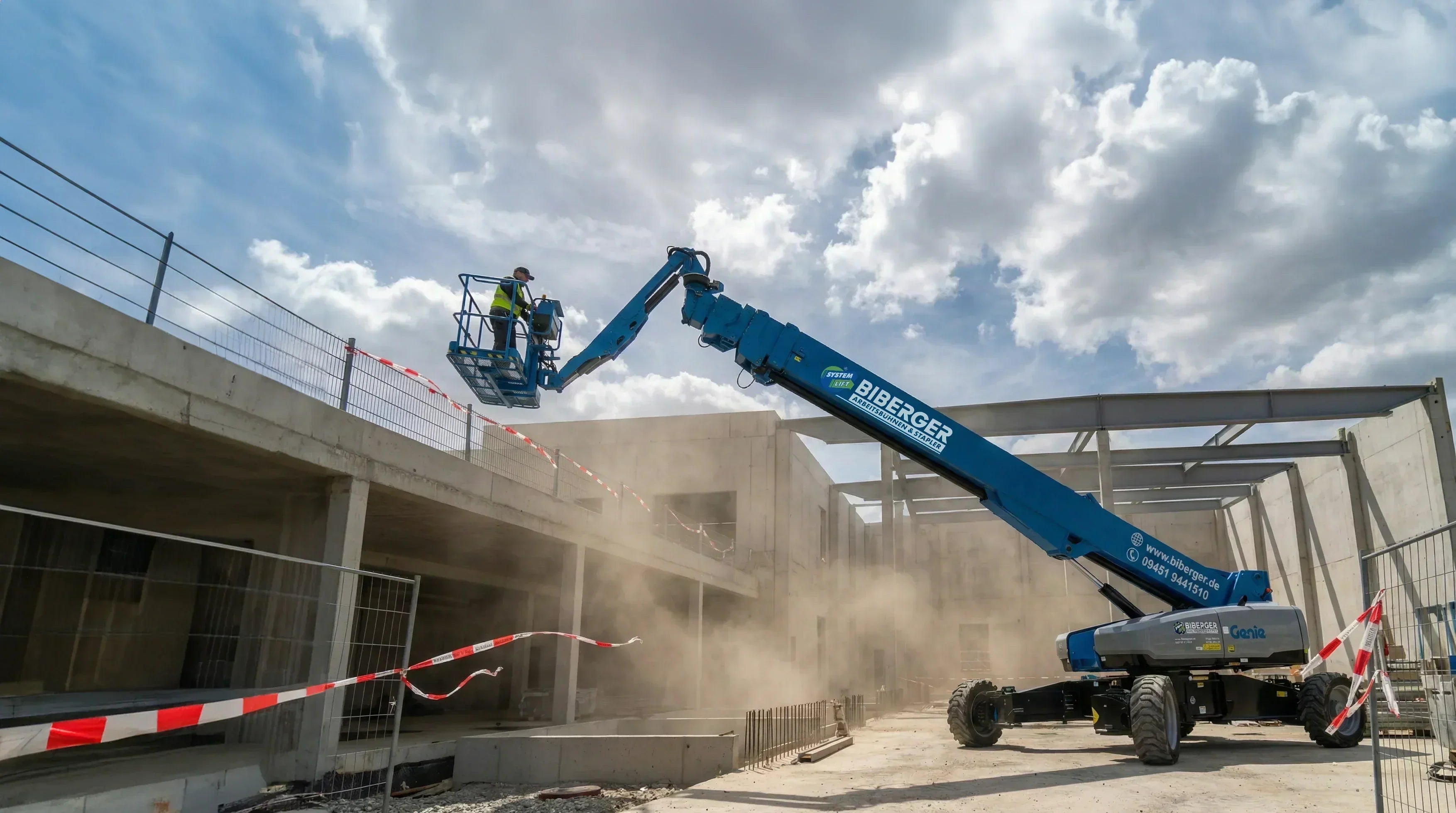
With an attachment basket and crane hook, they often replace work platforms and mobile cranes . This saves relocation and time.
Rigid vs. Roto: the most important differences
Both designs have clear strengths. The table will help you make a quick decision.
For complex construction sites with limited space, the Roto is often an advantage.
| criterion | Rigid telehandler | Roto telescopic forklift | Practical tip |
|---|---|---|---|
| Mobility/Implementation | More frequent relocation necessary | 360° achieves a lot from the stand | Roto saves shunting time |
| Heavy load | Very stable under base loads | Strong, but load dependent on projection | Check load diagram |
| Range of applications | Transport, pallets, bulk goods | + Crane operation, + Work basket | Roto replaces additional technology |
| Cost | Low daily rate | Higher daily rate | Consider total costs/TCO |
| Space requirements | More maneuvering space | Less shunting required | Tight construction site = Roto |
Structure, technology and operation
All telehandlers consist of a chassis, hydraulic telescopic arm , and attachment mounting system. Most come with all-wheel drive, four-wheel steering, and a swing axle.
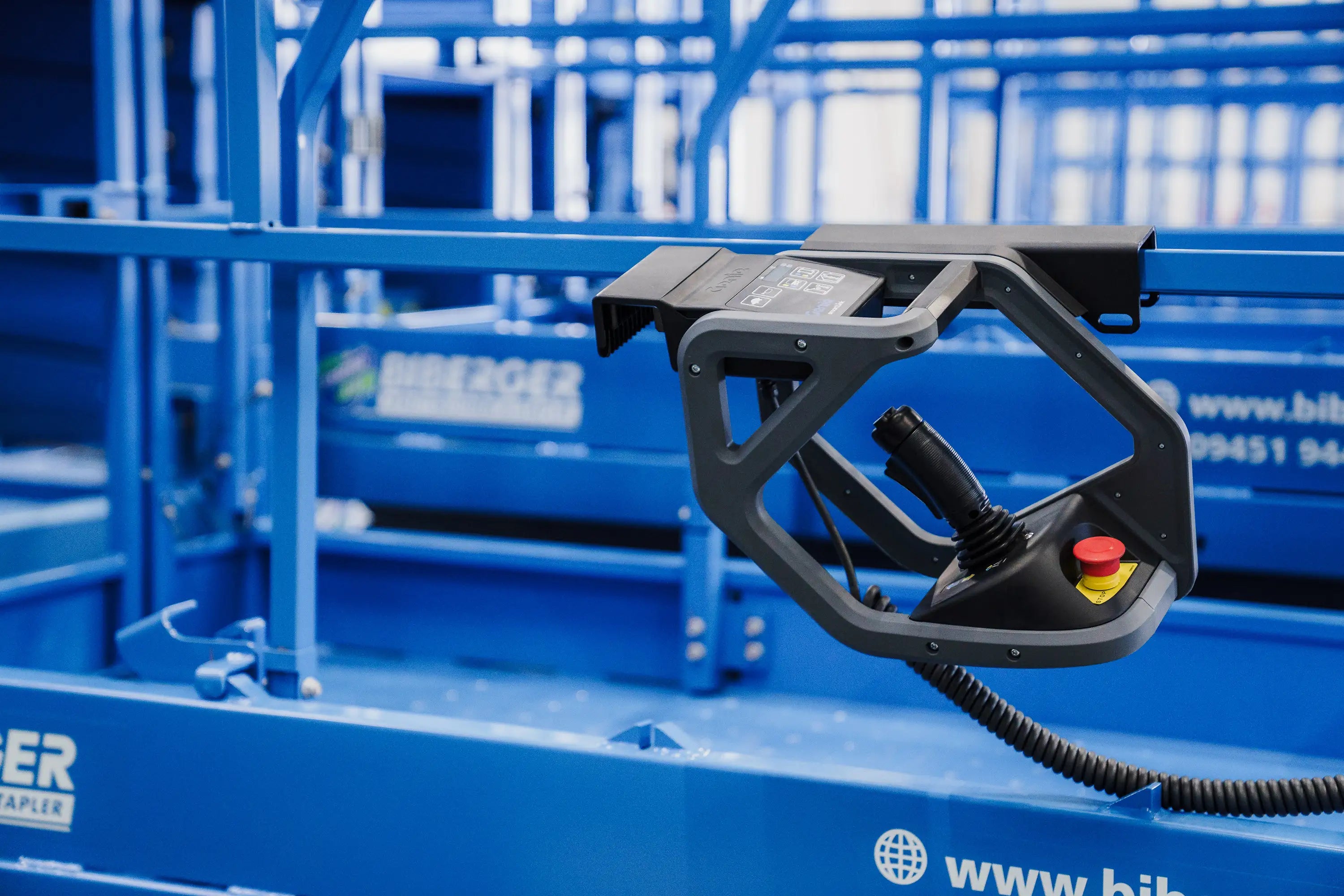
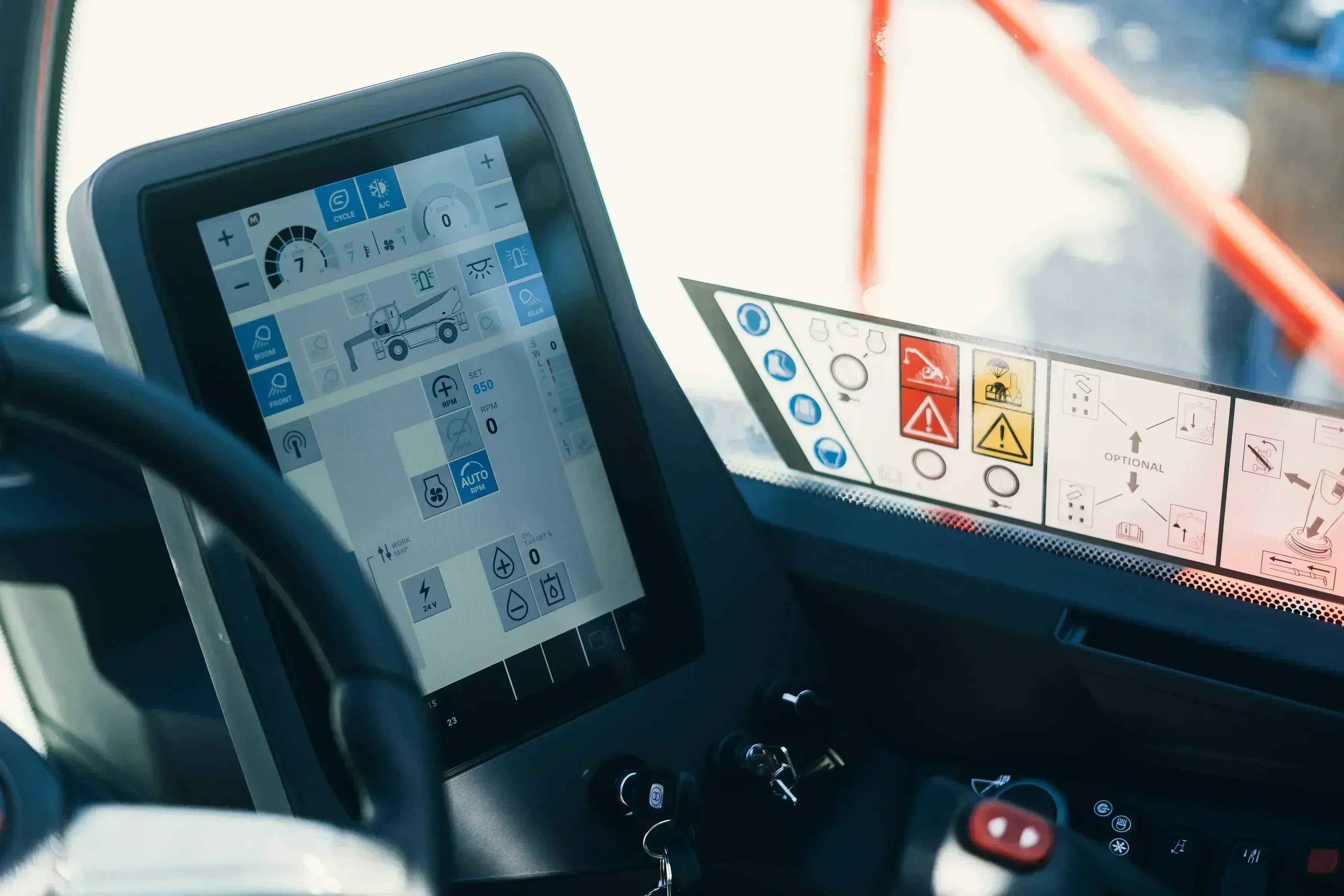
Driving, lifting, extension, and attachment are controlled via joystick. Modern machines feature load moment limitation and assistance systems.
Operating logic in brief
Every boom movement changes the load's center of gravity . This makes training and practice crucial.
Know the load diagram, consider inclinations, secure the ground – this ensures safe operation.
Driving license and qualification
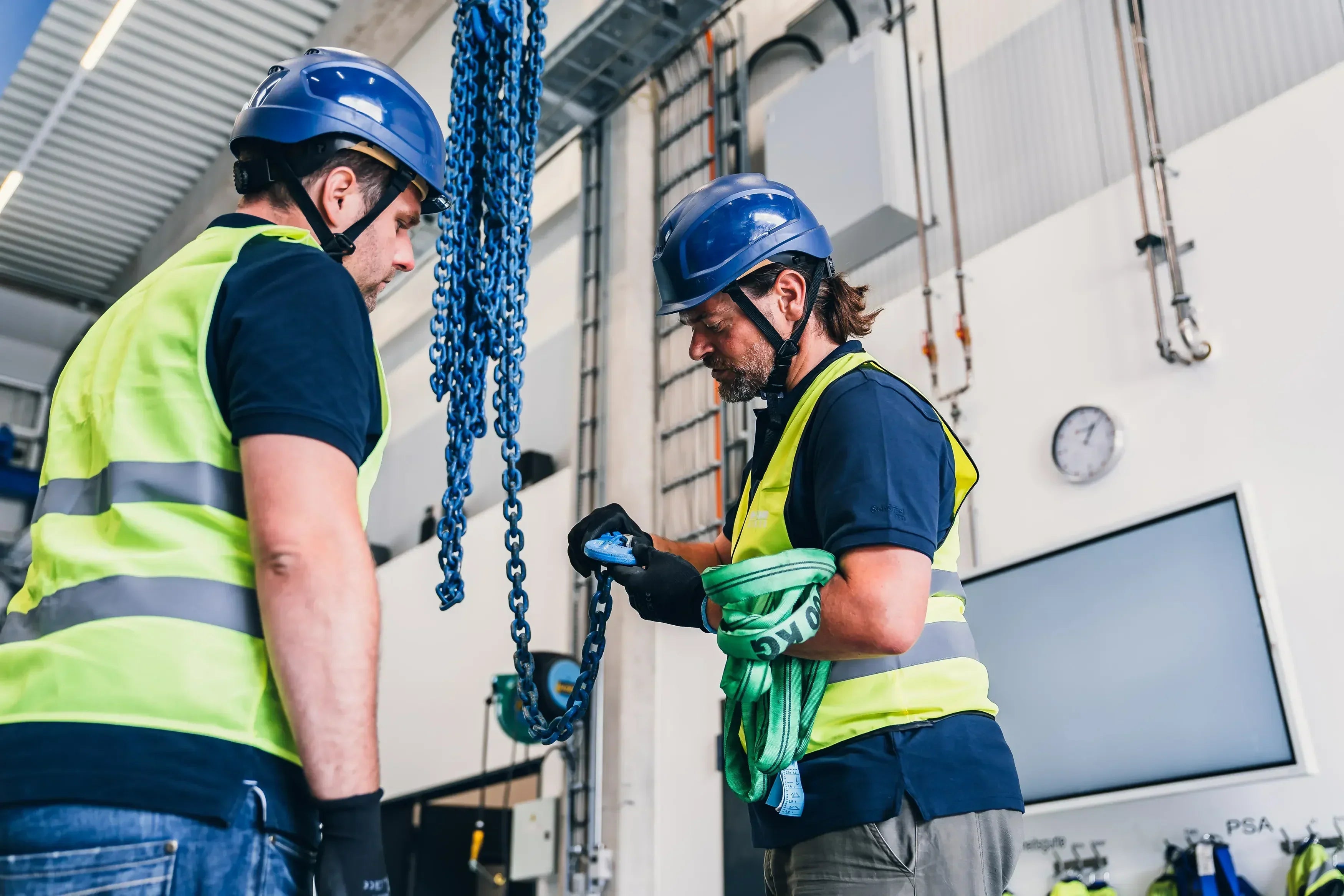
Operating a telehandler requires recognized operator training based on the DGUV (German Social Accident Insurance) system with levels.
In addition, rules apply to public transport and operational assignments.
Training levels according to DGUV
- Level 1: Basic qualification for rigid telehandlers
- Level 2a: Addition for swivel/Roto including crane operation
- Level 2b: Additional for use with work basket
- Level 3: Operational instruction on the specific device
Public road transport
For travel on public roads, at least Class L is required. Depending on the vehicle's registration/speed/total weight, additional Class B/C may be advisable or mandatory.
Carry: documents, warning triangle, wheel chocks and first aid equipment.
Good to know: Training and SYSTEM-CARD via BIBERGER: SYSTEM-CARD forklifts & telehandlers .
Manufacturers and market overview
How much does a telehandler license cost?
Costs depend on the scope of training, equipment type, and provider. Expect to pay for the basic course plus optional upgrades for the Roto and work basket.
| Course | Scope | Guide price | Notes |
|---|---|---|---|
| Basic Course Level 1 | 1–2 days | from approx. 300 € | Rigid telehandlers, theory + practice |
| Roto expansion (level 2a) | Additional module | + 100–200 € | Rotating superstructure, including crane operation |
| Work basket (level 2b) | Additional module | provider-dependent | Passenger transport, rescue, additional rules |
| In-house training | Individually | often cheaper per participant | Conditions for multiple participants |
Important: Make sure the provider is certified and issues you with a recognized operator ID card . You can request training and the SYSTEM-CARD directly from us: SYSTEM-CARD Forklifts & Telehandlers .
Well-known brands include Merlo , Magni , Manitou, JCB, Dieci, Liebherr, and others. They offer a wide range from compact to heavy-duty.
Lifting heights reach over 35 m , Roto models open up large working radii without relocation.
| attachment | Mission | Notice |
|---|---|---|
| pallet fork | Pallets, components, big bags | Select length/load capacity according to the diagram |
| shovel | Bulk material, soil | Consider volume vs. projection |
| Crane hook/load hook | Lifting/positioning | Check hook load and securing |
| Work basket | Personal access | Only with admission; additional qualification 2b |
| Special (e.g. solar set) | Module handling | Surface protection and fixation |
Areas of application and typical scenarios
Telehandlers are powerful when loads need to be lifted and positioned precisely . This saves time compared to ordering cranes.
Typical: construction site logistics, PV installation, formwork construction, industrial maintenance, landscaping and municipal services.
Costs: Rent, Buy, TCO
Never compare just the daily rate. The decisive factor is the total hourly effort for the project.
The guidelines below will help you with your initial calculations.
Rental prices at a glance
| type | day | Week (average/day) | remark |
|---|---|---|---|
| Rigid | ≈ 139–280 € | ≈ 60–80% of the daily rate | Price decreases with rental period |
| Roto | ≈ 290–365 € | ≈ 60–80% of the daily rate | Often including radio remote control |
Purchase prices and used market
| category | New device | Needed | Notice |
|---|---|---|---|
| Compact | ≈ €60,000–100,000 | from ≈ 25,000 € | Check operating hours |
| standard | ≈ 100,000–150,000 € | ≈ €50,000–150,000 | Maintenance history counts |
| Roto/Heavy Duty | ≈ €150,000–250,000+ | highly variable | Features drive up price |
TCO – Total Cost of Ownership
Expect an average of approximately €20 per operating hour, excluding operator costs. This includes maintenance, wear and tear, fuel, and depreciation.
Well-trained drivers measurably reduce fuel consumption and maintenance.
Maintenance, service and availability
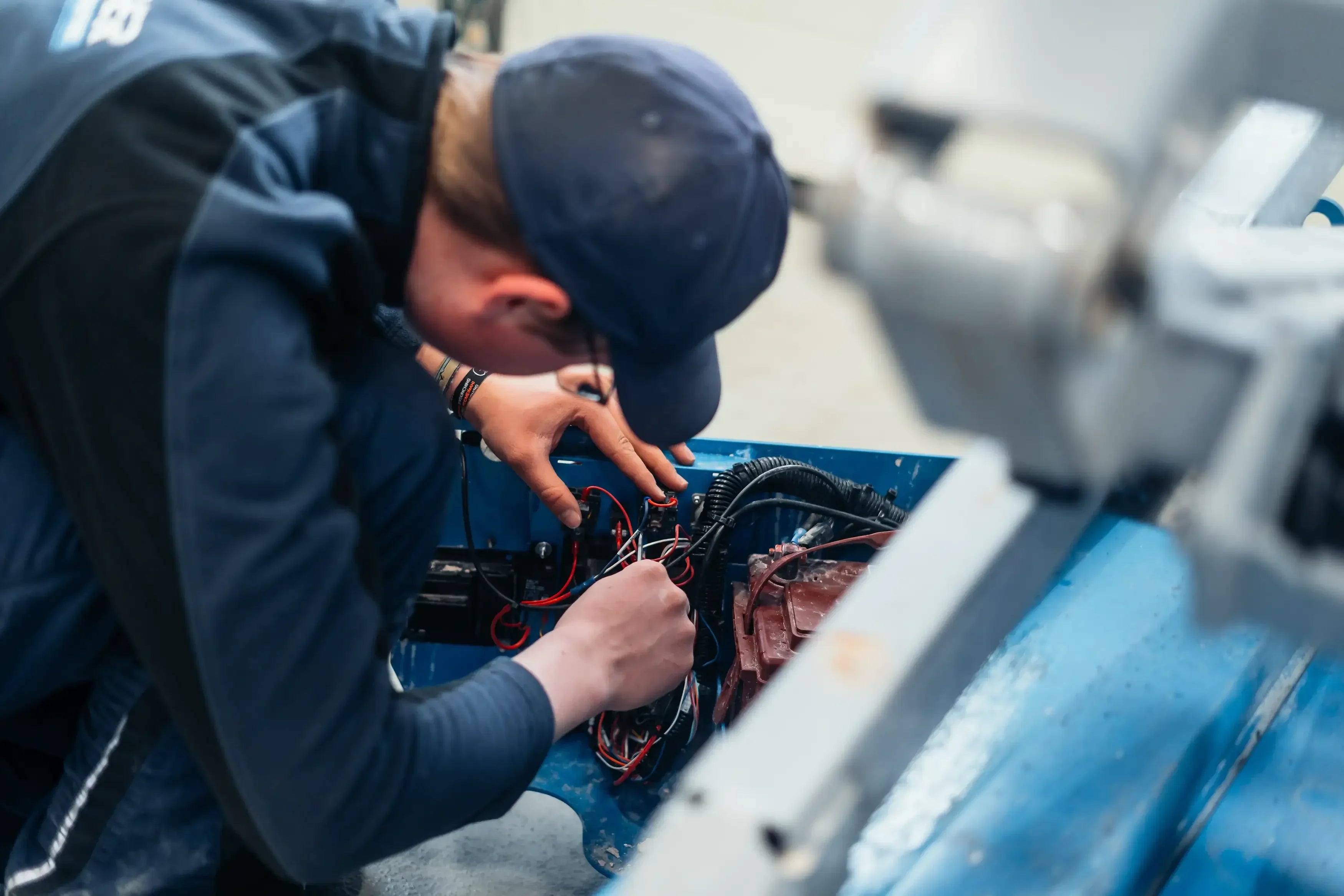
Regular maintenance ensures performance and residual value. Original parts and predictable service intervals pay off.
BIBERGER supports you with service levels , UVV scheduling and replacement equipment in the event of a malfunction.
Financing, insurance, residual value
Depending on your usage profile: long-term rental, leasing, hire purchase , or purchase. For project-related peaks, renting often remains the most cost-effective option.
Machinery insurance protects against fire, theft, and accidental damage. Residual values after long terms are typically in the double-digit percentage range .
Safety and accident prevention
The basis is training, operator's ID, and company authorization . Before use: Visual inspection, check the ground, wind speed, and load diagram.
If visibility is limited, use signallers and cordon off work areas.
Checklist: start safely
- Operator ID + authorization checked
- Daily visual/functional inspection
- Subsurface load-bearing, supports/support plates ready
- Load diagram and attachment released
- Communication/referrer clarified
Rent a telehandler from BIBERGER
Do you need a telehandler for your project at short notice? At BIBERGER , you'll find telehandlers and rotary telehandlers with various lifting heights, load capacities, and features. Of course, we can also advise you on the right attachment and support you with any questions about training.




Share:
Everything you need to know about the annual training for operators of aerial work platforms
Bridge inspection according to DIN 1076: regulations, procedure and technology
Our editorial quality standards
The subject content on biberger.de are editorially created, reviewed, and continuously updated. The basis is our daily work with aerial platforms, telehandlers, and industrial trucks – in rental, sales, operational planning, and technical support.
Each article draws on real-world experience and is editorially reviewed for clarity, accuracy, and practical relevance according to expert criteria. Technical statements are regularly compared against current industry standards and best practices.
The aim of our publications is to make reliable specialist knowledge accessible and to offer guidance to users, decision-makers and industry partners. BIBERGER sees itself as an independent information platform for safe, economical and modern height access technology – well-founded, comprehensible and free from advertising influence.