Reading now: Working platforms for building cleaners – which platform really suits you
Zusammenfassung Summary

Building cleaners needflexible, precise and floor-friendly work platforms– depending on the location and task. For facade cleaning,Truck-mounted work platforms, indoors areelectric scissor or articulated platformswith non-marking tires ideal. For glass roofs, skylights or hard-to-reach areas, you needsteered platforms with long reach and basket rotation.Crawler platformsare perfect for uneven, sensitive or narrow access areas.

Important points when choosing:Height, range, ground, access, power supplyand safety equipment (PPE).Typical errors arise from incorrect stage, untrained staff or lack of planning.

In many cases, a stage replaces scaffolding – faster, cheaper and without assembly.

Zusammenfassung Summary

Building cleaners needflexible, precise and floor-friendly work platforms– depending on the location and task. For facade cleaning,Truck-mounted work platforms, indoors areelectric scissor or articulated platformswith non-marking tires ideal. For glass roofs, skylights or hard-to-reach areas, you needsteered platforms with long reach and basket rotation.Crawler platformsare perfect for uneven, sensitive or narrow access areas.

Important points when choosing:Height, range, ground, access, power supplyand safety equipment (PPE).Typical errors arise from incorrect stage, untrained staff or lack of planning.

In many cases, a stage replaces scaffolding – faster, cheaper and without assembly.

Working platforms for building cleaners – which platform really suits you

Building cleaners work where others can't even reach. Whether it's a glass facade, a hall roof, or a skylight – you need to be able to stand high and safely while working efficiently.

Not every platform is designed for this. In this guide, you'll learn which work platform is suitable for which cleaning task , what to look out for when using it, and how you can work faster, more safely, and more professionally with the right technology.

What building cleaners really need from a work platform

The requirements in the cleaning sector differ significantly from those in the traditional construction industry:

  • Frequently changing locations
  • Sensitive floors (e.g. marble, tiles, industrial coatings)
  • Limited room heights and access
  • Work directly on glass, edges or facades
  • Fine work with freedom of movement in the basket

Conclusion: Building cleaners need less lifting capacity – but more precision, reach , and flexibility. Flexible rental of work platforms for various applications and ease of operation are essential.

Which work platform is suitable for which cleaning job?

Glass facade with level access

Ideal for cleaning hotel fronts, office buildings, schools or administrative buildings.

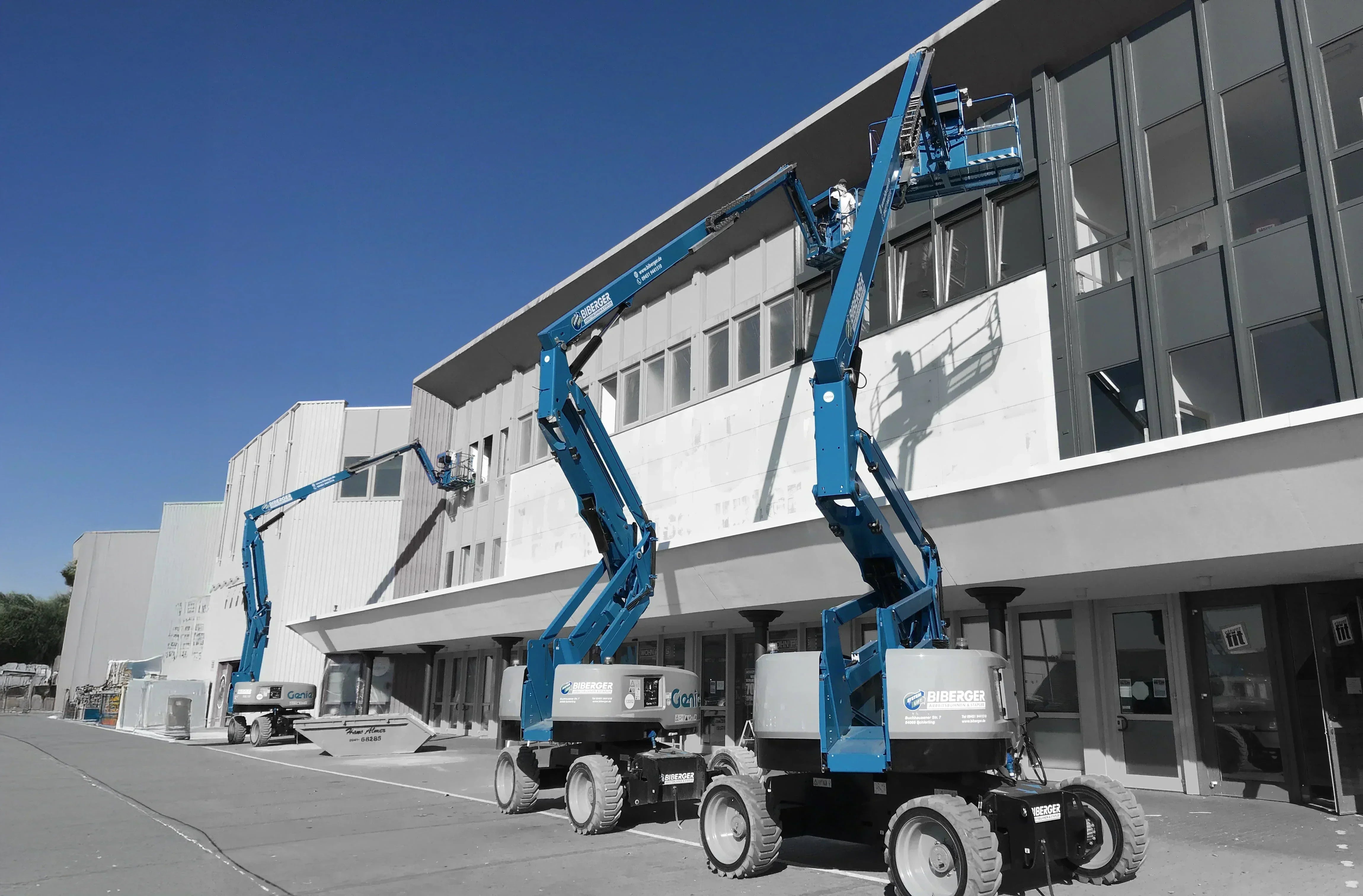
→ Truck-mounted work platforms with large lateral reach:

Quickly deployable, mobile and easily relocated between building sections, no anchoring required. Ideal for urban areas .

Interior cleaning of production or warehouse halls

Here you often need a long range – but emission-free and without soil pollution .

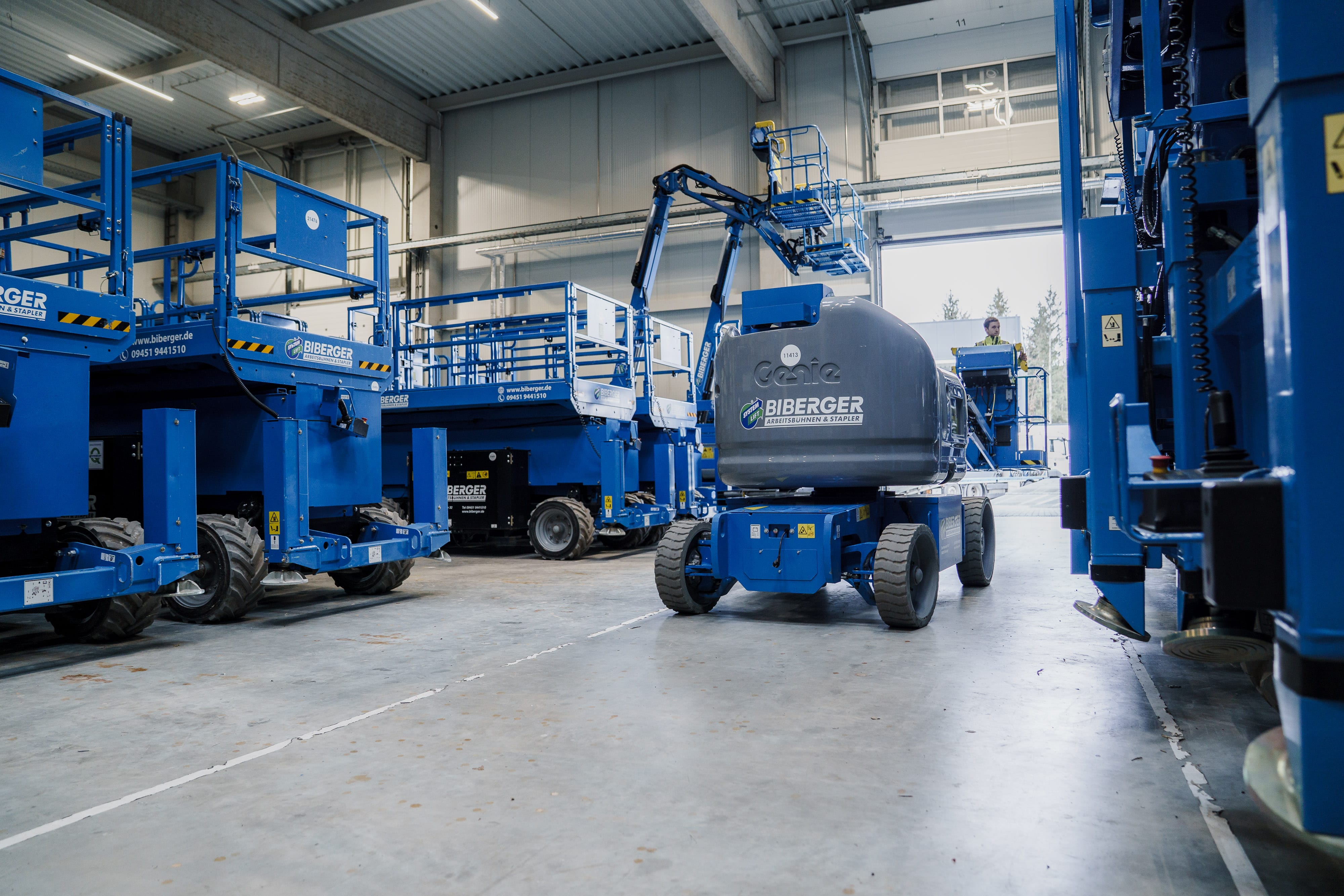
→ Scissor lift with electric motor or articulated telescopic platform with non-marking tires:

Ideal for sensitive floors, no emissions, optimal for ceiling lights, supports, pipes.

Cleaning of glass roofs, skylights or overhead glazing

Positionability is key here. You need to be able to get exactly under, next to, or above the surface.

→ Articulated telescopic platform with basket rotation and large reach-over height overcome almost any obstacle:

For sloping, hard-to-reach places, such as atriums or glass roofs. However, make sure there's enough space here.

Driveways with steps, grass, gravel or paving

Many building entrances are not designed for heavy equipment.

The solution: → Platform with crawler chassis - i.e. ground-protecting chain and compact design:

Extremely lightweight, all-terrain and safe on sensitive surfaces – also ideal for courtyards or gardens.

Typical mistakes – and how to avoid them as a building cleaner

  • Platform selected only by working height instead of reach
  • Model too heavy for the floor covering → pressure damage
  • Diesel engine used indoors → exhaust problems
  • No access to power supply → no charging possible
  • Stage too wide for elevators or passageways in the building
  • No training: Personnel must be familiar with the equipment
  • Generally not the right model selected → Work tool must be suitable for the location: e.g. indoor or outdoor

Tip: Do n’t just have “any” work platform delivered – get one that really fits the area, the surface and the task.

Safety: What should never be missing when cleaning at height

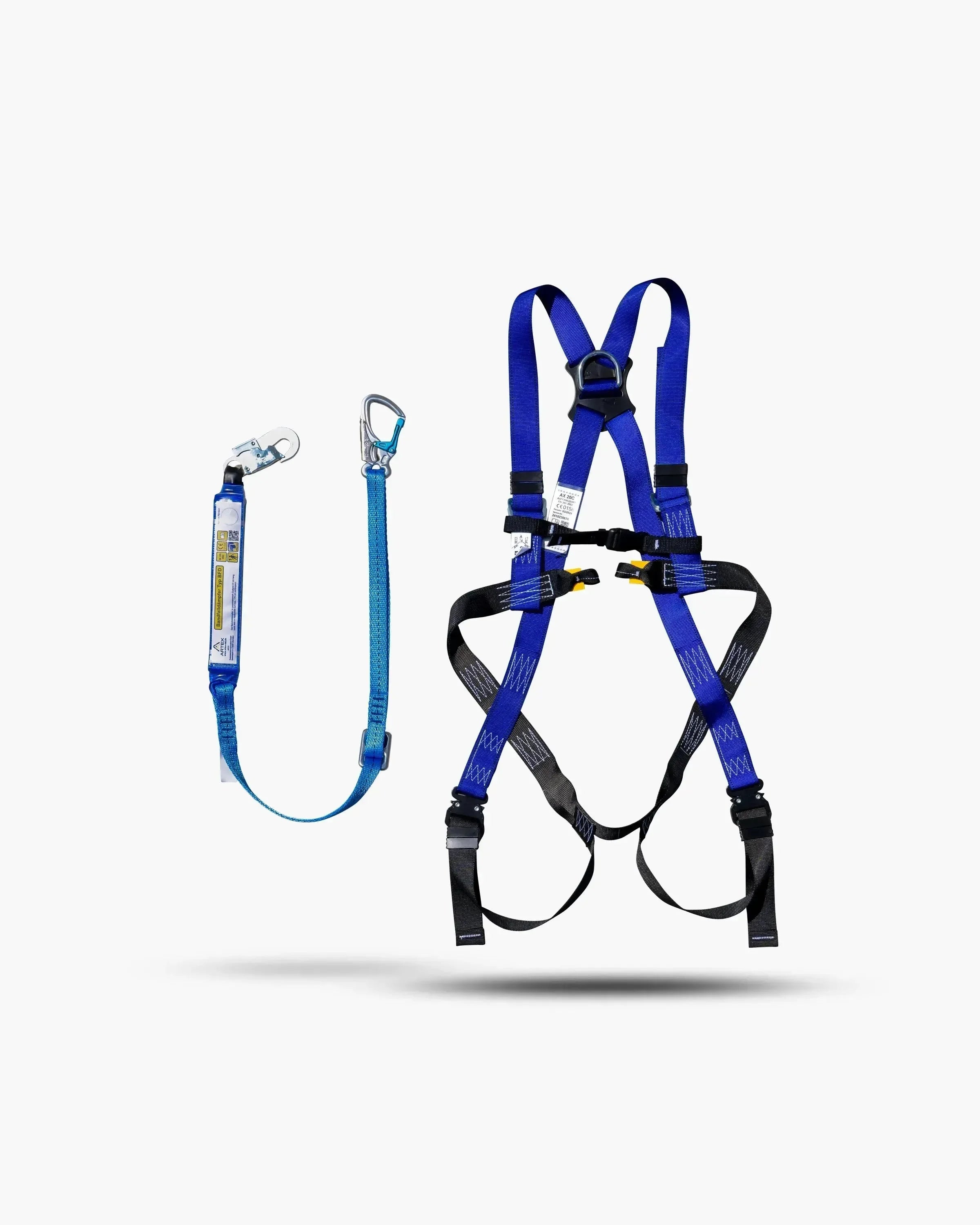
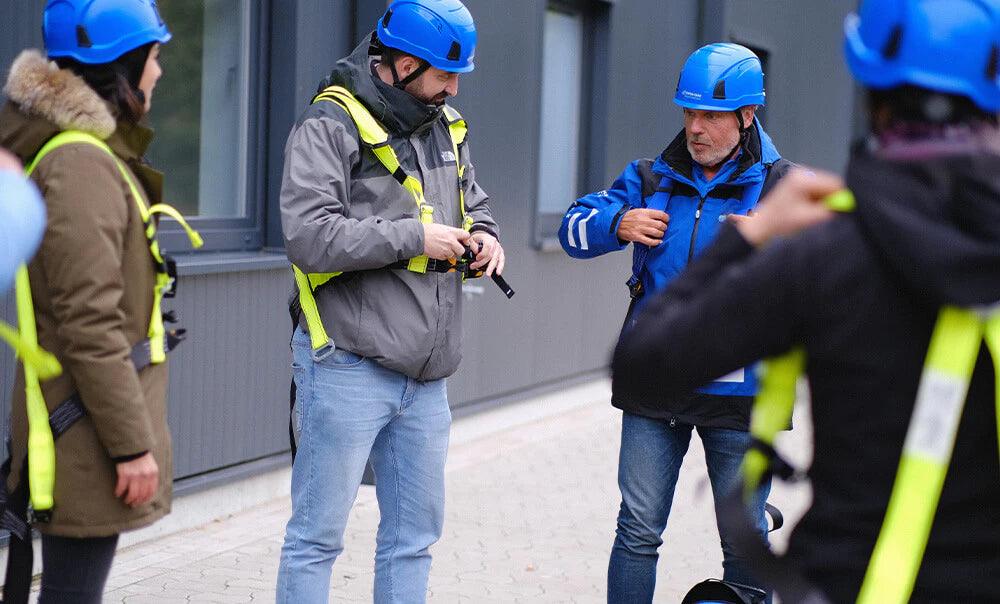
  • Always use PPE – even when cleaning the basket
  • Never drive the platform on wet, greasy or sloping ground
  • For glass surfaces: No contact with the facade – keep basket distance
  • Be careful with spray mist and cleaning agents – they can increase the risk of slipping
  • Check the platform for maximum lateral inclination, emergency lowering and battery/charge level before use

Rent work platforms for building cleaning

Renting work platforms for building cleaning is worthwhile – especially if you need to remain flexible.

Whether it's a glass facade, an inner courtyard, or a hall ceiling: With the right rental platform, you can reach any location quickly, without long setup times or additional safety risks. You get exactly the equipment you need for the job – including delivery, training, and, if desired, appropriate PPE.

Especially when working at changing locations or on seasonal jobs, renting a work platform is much more economical than using your own equipment.

How much does the right stage cost – and what influences the price?

  • Equipment type: Scissor lift, articulated platform, crawler, truck
  • Height & range: the higher, the larger the stage class
  • Location: approach, access, transport route
  • Rental period: daily, weekly or long-term
  • Special accessories: PPE, soft tires, basket extension

Tip: Many glass and building cleaning jobs take only 1–2 days with the right equipment. Careful planning saves money—not just on equipment, but also on time.

Advantages at a glance

Why a lifting platform is often superior to scaffolding

Application work platform scaffolding
Changing locations Yes - BIBERGER No - BIBERGER
Glass facade cleaning Yes - BIBERGER No - BIBERGER
Sensitive floors Yes - BIBERGER No - BIBERGER
Cleaning of skylights/glass roofs Yes - BIBERGER No - BIBERGER
Permanent fall protection No - BIBERGER Yes - BIBERGER

Rent the right machine now

You know what to do – now you just need to rent the right access platform . Whether for glass facades, interior cleaning, or hard-to-reach areas: We'll help you find the right access platform for your cleaning job.

Quickly available, delivered nationwide, and with training and personal protective equipment available upon request. Talk to us before you rent – ​​we'll show you what really works.
Rectangle_1 - BIBERGER
About the author

Martin Biberger

Managing Director

Martin is the founder and managing director of BIBERGER Arbeitsbühnen & Forklifts.

He is responsible for thetechnical areaTogether with his team, he is responsible for thetechnical purchasingthe machines thatFurther development of the machine inventoryand the smooth operation of over 1,500 BIBERGER rental devices.

From many years of experience he knows theStrengths and weaknesses of all device classes, the possibleAreas of applicationand thetechnical possibilities– always with a view to theDevelopment of the entire industryand future innovations.

Our editorial quality standards

The subject content on biberger.de are editorially created, reviewed, and continuously updated. The basis is our daily work with aerial platforms, telehandlers, and industrial trucks – in rental, sales, operational planning, and technical support.

Each article draws on real-world experience and is editorially reviewed for clarity, accuracy, and practical relevance according to expert criteria. Technical statements are regularly compared against current industry standards and best practices.

The aim of our publications is to make reliable specialist knowledge accessible and to offer guidance to users, decision-makers and industry partners. BIBERGER sees itself as an independent information platform for safe, economical and modern height access technology – well-founded, comprehensible and free from advertising influence.

Leave a comment

Please note, comments need to be approved before they are published.

This site is protected by hCaptcha and the hCaptcha Privacy Policy and Terms of Service apply.

FAQ

What do you do in building cleaning?

In building cleaning,Interior and exterior surfaces of buildings professionally cleaned, maintained and repairedThese include, among others,Glass and facade cleaning, staircase cleaning, office areas, halls, sanitary areas, floor coverings and special cleaning in hard-to-reach places– for example, on glass roofs or facades at great heights. Building cleaners work with special equipment, cleaning agents and often also withWork platformswhen things go up. The goal is always:Preservation of value, cleanliness and hygiene.

What does building cleaning involve?

Building cleaning includes all cleaning work that is carried out on and in a building on a regular or as needed basis. This includes, among others:

  • Maintenance cleaning (e.g. offices, sanitary areas, corridors)
  • Glass and window cleaning
  • Facade cleaning (e.g. aluminum, glass, natural stone)
  • Staircase and elevator cleaning
  • Cleaning of warehouses and production halls
  • Construction cleaning (before/after construction projects)
  • Special cleaning (e.g. graffiti, skylights, PV systems)
  • Gutter and roof cleaning

Many of these tasks involveWork platforms or special equipmentused – especially in hard-to-reach places or at great heights.

What do I need for building cleaning?

For professional building cleaning you needsuitable cleaning materials, specialist knowledge – and the right technology for height, area and substrate. This includes:

  • Cleaning products and accessories(Cloths, wipers, pads, sprayers)
  • machinessuch as vacuum cleaners, cleaning machines or high-pressure cleaners
  • protective equipment(e.g. gloves, PPE when working at height)
  • Work platform or access technologywhen windows, facades or roof areas are cleaned
  • Expertiseabout surfaces, chemical use and safety requirements

Depending on the location and task, you need specially adapted equipment– especially when it comes to high altitudes or when sensitive surfaces need to be cleaned.

What is the four-color system in building cleaning?

The four-color system is a defined color code for cleaning cloths and utensils used in building cleaning. The goal is to prevent cross-contamination and ensure hygienic standards. Each color represents a specific application:

  • Red: WC, urinals, toilet environment (high germ load)
  • Yellow: Sinks, tiles, fittings (sanitary, but less stressed)
  • Blue: General surfaces such as tables, desks, doors
  • Green: Kitchens, break rooms, food-related environments

The color concept prevents, for example, toilet bacteria from being transferred to work surfaces – an important component of professional hygiene standards.

Is building cleaning a construction service?

As a rule, building cleaning is not a construction service within the meaning of Section 13b UStG, as it is not directly related to the construction, repair, modification, or removal of a building. Typical cleaning work such as maintenance cleaning, glass or facade cleaning are consideredServices, not as construction services.

Exception:If the cleaning is directly related to a construction work – for exampleConstruction cleaning after new construction or renovationit can be classified as a construction work.This is particularly relevant for the VAT regulation (Section 13b – reversal of the tax liability).

If in doubt, clarify with your tax advisor or client whether the construction work is subject to tax.

How do professionals clean windows?

Professionals clean windowssystematic, streak-free and safe – with the right tools and the right technique.Most commonly used are:

  • Washerandpullerfor large areas
  • Microfiber clothsfor frames and detail work
  • Demineralized water(Osmosis process) for streak-free cleaning without chemicals
  • High-qualityCleaning products, adapted to glass type and soiling

For windows that are difficult to access or high up,Telescopic poles, rope access technology or, above all, work platforms are used– for example, glass facades, skylights or winter gardens.With a work platform, building cleaners can work precisely, safely and time-savinglywithout having to erect complex scaffolding.

Relevant topics

View all

Wind und Arbeitsbühnen: Was Du für einen sicheren Einsatz unbedingt wissen musst

Wind and aerial work platforms: What you absolutely need to know for safe use

Key problem: Why wind loads are so often underestimated Wind load is one of the most underestimated risks when using aerial work platforms. At ground level, wind force 6, with 12.5 m/s or around 45 km/h, often seems relatively harmless....

Read more

Arbeitsbühnenmärkte weltweit KI generiert

Aerial work platforms worldwide: An international comparison of markets, manufacturers & costs

Aerial work platforms are indispensable on almost every construction site and in many industries. However, although the basic technology is similar worldwide, markets differ significantly in terms of regulation, manufacturing landscape, pace of innovation, and typical application profiles. Understanding international...

Read more

Arbeitsbühne Privat mieten – Was ist erlaubt?

Renting a work platform as a private individual – What is allowed?

Aerial work platforms are primarily designed, standardized, and planned for commercial use. Typical applications include facade construction, plant and building technology, and industrial maintenance. Accordingly, equipment selection, insurance models, and rental procedures are geared primarily towards commercial users with trained...

Read more

Anschlagen von Lasten – Anschlagmittel richtig auswählen und sicher einsetzen

Lifting loads – selecting and safely using lifting equipment

Safely attaching loads is one of the most demanding tasks when operating cranes , forklifts , and lifting equipment. Errors almost never occur during the lifting itself, but almost always result from misjudging the load capacity, type of attachment, or...

Read more

Staplerfahrer werden

Become a forklift driver: safely, trained and responsibly

A moment of inattention 7:15 a.m. A forklift driver begins his early shift. Routine. He only gives the forklift a cursory check – time pressure, the truck is waiting. On the third lift, the fork tine snaps at an old...

Read more

CAN-Bus und J1939-Diagnose bei Baumaschinen - BIBERGER

CAN bus and J1939 diagnostics in construction machinery

Modern construction machinery is now highly networked systems. Sensors, control units and safety modules communicate with each other constantly – and this happens via the so-called CAN bus . The CAN bus is essentially the nervous system of every modern...

Read more

Magni Diagnose-Leitfaden: Fehlermeldungen richtig deuten - BIBERGER

Magni Diagnostic Guide: How to correctly interpret error messages

If your Magni telehandler (RTH / HTH series) suddenly displays a warning, it's rarely a total breakdown. Usually, a safety or protective function is being activated. This guide explains the most important error codes, their meaning, and how to react...

Read more

3D-Arm einer Arbeitsbühne

3D arm on aerial work platforms: Technology, advantages and model codes at a glance

The so-called 3D arm – also known as a 3D basket arm , pendulum basket arm , or hybrid jib – is a state-of-the-art feature for aerial work platforms. Its three-axis mobility allows for particularly precise work in hard-to-reach areas....

Read more