


 What You Need to Know
Working at height in urban areas presents unique challenges. Limited space, narrow access routes, sensitive subsurfaces, and stringent safety regulations make the use of work platforms and mobile cranes challenging. At the same time, precise work is essential – whether for facade construction, roof work, in courtyards, or over public roads .
This article shows you which machines are suitable for urban areas, who typically works there and what must be taken into account when selecting, planning and using them.
Who works at heights in urban areas?
Access to heights in cities is required in many industries. Typical applications include:
- Facade construction and renovation (ETICS, windows, cladding)
- Roofing and carpentry work (roof trusses, dormers, gutters)
- Building cleaning (glass, aluminum, natural stone)
- Electrical and lighting installations (traffic lights, masts, LED systems)
- Tree and green care in parks, cemeteries or courtyards
- Technical building equipment (ventilation, air conditioning, PV)
- Film, TV, event (camera technology, lighting, setups)
Particularly in demand: flexible machines that remain operational in confined conditions, can be set up and dismantled quickly and produce the lowest possible emissions.
Which machines are suitable for urban use?
Not every platform or crane is made for urban use. What's needed are compact, maneuverable, and precisely controllable devices that can be used safely even under difficult conditions.
Typical machines for urban use:
Truck-mounted work platforms up to 3.5 t
Truck-mounted platforms are ideal for short-term jobs requiring rapid availability, such as traffic light installation or inspections.
Advantages: Road legal, flexible, no permit for special transport required.
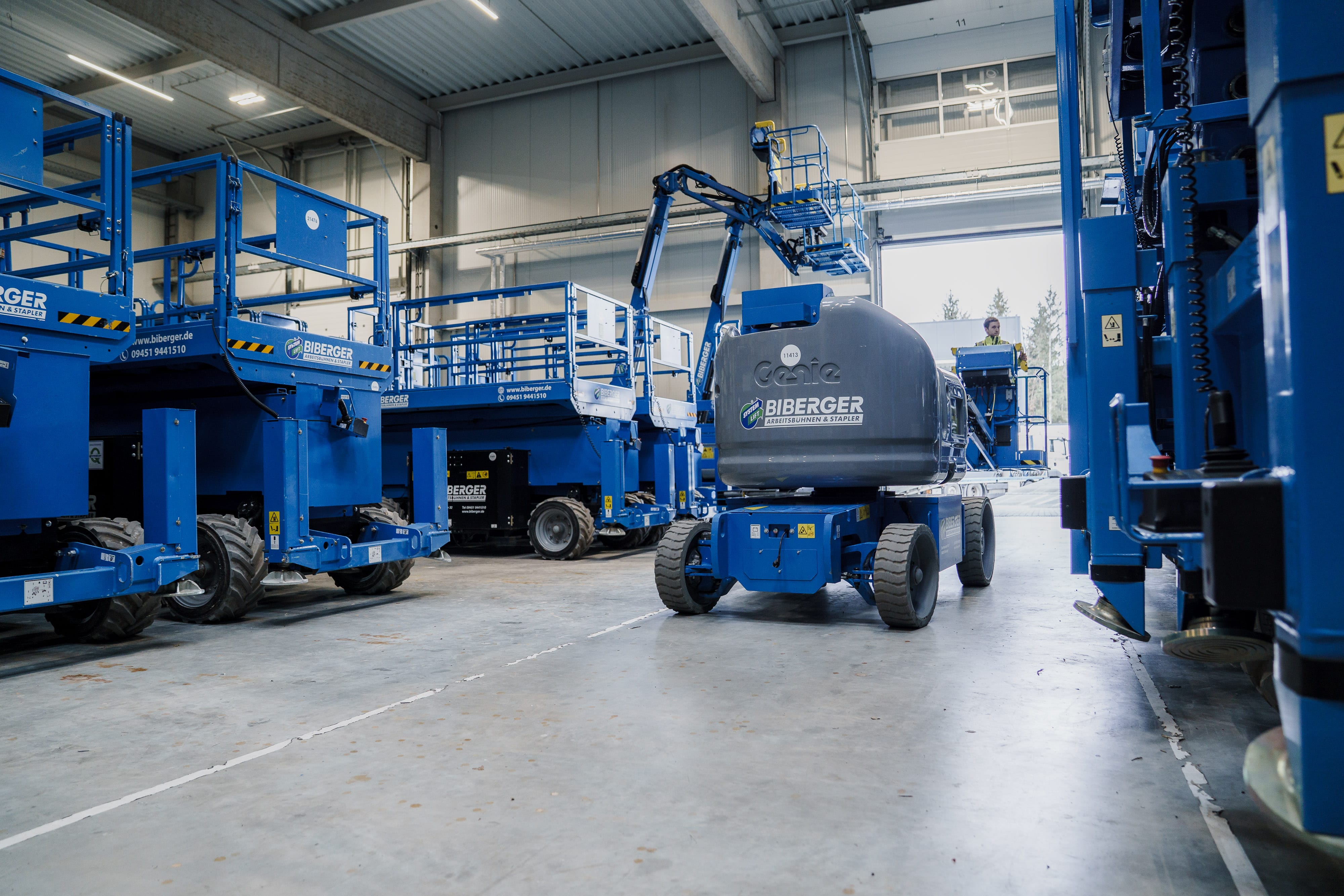
Articulated telescopic platforms
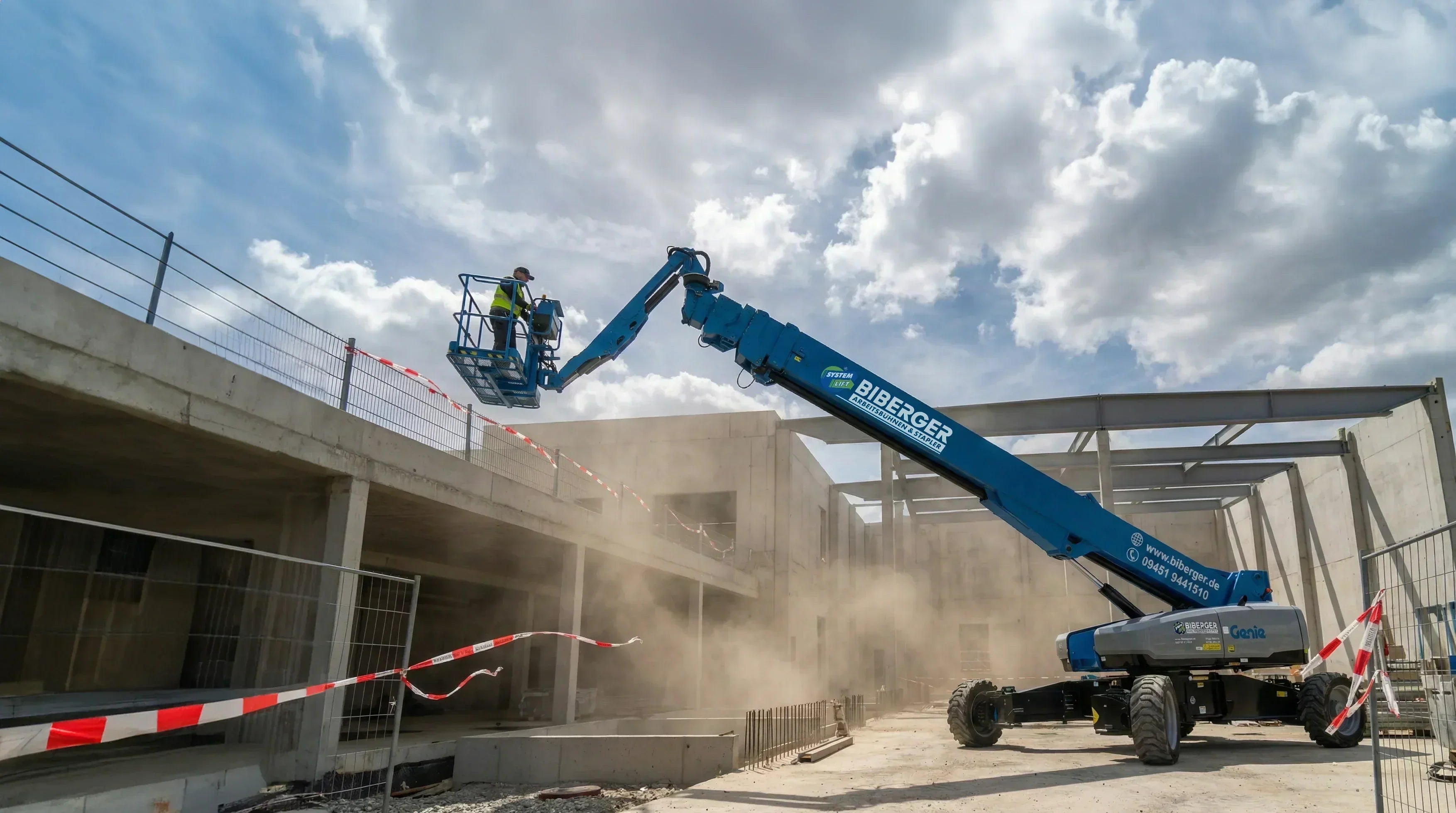
When it comes to winding backyards or lateral reach over obstacles , articulated telescopes with fine control have an advantage.

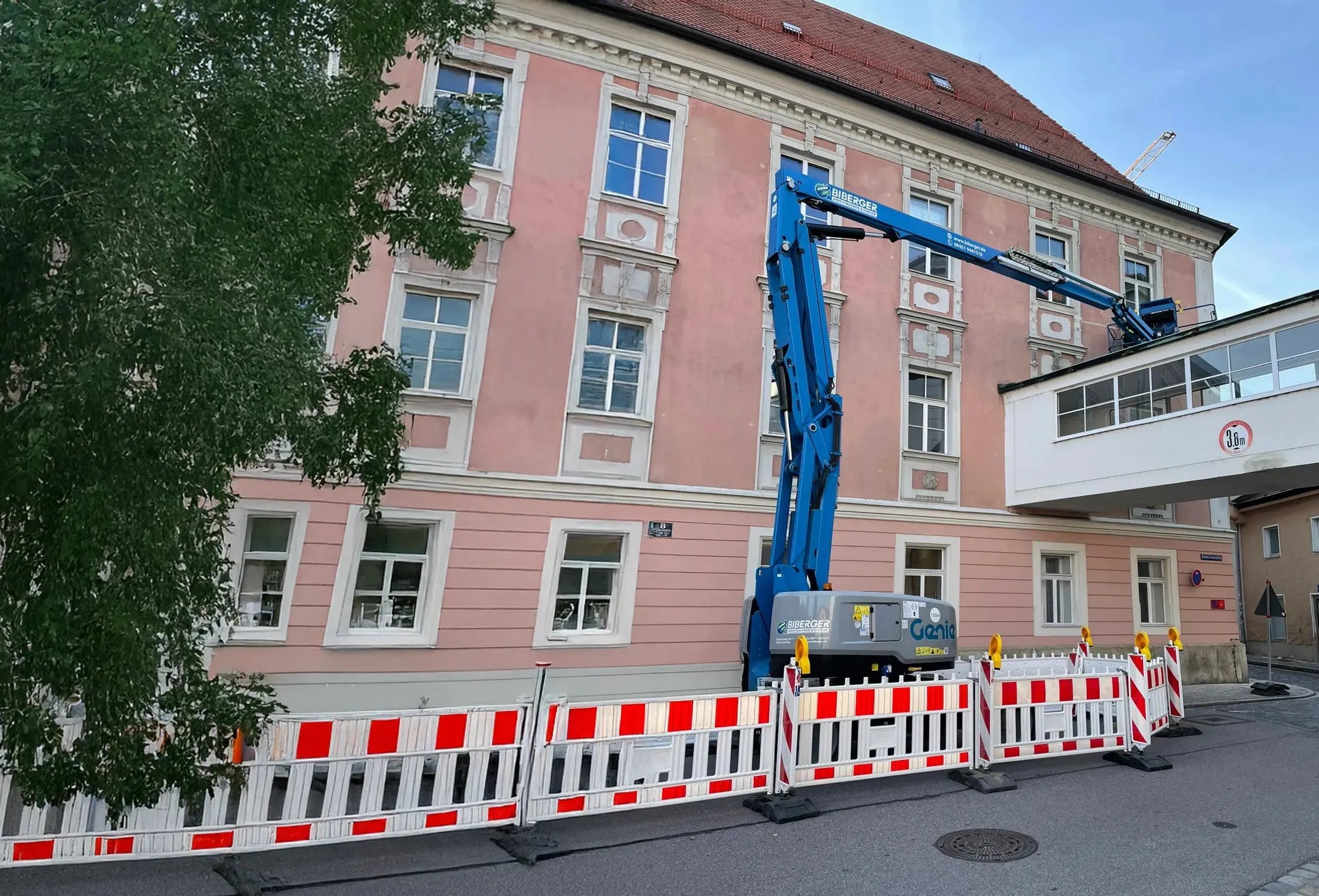
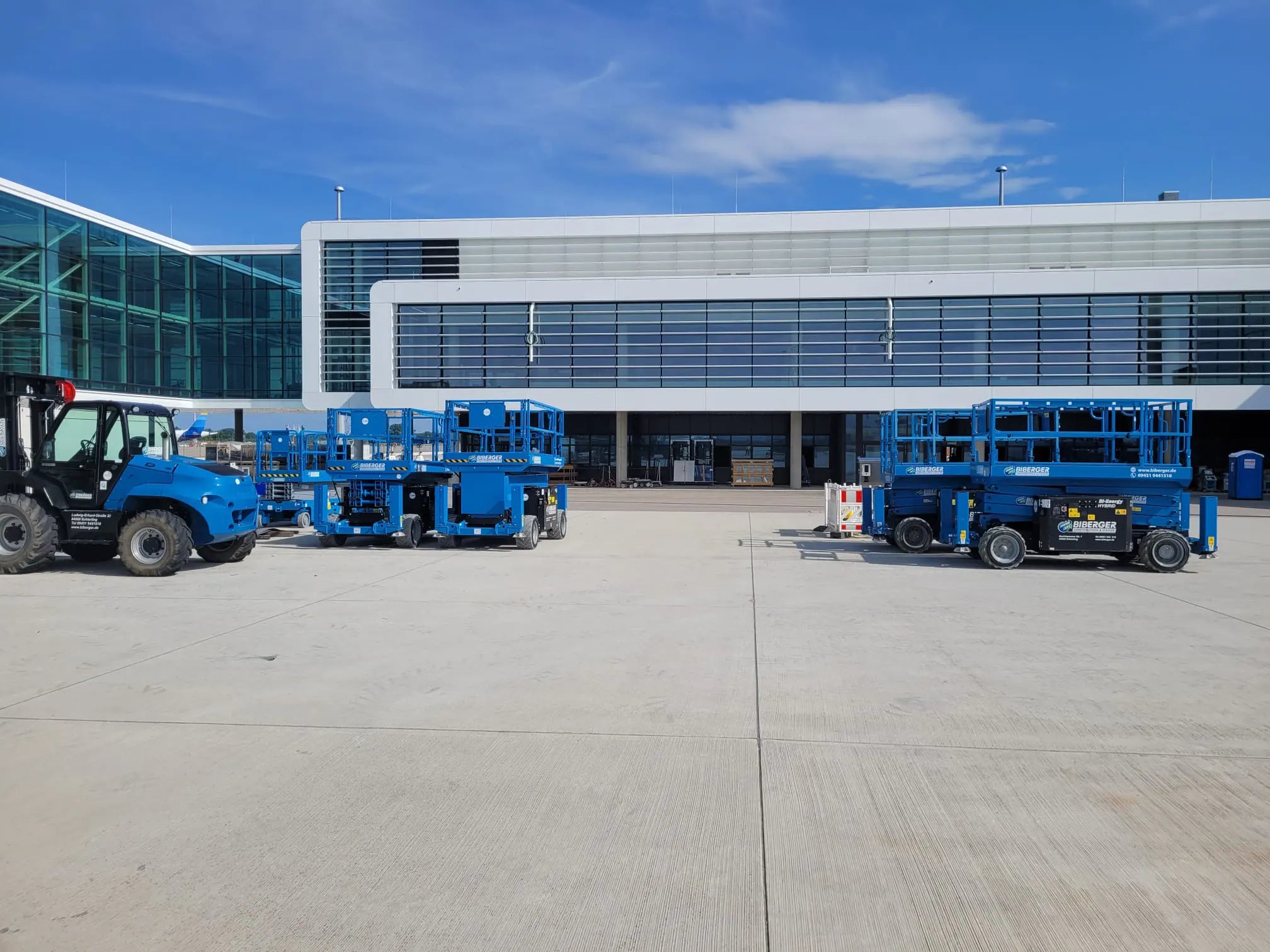
BIBERGER work platform in the city center – mobile and efficient for facade and installation work.
Scissor lifts
Scissor lifts are ideal for stable, flat surfaces with limited space and the need for high load capacity in a small area – ideal for installation or maintenance work.
Crawler platforms
When working over lawns, gravel, paving, or slopes, crawler platforms offer low ground loads, compact dimensions, and terrain compensation . They are indispensable for courtyards, gardens, and listed buildings.
Mobile cranes with small turning circle
For lifting heavy loads over roofs or streets , e.g. for technical building services installations or roof structures – provided access is secured.
What should be taken into account in urban use?
In contrast to an open construction site, in the city, you have to clarify many more parameters in advance and plan precisely . These include:
Access and shunting areas
Are driveways wide enough? Are there height restrictions caused by gates, canopies, or cables?
Soil conditions
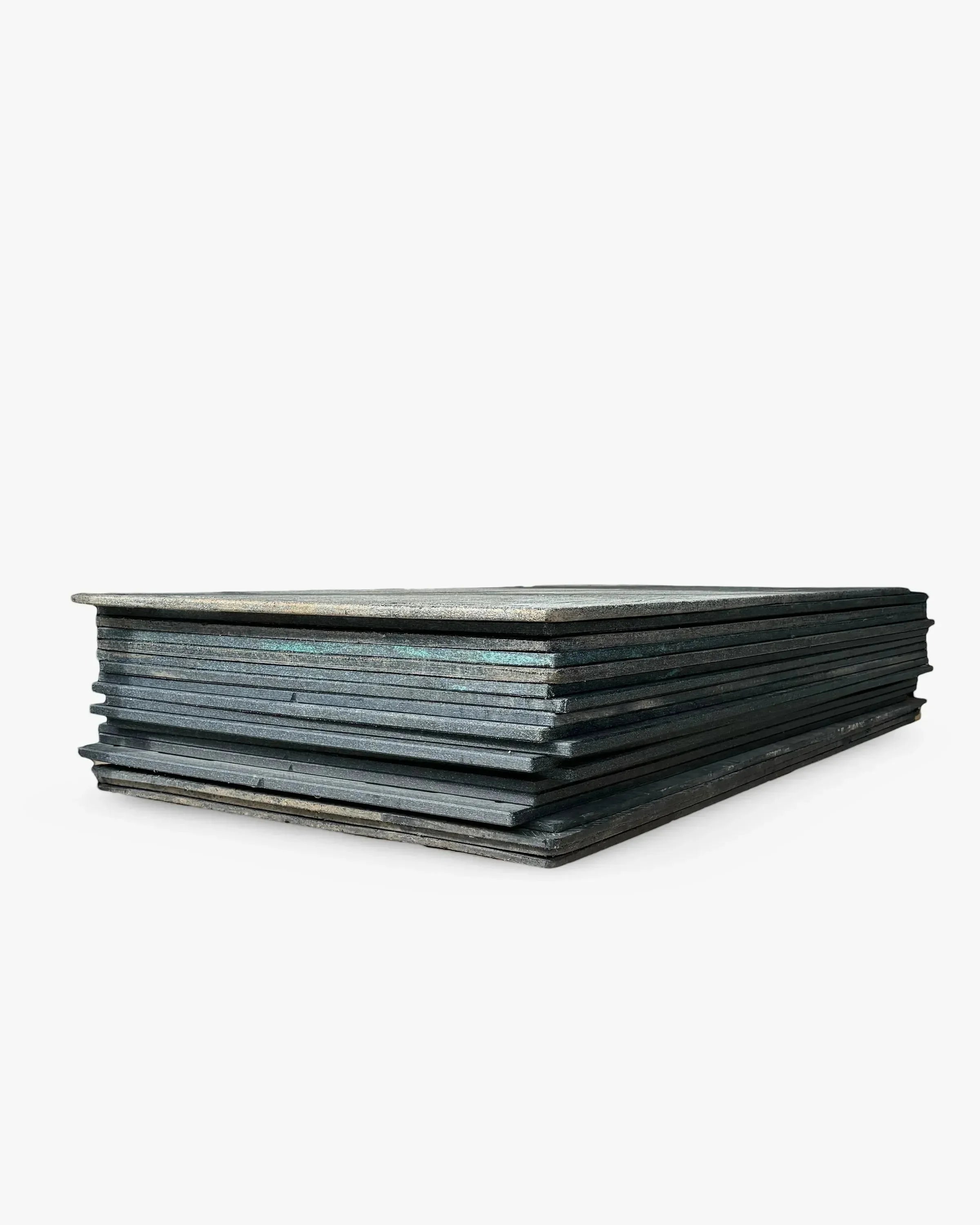
Load-bearing capacity, paving, lawns, underground garages – load distribution using underlayment or mats is often essential. Keyword: soil load
Public space / permits
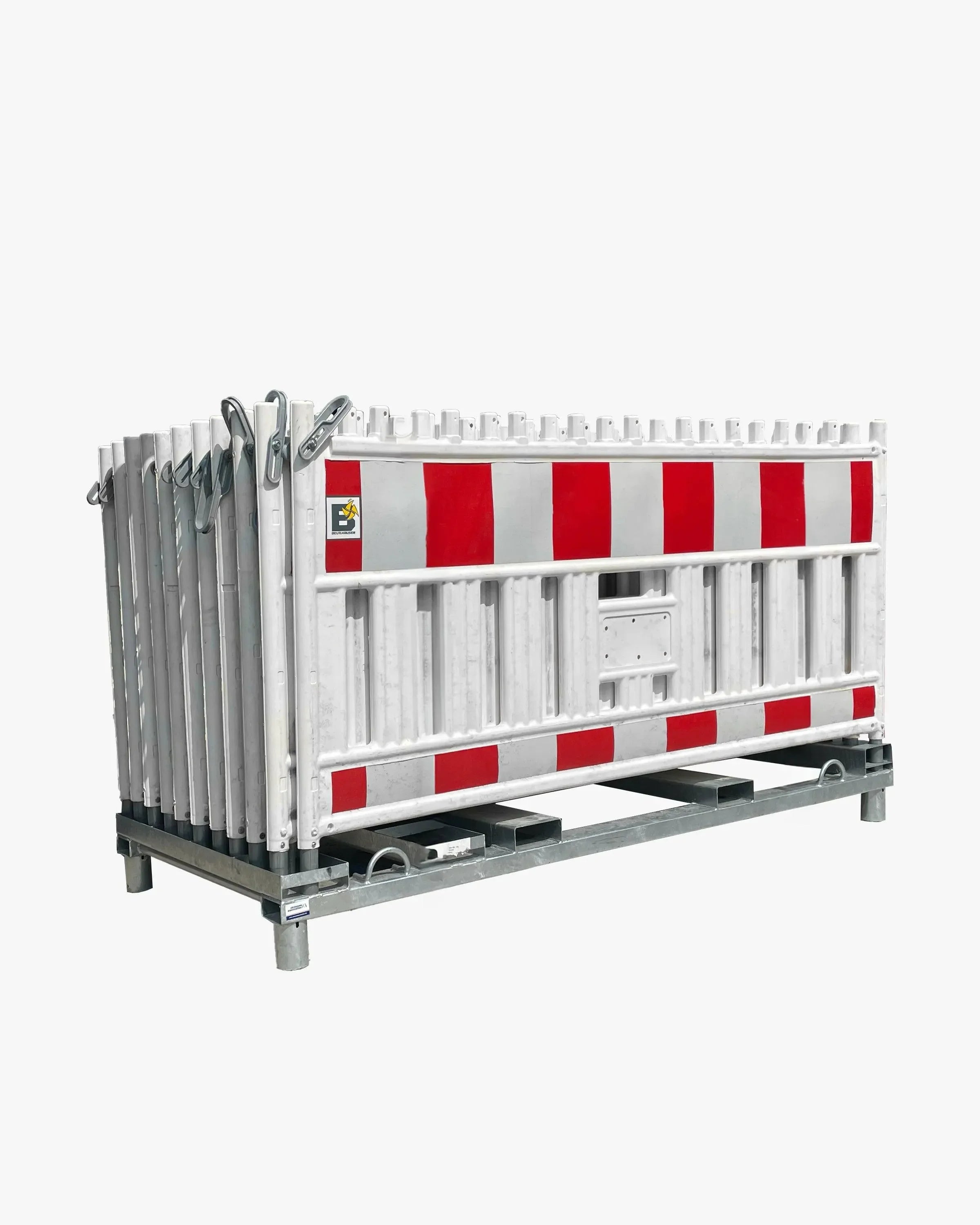
Work areas near traffic on sidewalks, streets, or squares? Barriers, regulations from the public order office, or a traffic law order are required.
Noise and emission protection
Electric or hybrid drives are often mandatory, especially in residential areas or inner cities.
Rescue and escape routes
The deployment must not block escape routes – especially in school buildings, clinics, and government offices.
Working through third parties
When pedestrian traffic occurs or restaurants are open, stricter protective measures apply, such as protective roofs, closures or night work.
What needs to be planned in advance?
The more confined the environment, the more important it is to have thorough preparation. Nothing will run smoothly in urban areas without coordination with construction management, landlords, authorities, and residents . The following points should be clarified before the project:
- Check and document access route
- Measure the installation area – including support width, basket reach, and if necessary, swivel radius
- Prepare load distribution (floor plates, protective mats)
- Secure the work area (signs, fences, traffic safety if necessary)
- Apply for special permits early
- Clarify power connections or charging options on site (for electric stages)
- Prepare alternatives in case weather or traffic conditions delay the operation
What role does the landlord play – and why is this crucial?
In urban operations, the rental company is much more than just an equipment provider . A good partner…
- inspects the construction site in advance to recommend the appropriate equipment
- knows the permit requirements , for example for truck platforms over 3.5 t or for road use
- delivers equipment at exactly the right time , e.g. early in the morning
- Provides base plates and accessories directly so that nothing is forgotten
- instructs the staff on site – important for sensitive equipment such as crawler platforms
- reacts flexibly to delays or changed requirements
In short: the smaller the area of operation, the greater the importance of a reliable, experienced work platform rental company .
Conclusion: Access to heights in the city requires technology, experience and planning
Working at heights in the city isn't easy – but it can be planned. Selecting the right machines early, assessing the area, and professionally preparing for the job saves time, money, and unnecessary rework. Technology must fit the environment – not the other way around.
BIBERGER supports you with:
- a modern rental fleet specifically for inner-city requirements
- Advice from experienced dispatchers
- reliable logistics and punctual delivery
- On-site instruction
This will ensure your deployment in confined spaces is safe – and successful.




Share:
How much load and height can a crane handle? Lifting capacity and reach of the largest cranes
How often should you clean construction equipment such as forklifts and work platforms?
Our editorial quality standards
The subject content on biberger.de are editorially created, reviewed, and continuously updated. The basis is our daily work with aerial platforms, telehandlers, and industrial trucks – in rental, sales, operational planning, and technical support.
Each article draws on real-world experience and is editorially reviewed for clarity, accuracy, and practical relevance according to expert criteria. Technical statements are regularly compared against current industry standards and best practices.
The aim of our publications is to make reliable specialist knowledge accessible and to offer guidance to users, decision-makers and industry partners. BIBERGER sees itself as an independent information platform for safe, economical and modern height access technology – well-founded, comprehensible and free from advertising influence.