


 What You Need to Know
Rough terrain work platforms are the first choice when work needs to be done in difficult terrain. With their tracked undercarriage and sophisticated technology, they can handle even the most challenging locations. But who needs such work platforms, when are they used, and what makes them so special?
In this article, we answer all the important questions about rough terrain work platforms and give you practical examples from daily use.
What are rough terrain work platforms?
Rough terrain work platforms are specifically designed for use on uneven, slippery, or loose surfaces. They typically feature:
- Tracked chassis or off-road tires: For maximum off-road capability and traction.
- An optional automatic leveling system: for a secure stand even on sloping or uneven ground.
- High climbing ability : They can handle inclines that are insurmountable for other stages.
These qualities make them ideal for off-road use – from construction sites to nature reserves.
Who needs rough terrain work platforms?
Rough terrain work platforms are the right choice for companies and professionals who work in demanding environments:
- Forestry: For example, for tree care or pruning branches.
- Energy industry: For work on power lines or wind turbines in fields or hilly terrain.
- Construction companies: Especially on large construction sites with unpaved access roads or construction site areas.
- Industry and trade: For work on hard-to-reach facades or facilities located away from roads.
If you work in an industry that regularly deals with rough terrain, an all-terrain work platform is the best choice.
When and where are rough terrain work platforms used?
Construction sites with uneven ground
Large construction sites often have loose soil, gravel, or clayey surfaces where conventional platforms cannot stand securely. Rough terrain work platforms ensure stability and safety.
Working on slopes
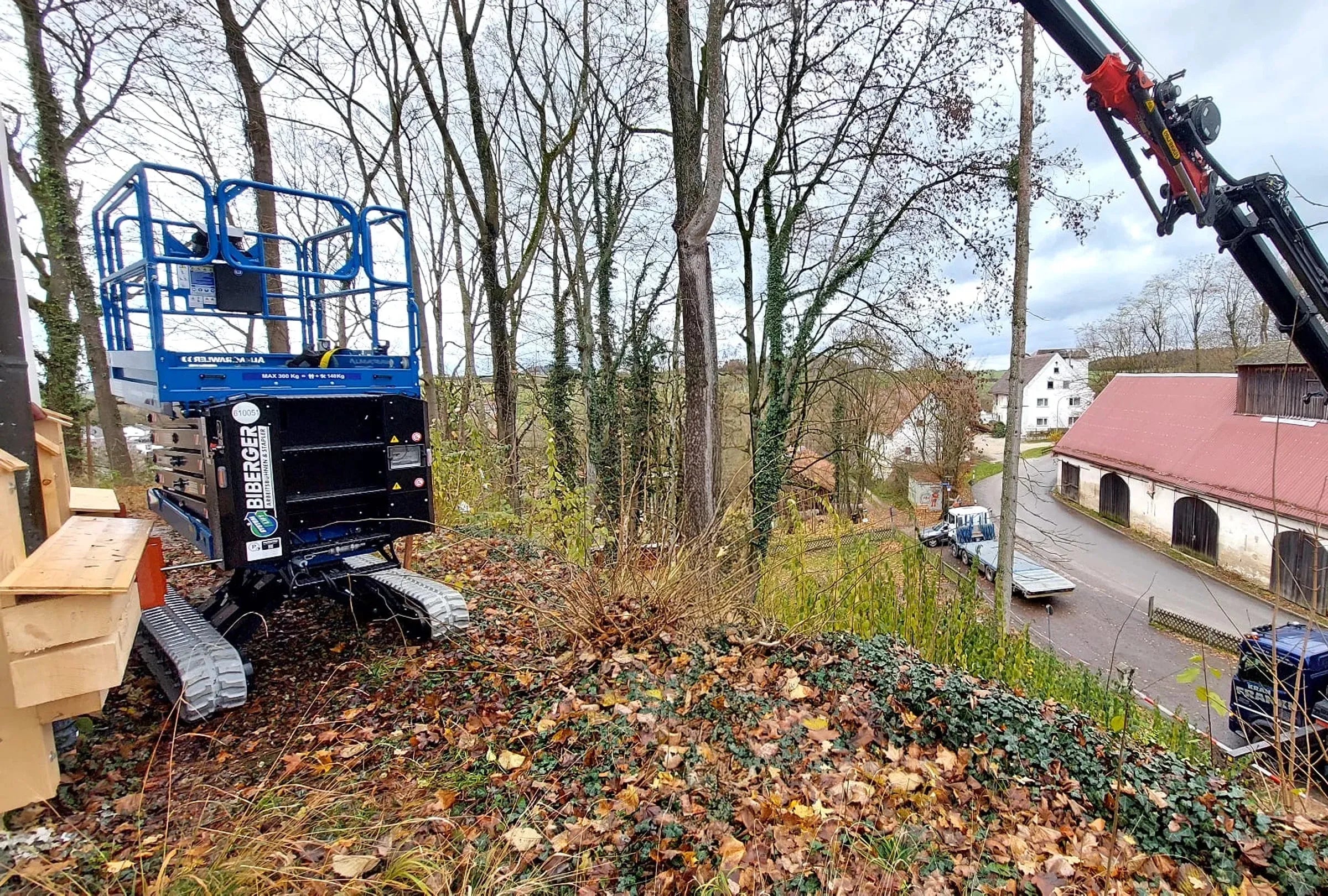
Thanks to their climbing ability and automatic leveling, these platforms are perfect for working on slopes or in hilly terrain, such as in vineyards or on embankments.
Operations in the forestry sector
Tracked work platforms are an indispensable tool for tree care , felling trees or repairs to forest roads.
Sensitive soils
The low ground pressure of the crawler chassis makes these platforms ideal for sensitive surfaces such as lawns or soft forest floors that should not be damaged.

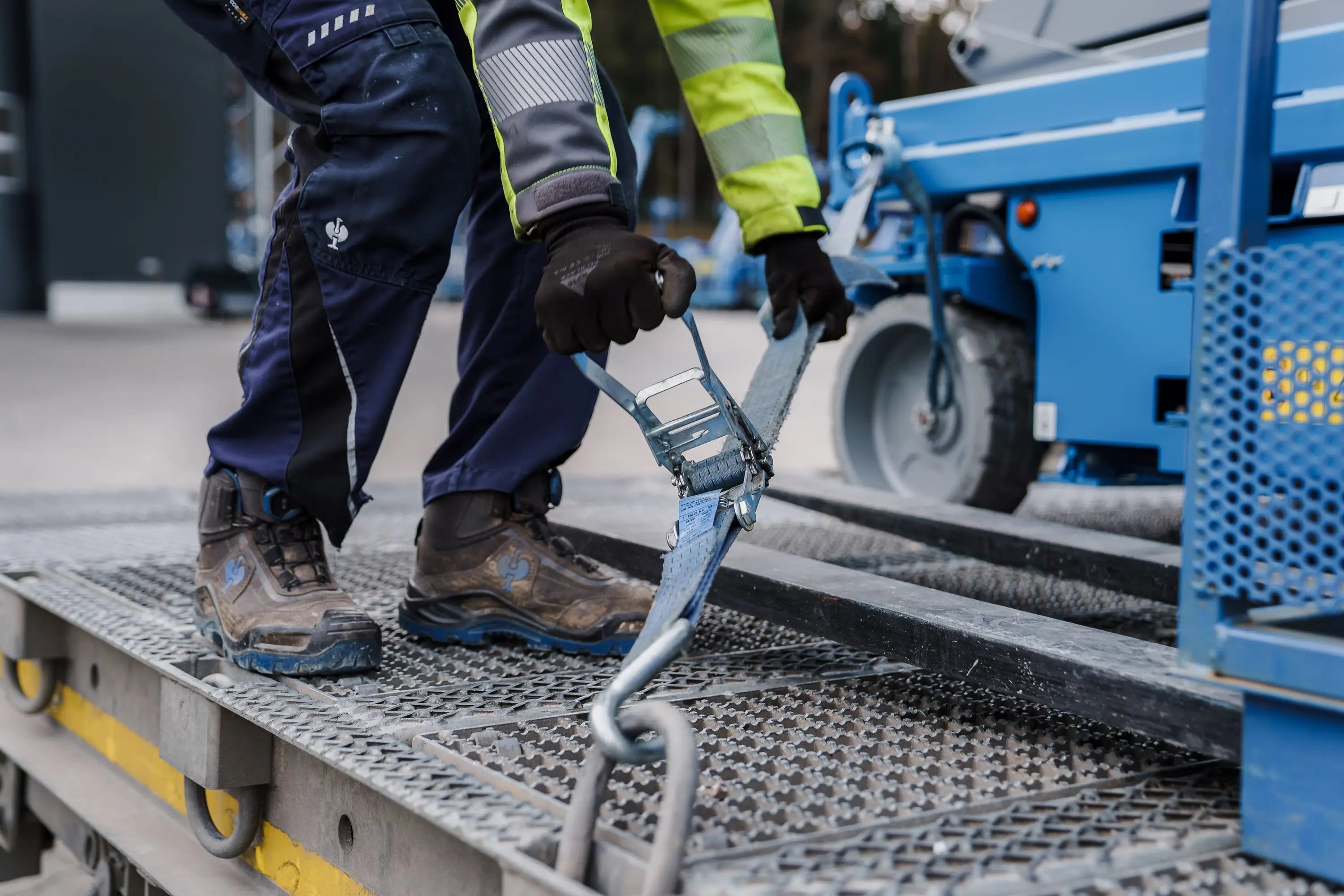
Our SPR 100-E is lifted to the deployment site.
Technical features of rough terrain work platforms
crawler undercarriage
Aerial work platforms with tracked chassis allow you to:
- Maximum traction on slippery or loose surfaces.
- Safe driving on inclines of up to 35–40%.
- A gentle distribution of weight, which minimizes damage to the surface.
Automatic leveling
Even on sloping ground, the platform remains secure. Automatic or manual support systems level the platform of some all-terrain work platforms, ensuring the work basket is always horizontal.
Long range
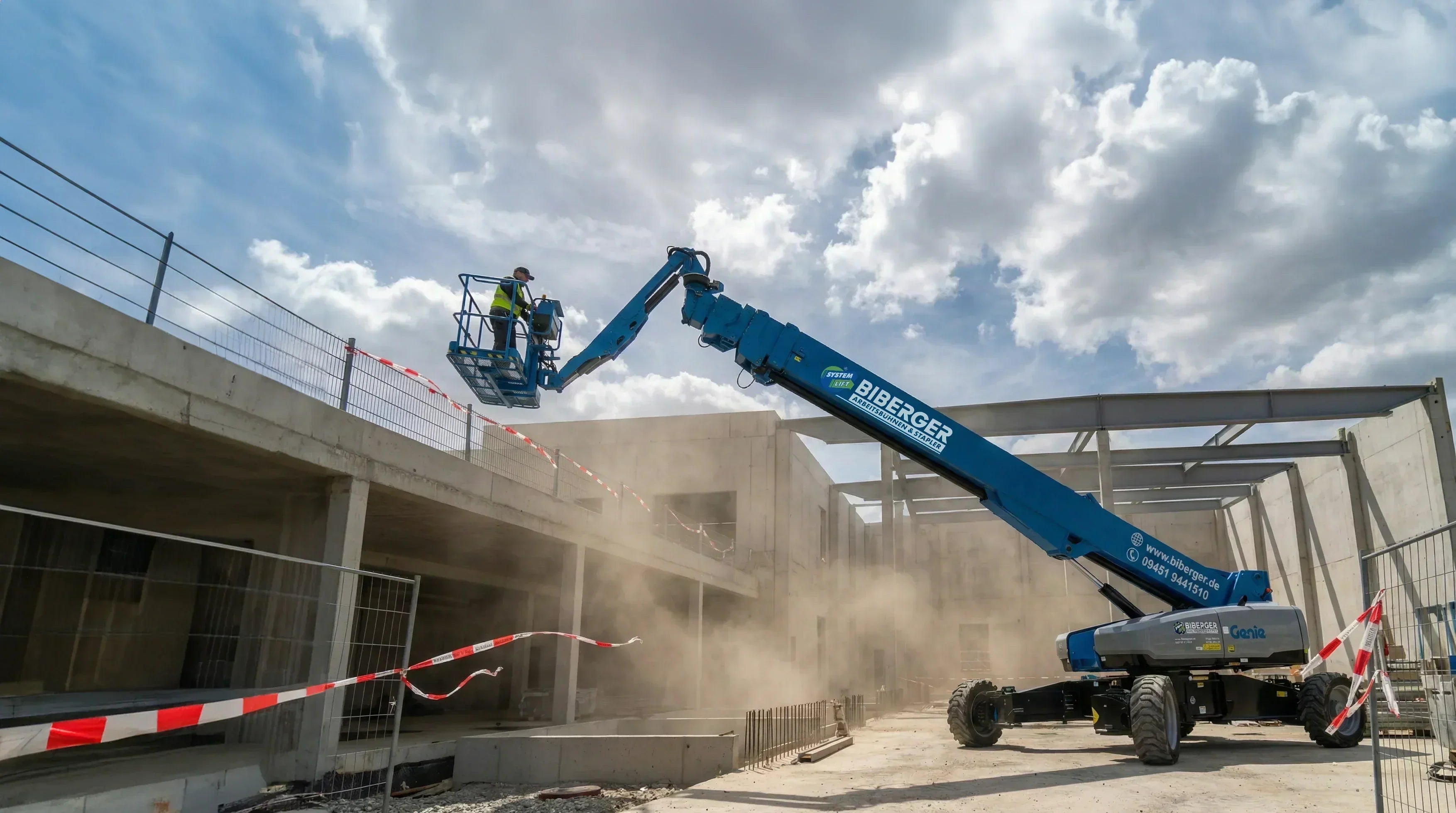
With working heights of up to 30 meters and lateral reaches of over 15 meters, you can easily reach even hard-to-access places.
Various drives
- Diesel engine: For maximum performance outdoors.
- Electric drive: Ideal for applications where environmental or noise protection plays a role, such as in residential areas.
Practical examples: Where rough terrain work platforms impress every day
Wind turbines in hilly terrain
A maintenance team needs to reach a turbine located on a remote hillside. An all-terrain work platform can easily overcome the incline and provides safe access at a great height.
Tree care in the park
A municipal service provider is pruning trees in a park with sensitive grass. Thanks to its tracked undercarriage, the platform leaves hardly any visible marks.
Facade work on a hotel on a hillside
A rough terrain work platform is being used for repairs at the rear of a hotel situated on a slope. The automatic leveling system compensates for the difference in elevation and ensures a stable footing.
Why rough terrain work platforms are so safe and efficient
Rough terrain work platforms score points not only for their off-road capability, but also for their safety features:
- Stability: The stage remains stable even on extreme inclines or loose ground.
- Soil protection: The crawler tracks minimize pressure on sensitive surfaces.
- Flexibility: Thanks to its high climbing ability, you can reach work locations that would be inaccessible with conventional platforms.
Conclusion: Rough terrain work platforms – The professionals for difficult jobs
If your project requires challenging terrain, sensitive soils, or great heights, a rough terrain work platform is the perfect choice. With their technical features, versatility, and reliability, they are indispensable for forestry workers, construction companies, and many other industries.
Whether you want to rent or buy a tracked platform – we're happy to advise you and find the right solution for your project. With our equipment, you can safely and efficiently master even the most challenging tasks.
Are you looking to rent or buy an outdoor stage?
Then you can continue from here .




Share:
The Almac BIBI 1090-BL EVO is now available for rent
Machinery Breakdown Insurance: Scope, Costs and Benefits
Our editorial quality standards
The subject content on biberger.de are editorially created, reviewed, and continuously updated. The basis is our daily work with aerial platforms, telehandlers, and industrial trucks – in rental, sales, operational planning, and technical support.
Each article draws on real-world experience and is editorially reviewed for clarity, accuracy, and practical relevance according to expert criteria. Technical statements are regularly compared against current industry standards and best practices.
The aim of our publications is to make reliable specialist knowledge accessible and to offer guidance to users, decision-makers and industry partners. BIBERGER sees itself as an independent information platform for safe, economical and modern height access technology – well-founded, comprehensible and free from advertising influence.