









 What You Need to Know
Work platforms enable safe and efficient work at heights – when used correctly. A key factor here is the integrated safety features. They protect the operator, prevent accidents, and ensure that all legal requirements are met. In this article, you'll learn about the systems that protect modern work platforms , how they work – and why regular inspection is crucial.
Why safety devices are essential
Whether on construction sites, in industry, or in facility management, anyone working with aerial work platforms often finds themselves several meters above the ground. Even a small mistake can have serious consequences. This makes it all the more important that every platform has technically sound safety features – and that you know what they're capable of.
Primary safety devices: railings, PPE, emergency stop
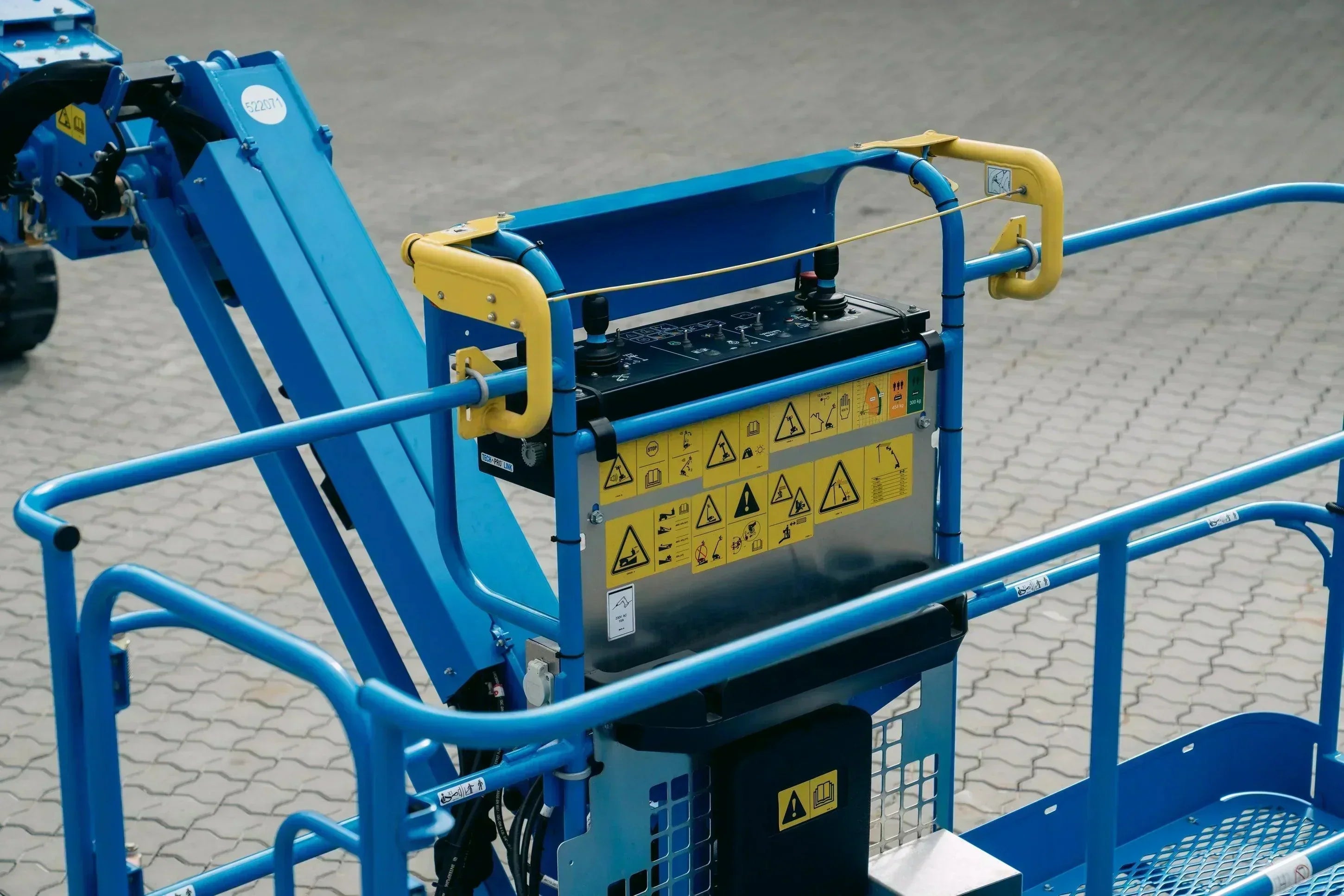
Work platform railings
Railings surround the platform and protect people from falling. They must be sturdy enough to withstand the pressure in the event of a fall—and are mandatory on every stage.
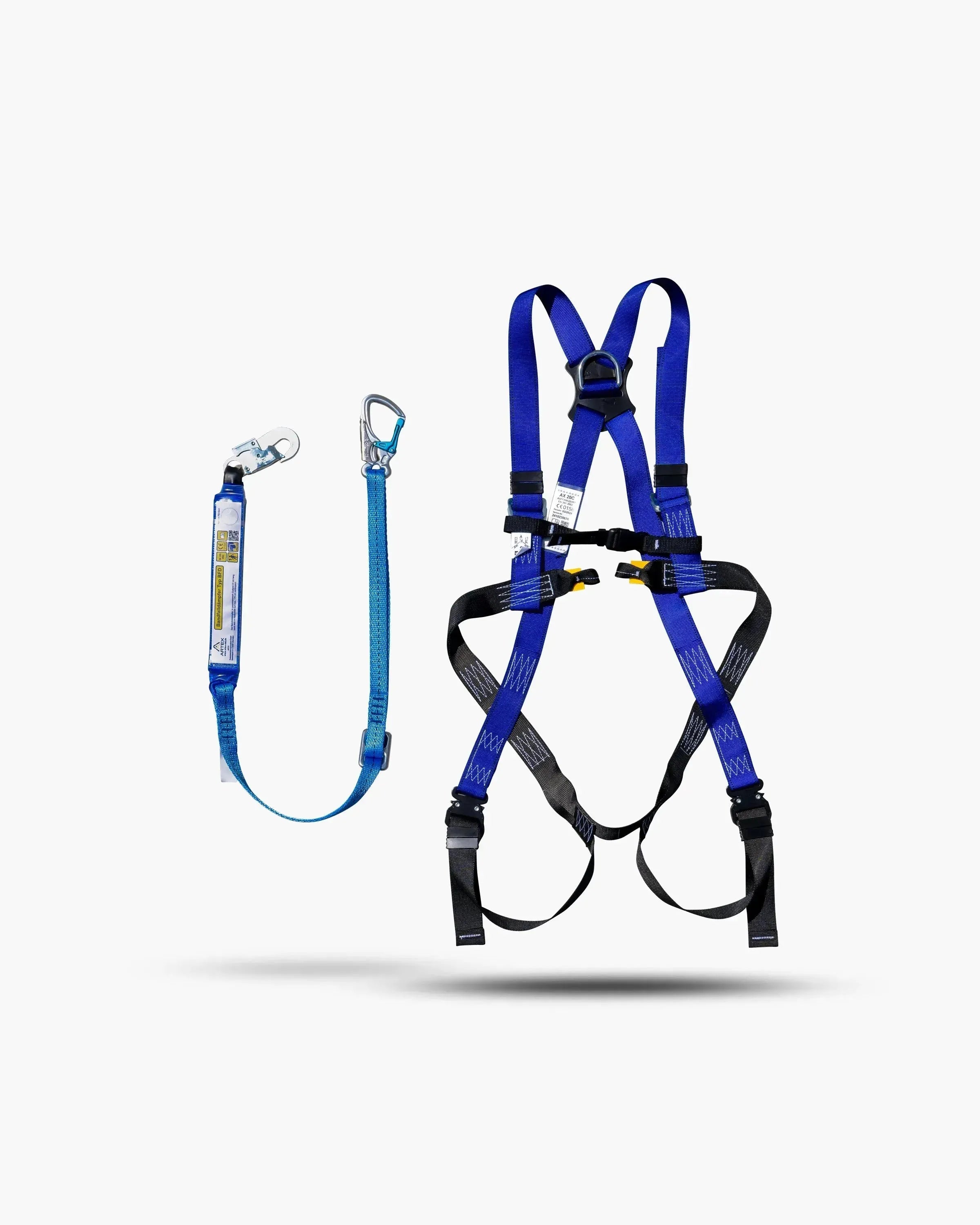
Fall arrest systems / PPE
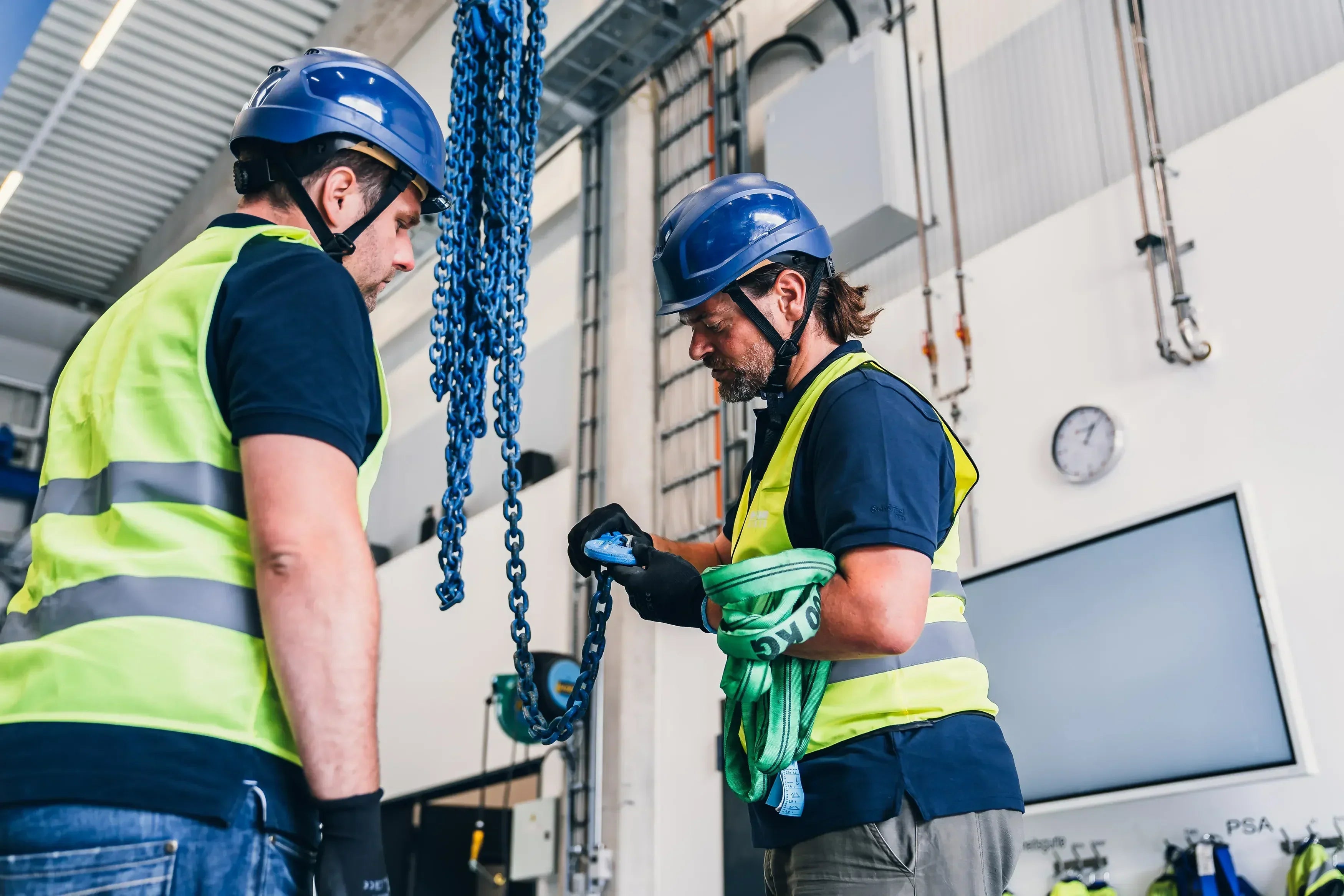
PPE (Personal Protective Equipment against Falls from a Height) such as harness systems and lanyards prevent serious injuries in the event of a fall. They must be checked regularly and worn correctly.
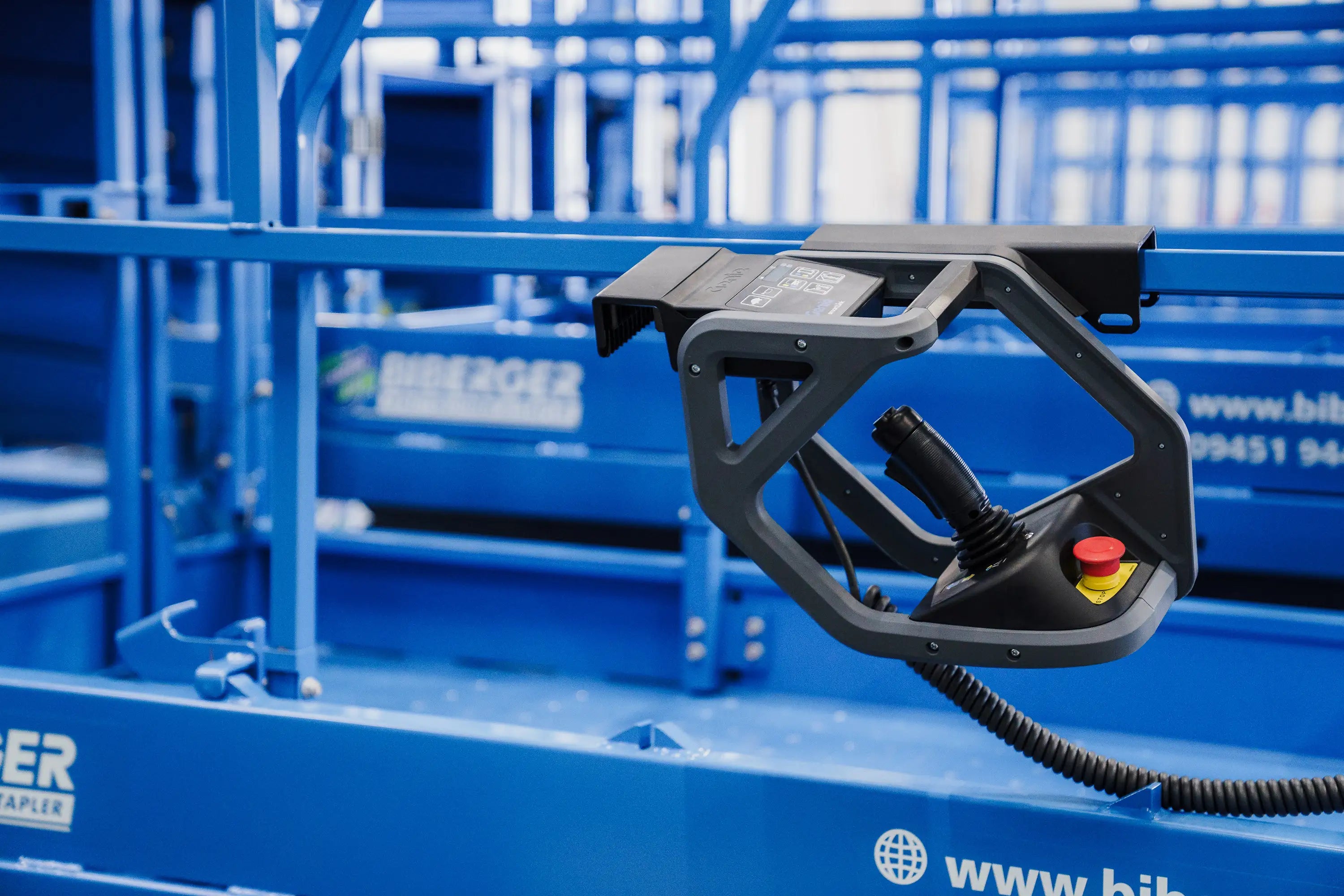
Emergency stop switch
The emergency stop switch immediately interrupts the power supply to the stage. In an emergency, any movement can be stopped – for example, in the event of malfunctions or dangerous situations.
Dead man's switch
The stage only moves as long as a control element is actively pressed. If the control element is released, the movement stops immediately. This prevents the stage from continuing to move uncontrollably—for example, if the operator leaves the console.
Ground control
A second control point on the ground allows the platform to be safely controlled from below in the event of an emergency or operator failure.
Secondary safety devices: sensors & interlocks
Inclination and overload sensors
Sensors monitor stability. If a dangerous tilt or overload is detected, the system issues a warning or automatically blocks movement.
basket scale
Modern platforms have integrated scales that measure the total weight in the basket and warn or switch off if overloaded.
Pothole protection
This function detects sudden changes in height on the ground (e.g. caused by potholes) and automatically reduces speed or blocks movement – for maximum stability.
Standards, regulations & deviations
All safety functions are based on European, international, and national regulations. The following table provides an overview of the most important requirements:
| Safety function | EN 280 | ISO 16368 | Machinery Directive | BetrSichV | DGUV | Deviation USA/UK |
|---|---|---|---|---|---|---|
| Emergency stop | Compulsory (PL c) | Emergency stop | EHSR 1.8, 3.7 | §8 (6) | Rule 101-005 | ANSI A92.22, BS EN 280-2 |
| Tilt sensor | Compulsory (PL c) | Tilt sensor | EHSR 1.2 | §9 (1) | Regulation 52 | OSHA 1910.67 |
| Load/torque limitation | Compulsory (PL d) | Load sensing | EHSR 1.2, 3.5.6 | §6 (2) | Rule 101-005 | ANSI A92.20 |
| Travel/lift interlock | PL c/d | Position limits | EHSR 1.7 | §8 (3–5) | Rule 100-500 | HSE Guidance |
Manufacturer comparison: Differences in security features
| function | genius | JLG | Haulotte | Magni |
|---|---|---|---|---|
| Tilt sensor | digital (PL d) | Level switch (PL c) | 2-axle (PL d) | analogue (PL c) |
| Load moment | Load cells + filters | Lever sensor (PL d) | Pressure sensor + monitor | Platform sensor (PL c) |
| Emergency stop | Braking resistor | Redundant buttons | Safety relay | Watchdog |
Inspection obligations & error diagnosis
Daily check
- Visual inspection of all lifting points
- Emergency stop test
- Check sensor displays
Monthly
- Read CAN diagnostics
- Calibrate load sensor
Yearly
- Check safety PLC
- Test limit switches
- Prepare test report according to §14 BetrSichV
Typical sources of error
- Tilt sensor drifts → stage blocked
- Chain sensor faulty due to vibration
- Corroded emergency stop button
Training media & innovation
Many manufacturers now offer interactive training platforms. Examples include:
- Genie YouTube: Calibrate tilt sensor
- JLG Academy: Overload sensor reset
Outlook: What’s next?
- AI-supported sensors for error prediction
- Real-time cloud analysis
- Security gateways against cyber attacks
Conclusion: Security needs a system
Only those who are familiar with safety functions, regularly check them, and use them correctly can operate the platform safely and in compliance with the law. Modern sensors and interlocks significantly increase safety – but only if they are understood and tested. Training and diligence are essential.




Share:
Instruction vs. instruction: These are the differences
Control elements on work platforms: How the control works
Our editorial quality standards
The subject content on biberger.de are editorially created, reviewed, and continuously updated. The basis is our daily work with aerial platforms, telehandlers, and industrial trucks – in rental, sales, operational planning, and technical support.
Each article draws on real-world experience and is editorially reviewed for clarity, accuracy, and practical relevance according to expert criteria. Technical statements are regularly compared against current industry standards and best practices.
The aim of our publications is to make reliable specialist knowledge accessible and to offer guidance to users, decision-makers and industry partners. BIBERGER sees itself as an independent information platform for safe, economical and modern height access technology – well-founded, comprehensible and free from advertising influence.