







 What You Need to Know
Why cleanliness is more than just appearance
Cleaning protects people, machines, and budgets.
Aerial work platforms and forklifts inevitably become dirty during daily use. Clay, oil mist, concrete dust, and paint overspray settle on platforms, booms, batteries, and sensors. These deposits not only impair the appearance but also safety, compliance with accident prevention regulations, and lifespan.
Cleanliness is therefore not an additional expense – it is an integral part of risk assessment and safe operation.
What really pollutes machines in everyday life
Typical types of pollution and their risks
Construction sites create deposits that quickly become a problem if not cleaned:
- Clay/soil – becomes slippery, increases the risk of falls.
- Oil/hydraulic residues – bind dust and conceal leaks.
- Concrete splashes – harden rock-hard and block moving parts.
- Paint residue clogs controls and sensors.
- Salt/fine dust – promote corrosion during winter operation.
The longer dirt remains on the machine, the greater the technical and financial damage will be.
How pollution really destroys machines
Cleaning telescopic booms: The “sandpaper effect”
Grease + dust + sand = a grinding paste. When the stage extends, millions of microparticles act like sandpaper on the sliding plates and boom surfaces. This leads to increased wear, uneven operation, and enormous repair costs.
Important: Applying grease without prior cleaning accelerates wear.
Hydraulic systems: Particles are the biggest enemy
Dirt can enter the hydraulic system via wipers, valves, or through improper high-pressure cleaning. Typical consequences:
- Valve blockages
- Pressure spikes and power loss
- Emulsion formation (“milk oil”) through water
- Wear and tear on pumps and cylinders
Hydraulic failures are among the most expensive breakdowns – often caused by inadequate cleaning.
Forklift batteries: Leakage currents due to dust and moisture
Contaminated battery surfaces conduct electricity. Fine dust and moisture create leakage currents that behave like a permanent mini-discharge. This leads to:
- reduced battery life,
- Corrosion on poles and connectors,
- higher charging requirements
- Operational disruptions.
A battery must be clean and dry – otherwise it will become a persistent problem.
Cleanliness is also safety.
How pollution directly leads to accidents
Dirty machinery poses a safety risk. Typical hazards include:
- smooth walking surfaces → risk of falling, especially in the cork area,
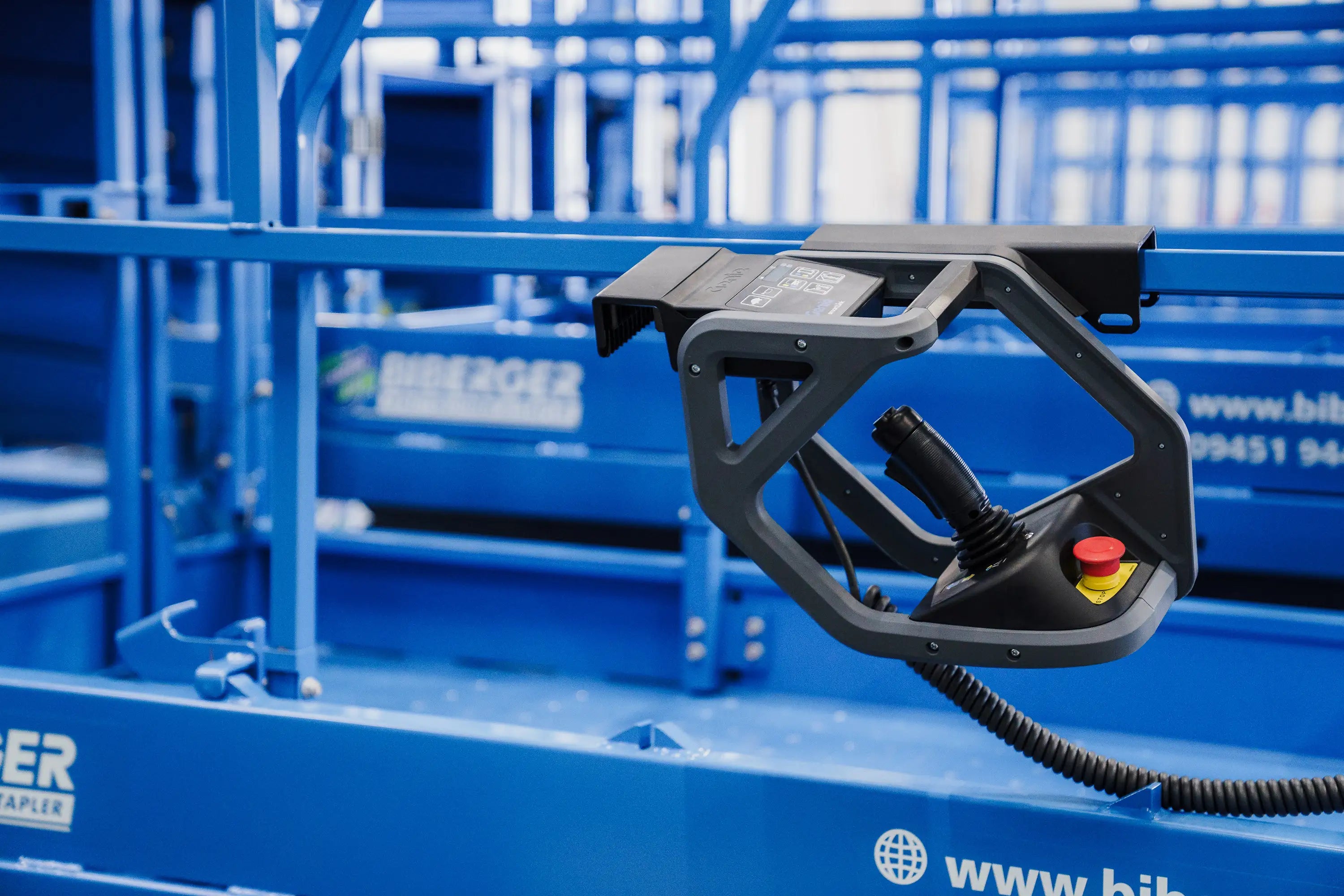
- Blocked emergency stop buttons → dangerous in an emergency,
- Smeared mirrors/sensors → no visibility, no control,
- Oil films → increased risk of slipping and fire.
Cleanliness is therefore a safety factor, not a matter of comfort.
Legal obligations: Cleaning is mandatory.
DGUV rules: Testable means clean
The DGUV (German Social Accident Insurance) stipulates that machines must be in a condition that allows for safe testing and operation. This means:
- Cracks must be visible,
- Hydraulic lines must not be covered.
- Visible surfaces must be clean.
A dirty stage cannot pass a safety inspection .
WHG & Environmental Law: Washing area instead of construction site
Washing clothes without an oil separator can violate water protection laws. Oil, grease, and cleaning agent residues must not enter the soil or surface water.
Therefore, WHG-compliant washing facilities are mandatory – whether in your own company or at the landlord's premises.
How often should it be cleaned?
Clean after use, not according to the calendar.
The cleaning frequency always depends on usage and soiling, not on routine.
Practical recommendations by area of application
- Concrete/paint: immediately after application, before it hardens.
- Clay/mud: remove on the same day.
- Oil/hydraulics: clean immediately and report damage.
- Winter maintenance: remove salt regularly.
Waiting makes cleaning more expensive – not easier.
Things to consider when cleaning
Using a pressure washer correctly
Incorrect use can destroy bearings, seals, and electronics. Basic rules:
- at least 30 cm distance to seals, displays and connectors,
- Never aim directly at wipers on telescopes,
- Clean the engine compartment manually only.
Protect sensitive electronics and sensors
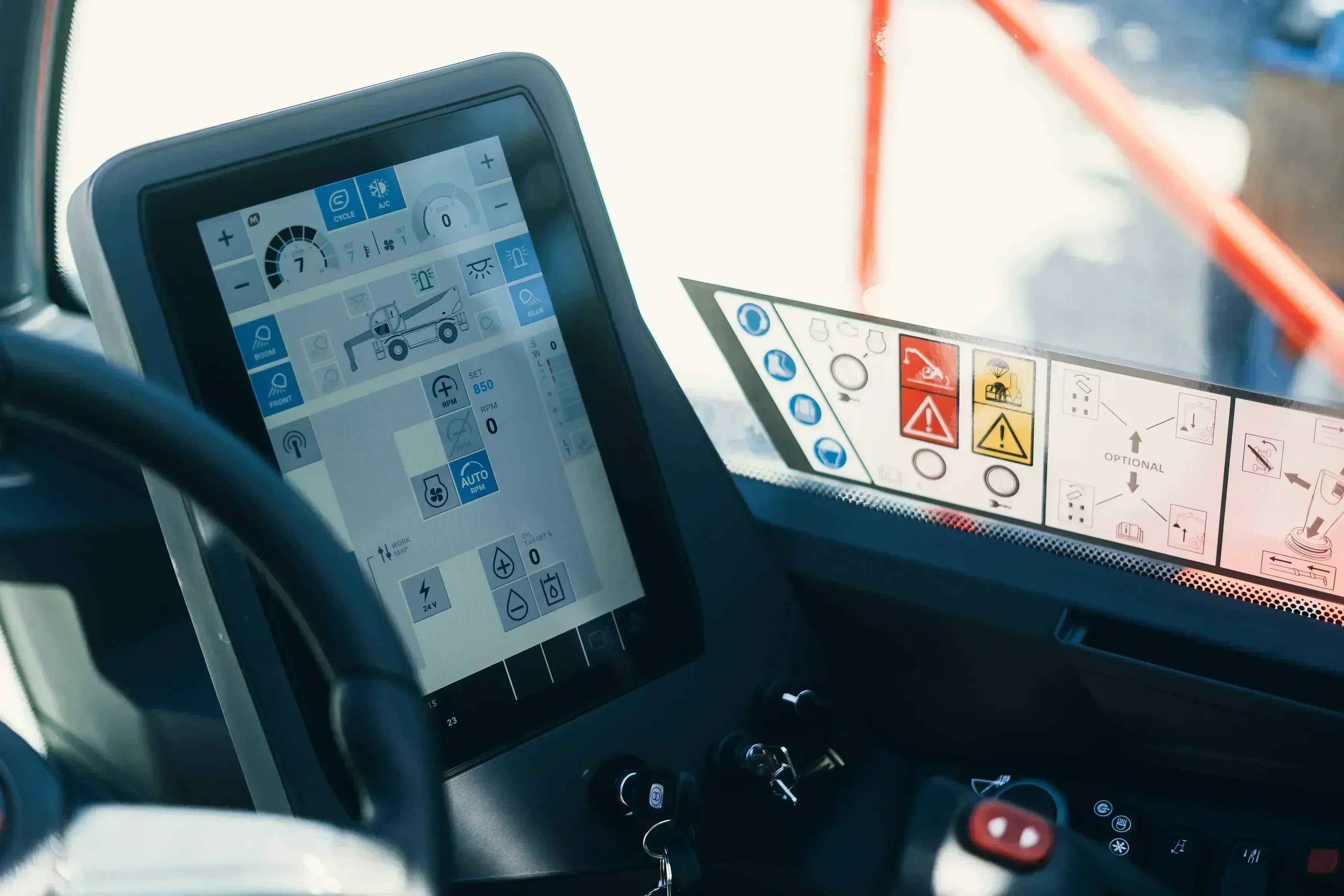
Ultrasonic sensors, joysticks, touch displays, and security cameras are sensitive. They should only be cleaned with water, a cloth, and mild detergent; never with a pressure washer.
Post-processing: drying, greasing, checking
After each cleaning:
- complete drying,
- new grease on cleaned sliding surfaces,
- Visual inspection of all wear points,
- Emergency stop and brake function test.
Tools for efficient machine cleaning
Professional tools that quickly pay for themselves
- Oil separator washing area (WHG compliant),
- Water-based cold cleaner for oil/grease,
- pH-neutral concrete removers ,
- Spatulas/brushes/microfiber cloths for fine cleaning.
Sealing as prevention
Ceramic coatings, underbody protection or films on displays make cleaning easier, prevent lead contamination and increase the resale value of used devices.
Cleaning of rental equipment: What rules apply?
What tenants can expect at BIBERGER
At BIBERGER, no machines leave the premises without being cleaned and technically inspected. This means:
- clean handover ,
- documented care ,
- no legacy issues from previous deployments .
What counts as normal pollution?
Construction site dirt is normal – baked-on concrete residue or thick layers of paint are not. Such residues require special cleaning agents or lengthy workshop times.
Therefore, a thorough cleaning before returning the property saves costs and allows for quick re-rental.
Checklist: Professional machine cleaning step by step
Directly applicable in the workplace
- Remove coarse dirt with low pressure
- Thoroughly clean the chassis/underbody
- Extend the telescope and clean it free of grease.
- Manually clean electrical components/sensors.
- Clean and dry the batteries
- Let the machine dry
- Re-greasing & visual inspection
- Test emergency stop and braking functions
Conclusion: Cleaning saves money – professional cleaning saves the most.
A clear decision for safety and value retention
Cleanliness protects operators, extends service life, and maintains compliance with safety regulations. It reduces unplanned downtime, minimizes maintenance costs, and ensures the machine is always ready for use.
If you want to save time and effort: We take care of the complete machine cleaning – WHG-compliant, efficient and at a fixed price.
Request a consultation now – and operate your machines safely and in a way that preserves their value.




Share:
Narrow, winding, difficult to access: Height access for urban use
Work platforms and power lines: Minimum distances and rules
Our editorial quality standards
The subject content on biberger.de are editorially created, reviewed, and continuously updated. The basis is our daily work with aerial platforms, telehandlers, and industrial trucks – in rental, sales, operational planning, and technical support.
Each article draws on real-world experience and is editorially reviewed for clarity, accuracy, and practical relevance according to expert criteria. Technical statements are regularly compared against current industry standards and best practices.
The aim of our publications is to make reliable specialist knowledge accessible and to offer guidance to users, decision-makers and industry partners. BIBERGER sees itself as an independent information platform for safe, economical and modern height access technology – well-founded, comprehensible and free from advertising influence.