


 What You Need to Know
Anyone who operates aerial work platforms or forklifts bears responsibility – for themselves, others, and the machine. Only trained and authorized personnel may operate these devices. The most important responsibilities include daily visual and functional inspections , compliance with operating instructions , and the correct use of personal protective equipment (PPE) for specific types of platforms. Even seemingly minor omissions, such as missing inspection seals or inadequate barriers, can result in liability.
Forklift drivers and platform operators must also actively identify, document, and report hazards . Special rules apply to work baskets : only occasional use , a load capacity of at least 5 times the total load , and an approved GS/TÜV seal . Following these principles not only fulfills the DGUV and TRBS requirements , but also ensures safe and efficient workflows – whether on a construction site, in a warehouse, or in public spaces.
Operator responsibilities for work platforms
Before use
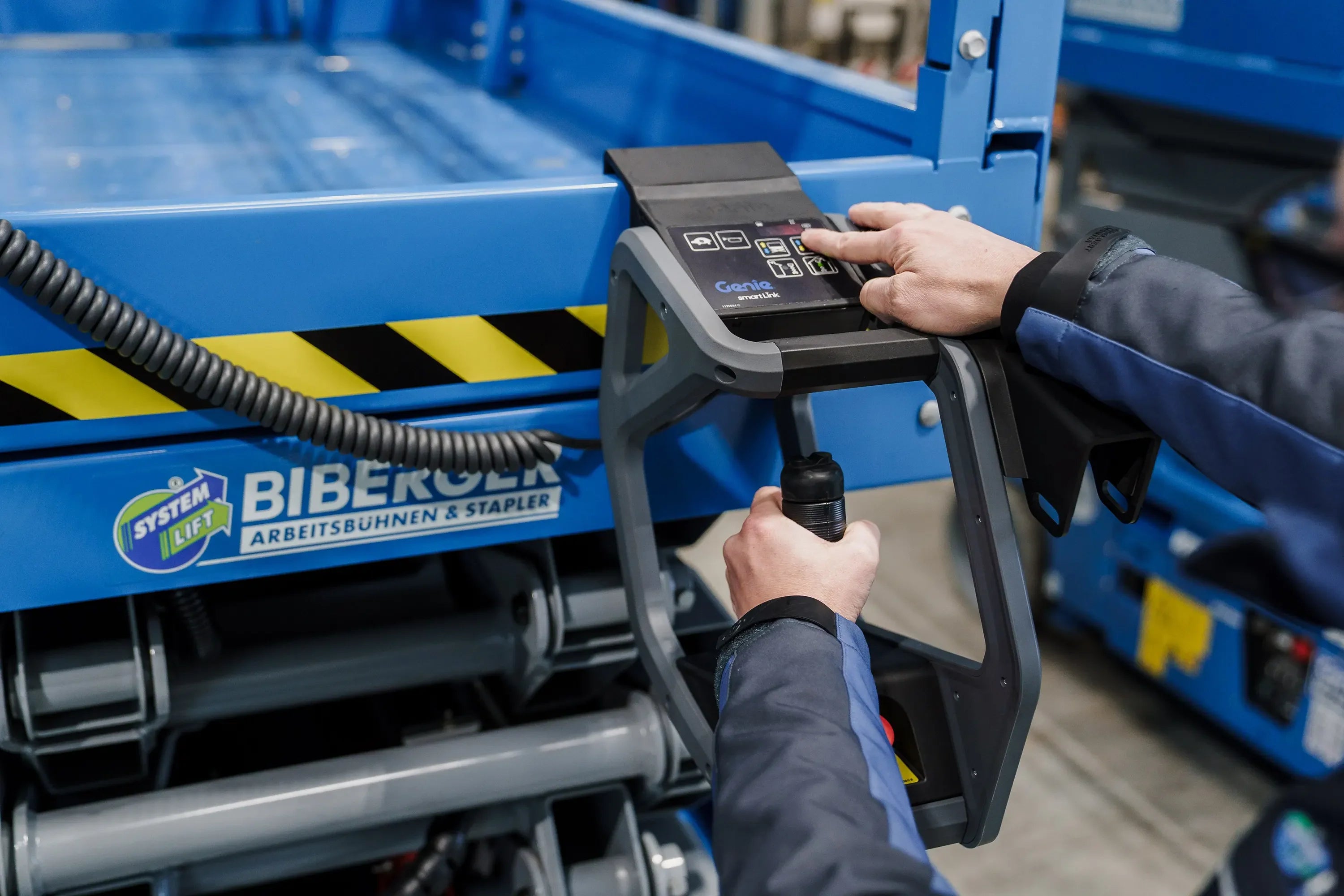
A daily visual and functional inspection is mandatory before commissioning. The operator is responsible for operational safety from the very first use – even with rental equipment. The following items must be checked: frame, boom, welds, hydraulics, hoses, electrical system, battery/tank, tires, outriggers, emergency stop, ground controls, locks, and operating elements. The inspection sticker or seal must also be observed.
The operating instructions must be site- and application-specific—not just a general document. A site inspection with a risk assessment is mandatory to accurately assess the subsurface, weather conditions, and surroundings.
The work diagram forms the basis for every movement. It should be clearly visible or printed out and carried with you. The permissible nominal load (personnel + tools + material) must not be exceeded.
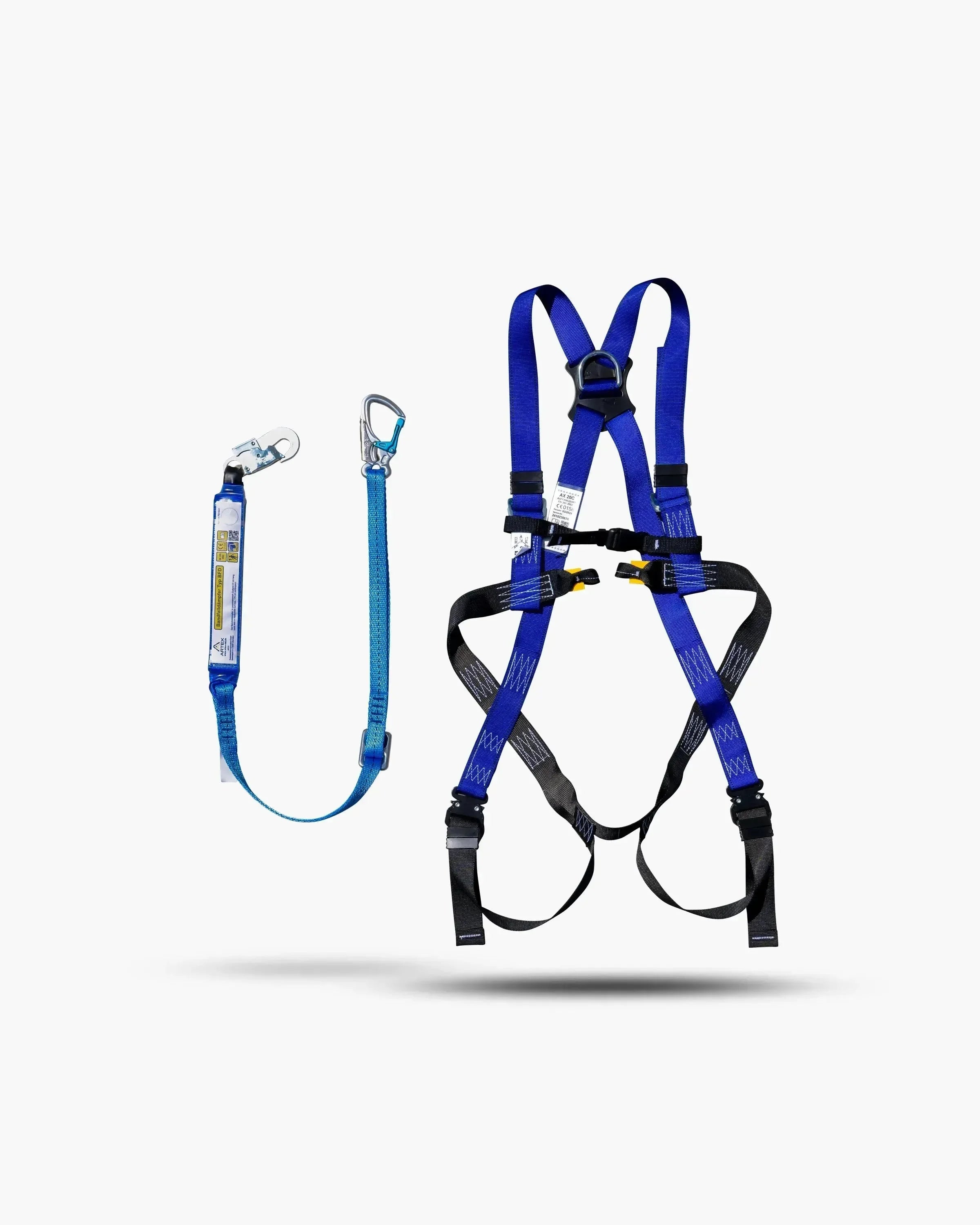
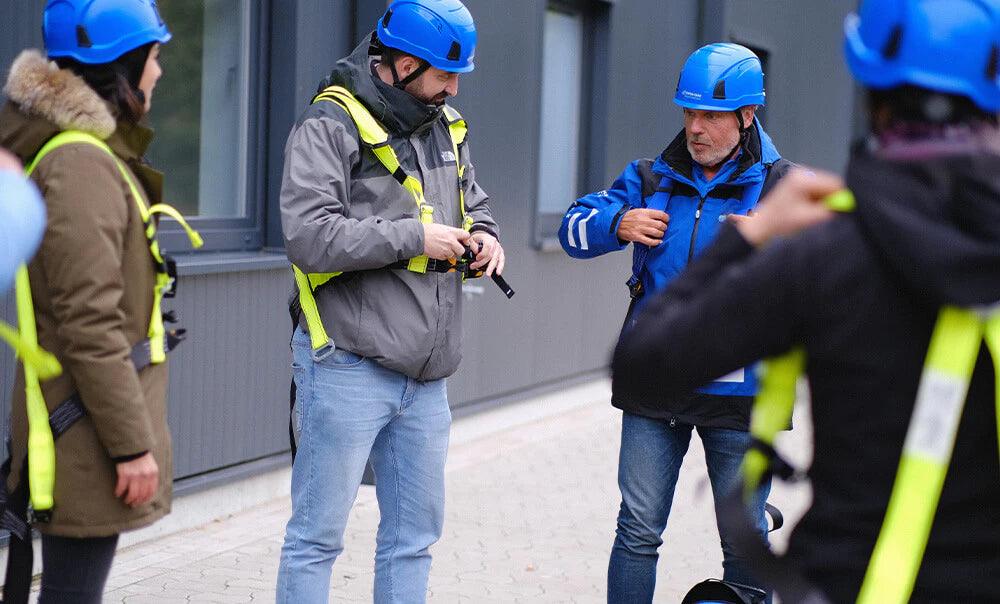
Personal protective equipment (PPE) is mandatory for telescopic and truck-mounted platforms . For scissor lifts, the requirement depends on the height and operating environment – below approximately 5 m, it is often not required, above 6 m, it is usually mandatory. If in doubt, consult the manufacturer. Harnesses and connecting elements must be checked for damage every workday. A helmet with a chin strap in accordance with EN 12492 is mandatory.
During the operation
The platform may only be operated on stable ground. Supports must be fully supported. Wind and weather conditions must be continuously monitored. If in doubt, leave it standing .
Pushing, pulling, or bracing the platform against structures is prohibited – the permissible manual force must not be exceeded. Work platforms are not assembly aids.
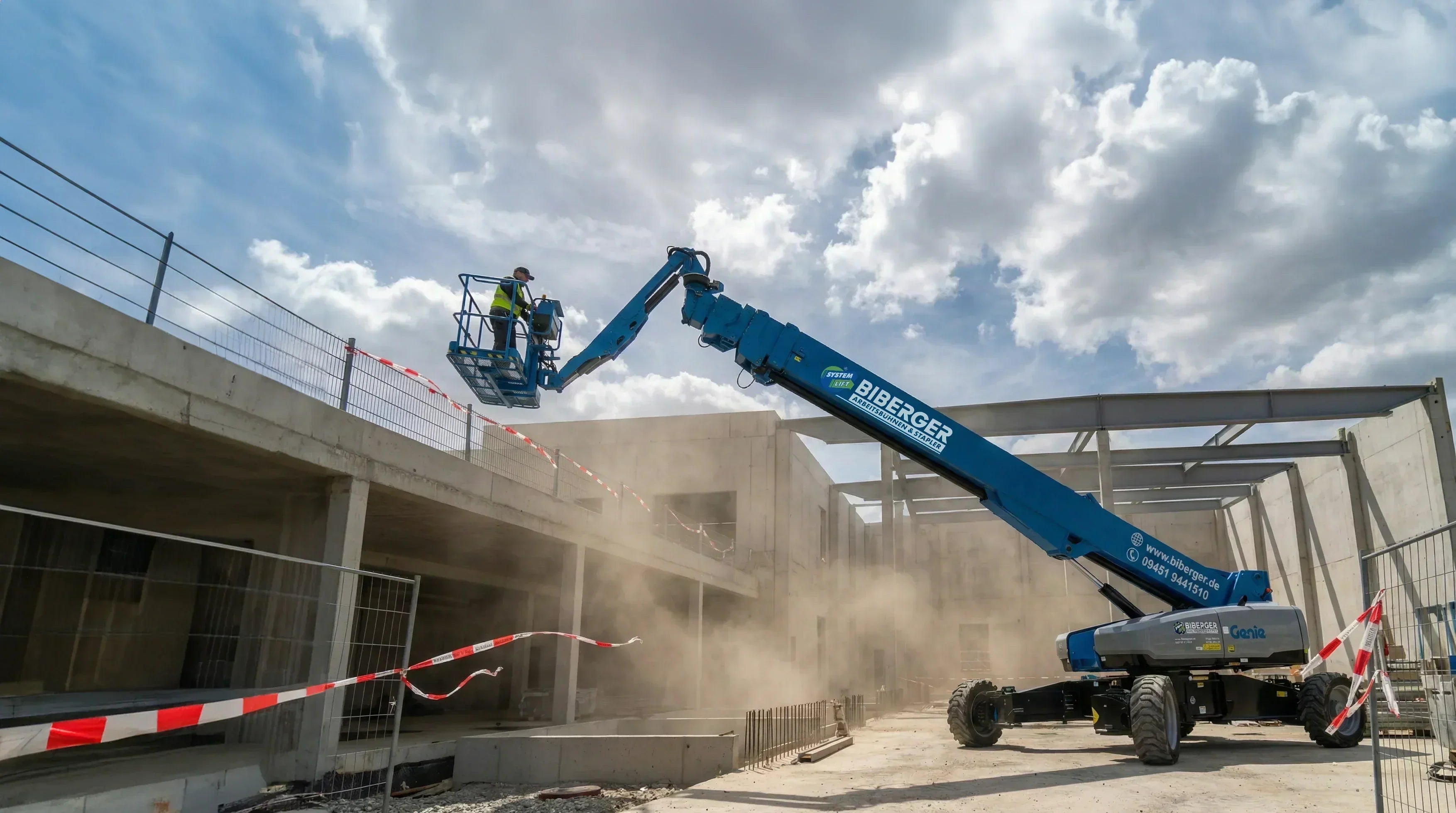
The danger zone beneath the stage must be cordoned off. Security guards or signalers are required in public areas.
Overhead lines: safety distances and 5-point inspection
A safety distance must always be maintained from electrical cables. The voltage is the determining factor:
| Tension | Minimum distance |
|---|---|
| up to 1 000 V | 1 m |
| 1 000 – 110 000 V | 3 m |
| 110,000 – 220,000 V | 4 m |
| 220,000 – 380,000 V | 5 m |
| Unknown voltage | 5 m |
The distances mentioned refer to the moving parts of the platform —such as the boom, work basket, or fork. They are guidelines only; in the case of high-voltage lines or any uncertainties, the grid operator must always be informed. Newer standards such as DIN EN 50341 may stipulate different values.
The 5-point test according to DGUV Information 203-005 includes:
- Determine voltage
- Determine safety distance
- Check line of sight and distance on site
- Evaluate the stage's range of motion
- If in doubt, contact your network operator
After the deployment
After completing the work, the platform must be completely lowered, the key removed, and the device secured against unauthorized use. All defects must be reported and documented in writing.
Emergency stop and emergency lowering – clearly distinguish
- Emergency stop: interrupts power supply, stops all movements immediately.
- Emergency lowering: relieves hydraulics, lowers platform in a controlled manner.
The operator must be familiar with both functions. Rescue is carried out via emergency lowering , ground control (if available) , or a second platform of the same model or with documented equivalent type approval . From a working height of approximately 30 m, only internal rescue or fire department support is usually realistic.
General obligations
Operators are permitted only with an operator's ID card , written authorization , and annual training. Documents must be carried. Alcohol, drugs, and fatigue are prohibited.
The warranty obligation obligates the operator to actively prevent hazards and report defects. Daily inspections should be documented—especially when rented to third parties, as documentation and liability obligations apply here.
Operator responsibilities for forklifts
Before use
Forklift drivers must inspect their equipment daily and document the results. Visual and functional inspections are required by DGUV V 68 § 9. Test results must be retained for at least one year. A designated supervisor must review and approve the logs. This role can be performed by the shift manager, workshop supervisor , or a person designated on an authorization form . The authorization must be issued in writing .
The visual inspection includes: vehicle frame, tires, hydraulics, lift mast, chains, battery, and attachments. Functional inspection: lighting, horn, brakes, steering, mast and tilt functions, and restraint system.
During the operation
Forklifts must be operated with care. The permissible load capacity according to the load diagram must not be exceeded. The driver must actively check the load securing (VDI 2700) – do not rely blindly.
In restricted visibility conditions , reversing is mandatory ; if necessary, with a guide. The restraint system must be worn throughout the entire journey.
Work basket use
When using a work basket, special rules apply (DGUV Information 208-004):
- PPE mandatory for persons in the basket
- The forklift must not move with the basket raised – only minimal alignment is permitted
- Maximum lifting height usually 5–6 m
- Load capacity: The forklift must be able to carry at least five times the total weight (basket + person + load)
- Technical approval: Work baskets must have a valid GS or TÜV seal
- Frequency of use: Only permitted for occasional work – regular or daily work at height is not permitted
- Operator remains at the wheel; communication must be ensured
After the deployment
After the end of the shift: Apply the parking brake, remove the key, and secure the device. Report any defects in writing. Only technically sound devices may be continued to be operated.
General obligations
Forklift drivers require a valid forklift license and written authorization from the employer (Section 7 of the German Social Accident Insurance (DGUV) V 68). Annual safety training is mandatory, and semi-annually for young people. Alcohol, drugs, illness, or fatigue preclude employment.
Drivers are also subject to a duty of care : They must identify, prevent, and report hazards immediately. Violations can result in employment and criminal consequences.
Important differences between platform and forklift
Work platforms
- PPE is mandatory for telescopic and truck-mounted platforms; for scissor lifts, depending on the height and work schedule – if in doubt, ask the manufacturer
- Helmet with chin strap required (EN 12492)
- Overhead line distances according to voltage – inform network operators in case of uncertainty
- Cordon off danger area, signal for roadworks
- Guarantee obligation and liability even in the event of operating errors
Forklift
- Rear-axle steering requires adapted driving style
- Active testing of load securing (VDI 2700)
- Work basket use: Load capacity ≥ 5× total load, GS/TÜV seal required
- Only occasional work allowed, no regular operation
- Documentation obligation and supervisor in the company
Conclusion
Whether using a platform or a forklift, safety is achieved through systematic, routine work. Those who check, document, and pause daily act professionally. Training, attentiveness, and responsibility are the foundation for accident-free work at height and in the workplace.




Share:
Pendulum axles simply explained: Function, safety and maintenance for platforms and forklifts
JLG error codes explained: causes, meaning & solutions
Our editorial quality standards
The subject content on biberger.de are editorially created, reviewed, and continuously updated. The basis is our daily work with aerial platforms, telehandlers, and industrial trucks – in rental, sales, operational planning, and technical support.
Each article draws on real-world experience and is editorially reviewed for clarity, accuracy, and practical relevance according to expert criteria. Technical statements are regularly compared against current industry standards and best practices.
The aim of our publications is to make reliable specialist knowledge accessible and to offer guidance to users, decision-makers and industry partners. BIBERGER sees itself as an independent information platform for safe, economical and modern height access technology – well-founded, comprehensible and free from advertising influence.