


 What You Need to Know
When setting up a marquee, everything has to be perfect – timing, technology, and logistics. Whether it's a folk festival, a brewery festival, or a city anniversary, the deadlines are tight, the processes are tightly scheduled, and every day of delay costs money. This makes it all the more important to rely on efficient equipment – especially the right work platform.
In this article, you will learn which work platforms have proven themselves in the construction of marquees , what you need to pay attention to when selecting and using them , and how you can safely assemble trusses, lighting, or rides – without wasting time and with maximum safety.
Why work platforms are indispensable when erecting marquees
Large tents and beer halls are no longer erected using scaffolding or ladders – safety requirements have increased. Modern tent constructions require precise work at heights. Work platforms enable:
- quick access to ridge, eaves and gable
- stable platforms for tools, lighting or trusses
- safe working even on uneven or gravel ground
Especially when schedules are tight – when rides or supply lines are being installed at the same time – the use of a stage saves valuable time and ensures a smooth process.
Typical work with work platforms when erecting a tent
With the right platform, you can complete all assembly work safely and efficiently:
- Installation of supports, roof tarpaulins and side walls
- Installation of lighting and sound technology
- Installation of banners, trusses and decorations
- Access to technology via stage or bar area
- Maintenance and adjustments during the festival
Work platforms are also indispensable for mobile stages or show trucks – for example, when aligning structures or carrying out safety checks at height.
DGUV Regulation 42: Safety when setting up tents
DGUV Regulation 42 stipulates that large tents may only be erected under the supervision of a certified supervisor—the so-called tent erector . Requirements include at least two years of professional experience or 20 documented erections, as well as successful completion of a five-day training course with an exam.
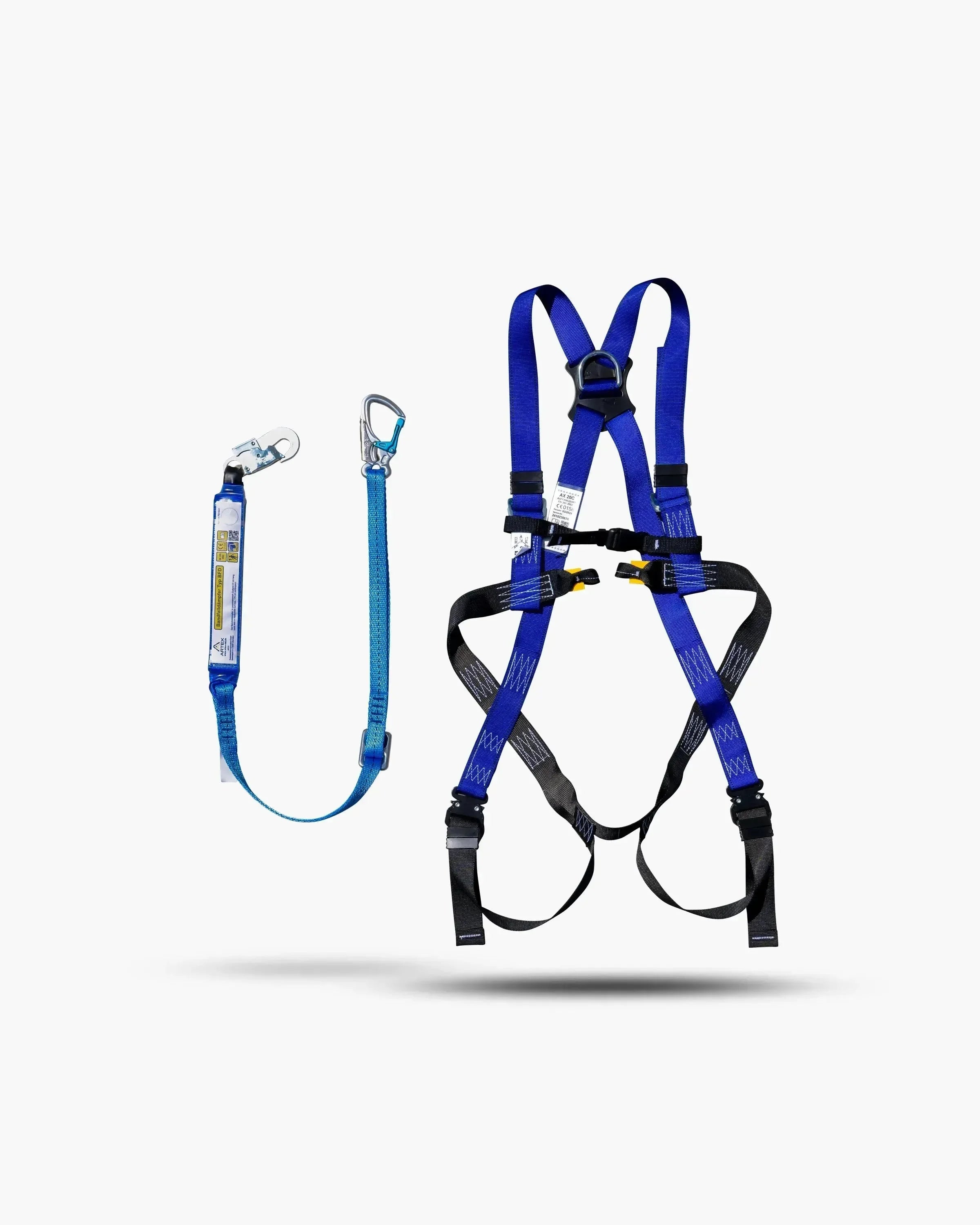
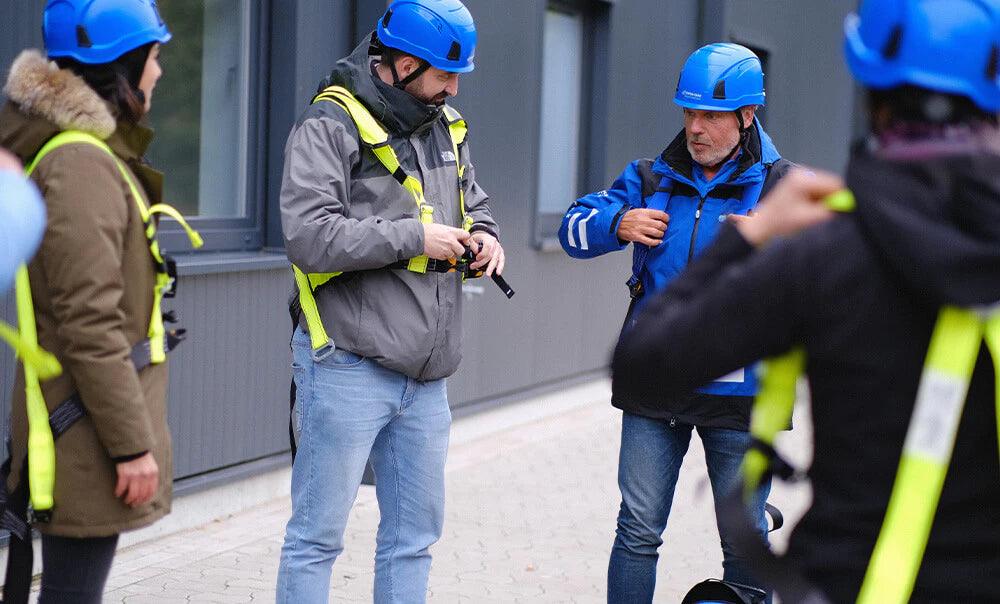
For work over five meters in height, personal protective equipment (PPE) against falls from a height is mandatory. This includes full body harnesses, lanyards, and tested anchor points.
Pay attention to wind and weather conditions
Wind is a crucial safety factor when erecting a marquee. The maximum permissible wind speed is 12.5 m/s (approximately 45 km/h) , or force 6 on the Beaufort scale. Measurements must be taken at the actual working height. In strong winds or thunderstorms, assembly work must be suspended until the weather conditions stabilize.
Load-bearing capacity of the subsoil and soil load
Scissor lifts require a solid surface with a load-bearing capacity of at least 3–5 kN/m² . On meadows or gravel surfaces, base plates are mandatory. Articulated telescopic lifts, thanks to their all-wheel drive and oscillating axle, are more gentle on the ground and better suited for uneven terrain.
Suitable stage types for fairgrounds
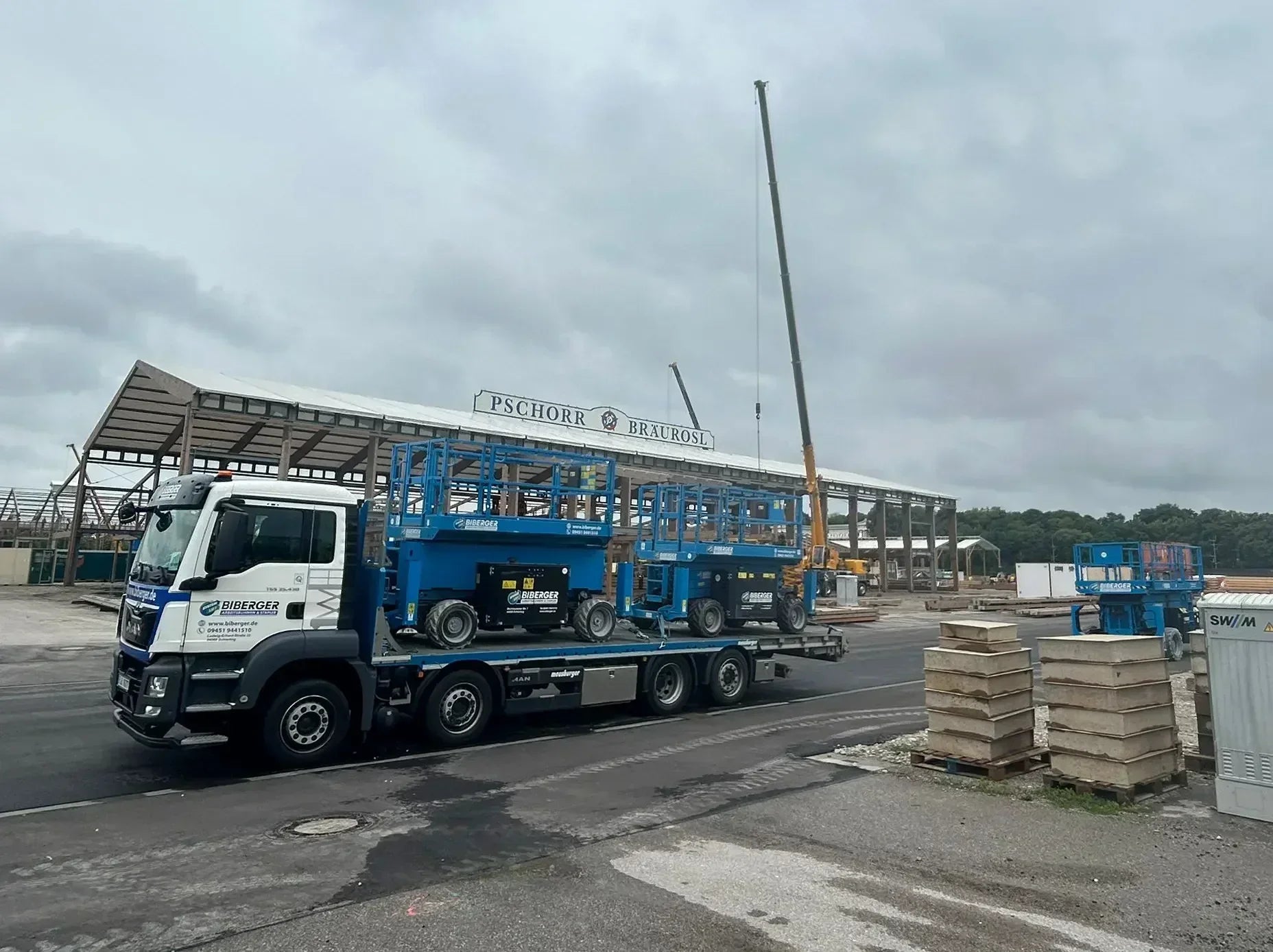
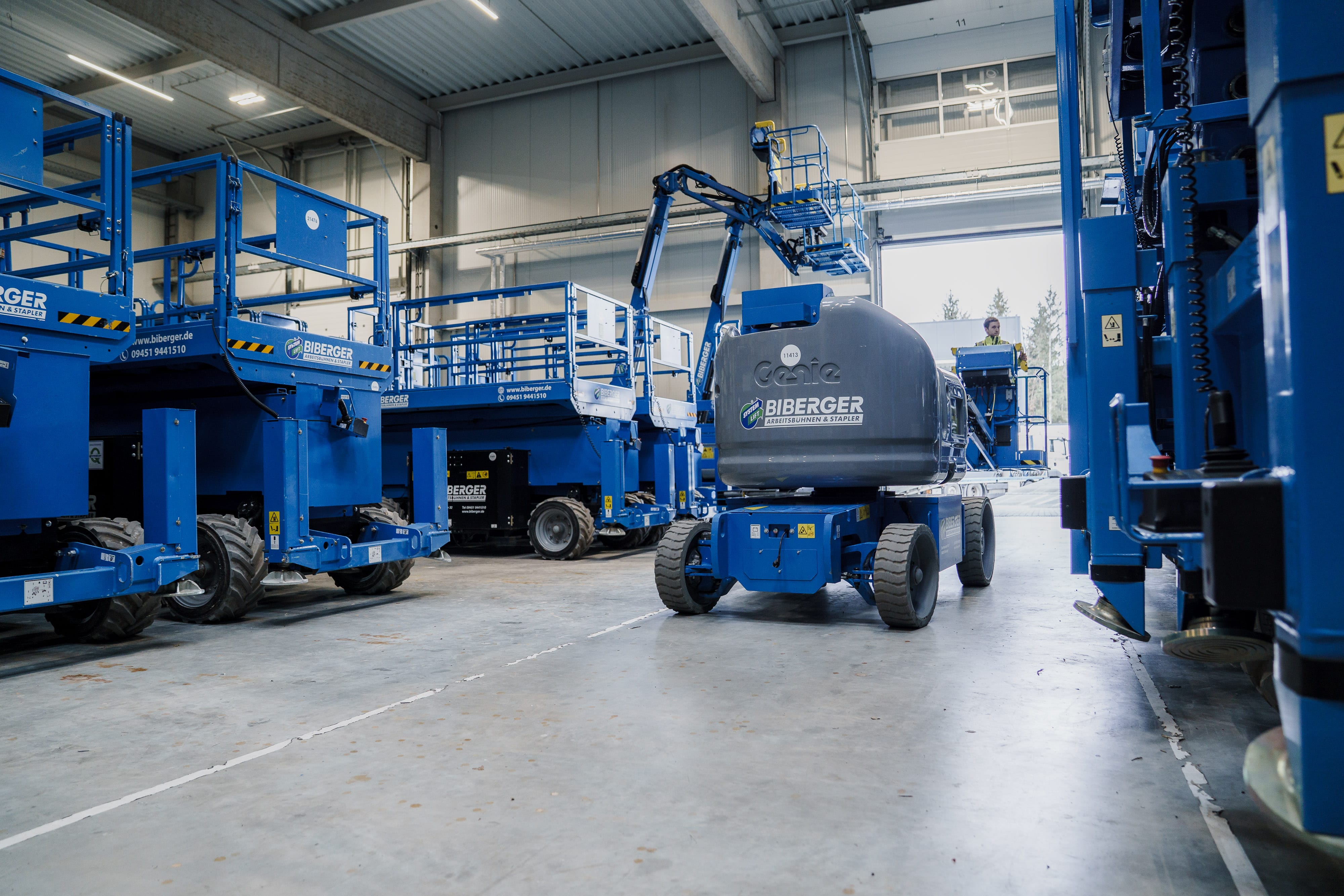
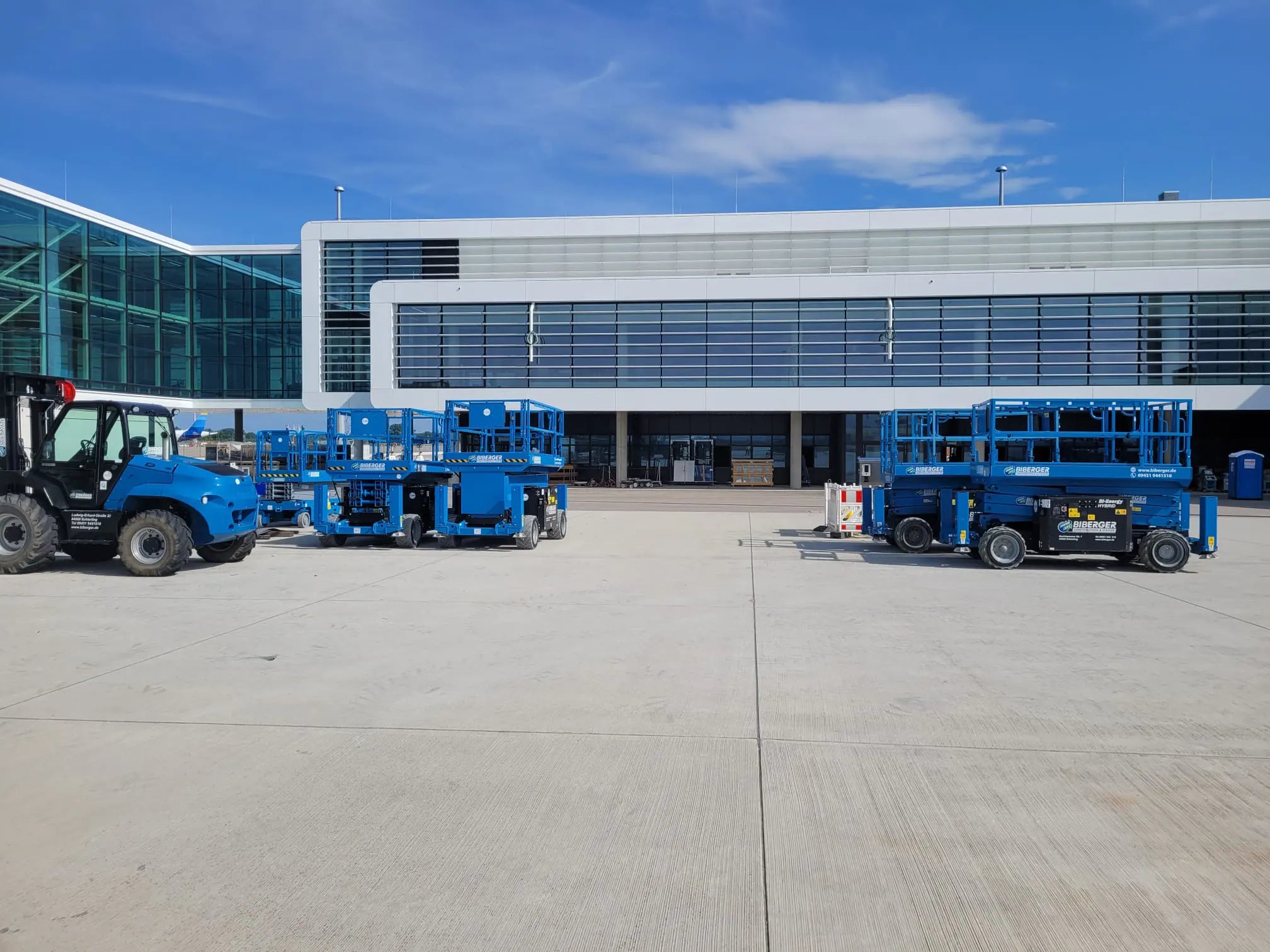
Scissor lifts (electric or diesel)
Ideal for working inside a tent or on paved surfaces. They offer high load-bearing capacity and a large platform for tools, decorations, or lighting equipment.
Articulated telescopic platforms (diesel, off-road)
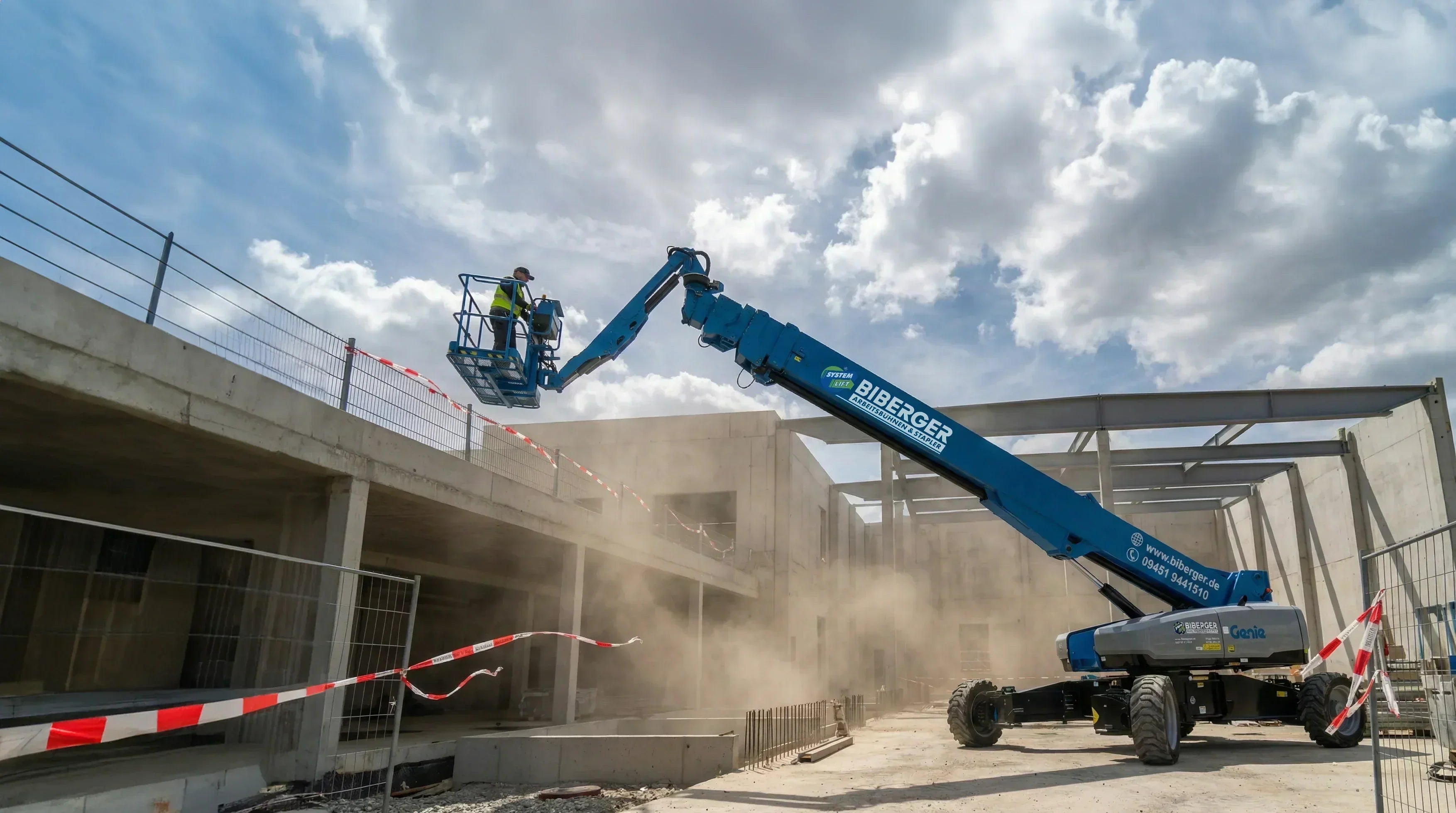
Ideal for outdoor work or in hard-to-reach areas. The boom bridges obstacles such as stands or structures. Thanks to all-wheel drive, they can also be used on lawns.
Rent an articulated telescopic platform
Telescopic platforms and telehandlers with work basket
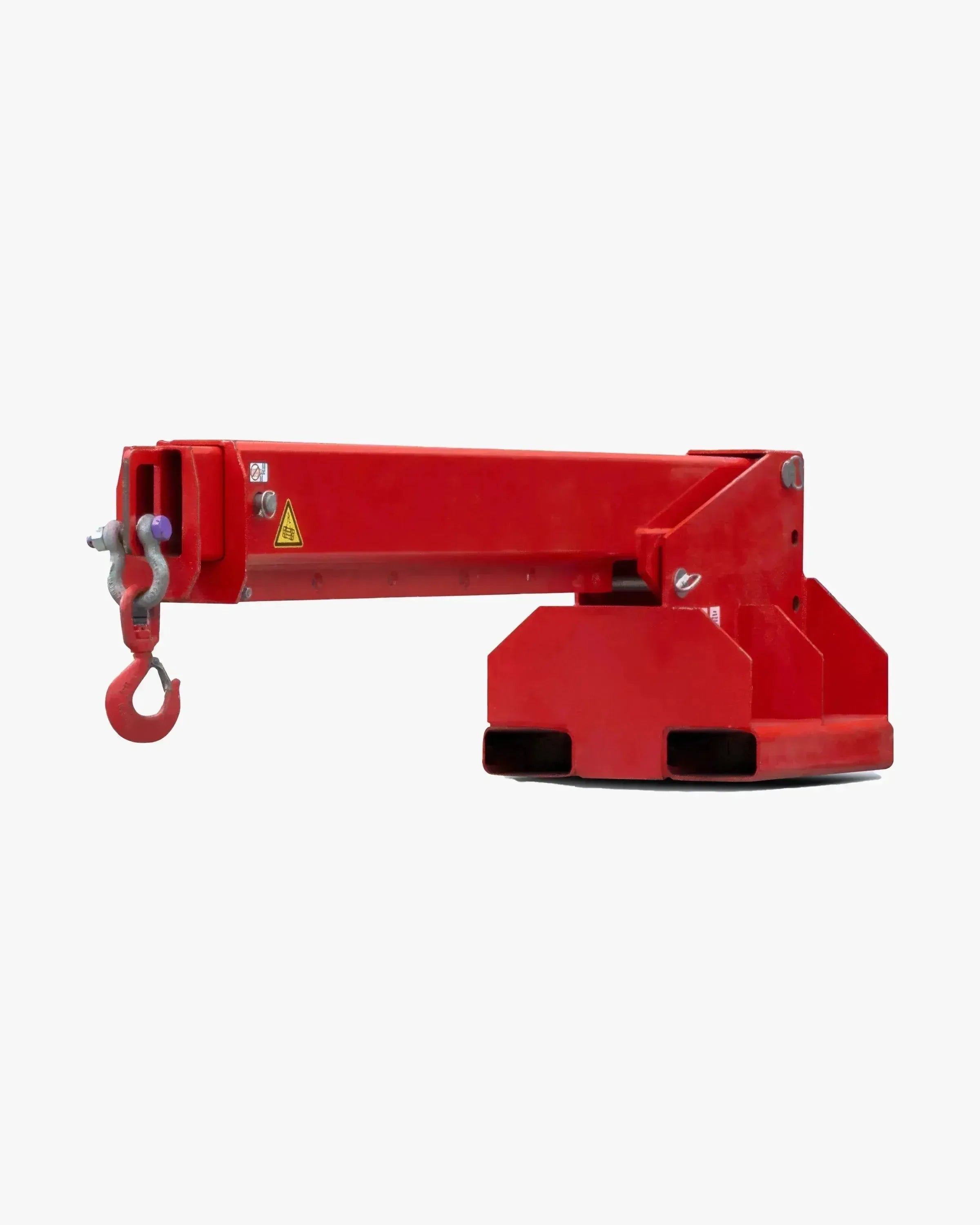
When reach is crucial: Telescopic platforms and telehandlers enable work over superstructures or on high facades. Optionally, they are also available with load hooks for material transport.
Forklifts and telehandlers
Indispensable for logistics on the festival grounds. They transport benches, refrigerators, decorations, and equipment safely and quickly – even on uneven ground.
Important planning steps before construction
- Calculate the rental period generously – also for rehearsal and dismantling
- Check driveways and ground conditions – grass, asphalt or gravel?
- Determine required working height and reach
- Coordinate safety concepts with supervisors (DGUV V42)
- Ensure access and power supply during setup times
Tip: At BIBERGER, you will receive a free preliminary consultation – we will help you choose the right stage with the right accessories and transport.
Conclusion: With the right stage for a successful party
A successful event begins with professional setup. Aerial work platforms are the key to safety, efficiency, and time savings. Whether inside the tent, on the grounds, or on rides – with the right technology, you'll stay on schedule and work safely.
BIBERGER delivers the right stage on time, tested, and ready for use – so your event setup gets off to a smooth start.




Share:
More efficiency on the construction site: When a telehandler is worthwhile
Access to heights in refineries, power plants, etc.: Which work platform is really suitable?
Our editorial quality standards
The subject content on biberger.de are editorially created, reviewed, and continuously updated. The basis is our daily work with aerial platforms, telehandlers, and industrial trucks – in rental, sales, operational planning, and technical support.
Each article draws on real-world experience and is editorially reviewed for clarity, accuracy, and practical relevance according to expert criteria. Technical statements are regularly compared against current industry standards and best practices.
The aim of our publications is to make reliable specialist knowledge accessible and to offer guidance to users, decision-makers and industry partners. BIBERGER sees itself as an independent information platform for safe, economical and modern height access technology – well-founded, comprehensible and free from advertising influence.